
Vino was already neutered when I brought him home from the vineyard in northern Tasmania in April 2022. The family who ran the property had it done while he was still working the barn, catching mice and making a general nuisance of himself among the wine barrels. I didn't witness the procedure or the immediate recovery, but I've lived with the long-term results every single day since: a 6 kg tuxedo cat who still meows like he's filing a formal complaint, still follows me around the yard demanding attention, and still has zero food self-regulation. Neutering a male cat didn't sand down Vino's personality. It redirected certain energies while leaving the core chaos fully intact.
I wanted to write this post because I get asked about it. People see Vino's confidence, his size, his relentless sociability, and they assume he's intact. He isn't. What follows is everything I've learned about the procedure, the recovery, and the behavioural shifts: partly from Vino's history as relayed by the vineyard family, and partly from watching him settle into domestic life over several years.
Why Neutering a Male Cat Changes Less Than You'd Expect
There's a common assumption that neutering flattens a cat's personality. I understand where it comes from. The procedure removes the primary source of testosterone, and testosterone drives a cluster of specific behaviours: territorial spraying, roaming for mates, and inter-male aggression. Remove the hormone, and those behaviours diminish or disappear entirely.
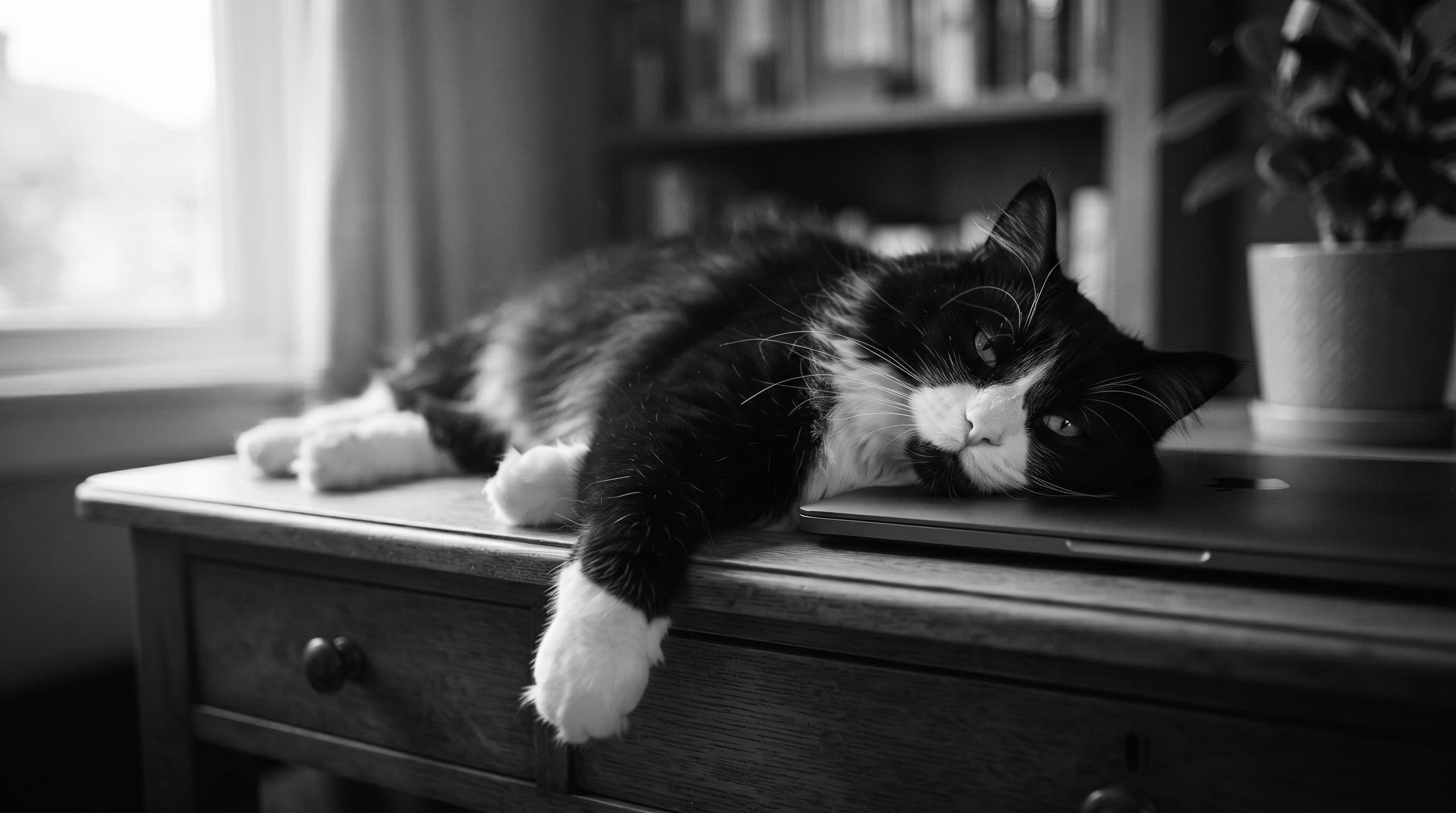
But personality isn't testosterone. Vino's relentless need to be underfoot, his five-second protest meow when he can't go outside, his habit of jumping onto whatever I'm trying to reach: none of that is hormonal. It's structural. It's who he was in the winery barn before neutering, and it's who he is now on my desk at home.
Zola, by contrast, was spayed before we got her a few months after Vino. She's about 3.9 kg, black with a small white patch on her tummy, and her default setting is reserved indifference. Spaying didn't make her calm. She was already calm. The surgery simply ensured she wouldn't go into heat or produce kittens. The personality gap between these two cats living under the same roof has nothing to do with reproductive surgery and everything to do with individual temperament.
The Procedure Itself Is Shorter Than You'd Think
Male cat neutering, technically called orchiectomy, is one of the most routine surgeries in veterinary medicine. The cat goes under general anaesthesia, and the vet makes one or two small incisions in the scrotum to remove both testes. The whole process typically takes between 15 and 30 minutes. Most vets use dissolvable sutures or leave small incisions to close on their own, which means there's often no return visit to have stitches removed.
The cat is usually discharged the same day. He'll be groggy from the anaesthesia for a few hours, possibly unsteady on his feet, and he shouldn't eat a full meal until the sedation has properly worn off. From what the vineyard family told me, Vino was back to harassing people within about 48 hours. That tracks with his general approach to setbacks, which is to ignore them completely.
Recovery Lasts About 10 to 14 Days
The physical recovery window is roughly 10 to 14 days. During this time, the incision sites need to stay clean and dry. The biggest challenge for most owners isn't wound care; it's keeping the cat from being too active. Running, jumping, and rough play can reopen incisions or cause swelling. A recovery cone or soft collar can help keep a cat from licking the incision site, though not every cat tolerates one.
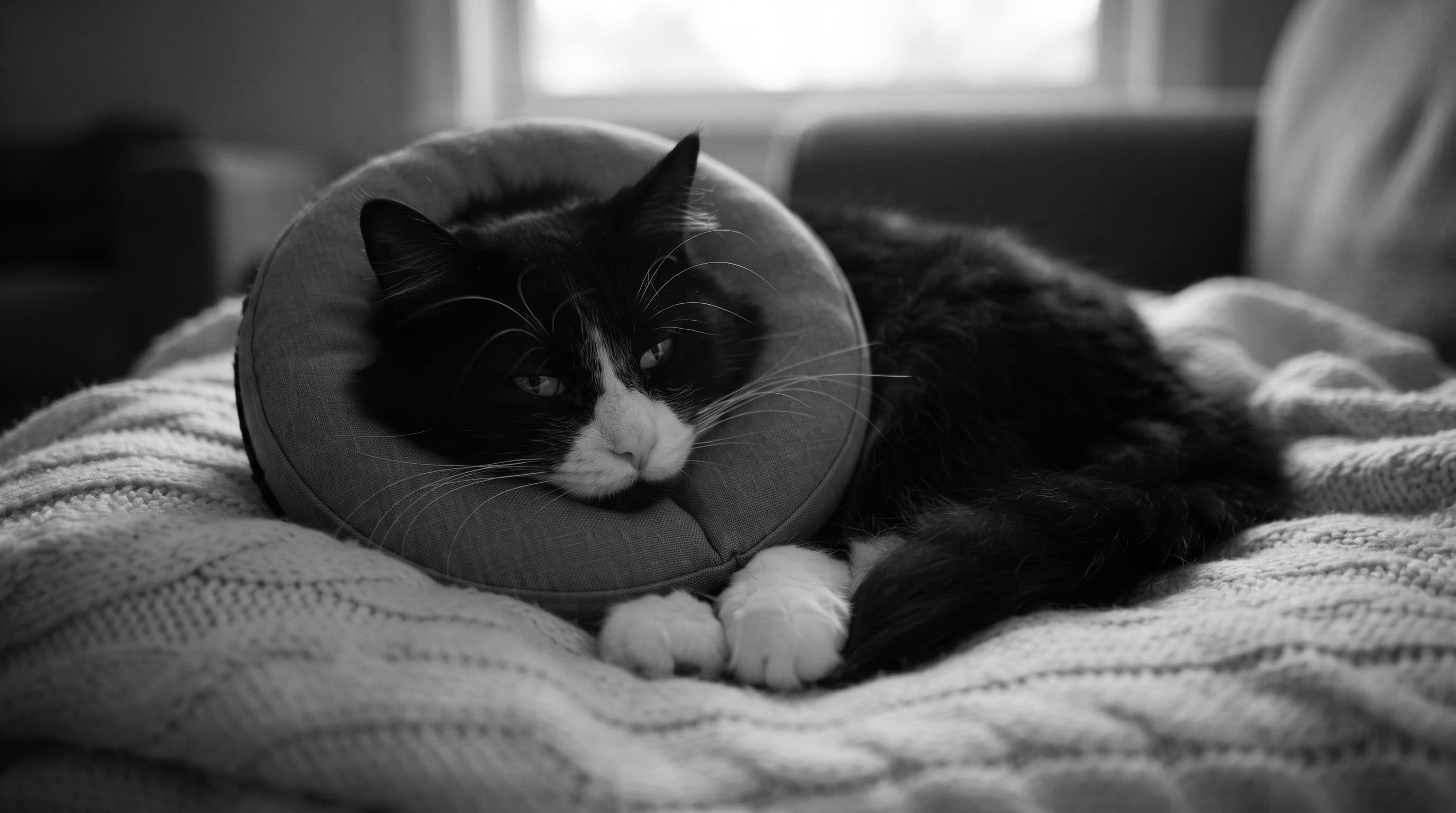
I didn't have to manage Vino's recovery myself, but I've spoken with enough cat owners in our area of northern Tasmania to know the pattern. The first 2 to 3 days are the quietest: the cat sleeps more than usual, eats less, and generally stays put. By day 4 or 5, most cats are testing boundaries. By day 10, you're essentially restraining a fully energised animal who doesn't understand why he can't sprint across the living room.
Keeping a recovering cat indoors and confined to a single room is the standard advice. For a cat like Vino, who spent his pre-domestic life roaming vineyard grounds freely, that confinement would've been its own ordeal.
Behavioural Shifts I've Observed
Here's what I can speak to with authority: the long arc of post-neuter life. Vino came to me already neutered, already settled into his hormonal baseline, and I've watched him for years. These are the patterns I've noticed.
No spraying. Vino has never sprayed indoors. Not once. He marks territory in subtler ways: rubbing his chin on furniture, kneading the bed, sitting on my laptop. But urine marking hasn't been part of our lives. This is one of the most reliable outcomes of early neutering, and it held true for Vino.

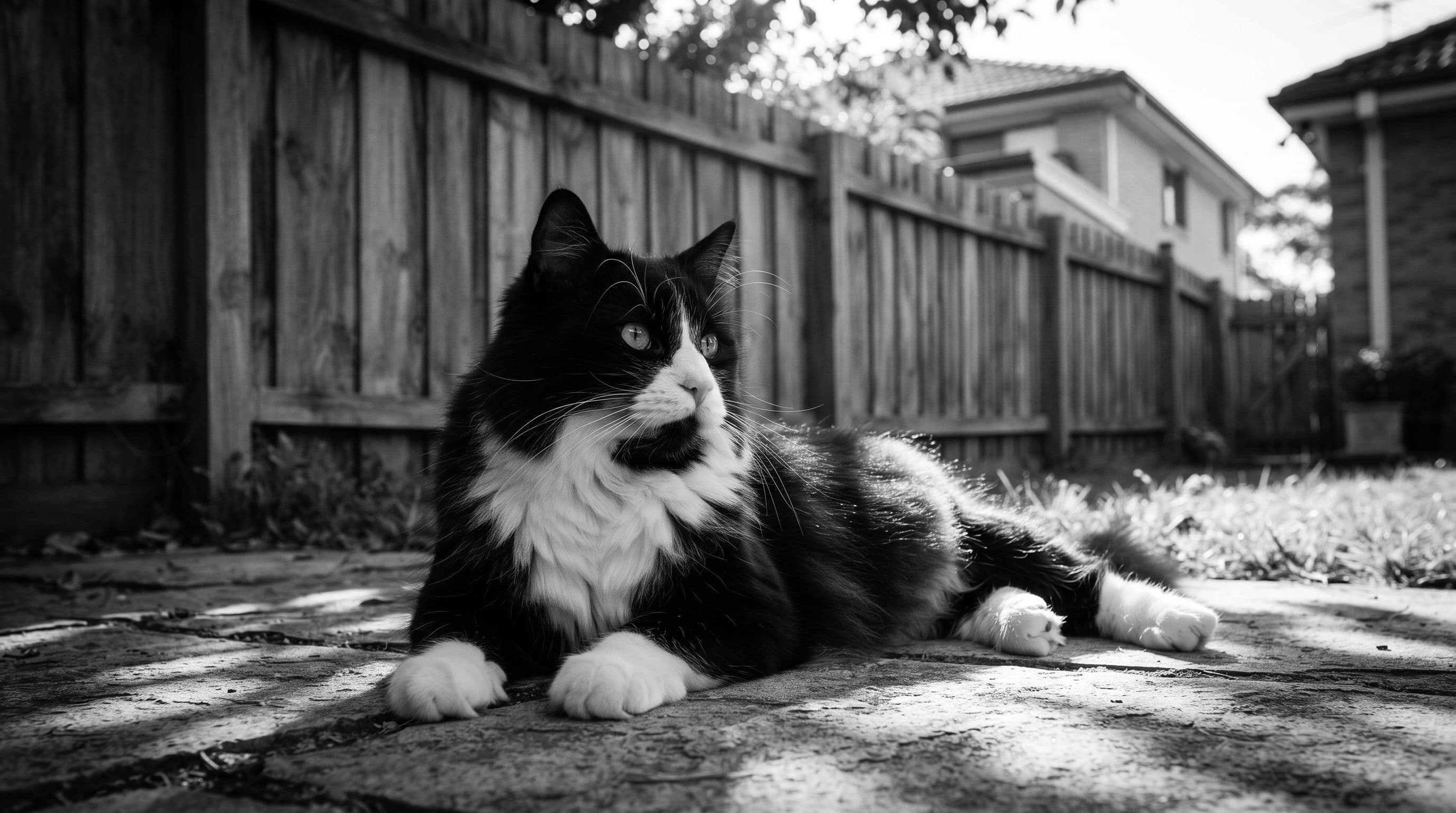
Reduced roaming drive, but not zero. At the old house he would occasionally clear the fence during his afternoon outside and head into the bush, meowing the whole time so I knew where he was. But he comes back. He doesn't vanish for days searching for a mate. The roaming is exploratory, not hormonal. There's a meaningful difference.
No inter-male aggression. Vino's relationship with the neighbour's Staffordshire Bull Terrier is pure passive aggression: lying a metre from the fence, eyes fixed on nothing in particular, pretending the dog doesn't exist. He doesn't fight. He provokes, but he doesn't escalate. With Zola, the dynamic involves hissing and the occasional standoff, but it's performative. They smooch each other, share a windowsill, and sleep close together. They've never drawn blood.
Appetite stayed enormous. Neutering can increase appetite because the metabolic rate shifts slightly downward without testosterone. Vino's appetite didn't increase after neutering; it was apparently bottomless before and it remains bottomless now. Give him a bowl of biscuits and he'll eat all of them in one sitting, every time. His portions are measured rather than left out, which is the only weight management he has ever needed. That's his entire weight history. The lesson: neutering doesn't cause weight gain. Overfeeding causes weight gain. Neutering just makes overfeeding easier to do.
Weight Management After Neutering Matters More Than People Realise
Research from the International Journal of Neuroscience in 1993 looked at body and brain weight in domestic cats, confirming that males weighed more than females overall. The findings reflected sexual dimorphism in body weight, though no specific average kilogram difference was reported. That's consistent with what I see at home. Vino at 6 kg is a normal, healthy shape for his medium-long-furred frame. Zola at 3.9 kg is slender and proportional for hers.
After neutering, a male cat's caloric needs drop. The responsible move is to adjust food portions downward slightly and monitor weight over the following 3 to 6 months. I weigh Vino periodically. The 5.8 kg creep happened gradually enough that I might've missed it without the scale. Once I caught it, the fix was simple: slightly smaller meals, no extra treats for a few weeks, and patience. He wasn't happy about it. He made that clear through sustained, single-tone meowing. No vet has ever put him on a diet.
The Timing Question: When to Neuter
Neutering before a cat reaches sexual maturity is the general approach; for most male cats, that window falls somewhere between 4 and 6 months of age. Earlier neutering, sometimes as young as 8 weeks, is practiced in shelter settings to prevent unwanted litters before adoption. The vineyard family had Vino neutered while he was still a working barn cat, which means he was likely done within his first year or two of life. By the time I met him in that winery barn in northern Tasmania, he was already neutered, already confident, and already tripping me every time I walked through the door.
The earlier you neuter, the less likely the cat is to develop spraying behaviour at all. Cats neutered after they've started spraying sometimes continue the behaviour out of habit, even without the hormonal driver. Vino never started, so the question was moot for us.