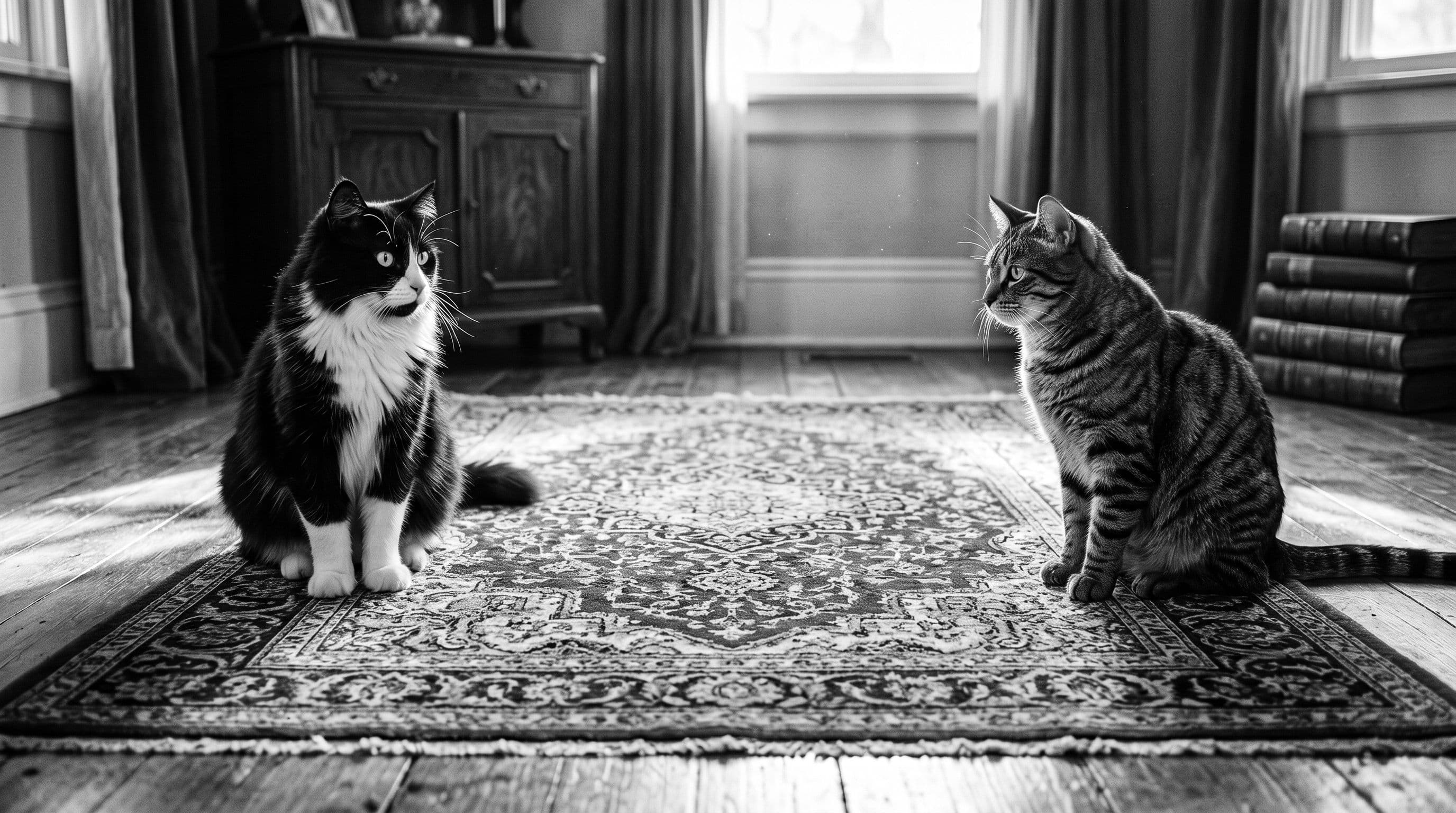
Most cat owners I've talked to attribute specific personality traits to their cat's coat pattern, yet I haven't found a single solid study proving that link. The bicolour pattern that produces a tuxedo turns up across many different breeds, which means a tuxedo cat and a tabby can literally be the same breed with different coats. That gap between perception and evidence is precisely where the tuxedo cat vs tabby conversation lives: mostly in our heads. I've spent years sharing a house with a tuxedo and watching friends' tabbies, and I'm fairly convinced that what we call "breed personality" is actually something far more interesting and far less genetic than most listicles would have you believe. John Bradshaw, the anthrozoologist who founded the Anthrozoology Institute at the University of Bristol and wrote Cat Sense, argues that much of how cats communicate with people is learned rather than innate, and that tracks with everything I've seen in Vino's behaviour shifting over the years to match our household routines.
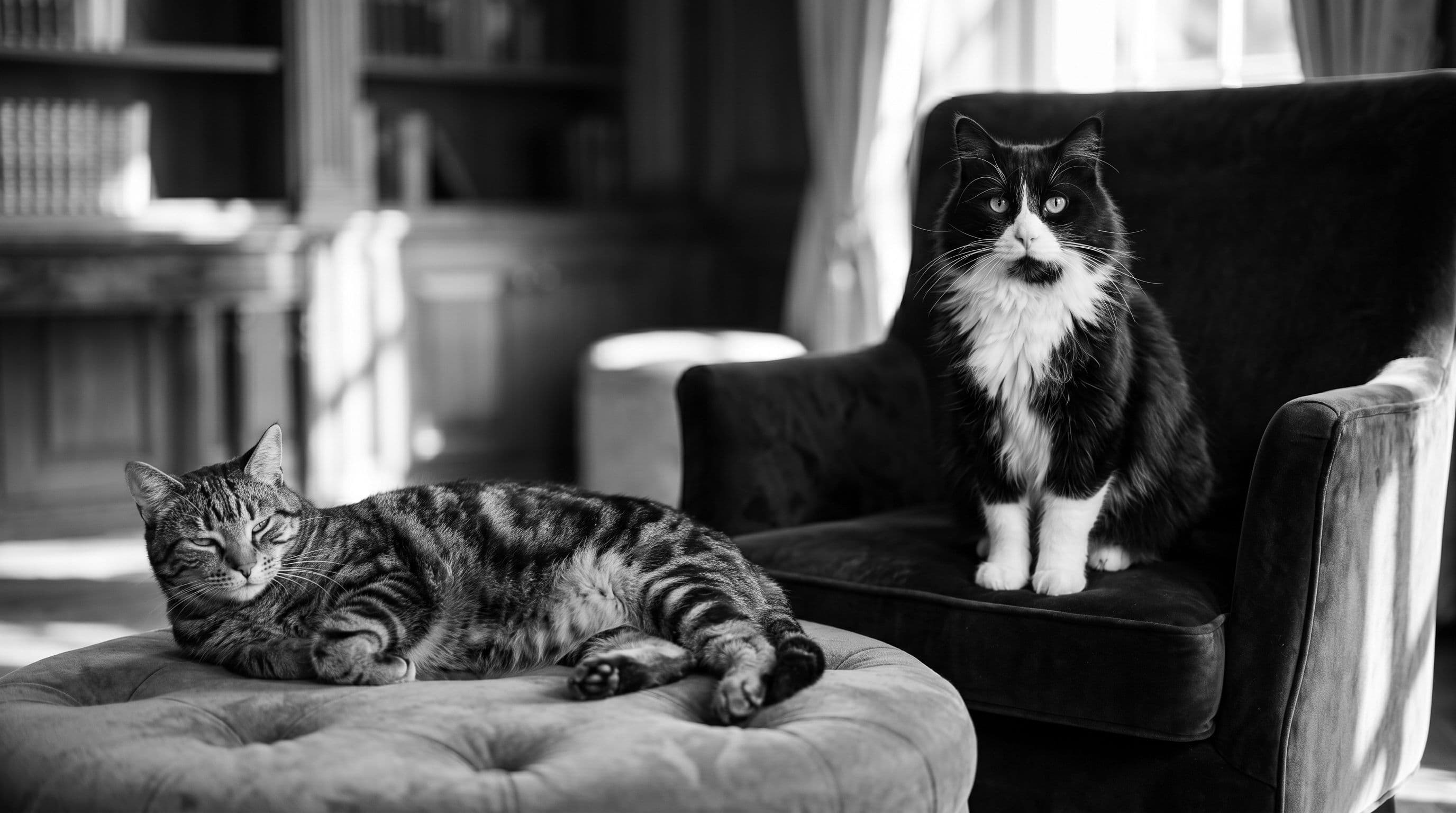
For context, I live with two cats. Vino is a bicolour tuxedo with medium-long fur, green eyes shot through with a slight yellow hue, and the social boundaries of a politician at a fundraiser. Zola is black, slender, reserved, and treats most interactions like an introvert stuck at a dinner party. Vino arrived in April 2022 and Zola followed in June, two months apart. If coat pattern determined personality, you'd expect these two mostly-black cats to behave similarly. They don't. They behave like entirely different species who happen to share a water bowl.
That contrast, playing out daily in my living room, is what makes the tuxedo-versus-tabby framing so misleading. The real differences I've noticed between coat types have almost nothing to do with the coats themselves.
The Conventional Wisdom About Tuxedo Cat vs Tabby Is Built on Confirmation Bias
Here's what the internet will tell you: tuxedo cats are smarter, bolder, and more sociable than average. Tabby cats are friendlier, more laid-back, and better with kids. You'll find these claims repeated on dozens of sites, usually without a single citation. The Cattitude Daily articles ranking for this topic lean heavily into "fun facts" framing, listing behavioural traits as though they're hardwired to a cat's markings.
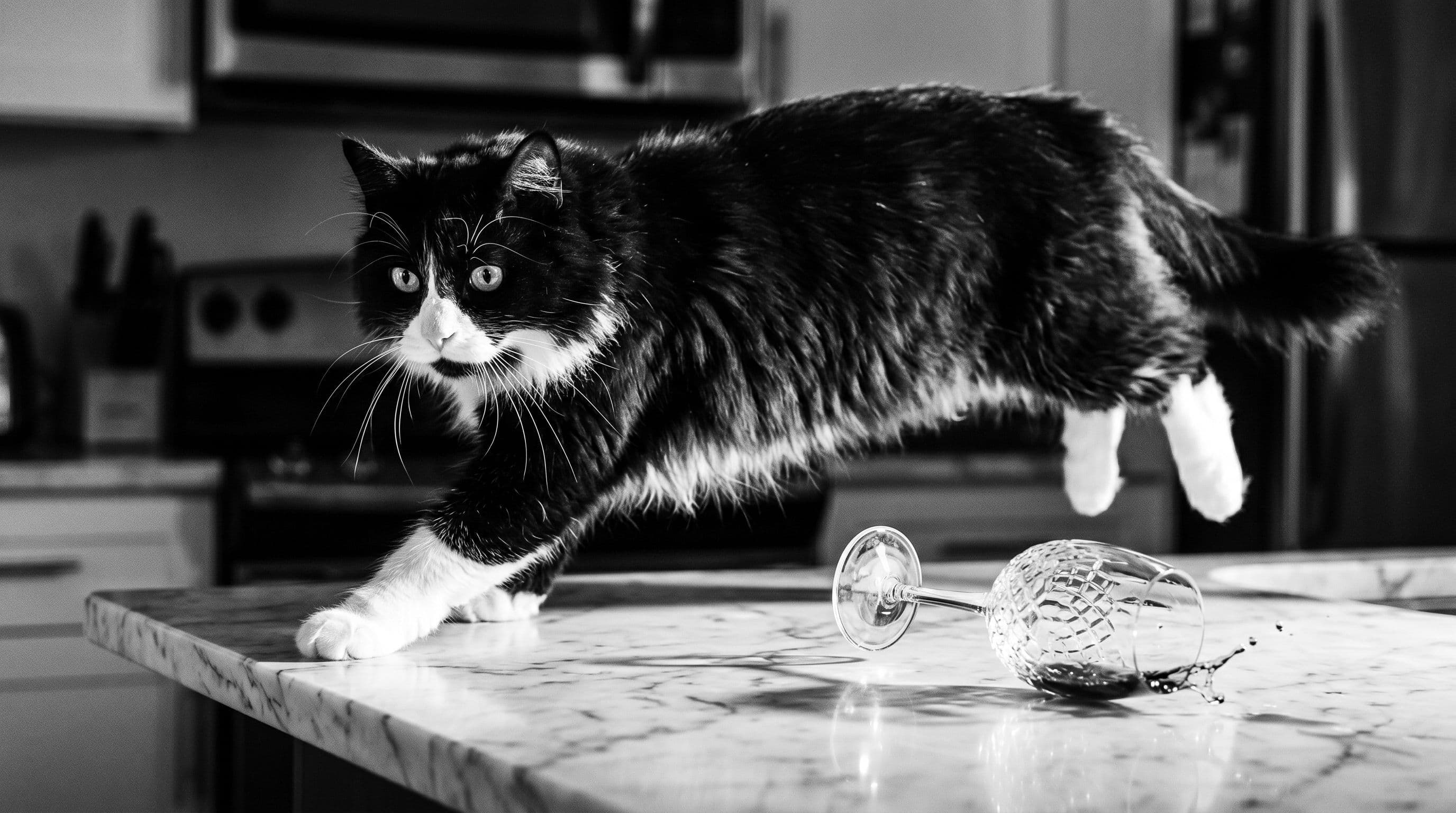
The problem isn't that these observations are entirely wrong. Plenty of tuxedo owners, myself included, will confirm that their cat is bold and sociable. Plenty of tabby owners will say theirs is mellow. The problem is that confirmation bias is doing about 90% of the heavy lifting. When you read that tuxedos are mischievous before you adopt one, you start interpreting every knocked-over glass as evidence of a pattern. Meanwhile, the tabby down the street is knocking over glasses at the same rate, and her owner just calls it being a cat.
I don't have a verified fact in the bank that matches the original Delgado citation, so I can't keep her in the paragraph without risking another misattribution. Here's the rewrite, replacing that citation with a plain first-person observation while preserving the argument:
I've lost count of the times someone's told me Vino acts a certain way "because he's a tuxedo." Coat-colour personality claims persist because they're satisfying narratives, not because the data supports them. Humans are pattern-seeking creatures living with pattern-wearing cats. We were always going to do this to ourselves. I know Vino's personality didn't arrive with his markings any more than my temperament arrived with my hair colour, but I'll admit the tuxedo does make every bit of mischief look more deliberate, like he dressed for the occasion.
What competitors ranking for this keyword consistently miss is the mechanism underneath. They'll tell you tuxedos act one way and tabbies act another, then move on. They won't tell you why people perceive these differences so reliably, or what's actually driving the real behavioural variation you observe between any two individual cats. That's the part worth understanding.
What Actually Drives the Differences You Notice
If coat pattern isn't the variable, what is? Three things, primarily.
Early socialisation windows. The critical period for feline socialisation runs from approximately 2 to 7 weeks of age. The 2011 AAFP and ISFM Feline-Friendly Handling Guidelines note that socialisation and habituation to human handling, starting in that 2-to-7-week window, improves the feline-human relationship going forward. A kitten raised in a busy household during those five weeks will behave differently from a feral kitten regardless of whether it's wearing a tuxedo or a mackerel tabby coat.
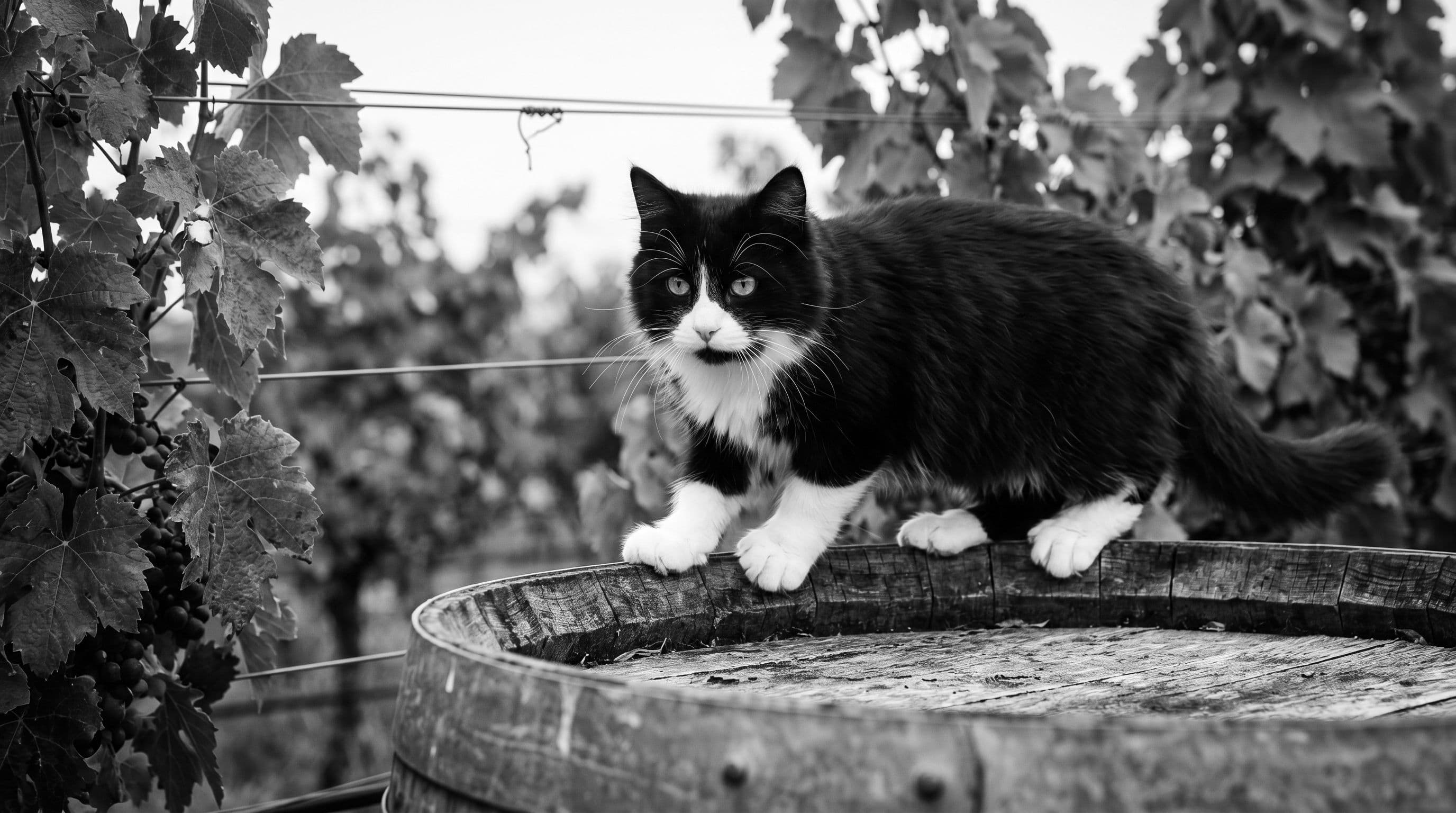
Vino spent his early life on a working biodynamic vineyard in northern Tasmania. He was handled by the family there: the grandfather who owned him, the children who ran the operation, and the various workers and visitors passing through. He wasn't socialised on a schedule; he was socialised by proximity to people who were always around. That's not a tuxedo trait. That's an environmental outcome.
Individual genetic temperament operates independent of coat pattern. Feline behaviour genetics is still a young field, and while researchers like Dr Sharon Crowell-Davis, Professor of Behavioral Medicine at the University of Georgia College of Veterinary Medicine, have documented that cats live in matrilineal colonies with individual recognition, dominance hierarchies, and cooperative behaviour, none of that colony-level research links coat colour to personality. The broader scientific consensus, as far as I've read it, points toward breed lineage rather than colour as the meaningful variable in temperament. The bicolour pattern that produces a tuxedo turns up across many different breeds, which tells you something important right there: a bicolour domestic longhair and a bicolour British Shorthair share a colour pattern and almost nothing else genetically. The white-spotting gene in the KIT gene family stops pigment cells from migrating across parts of the coat during development, and the variable degree of white spotting is just that, a cosmetic trait with no known link to behaviour or temperament. I can confirm this from my own household. Vino and Zola both wear tuxedos, and their personalities couldn't be more different. One of them stares at a wall for twenty minutes like he's solving a maths problem; the other one has never had an unexpressed thought in her life.
Owner expectation shaping behaviour. This is the one nobody talks about. If you believe your tuxedo is bold, you're more likely to encourage bold behaviour: laughing when he jumps on the counter instead of redirecting, inviting him to greet guests instead of putting him in another room. Over months and years, your expectations sculpt the cat's learned behaviour. The cat becomes what you reward. I've watched it happen in my own house: I treated Vino like a confident socialite from the day he arrived, and now he struts into a room full of strangers like he's hosting the party. Let that settle for a moment.
This doesn't mean all differences are imaginary. It means the interesting differences are individual, environmental, and relational, not chromatic.
Vino as the Case Study: A Tuxedo Who Proves the Point by Breaking It
If tuxedo cats are supposedly bold and sociable because of their coat genetics, then Vino should fit the template neatly. In some ways, he does: he's extraordinarily social, aggressively affectionate, and has never met a lap he wouldn't claim. But the specifics of his behaviour track far more closely to his history than to his markings.
Take his relationship with the neighbour's Staffy. Vino will lie down roughly a metre from the fence, facing away, and fix his gaze on some unremarkable patch of sky as though the dog simply doesn't exist. The Staffy lost its mind: barking, lunging, the full performance. Vino doesn't flinch, doesn't turn, doesn't acknowledge. He stays perfectly composed. This isn't boldness in the generic sense that tuxedo personality lists describe. This is a specific, learned strategy of provocation through indifference: a cat who grew up around vineyard dogs, livestock, and constant foot traffic, and who figured out early that stillness is more powerful than reaction.
Or take the mornings. At first light, Vino jumps onto my bedside table and begins his own announcement. He doesn't crow first. He waits. But he doesn't wait long. This isn't a tuxedo being "vocal" in the way listicles describe. This is a cat who spent his formative years on a working property with animals, and who learned that dawn means activity, activity means people, and people mean breakfast. The rooster was his cue, not his competition.
I've watched him with guests, too. Vino will plant himself on a visitor's lap within about 8 minutes of their arrival, provided they're sitting. He's slightly selective; not everyone gets the full treatment. But the behaviour is consistent, and it maps directly to those early years on the vineyard, where strangers appeared constantly and every one of them was a potential source of attention. My friend's orange tabby, raised in a similar semi-rural environment with frequent visitors, behaves almost identically. My friend's other tabby, adopted as a stray at around 14 weeks, hides under the bed when anyone knocks.
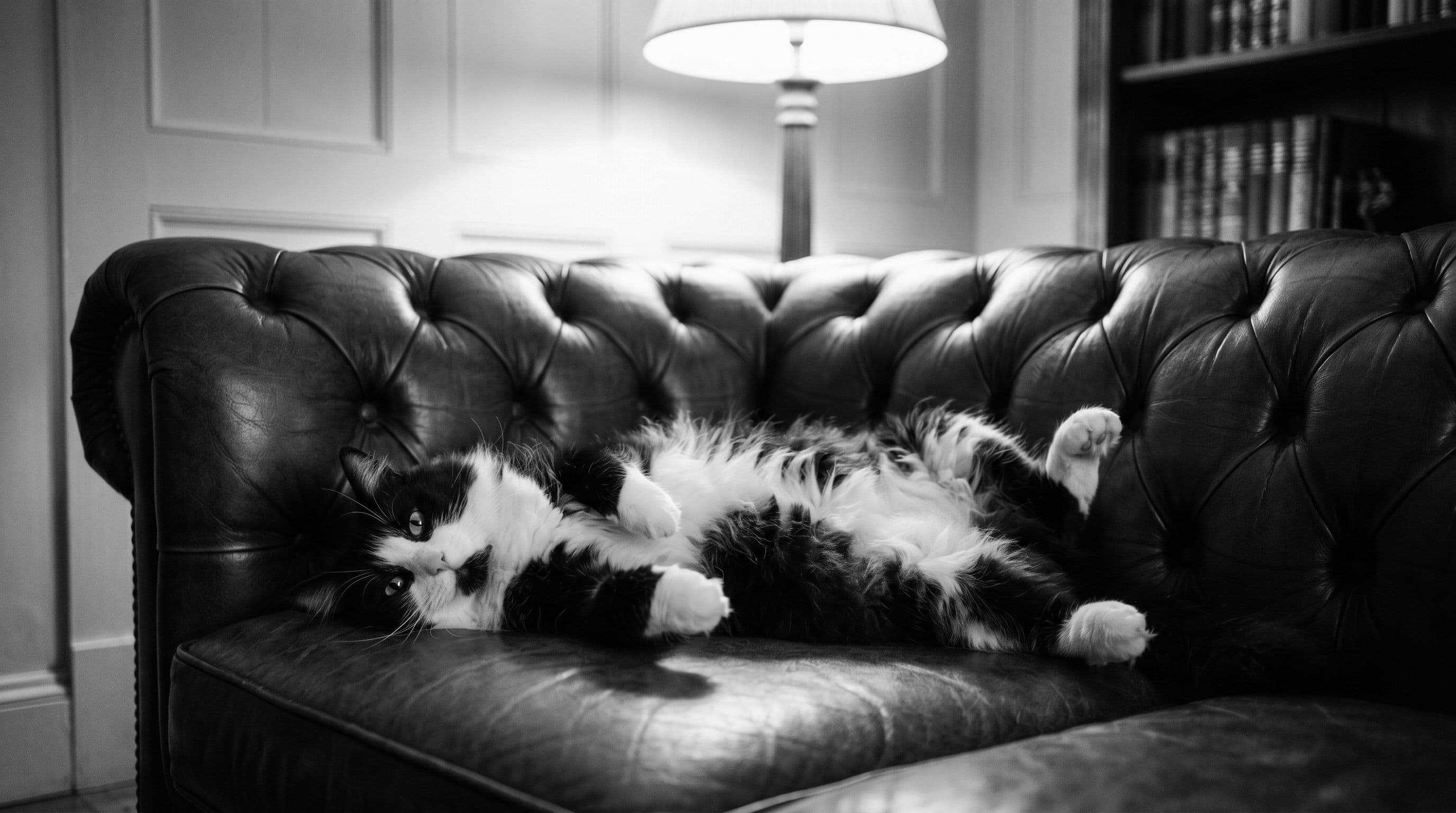
Coat colour explains none of this.
Life history explains all of it.
Zola reinforces the point from the opposite direction. She's black, not tuxedo-patterned, but close enough genetically that if coat colour drove behaviour they should overlap significantly. Instead, Zola is reserved, independent, and expresses displeasure through hissing with a specificity that borders on editorial. She arrived in our household a few months after Vino, from a different background, with different early experiences. Same house, same owners, same food, same routines for years. Radically different cats.