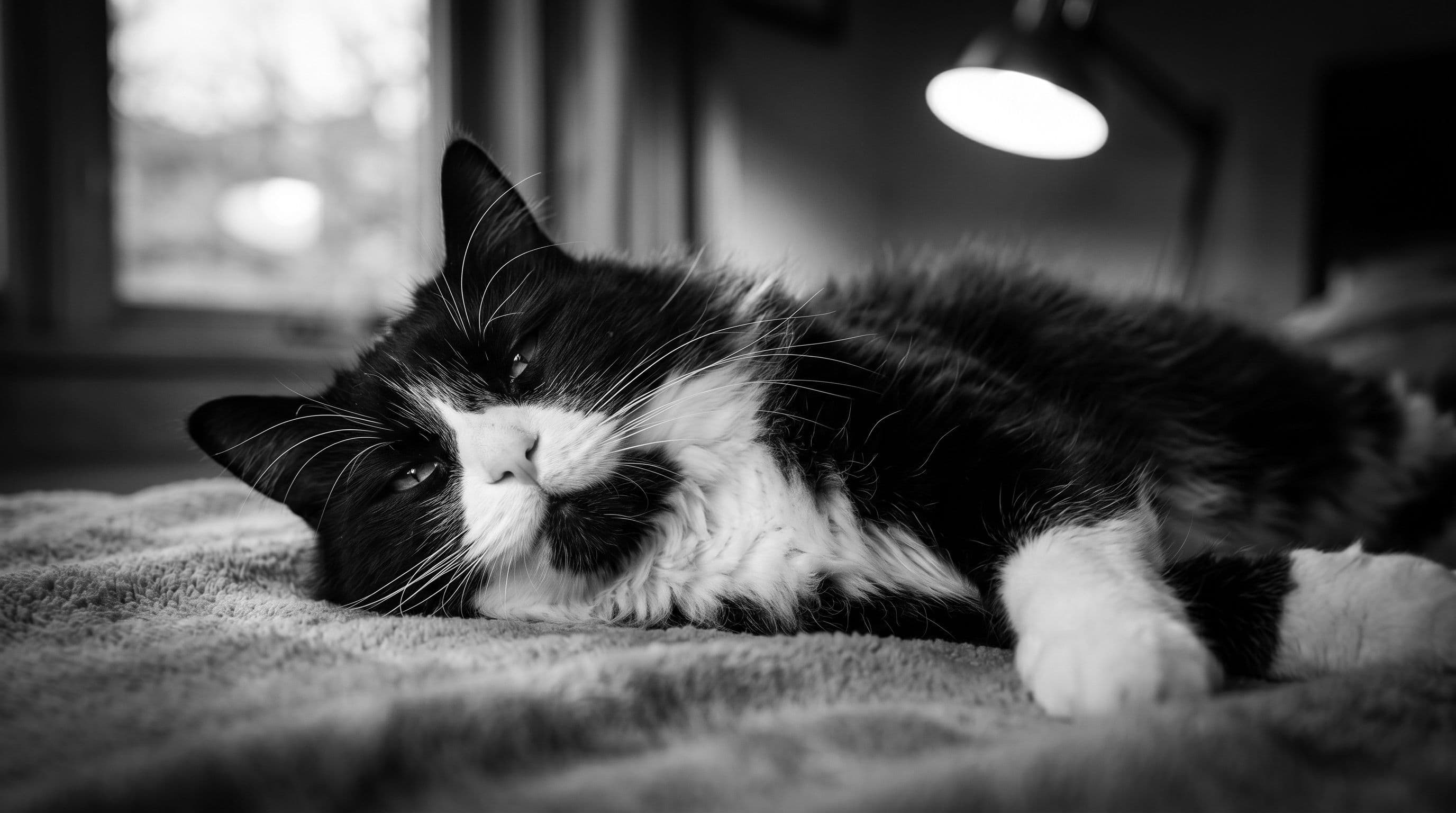
Vino skipped the meowing one morning and went straight for the purr: he landed on my bedside table, pinned me with those green-gold eyes, and began purring before he even opened his mouth to demand breakfast. That's the part I find fascinating: the purr came first, before the meow, before the food, before anything had actually happened to make him happy. He was purring as a kind of opening argument. If you've ever wondered why do cats purr, I'd encourage you to spend a single morning with a tuxedo cat who uses his entire vocal range the way a trial lawyer uses rhetoric: strategically, relentlessly, and with zero regard for whether you're awake.
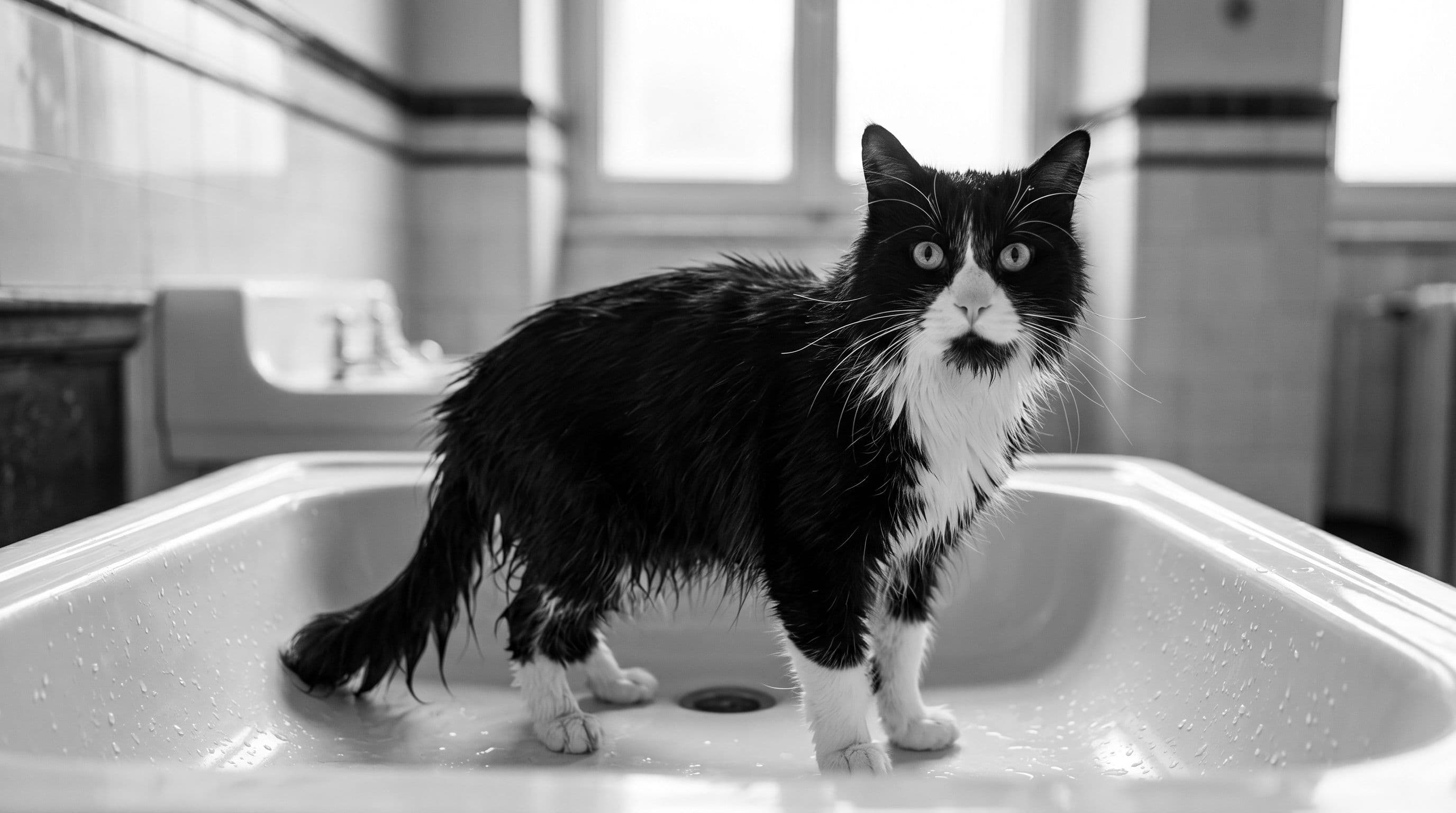
Vino has lived with me since April 2022, and in that time I've become borderline obsessed with the mechanics of his purring. Not because it's soothing, though it is. Because it doesn't always make sense. He purrs on my lap during a film. He purrs when he's about to get brushed. He also purrs during the deeply undignified half-baths required when his medium-long back-leg fur catches something it shouldn't. He is not happy during those baths. He growls, fights, and tries to escape. And yet, underneath all of it: a purr. That contradiction sent me down a research path I haven't fully come back from.
Why Do Cats Purr? It's Not Just About Happiness
The popular assumption is simple: purring equals contentment. And sure, sometimes it does. When Vino is making biscuits on the bed at 9 p.m. and drooling on my shirt, he's content. No ambiguity there.
But the science tells a more complicated story. A 2023 University of Vienna study published in Current Biology, led by voice scientist Christian Herbst, found that excised cat larynges produce purring frequencies of 25 to 30 Hz with no neural input, thanks to connective-tissue pads in the vocal folds. Those specific low frequencies have been associated in biomedical research with improved bone density and soft tissue healing. Herbst's findings were striking: cats don't even need active muscle contractions to purr, which suggests the mechanism evolved as something almost passive, a low-energy tool that could serve self-repair. It's a biomechanical advantage that works whether the cat is happy, stressed, injured, or simply lying on your chest because it's Wednesday.
This reframed everything for me. Vino isn't just expressing emotion when he purrs during a stressful half-bath; he might be actively managing pain or anxiety through vibration. That's a fundamentally different thing than "he's pleased."
The Mechanics: How a 6 kg Cat Produces That Sound
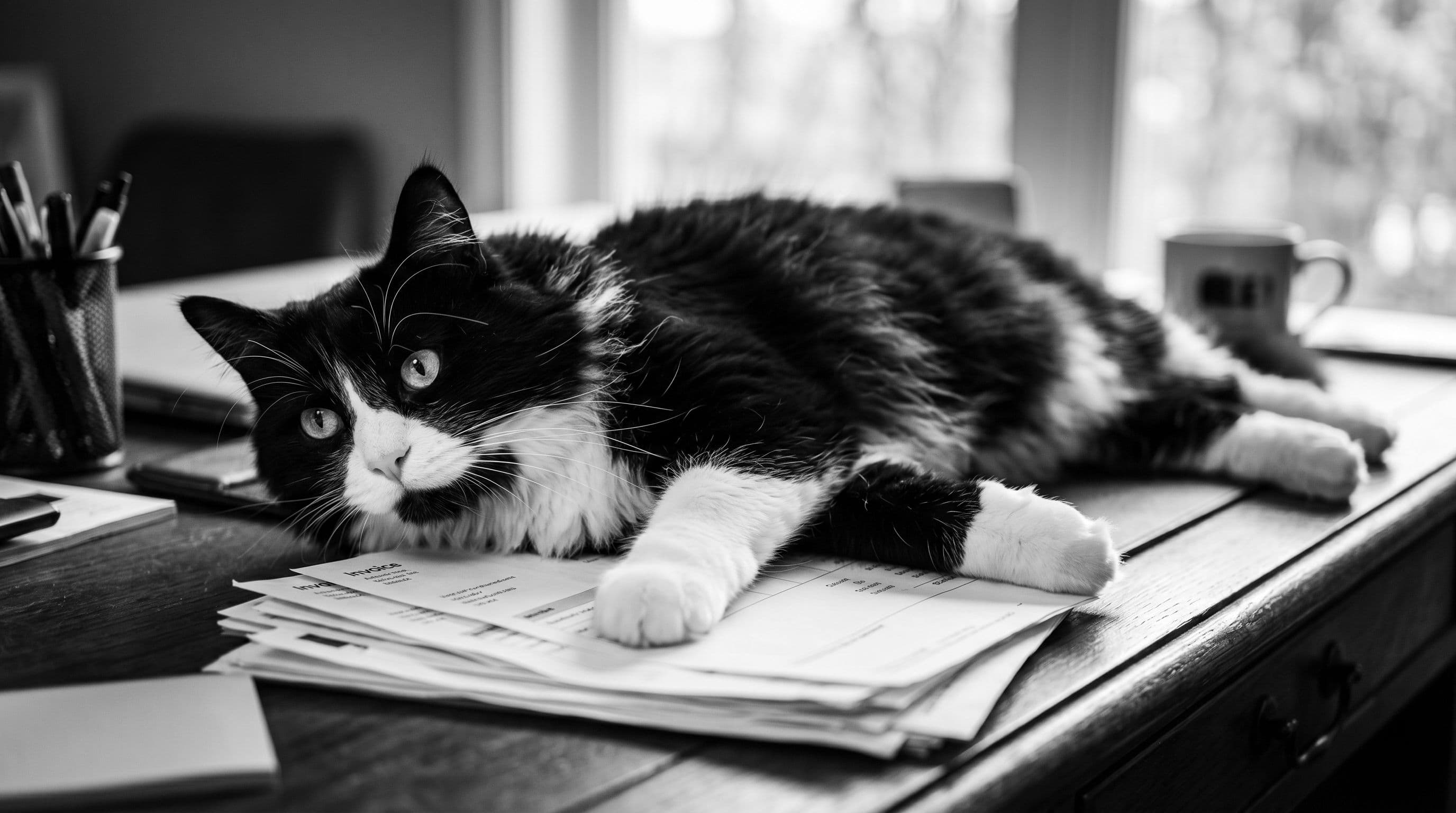
Vino weighed 6 kg at his September 2026 check-up, which is above average for a domestic cat. Despite his size, the purr he produces can be felt through two layers of blanket. How does he do it?
For decades, the exact mechanism was debated. A 2023 University of Vienna study in Current Biology led by voice scientist Christian Herbst found that excised cat larynges produce purring frequencies of 25 to 30 Hz with no neural input, thanks to connective-tissue pads in the vocal folds. In other words, the anatomy itself is built to purr. The laryngeal muscles contract and relax at that same rate of about 25 to 30 cycles per second, opening and closing the glottis, and the airflow across those specially padded vocal folds does the rest. I've pressed my hand to Vino's throat mid-purr more times than I can count, and that steady, almost mechanical thrumming makes a lot more sense now that I know his vocal folds don't even need a brain signal to keep it going.
What struck me about Herbst's findings was the passivity of it. Cats don't have to think about purring the way they'd think about meowing. The structure does much of the work. This aligns with what I observe at home: Vino can purr while half-asleep, while eating, while being carried against his will from the desk where he's been disrupting my work. There's no apparent effort involved.
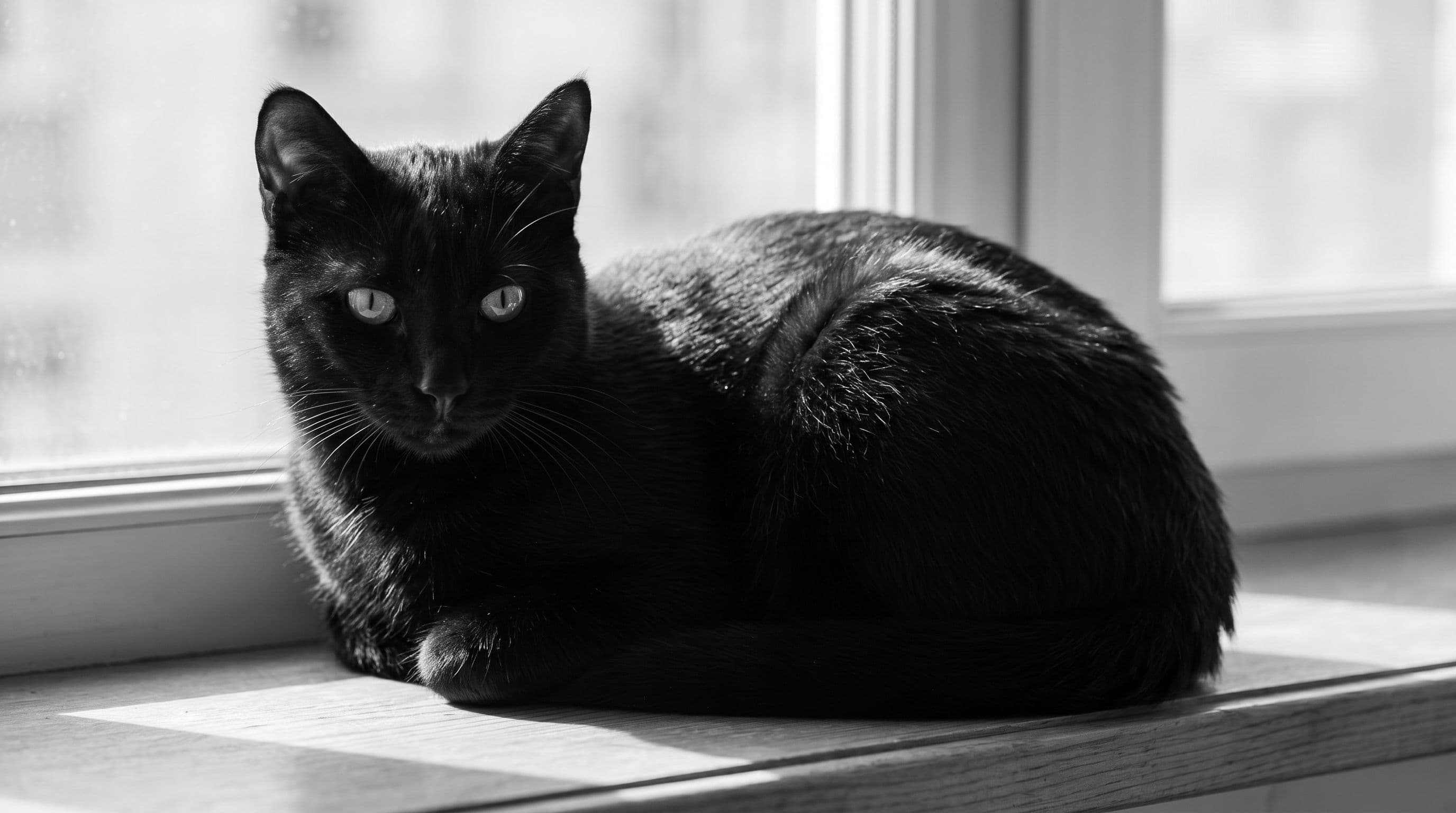
Zola purrs too, but hers is quieter and rarer. She's a slender black cat with a small white patch on her belly, and her entire personality runs cooler than Vino's. If Vino is a brass section, Zola is a single cello string plucked once. She'll purr when she's settled on the windowsill they sometimes share in the afternoon, but she won't purr during conflict, during handling, or during anything that inconveniences her. She hisses instead. The difference between them has made me think their individual purring patterns reveal something about temperament, not just biology.
Solicitation Purring: When Vino Wants Something
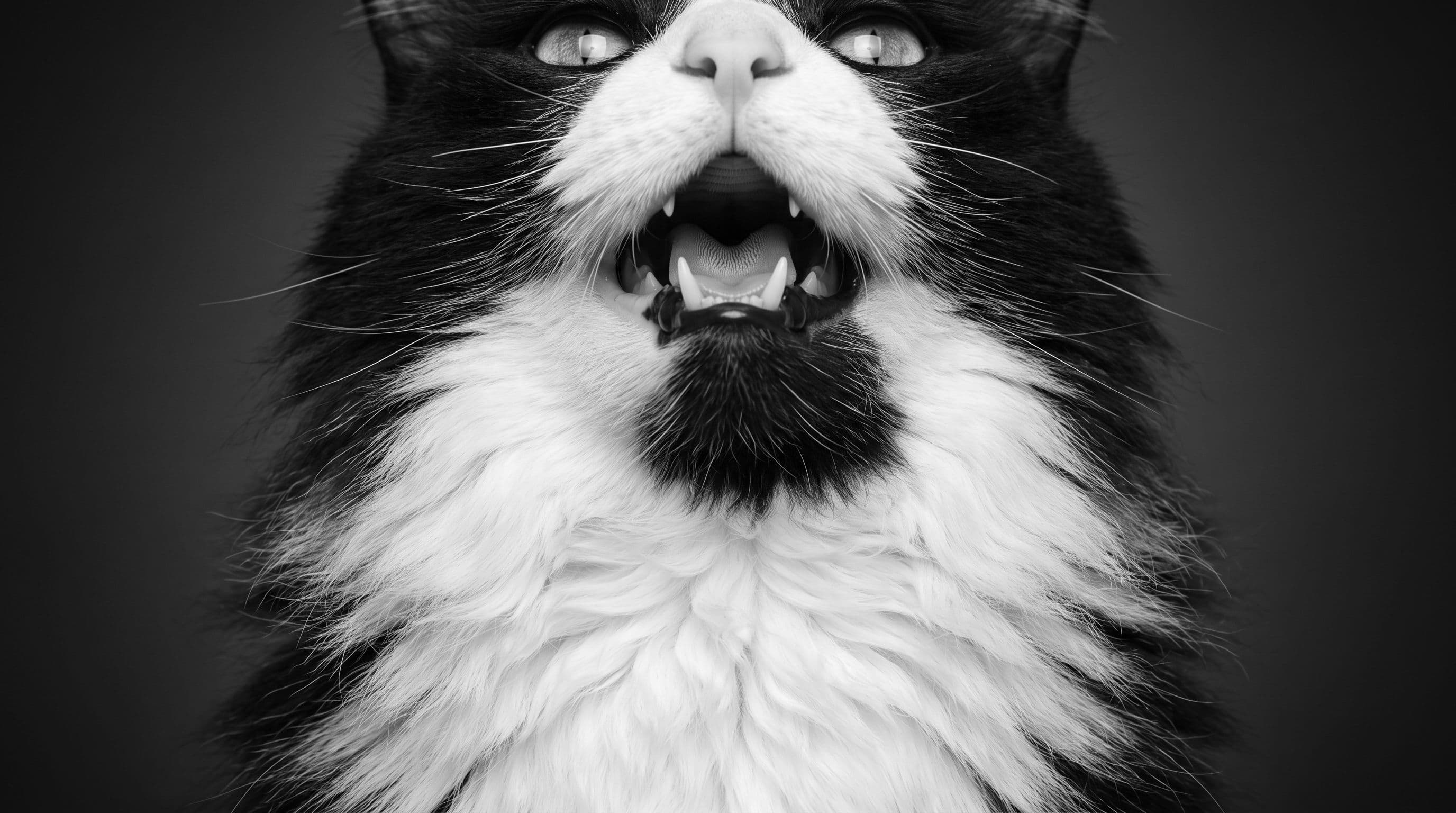
Here's an angle I haven't seen discussed enough in most popular articles on the subject. Karen McComb and colleagues at the University of Sussex showed that cats embed a high-frequency, cry-like element in their purr when soliciting food, which humans find urgent and hard to ignore. I can confirm this from personal experience: when Vino wants his breakfast, his purr shifts into something sharper and more insistent, a sound that hits me right in the guilt center before I've even opened my eyes. It's a different animal from his relaxed evening purr on the couch, and I'd bet anyone sitting in my kitchen at 6 a.m. would feel the same pressure to get up and fill the bowl, cat owner or not.
I read that paper and felt personally targeted.
Vino's 6 a.m. bedside table purr is textbook solicitation purring. It's louder, more insistent, and slightly higher in pitch than his evening lap purr. I've noticed it's also the purr he deploys when someone is sitting down and he hasn't yet claimed their lap: that specific frequency shift, as if he's saying "you appear to be stationary and I have needs." Guests don't stand a chance. He'll settle onto a visitor's lap within 3 minutes of them sitting on the couch, and the solicitation purr is always the opening move.
Karen McComb and colleagues at the University of Sussex showed in Current Biology back in 2009 that cats embed a high-frequency, cry-like element in their purr when soliciting food, and that humans find this sound urgent and hard to ignore. I'd put my personal response level closer to 100%. That sound gets me out of bed faster than the rooster does.
Purring During Stress: The Half-Bath Evidence
This is where my own household observations deviate from what most cat owners expect. As I mentioned, Vino purrs during his occasional half-baths. He also purrs at the vet. He purred when the neighbour's Staffy lost its mind on the other side of the fence while he lay about a metre away, gazing at absolutely nothing in particular, pretending the dog doesn't exist.
These aren't happy contexts. If you've read about Vino's relationship with the Staffy next door, you know that his calm exterior during those fence encounters is performance art. The purring in those moments looks like self-soothing behaviour.
The veterinary literature supports this. Purring in distress is well documented across clinical and end-of-life contexts, and I've watched Vino purr through moments that were plainly uncomfortable for him, the half-bath being the canonical example. A 2023 University of Vienna study in Current Biology, led by voice scientist Christian Herbst, found that excised cat larynges produce purring frequencies of 25 to 30 Hz with no neural input, thanks to connective-tissue pads in the vocal folds. The mechanism, in other words, sits ready to fire whether the cat is content or in pain. It doesn't mean the cat is comfortable; it means the cat's body is deploying a tool it has available.
For me, this was the single most important thing I learned. I used to interpret Vino's half-bath purring as evidence that he secretly didn't mind the water. He does mind. He minds enormously. He's just also trying to manage his own stress response while growling, fighting, and making his opinion about warm water abundantly clear.
Why Kittens Purr Before They Can See
One detail I find remarkable: kittens begin purring within the first few days of life, well before their eyes open. I've always thought of this early purring as a kind of vibrational "I'm here, I'm okay" between kitten and mother, something that works in the dark, at close range, without requiring sight or complex vocalisation.
Vino came from a small, family-run biodynamic vineyard and winery in northern Tasmania, where he'd been living and working as a mouse catcher for a couple of years before I took him home. I don't know anything about his kittenhood. But I do know that his purring today still carries that same quality of proximity signalling. When he sits on my lap in the evening, the purr starts the moment he settles. It's not a request. It's not solicitation. It's contact confirmation. I'm here. You're here. This is fine.
Zola, by contrast, will sit near me on the couch but not on me, and her purr in those moments is so faint I sometimes have to put my hand on her side to confirm it's happening. If you're interested in how differently these two cats occupy the same space, I wrote about their windowsill dynamics and territorial habits in an earlier post.