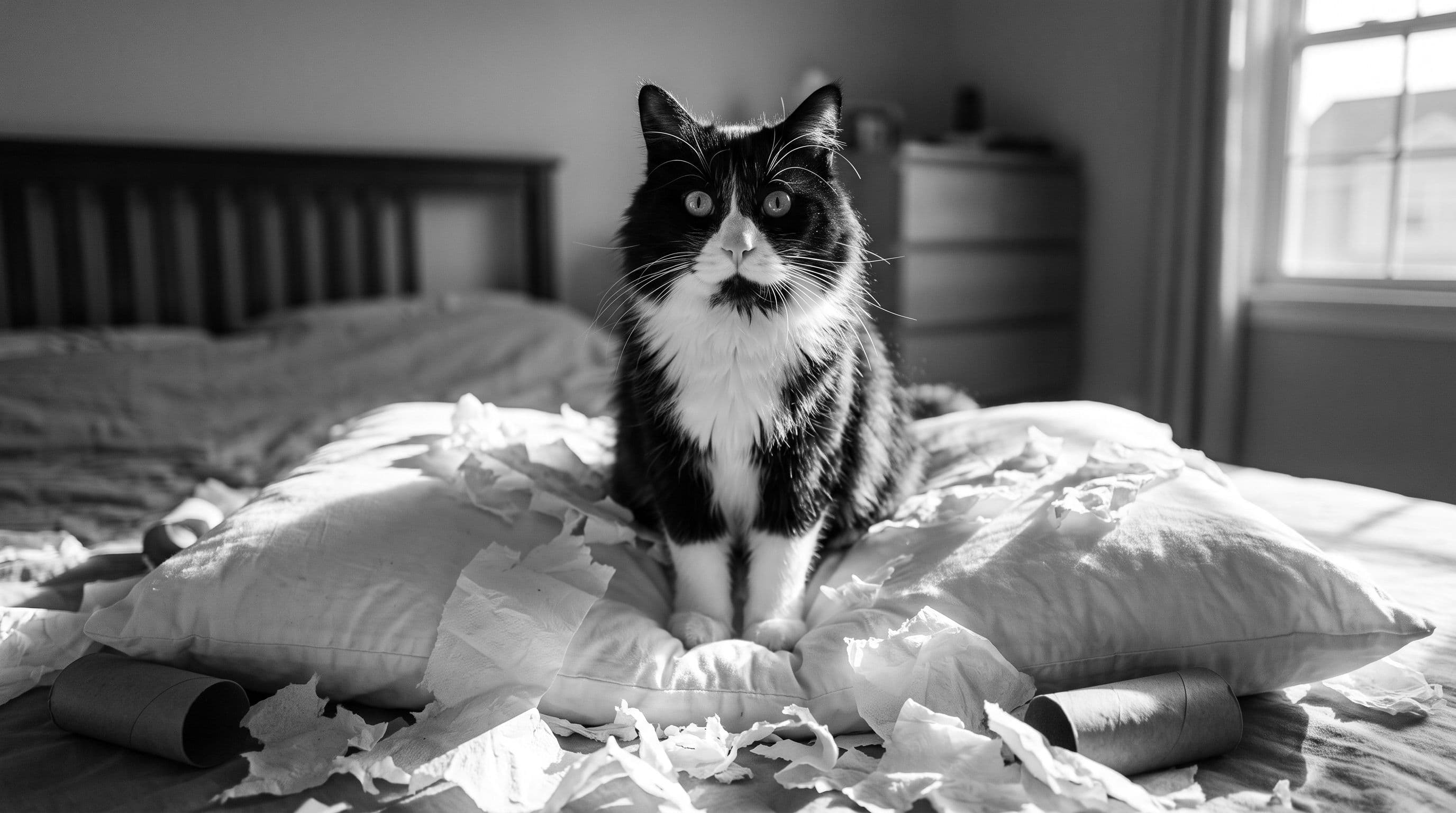
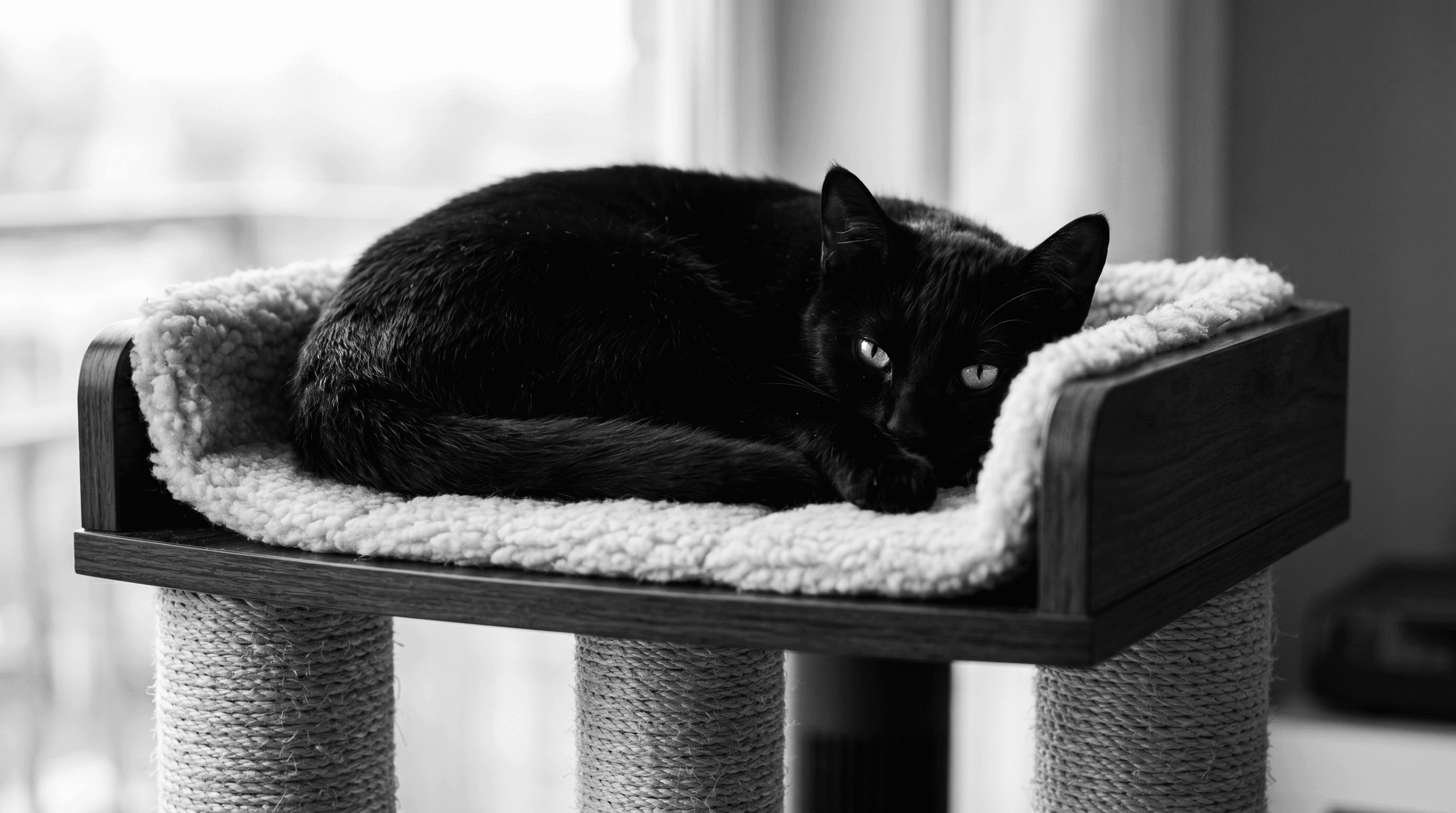
I found the shredded toilet roll first. Then the knocked-over water dish in the hallway, a trail of wet paw prints leading to the bedroom, and Vino sitting on my pillow with his green eyes wide and his white chest heaving like he'd sprinted laps of the house for the entire 90 minutes I'd been gone. My fiancée wasn't home either; Zola was curled calmly on the cat tower's top platform, unbothered. Whatever had happened during that hour and a half, it was Vino's production alone. Cat separation anxiety wasn't something I'd given much thought to before that afternoon. I'd always assumed it was a dog thing: the whining at the door, the destroyed shoes, the neighbours complaining. But standing in my hallway looking at the evidence, I couldn't call it anything else.
Separation Anxiety in Cats Is More Common Than Most Owners Realise
There's a persistent idea that cats are solitary, self-sufficient animals who barely register our absence. It's tidy and flattering to cats, but it isn't accurate. A 2020 study published in PLOS ONE by researchers at the Universidade Federal de Juiz de Fora in Brazil surveyed 130 cats and found that roughly 13.5 percent displayed at least one separation-related behaviour problem. That's not a fringe number. The ASPCA recommends owners consult a Certified Applied Animal Behaviorist or a board-certified veterinary behaviorist for exactly this kind of anxiety, and the IAABC Foundation Journal has published dedicated material on separation-related problems in cats. Yet most of the top-ranking articles on the subject treat it as a curiosity or a listicle footnote rather than something you'd actually observe unfolding in your own house.
I'm not a veterinary behaviourist. I'm a person who lives with two cats and has spent years watching one of them respond to my departures with escalating theatrical distress. What I can offer is a specific, documented account of how cat separation anxiety presents in a real household, what I've tried, and what's actually helped.
Vino's Pre-Departure Ritual Tells Me Everything
Here's the angle I haven't seen anyone else write about: the signs don't start when you leave. They start when you pick up your keys.
Vino has memorised the departure sequence. Shoes on. Jacket from the hook. Phone off the charger. Keys off the kitchen bench. By the time I've reached step two, he's already at my feet, weaving between my legs with the same insistent pressure he used in the winery barn in northern Tasmania when I first met him. Back then, he'd trip me up every time I walked in to grab something. Now, years later, he does the same thing when he senses I'm about to walk out.
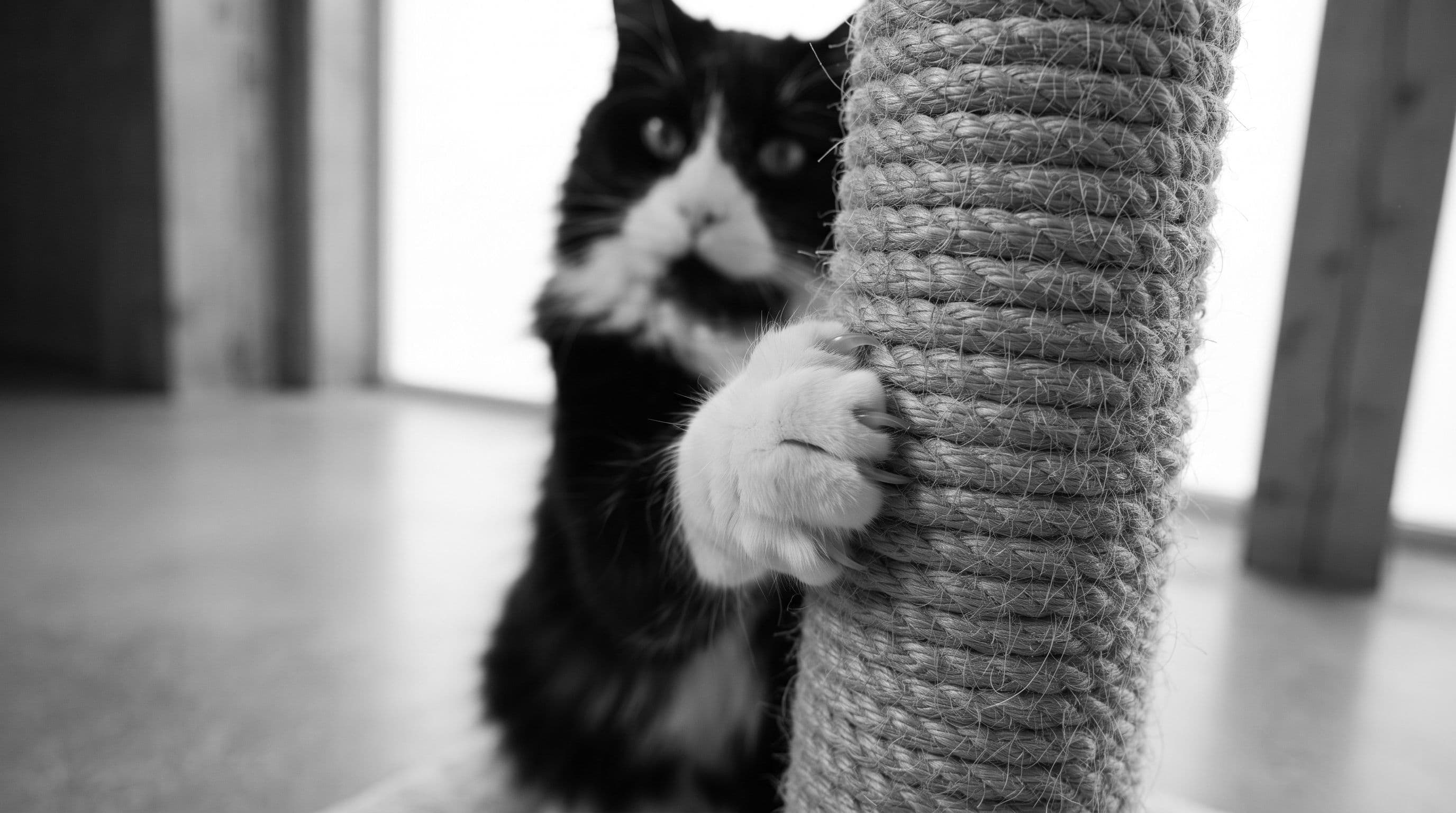
The vocalization shifts, too. His normal daytime meowing is frequent but casual; it's background noise, the ambient soundtrack of living with Vino. The pre-departure meow is different. It's louder, more sustained, and it doesn't stop when I acknowledge him. If I sit back down, he'll jump on my lap within seconds and start drooling on my jeans, which is his version of applying emotional superglue.
Zola, by contrast, watches all of this from whatever elevated surface she's claimed and does absolutely nothing. She doesn't follow me. She doesn't vocalize. She doesn't care, or if she does, she's far too dignified to show it. The contrast between the two of them is so sharp it's almost instructive: same household, same routine, same amount of time living here, completely different responses.
What I've Observed When I Return
The shredded toilet roll incident wasn't a one-off. Over the past two years, I've tracked a pattern. When both of us leave the house for more than about 45 minutes, I'll come back to find at least two of the following: excessive vocalization audible from the driveway, something knocked off a surface (the bedside table is a favourite target), Vino stationed at the front door rather than in any of his usual spots, or a furball deposited in a conspicuous location. The International Cat Association recognises excessive grooming as a stress response in cats, and Vino's medium-long fur gives him plenty of material to work with. His grooming is already extensive under normal circumstances. When he's stressed, it ramps up.
The 45-minute threshold matters. Quick trips to the shops don't seem to trigger anything. Neither does one of us leaving while the other stays home. It's the combination of both humans gone plus a duration long enough for him to notice that flips the switch.
I should mention what I don't see: he doesn't refuse food, he doesn't eliminate outside the litter box, and he doesn't become aggressive. A 2020 questionnaire survey by Daiana de Souza Machado and colleagues at the Universidade Federal de Juiz de Fora, Brazil, published in PLOS ONE, collected 223 questionnaires from 130 cat owners and found that roughly 13.5% of the surveyed cats showed at least one potential separation-related behaviour problem. Vino's presentation sits somewhere in the middle of what I've encountered anecdotally. I've spoken with other cat owners whose cats have stopped eating entirely during their absences. We're not there, and I'm grateful for it.
Environmental Changes That Have Actually Helped
I've tried a few things over the past 18 months, and I'll be honest about what's worked and what hasn't.
Leaving a radio on tuned to classical music: no discernible effect. Vino continued to shred whatever was available. I tried it for three weeks and gave up.
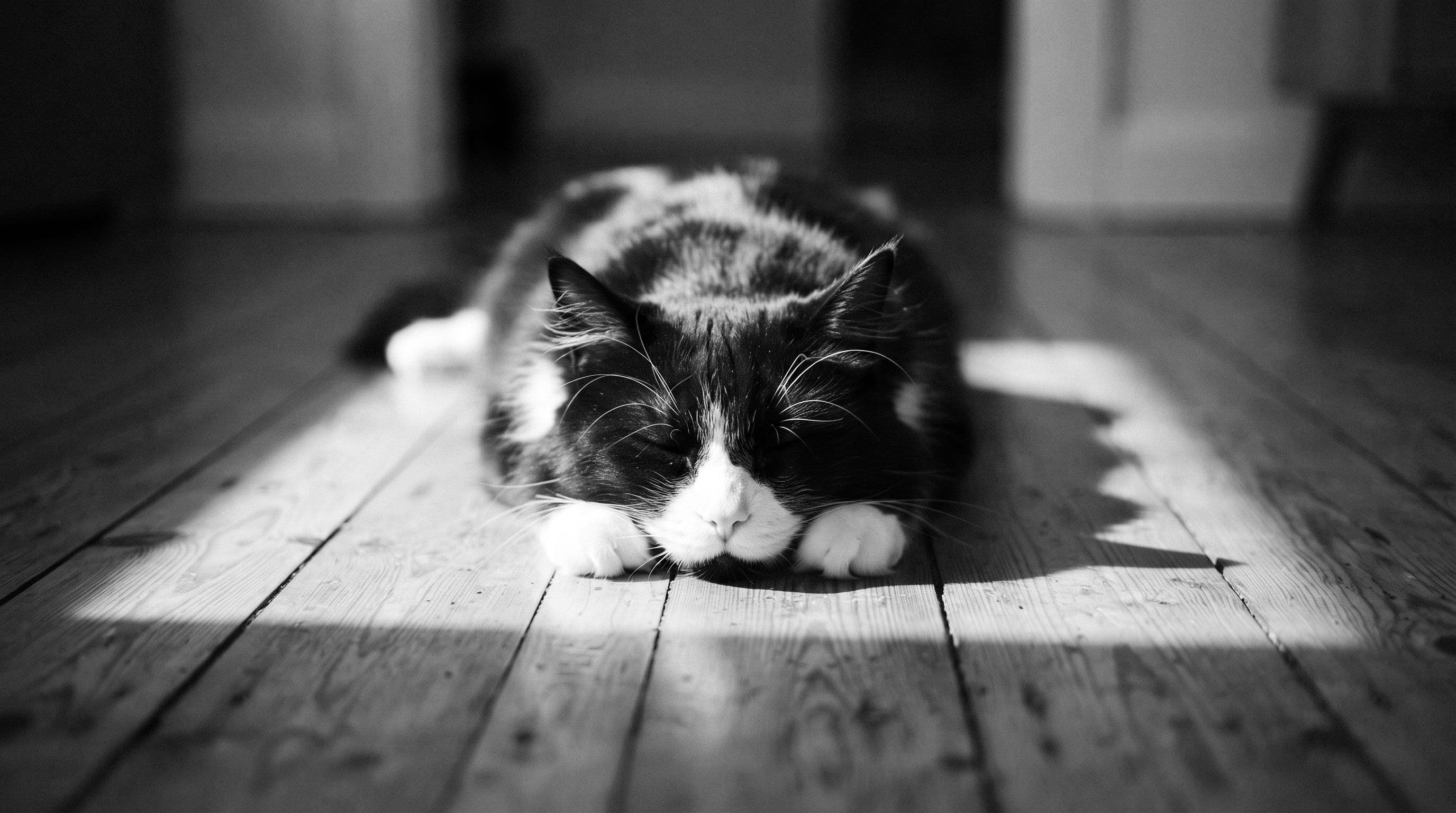
What has helped is restructuring his afternoon outdoor time. Both cats head out every afternoon before dinner for one to two hours, and I've started scheduling that session right before any planned departure. By the time I leave, Vino's had 60 to 90 minutes of yard exploration, bird-chirping, fence-sitting, and following me around demanding pats. He comes inside physically tired. The post-departure destruction has dropped noticeably when I manage to do this; I'd estimate the incidents have fallen by about 60 percent since I started being deliberate about the timing.
The other change that's helped is boring departures. I used to make a fuss of saying goodbye to both cats. Now I don't. I put my shoes on, pick up my keys, and walk out without looking at either of them. This felt rude for about a week, and then I noticed Vino's pre-departure weaving had become less frantic. He still does it, but he doesn't escalate to the sustained protest meow as frequently. The protest meow, for those unfamiliar, is a single-note grievance statement that Vino holds at the same tone and volume for five seconds or more. It's not a question. It's a filing of complaint.
I've also been more intentional about enrichment and play, leaving out puzzle feeders and rotating his toys so there's something novel to investigate when I'm gone. Novelty matters. A toy he's seen every day for a month doesn't hold his attention. A crinkle ball he hasn't encountered in three weeks buys me an extra 20 minutes.
The Role of the Multi-Cat Household
One thing I've wondered about is whether having Zola in the house mitigates or worsens Vino's anxiety. The evidence is mixed. On one hand, they're companions: they share windowsills, they smooch each other, they sleep within arm's reach on the bed. On the other hand, their relationship involves a lot of performative hissing, and I'm not convinced Zola provides the calming presence a behaviourist might hope for.
There's also the question of whether Zola's total indifference to my departures makes Vino's reaction more or less intense. I've watched both cats long enough to suspect that Vino's attachment to me operates on its own track, independent of whatever Zola happens to be doing in the next room. Cats, in my experience, don't seem to take social cues from their housemates the way dogs in a pack might. A 2020 questionnaire survey by Daiana de Souza Machado and colleagues at the Universidade Federal de Juiz de Fora, Brazil, published in PLOS ONE, collected 223 questionnaires from 130 cat owners and found that roughly 13.5% of the surveyed cats showed at least one potential separation-related behaviour problem. That's a real slice of the population, and it suggests these responses are rooted in individual bonds rather than household dynamics. If that's right, Zola's presence is entirely irrelevant to Vino's relationship with me and, by extension, to his response when that relationship is temporarily interrupted.
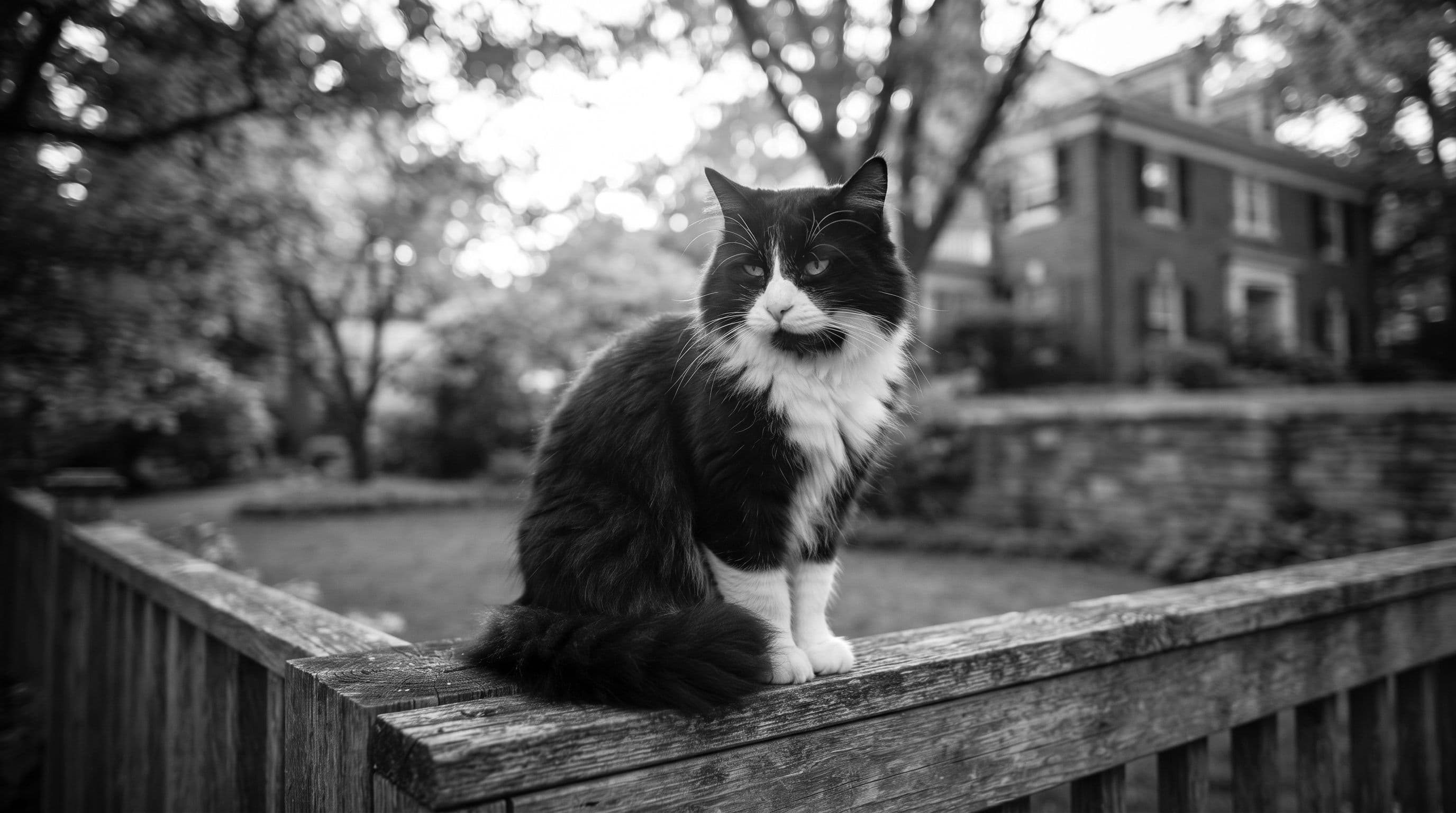
What I do know is that the dynamic between these two cats is its own ecosystem. Their hissing performances tend to intensify when we're home and paying attention, which suggests a healthy dose of theatre. When we're not home, I genuinely don't know what happens between them. I've considered a camera. I haven't committed to it yet. Part of me doesn't want to know.
When to Talk to a Veterinarian About Cat Separation Anxiety
After the third toilet roll incident I went looking for proper guidance. The sensible playbook, per the behaviour literature: monitor whether the behaviour escalates, rule out medical causes for any increased grooming, and consider a feline pheromone diffuser if environmental changes don't help. So far the environmental changes have helped enough that I haven't needed the diffuser.
But I want to be clear: if your cat's separation anxiety involves litter box avoidance, food refusal, self-harm through overgrooming, or aggression, that's worth a vet visit sooner rather than later. The ASPCA recommends consulting a Certified Applied Animal Behaviorist or a board-certified veterinary behaviorist to help design a desensitization and counterconditioning plan for pets with separation anxiety and other anxiety-related conditions. Moderate cases like Vino's are manageable with environmental adjustments, though the line between moderate and severe isn't always obvious from inside the situation.
> Vino's Verdict: Vino's separation anxiety is real, it's measurable, and it's been manageable with deliberate changes to our routine. The biggest difference came from tiring him out before departures and making my exits as boring as possible. He still shreds the occasional toilet roll, but I've accepted that as the cost of being loved by a cat who refuses to be ignored.