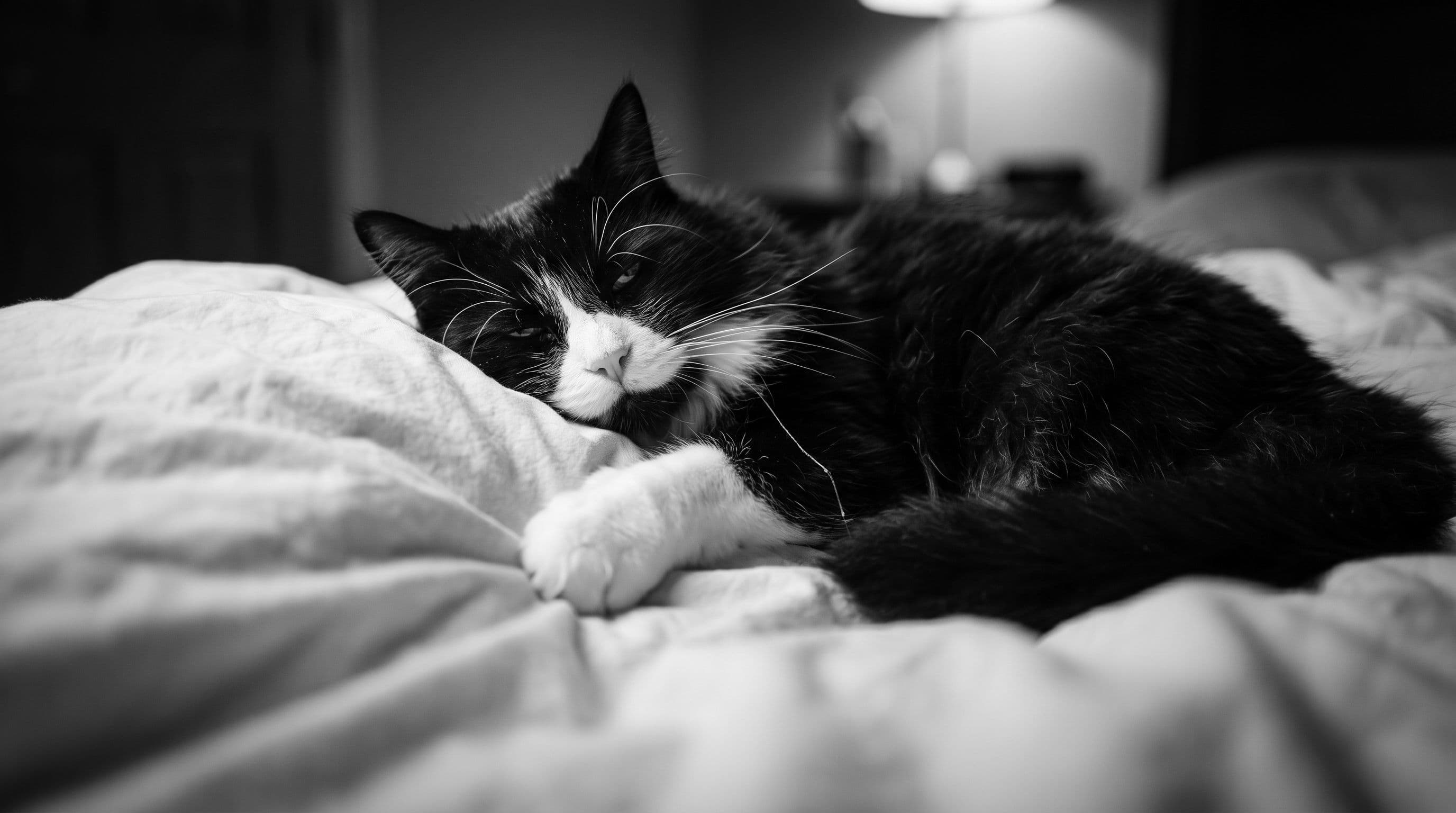
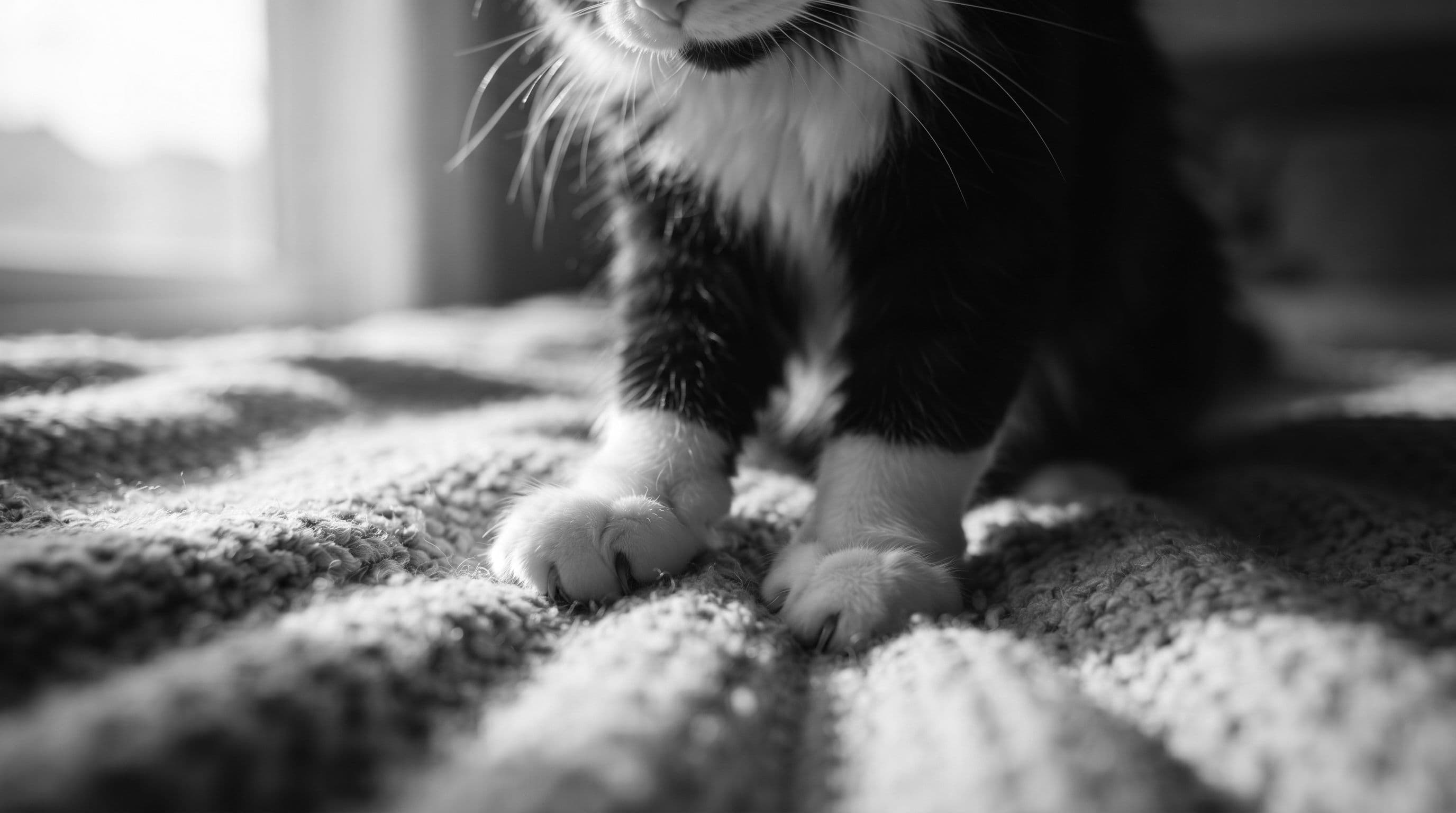
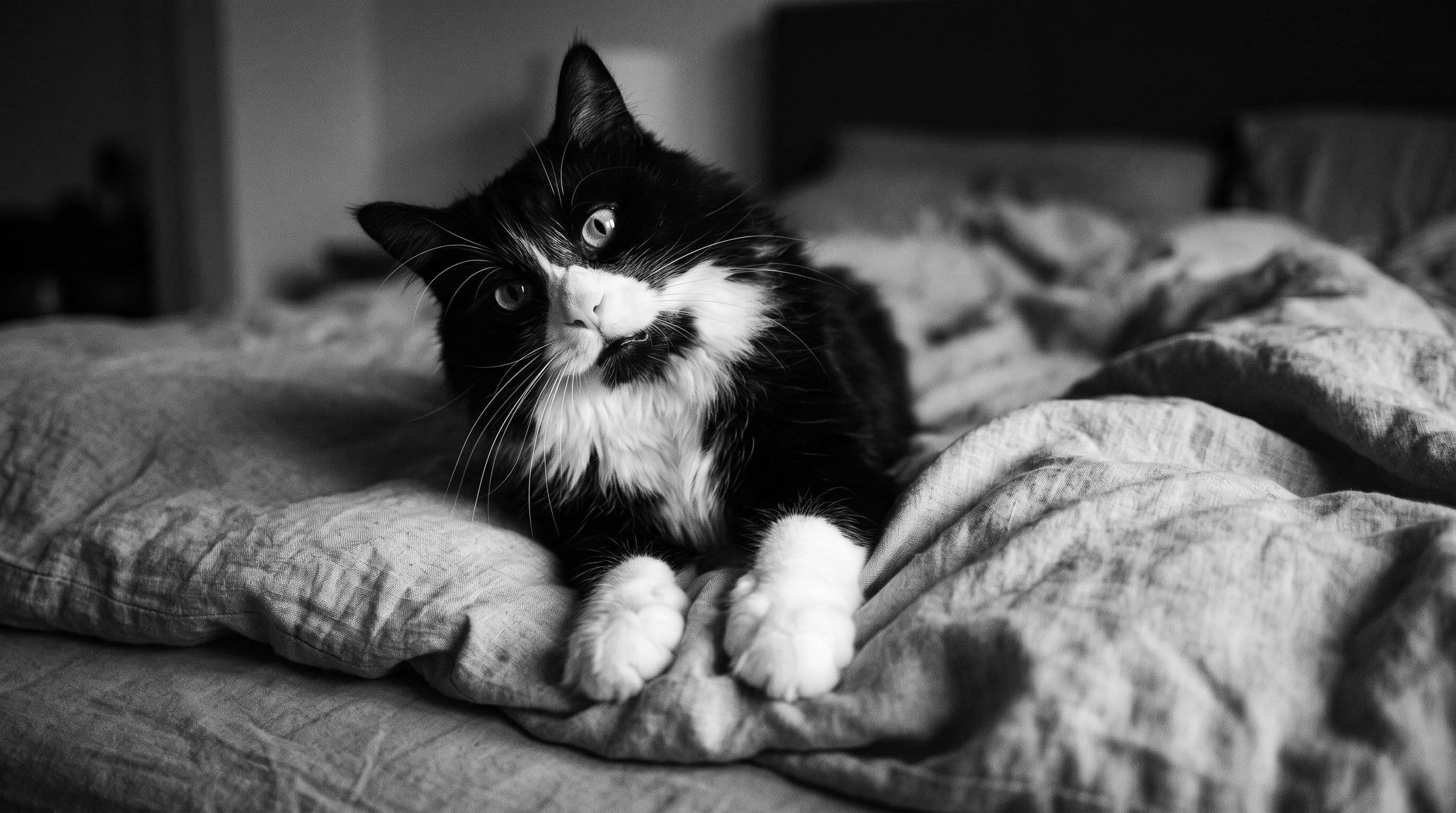
Vino stepped onto the duvet one evening, locked eyes with me, and began working his front paws into the fabric with the intensity of a Parisian baker on a deadline. His claws sank in, released, sank in, released. His green eyes went glassy. A thin strand of drool stretched from his lower lip to the blanket. If you've ever wondered why do cats knead, watching Vino's nightly performance answers the question more vividly than any textbook. The rhythmic push-pull continued for a solid 8 minutes before he collapsed sideways into a puddle of black and white fur, purring so loudly my fiancée could hear it from the kitchen. This is Vino's nightly biscuit-making ritual, and it hasn't varied in the years he's lived with us. I've never once seen him skip it.
Why Do Cats Knead? What Vino's Nightly Ritual Actually Tells Us
That scene on the bed isn't random comfort-seeking. It's a behavior rooted in the earliest hours of a cat's life, and it persists into adulthood for reasons that go well beyond simple habit. Kittens knead their mother's mammary glands to stimulate milk flow; the alternating paw motion increases lactation output. I've noticed that Vino kneads far more obsessively than any cat I've lived with before, and plenty of seasoned veterinarians and behaviorists will tell you that early weaning tends to amplify these self-soothing habits well into adulthood. From everything I've read and observed, much of how cats communicate with people is learned rather than fixed at birth, and that tracks with what I see in Vino: his kneading isn't some hardwired instinct running on autopilot but a comfort behavior shaped by early experience. I can't point to one single number, but I've watched him do it enough to feel the pattern in my bones. He'll knead anything soft for minutes on end, purring like a diesel engine. I don't actually know Vino's weaning story, he came to me as an adult barn cat, but the obsessiveness fits the pattern behaviourists describe, and it locked in long before I met him.
Vino came from a family-run biodynamic vineyard in northern Tasmania. I don't know exactly when he was weaned, but I do know he spent his early life as a working mouser in a winery barn before I brought him home. His kneading is vigorous, deliberate, and accompanied by enough drool to leave a visible damp patch on the sheets. He doesn't knead the couch. He doesn't knead my lap. He kneads the bed, specifically the duvet, and only in the evening. This specificity matters, because it tells me something about what the behavior means for him: it's not a generalized comfort response. It's a ritual tied to one location and one time of day. He's not soothing himself out of anxiety. He's preparing for sleep the way he's always prepared for sleep.
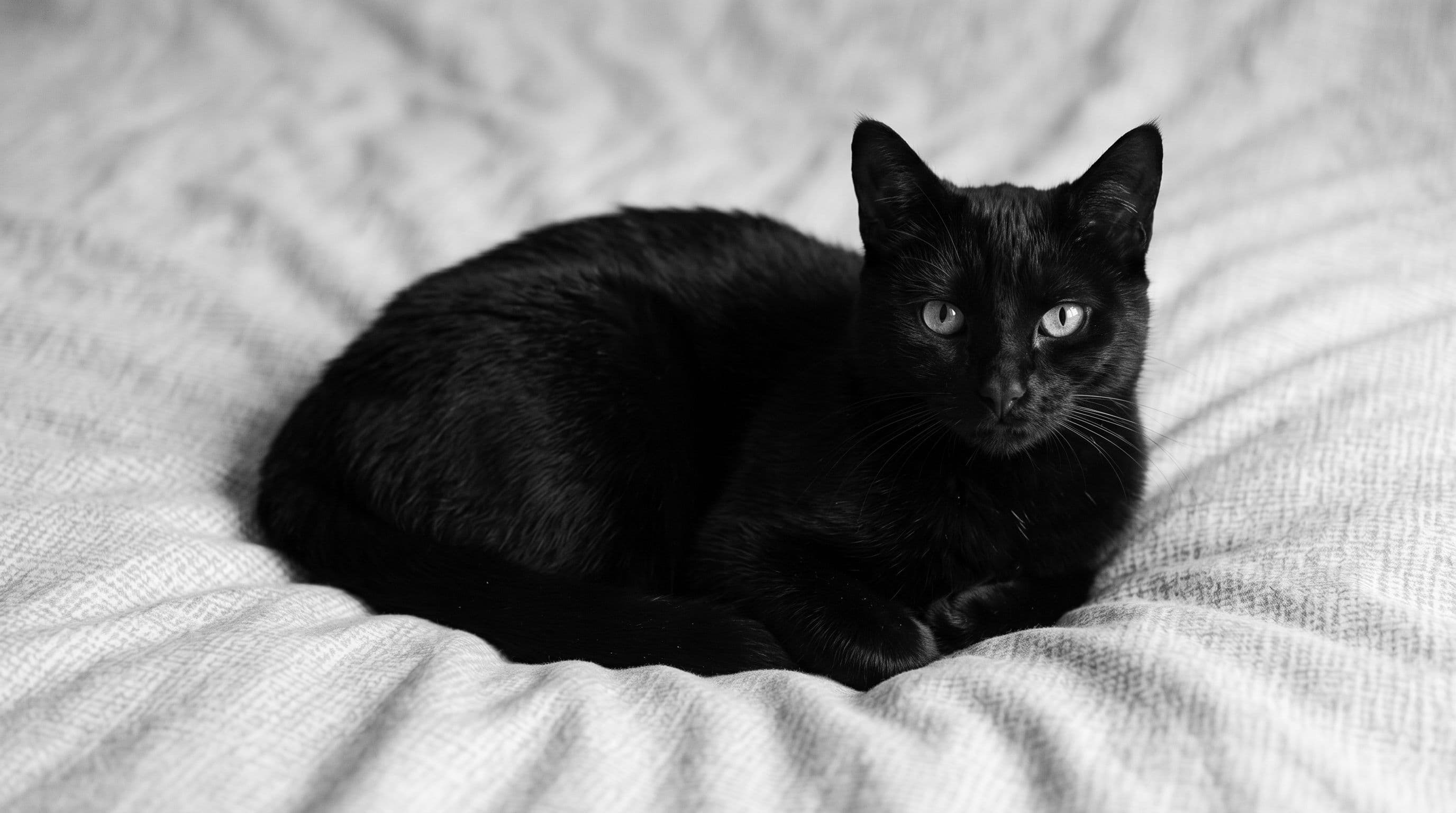
Zola, by contrast, doesn't knead at all. She's a black domestic shorthair, slender and reserved, and she's lived in this house almost as long as Vino. Same environment, same feeding schedule, same access to soft surfaces. She simply doesn't do it. If kneading were purely about comfort or territory, you'd expect both cats in the same household to display it. They don't, which suggests individual variation plays a larger role than most general explainers acknowledge.
How Vino's Kneading Differs from the Textbook Description
Most articles about why cats knead describe a fairly uniform picture: cat finds soft surface, cat rhythmically pushes paws, cat looks content. That's accurate as far as it goes. But there's a dimension to this behavior that I think gets overlooked, and it's one I can only describe because I've watched the same cat do it roughly 1,400 times.
Vino's kneading has a tempo. It starts slow, about one push per second per paw, then accelerates over the first 2 minutes into something closer to two pushes per second. His breathing changes. His pupils dilate. The drooling begins at roughly the 90-second mark; I've timed it enough evenings to feel confident in that number. Then, between minutes 6 and 9, the tempo decelerates, and he transitions from kneading to lying down with no clear dividing line between the two. It's a graduated wind-down, not an on-off switch.
Adult cats in human households don't always outgrow their kitten behaviors, and I think the reason is plain enough: they don't need to. A cat living with people never has to become a fully solitary, self-sufficient hunter because food, shelter, and social needs are handled by someone with opposable thumbs and a Costco membership. Kneading fits neatly into this framework. Vino doesn't need to stimulate milk flow. But the neurochemical payoff of the motion, the release of endorphins, the activation of whatever pathway once meant "food is coming, I'm safe," still works. I've watched him settle into a kneading session on my lap with the same glassy, blissed-out expression every single time, and it's hard not to read that as a circuit that fired in kittenhood and simply never stopped firing. The behavior has been repurposed, not outgrown.
Here's where my observation diverges from what I've read elsewhere. Most explainers treat kneading as a single-purpose behavior: comfort, or territory marking through the scent glands in the paw pads, or nesting instinct inherited from wild ancestors. I think Vino's version is all three simultaneously, and the proportions shift depending on context. When he's kneading the duvet after a day spent mostly indoors, it looks meditative. When he's kneading after a 2-hour outdoor session where he's been chasing Zola around the yard and tormenting the neighbour's Staffy through the fence with his signature passive indifference, the kneading is faster, more intense, and accompanied by louder purring. He's not just settling; he's processing.
I've noticed that when Vino purrs and kneads at the same time, the two behaviors seem to reinforce each other, almost like a feedback loop. The rumble starts, the paws get going, and within seconds he's in a trance so deep I could vacuum next to him without breaking the spell. The kneading motion engages his forelimb muscles in a rhythmic, repetitive way that looks like it relieves built-up tension, and the purring settles his whole body into something close to meditation. If I'm reading the signs right, Vino isn't just making biscuits on my lap. He's running his own nightly physiotherapy session, and I'm the massage table.
What You Should Actually Do About Your Cat's Kneading
If your cat kneads, you don't need to stop it. Let me be clear about that before anything else: kneading is normal, healthy, and almost certainly feels good for your cat. The only practical concerns are about your furniture, your skin, and knowing when kneading crosses over from comfort behavior into something that warrants a vet visit.
Protect your surfaces. Vino's claws, even when trimmed, leave tiny puncture marks in the duvet cover. I've accepted this. If you haven't reached that level of acceptance, keep a dedicated blanket or throw on whatever surface your cat prefers. A thick wool area rug works well too; we've got one near the foot of the bed that Vino occasionally targets when the duvet isn't available. The key is giving them a consistent surface rather than trying to redirect the behavior itself.
Keep claws trimmed, but don't declaw. I trim Vino's claws every 10 to 14 days using a standard stainless-steel claw trimmer. The American Association of Feline Practitioners' 2017 position statement strongly opposes declawing as an elective procedure, and the procedure has been illegal here in Australia, with narrow welfare exceptions, since 2001. Trimming is sufficient. If your cat won't tolerate trimming, a vet or groomer can handle it for roughly the cost of a decent bottle of wine.
Know the difference between kneading and overgrooming. If your cat kneads for unusually long stretches, in multiple locations throughout the day, and especially if they're also pulling out fur or sucking on fabric while doing it, that's not normal comfort behavior. That's a compulsive disorder, and it needs veterinary attention. Vino's 6-to-9-minute window is well within the typical range. Anything beyond 15 minutes on a regular basis is worth flagging.
Don't punish the behavior. This sounds obvious, but I've seen online forums where people spray their cats with water to stop kneading because of the claw damage. Punishing a self-soothing behavior creates anxiety, which leads to more self-soothing behavior, which leads to more punishment. It's a miserable cycle. If the issue is your lap and the claws, place a folded towel over your legs. Problem solved.
If you're curious about how Vino's other quirks fit into the broader picture of tuxedo cat behavior, I've written about what tuxedo cat markings actually mean genetically and about whether indoor-outdoor routines affect cat temperament in previous posts.
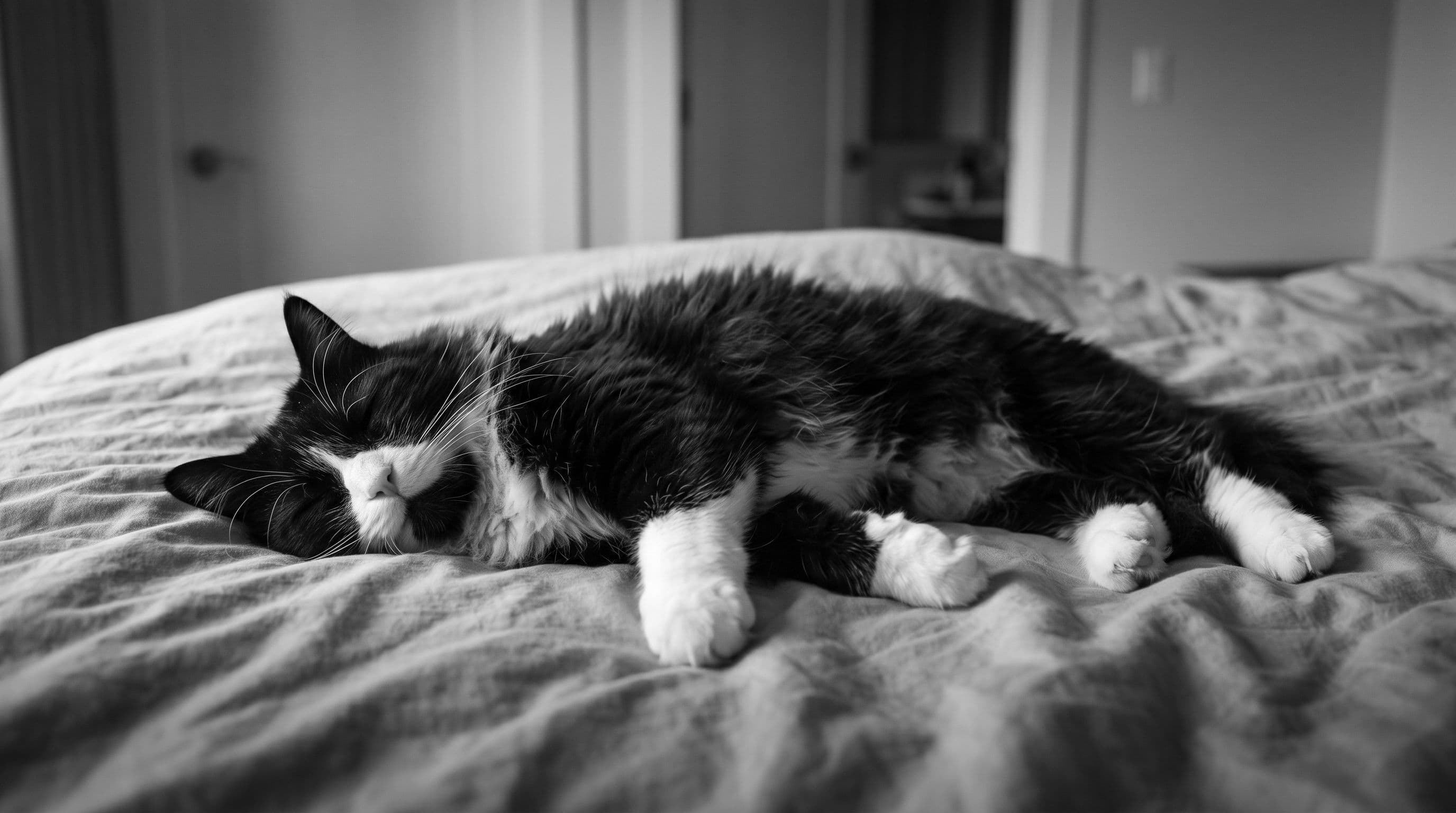
> Vino's Verdict: Vino kneads the duvet for 6 to 9 minutes every single night, drools through the entire process, and has never once been asked to stop. In years of watching him do it, I'm convinced it's the most genuinely content he ever looks, and that includes mealtime. If your cat makes biscuits, they're telling you something important: they feel safe.