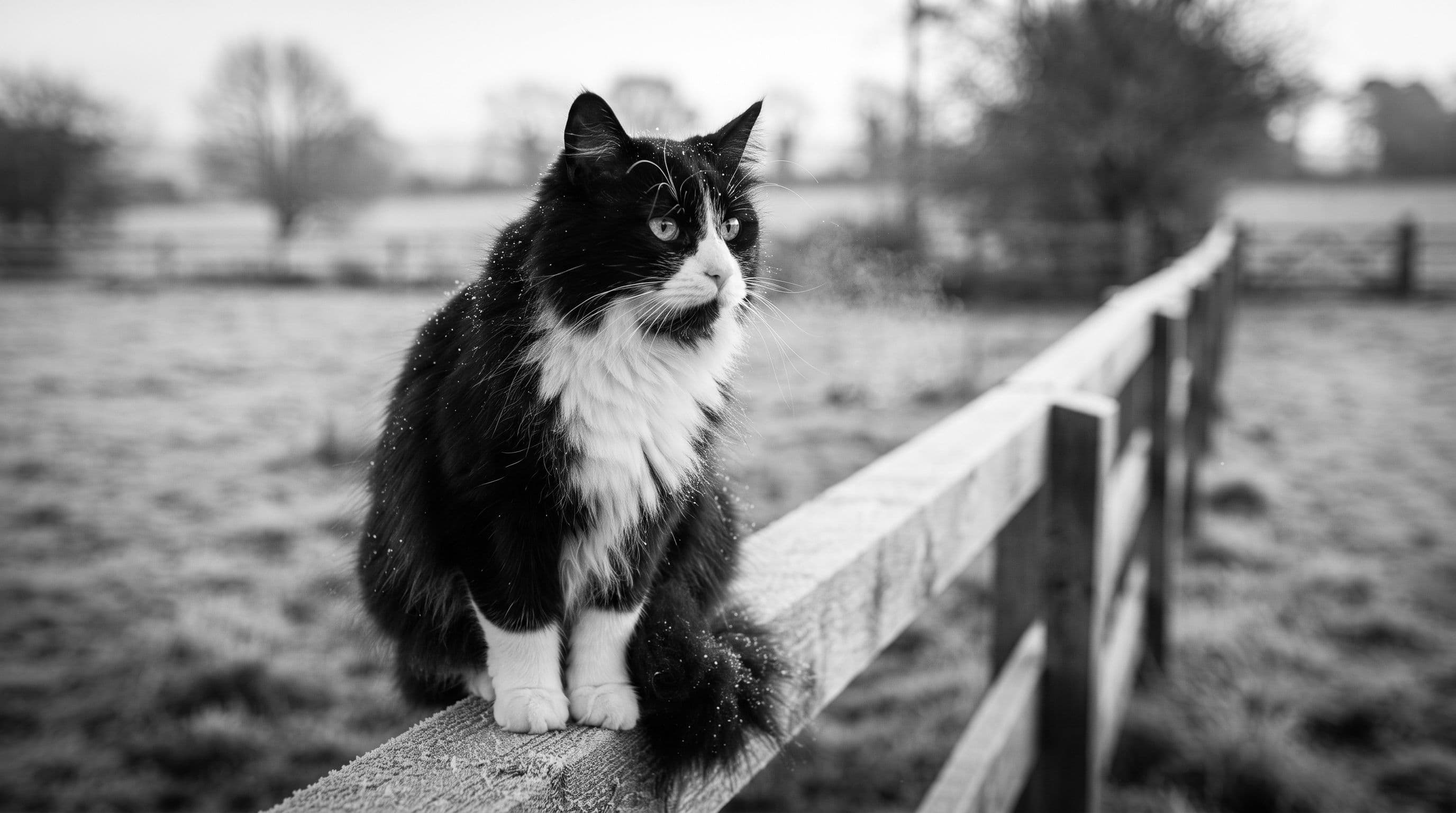
Three observations from the household complicate the standard answer to whether cats get cold in winter. I'd been watching Vino and Zola closely during the cooler months here in northern Tasmania, and what I noticed didn't fit neatly into the reassuring advice you'll find scattered across pet forums. One cat seemed entirely unbothered by a 6°C morning. The other turned into a heat-seeking missile the moment the temperature dropped below 12. Same house, same season, same afternoon light slanting through the kitchen window. The difference came down to coat, temperament, body mass, and a stubbornness I should've predicted from a cat who spent 2 years working a vineyard barn.
Vino weighs about 6 kg and carries medium-long fur that thickens noticeably from late autumn onward. Zola, at roughly 3.9 kg with a sleeker, shorter coat and a slender frame, doesn't have the same insulation. Watching them both respond to the same cold snap gave me a better education on the question than any article I'd read. Here's the evidence.
Exhibit One: Vino Doesn't Seem to Know It's Cold
The first exhibit arrived on a still morning in early July when the thermometer on the back veranda read 4°C. I'd let both cats out for their usual pre-breakfast wander, and within 90 seconds Zola had turned around, trotted back to the door, and produced her quiet, insistent chirp to be let inside. She planted herself on the wool area rug near the heater and didn't move for 45 minutes.
Vino, meanwhile, was sitting on the top rail of the chicken run fence, roughly 20 metres from the house, watching the rooster with an expression I can only describe as editorial. He wasn't shivering. He wasn't tucked into a ball. He was just sitting there, belly fur ruffling slightly in the breeze, as though the cold was a rumour he'd chosen not to believe.
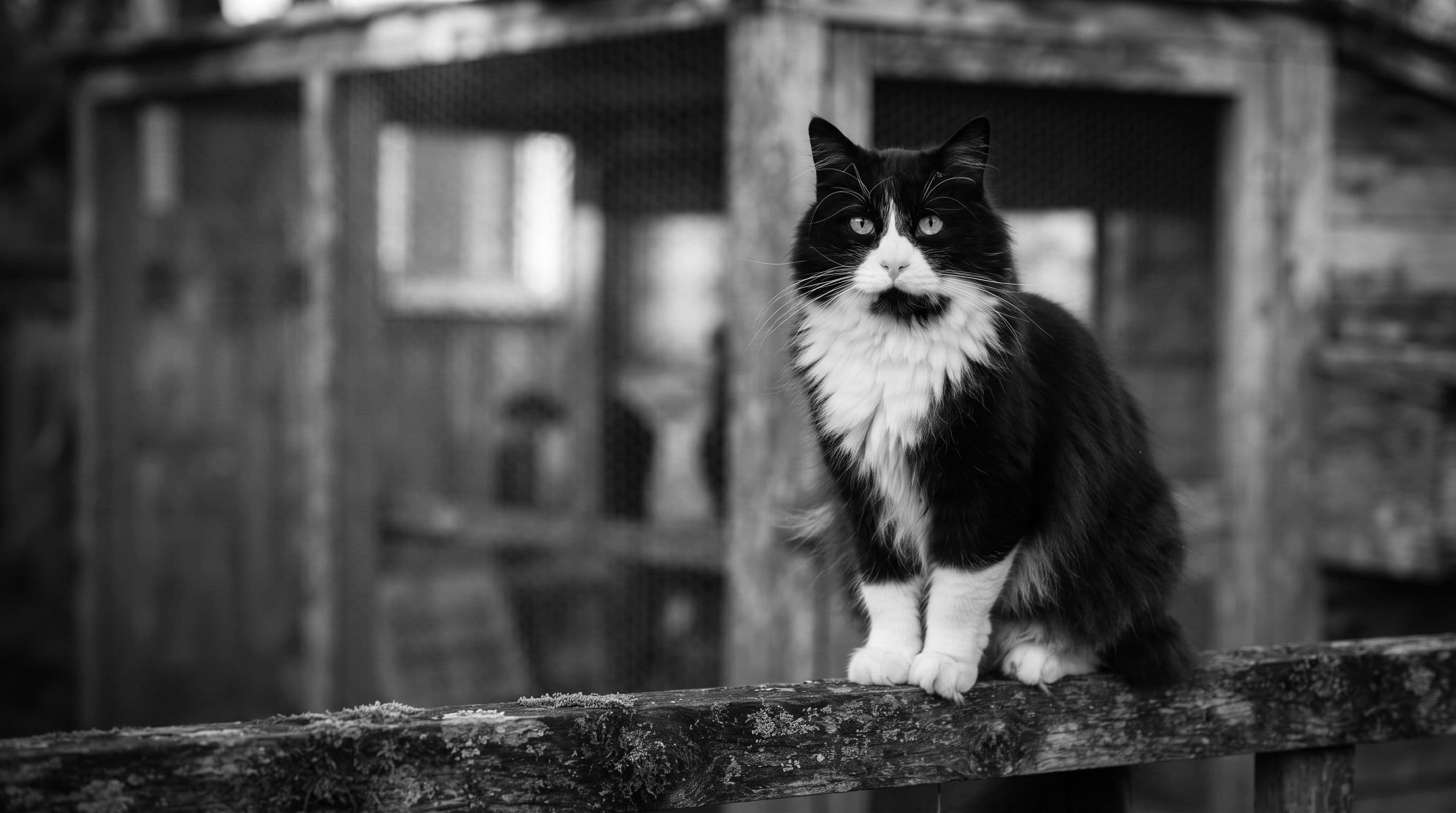
This is where his coat matters. That medium-long fur, particularly the dense ruff around his chest and the longer hair on his back legs, acts as genuine insulation. When I brush him during winter (which he adores; chin and chest especially), the undercoat is thick enough to trap warm air close to his body. His 6 kg frame generates more baseline heat than Zola's 3.9 kg frame, too. It's not that he can't get cold. It's that his threshold sits lower than hers by a meaningful margin.
So do cats get cold in winter? Absolutely. But "cats" is doing a lot of heavy lifting in that sentence. The answer depends on the individual animal: their coat density, their body mass, their activity level, and whether they spent formative years outdoors on a property in the Tamar Valley or arrived as a cautious indoor rescue.
Exhibit Two: The Windowsill Negotiations
The second exhibit is subtler. During the cooler months, Vino's behaviour around the kitchen window changes. In summer, he'll sit on the sill with the window cracked open, nose twitching at whatever's coming off the eucalyptus and the neighbour's Staffy. In winter, he still sits there, but he positions himself differently: pressed against the glass where the morning sun hits, body turned sideways to maximise the surface area catching light. He isn't asking to go out. He's using the window as a solar panel.
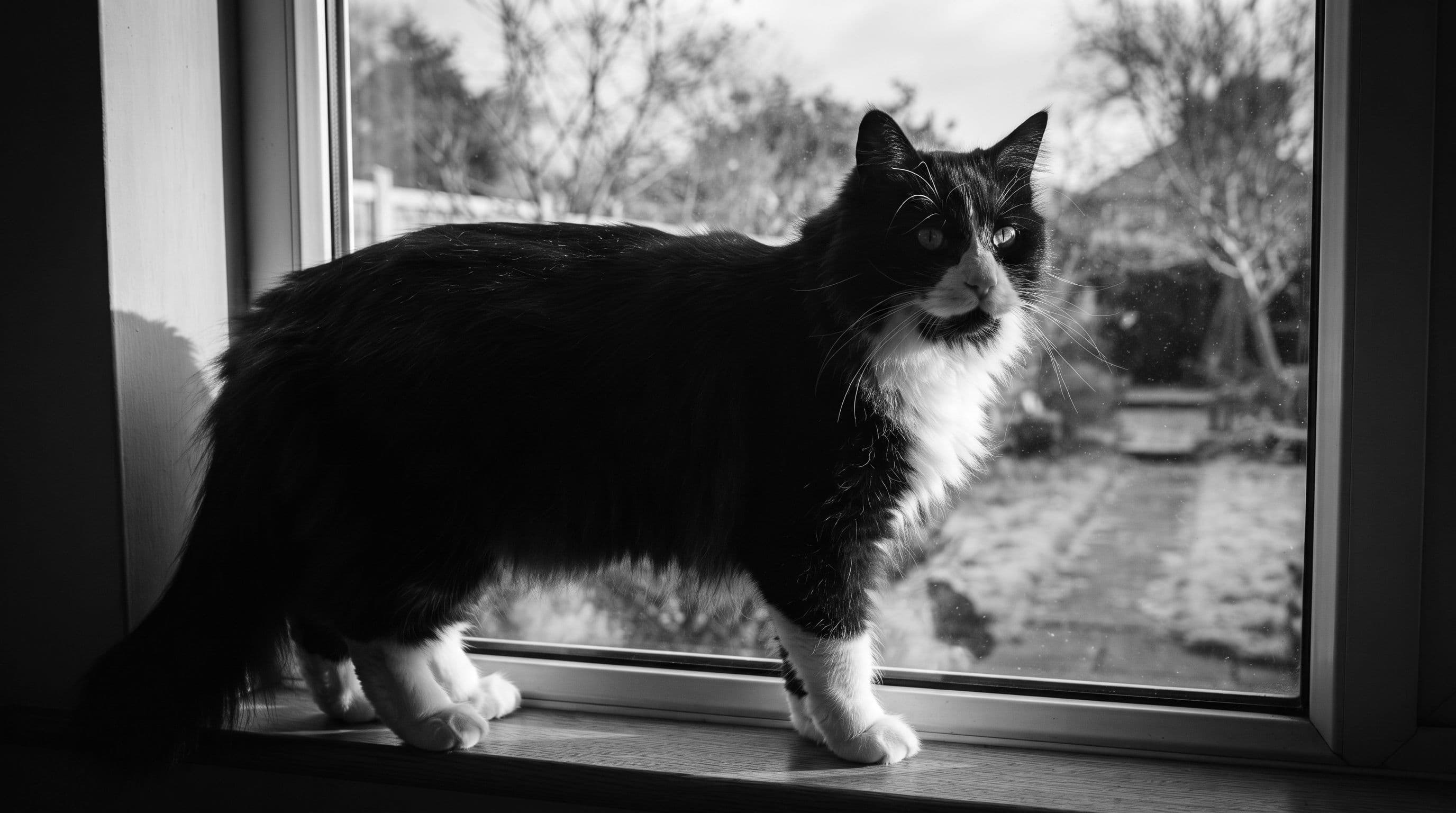
This is thermoregulation, and it's instinctive. Cats are descended from desert-adapted ancestors, which means their comfort zone sits higher than ours. A room that feels pleasant to me at 18°C can register as cool to a cat who'd prefer 20 to 22. Vino's sun-patch habit intensifies in winter: he'll follow the light across the floorboards through the afternoon, relocating from the kitchen window to the living room rug to the bedroom doona as the angle shifts. I've counted him changing position 4 times in a single afternoon, tracking warmth like a furry sundial.
Zola does the same thing, but she's less patient about it. If there's no sun patch available, she'll go straight to the heated option: my fiancée's lap, the bed, or the spot directly in front of the panel heater. Vino will tolerate a sunless stretch by curling into a tighter ball on the cat tower, tucking his paws underneath his chest and wrapping his tail around his body. That tail-wrap is a reliable cold indicator. If I see it, I know the room's dropped below his preference.
Exhibit Three: The 2 a.m. Migration
The third exhibit is the one that settled the question for me. During summer, Vino sleeps at the foot of the bed or on the couch. He's nearby but not on top of me. In winter, he migrates. Sometime around 2 a.m., all 6 kg of him will walk up the bed, step directly onto my chest, knead the doona for an unreasonable amount of time, and then settle against my side with his back pressed firmly into my ribs. He drools. He purrs. He doesn't move until first light and he decides it's time for breakfast.
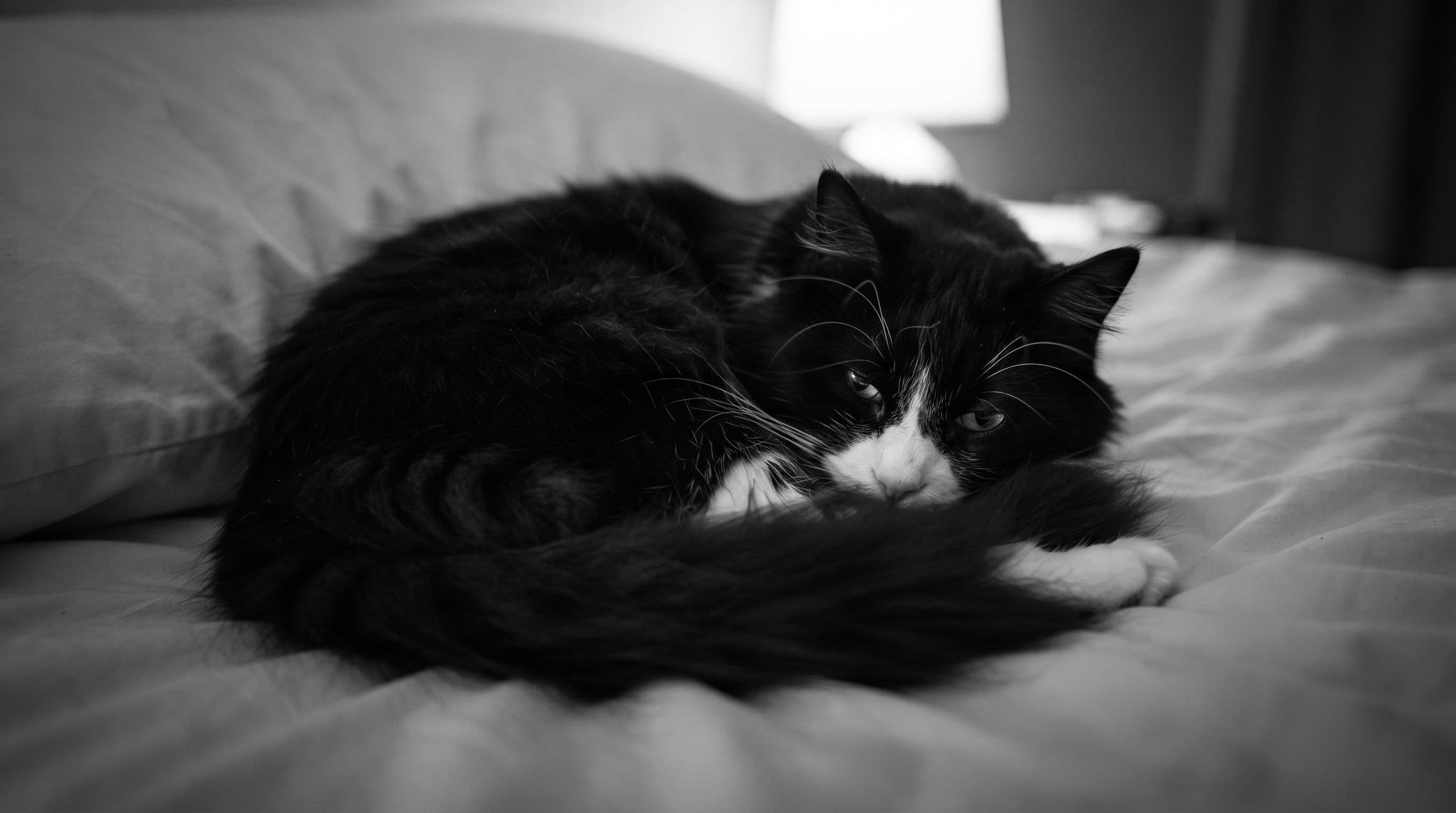
This isn't affection. I mean, it might be partly affection. But the timing is too consistent and too seasonal to be anything other than thermal strategy. The coldest part of the night in our part of Tasmania, south of Launceston, hits between 1 and 4 a.m. Vino arrives at 2. He's not cuddling; he's requisitioning a heat source.
Zola, for the record, doesn't do this. She sleeps in her own spot on the armchair in the living room year-round, though in winter she'll burrow under the throw blanket my fiancée leaves draped over the cushion. Her approach to cold is avoidance: find something warm, get under it, stay there. Vino's approach is more calculated. He identifies the warmest body in the house and pins himself against it, redistributing my heat as though he'd filed a formal request and had it approved.
Pulling the Threads Together
All three exhibits circle the same reality: cats do get cold in winter, but how they show it and how severely it affects them varies enormously between individuals. Vino, with his medium-long double coat and 6 kg frame, handles cold weather better than Zola, who's lighter, shorter-coated, and more sensitive to temperature drops. Neither of them is in danger in our home; the house stays above 15°C even on the coldest nights. But both of them recalibrate their habits once the season turns, and those recalibrations are legible if you're paying attention.
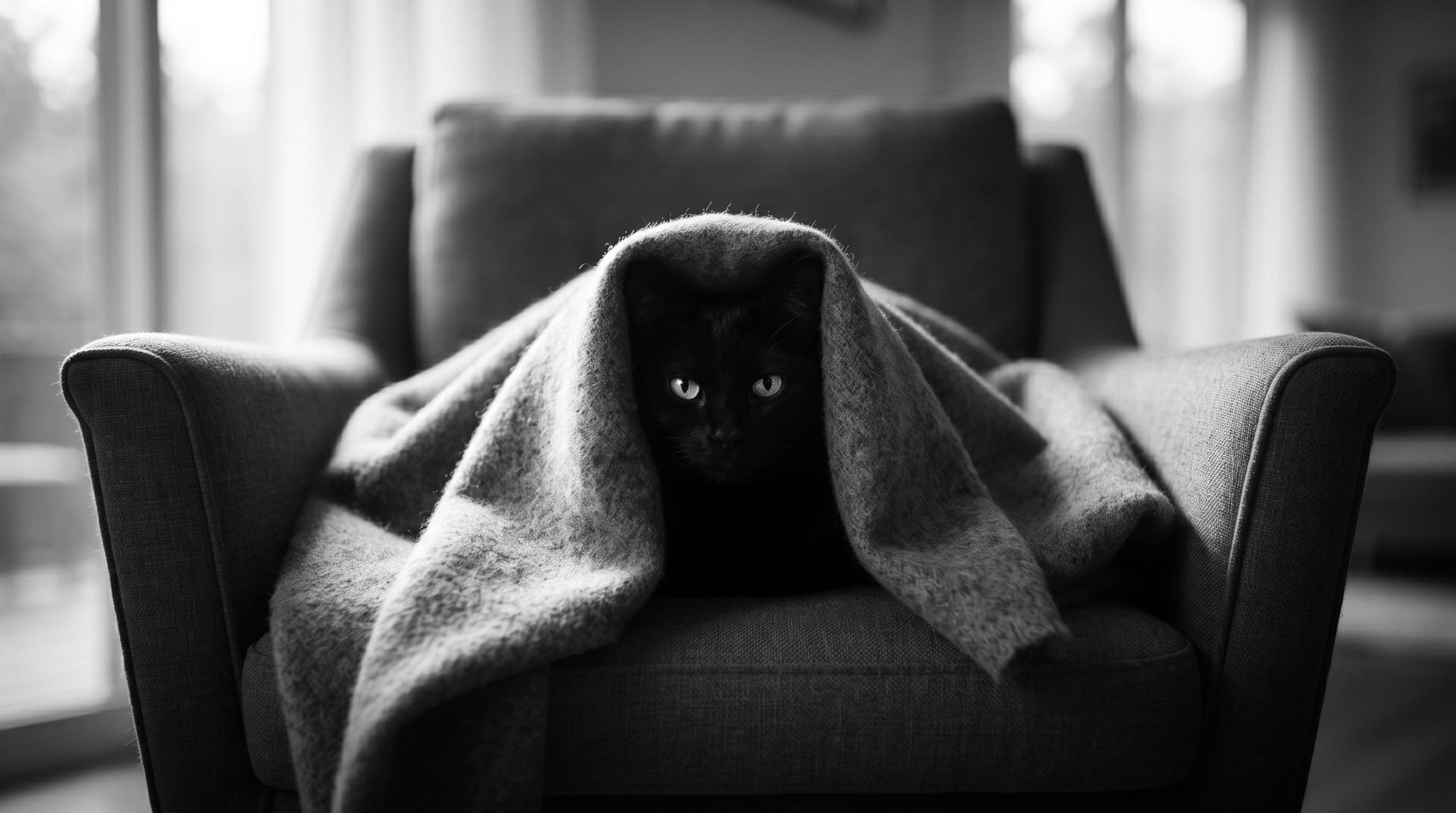
What I've learned from years of living with these two is that cold management for cats comes down to observation more than equipment. You don't need a smart thermostat or a heated cat bed (though Zola wouldn't refuse one). You need to watch where your cat sleeps, when they relocate, and whether they're curling tighter than usual. Vino's tail-wrap and his 2 a.m. chest migration tell me more about the ambient temperature than any gadget could.
For anyone keeping indoor cats through winter, the practical takeaways are uncomplicated: maintain a warm sleeping option in every room your cat frequents, keep drafts blocked at floor level where cats actually live, and don't assume a long-coated cat is immune to cold just because they look fluffier. Vino looks like he's wearing a fur coat because he is wearing a fur coat, but he still wants my body heat at 2 a.m. If your cat's indoor enrichment setup includes a cat tower near a window, make sure there's also a warm retreat nearby for the hours when the sun disappears. A wool blanket on the lower platform costs nothing and changes how long they'll stay comfortable.
Frequently Asked
Exhibit Two: The Heater Negotiations
By mid-July, Vino had developed a position on the living room heater. Not a preference: a position. He would settle himself on the floor vent before I'd even finished my coffee, and radiate a sense of entitlement so complete that moving him felt like a minor act of violence. Yet this same cat, on that same morning, would demand to be let outside into air that made my hands ache within minutes.
The contradiction resolved itself when I stopped thinking of him as cold or not cold. Vino treats warmth as a resource to be claimed, not a necessity to be sought. His 6 kg frame holds heat well enough that he can tolerate genuine discomfort; what he won't tolerate is the opportunity cost of missing a prime vent location. Zola, by contrast, operates on pure thermal pragmatism. Below 12°C, she is indoors, motionless, and visibly resentful of any human who opens a door.
This distinction matters for anyone wondering whether their own cat needs intervention. Vino's behaviour in cold weather is not reliable data about his comfort. He will sit on frozen concrete to maintain visual contact with a chicken. He will refuse to come inside during a hailstorm because he has committed to a patrol route. His tolerance is not his preference, and his pride is not his wellbeing.
Exhibit Three: The Midnight Relocation
The most telling observation came unbidden in the middle of the night, when I woke to find Vino had abandoned his usual position at the foot of the bed. He had, at some point, migrated under the doona and arranged himself against my fiancée's legs, a location he normally rejects as insufficiently dignified. His fur was cool to the touch where it had been exposed; his paws were tucked tight against his chest in a posture I never see him adopt voluntarily.
He had gotten cold. He had simply refused to admit it until the household was unconscious and unable to witness his surrender.
Do Cats Get Cold in Winter?
Yes. The question is whether they'll tell you.
Vino's entire winter performance is built around this single deception. His breed-standard tuxedo coat provides genuine insulation, but not immunity. His body mass helps, but 6 kg is not 8 kg. What he offers the observer is confidence, not evidence.
FAQ
How can you tell if your cat is actually cold?
Watch for the admissions they don't want to make. Vino's middle-of-the-night doona migration is one. Another is the sudden enthusiasm for lap-sitting in cats who normally prefer the floor. Zola simply leaves; her honesty is almost offensive by comparison. Look for posture changes: tucked paws, lowered body position, tail wrapped tight. A cat who is merely chilly will seek warmth. A cat who is cold will seek warmth and pretend they were already planning to be there.
Should I get a heated bed for my cat?
Vino has rejected every heated bed purchased for him. He will, however, fight Zola for control of a sun-warmed patch of carpet mid-morning. The technology matters less than the location and the cat's sense of ownership. If your cat already has a territory they defend, start there. If they don't, no amount of warming elements will overcome their indifference to real estate they haven't chosen themselves.
Do indoor cats handle cold differently than outdoor cats?
Vino spent two and a half years in a Tasmanian vineyard barn with minimal climate control. He developed a tolerance that persists, but also a set of habits that don't translate well to domestic life. He still expects to generate his own heat through movement and will pace the house meowing at 5°C rather than simply accepting the available warmth. Zola, who has known only heated spaces, has no such compunctions. Her body never learned to compensate, and she doesn't try.