The Zola Situation: A Season One Recap
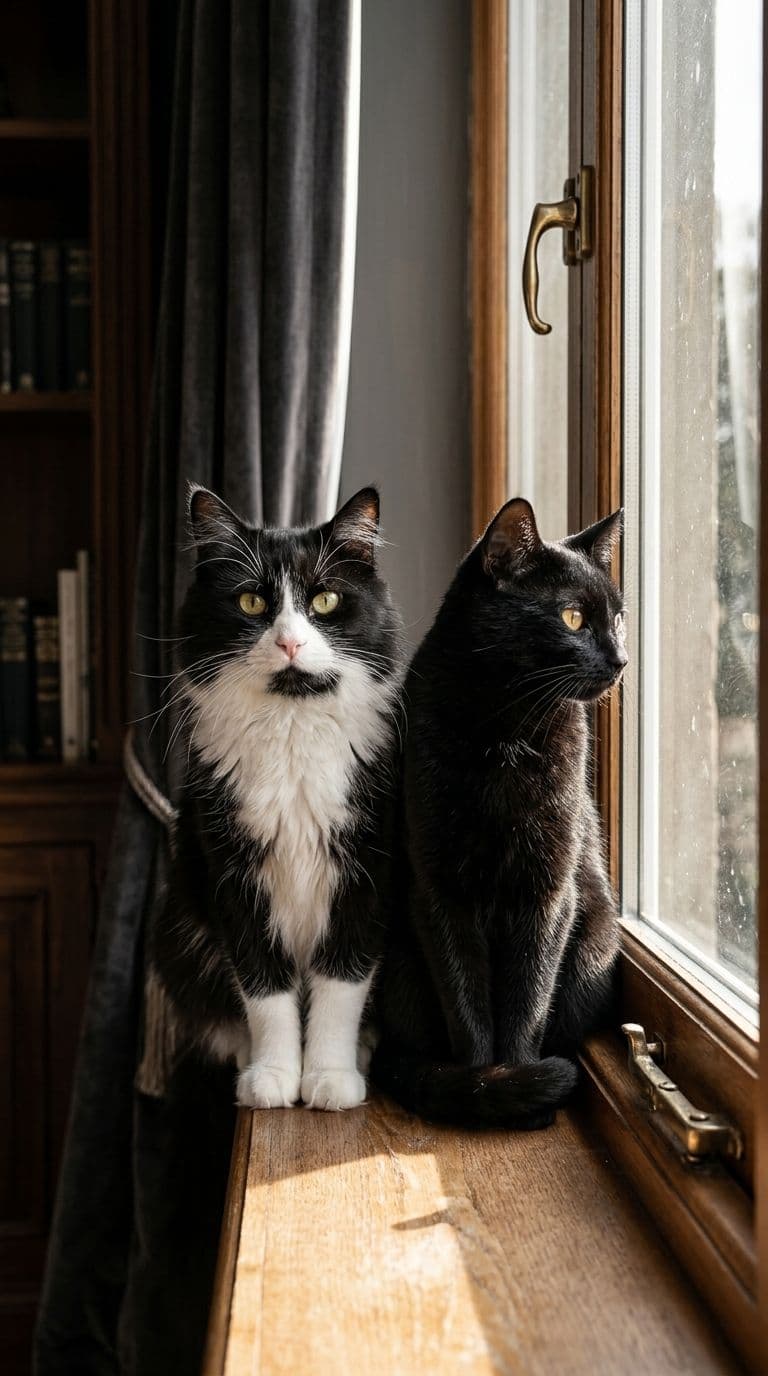
The windowsill fits one cat comfortably. It has always fit one cat comfortably. This has not stopped Vino and Zola from occupying it at the same time, in close enough proximity to constitute a statement, yet far enough apart that neither party would be caught acknowledging the arrangement.
This is their relationship in miniature. It has been their relationship from roughly the first month Zola arrived. It will almost certainly remain their relationship until one of them decides otherwise, and given that neither of them has blinked in years, I'm not holding my breath.
For those arriving here fresh: welcome. Sit down. There is a great deal of ground to cover.
Who Zola Is, and What She Brought With Her
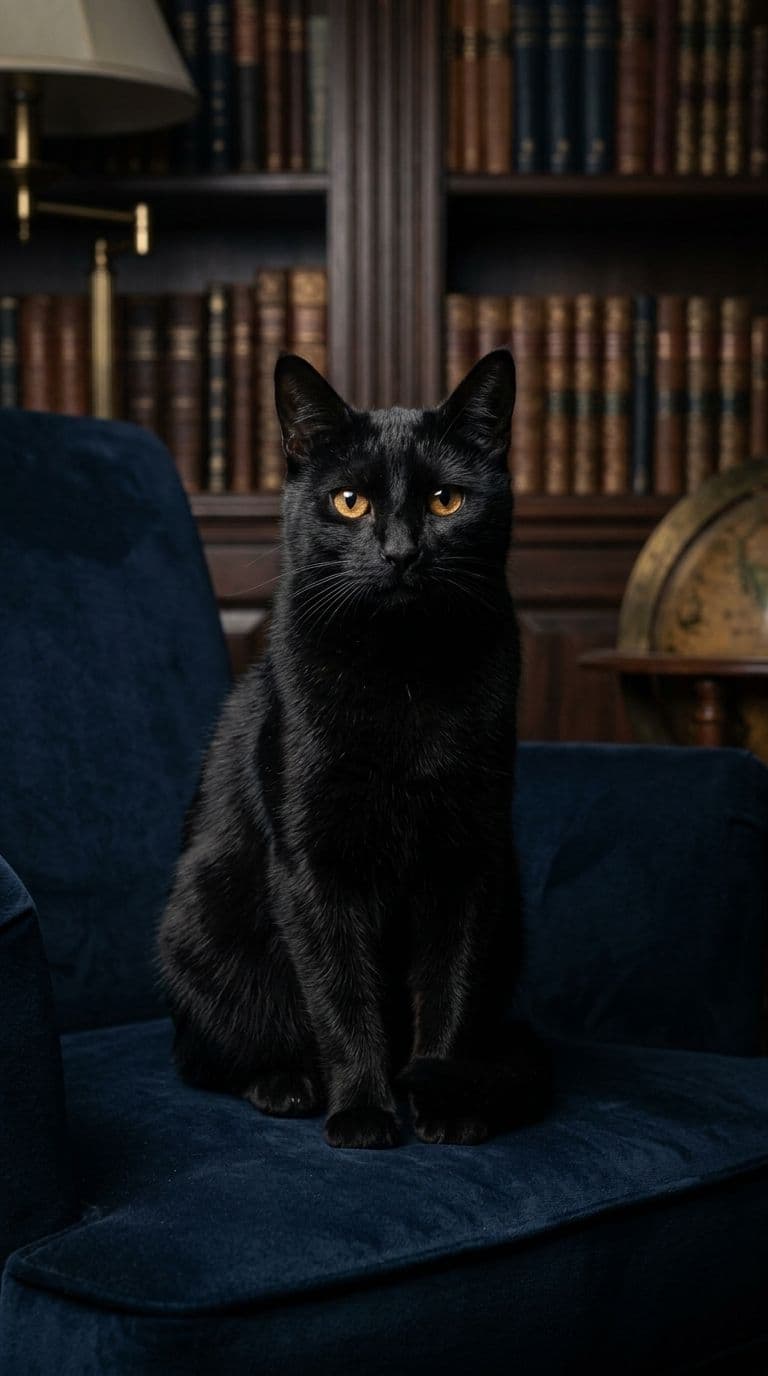
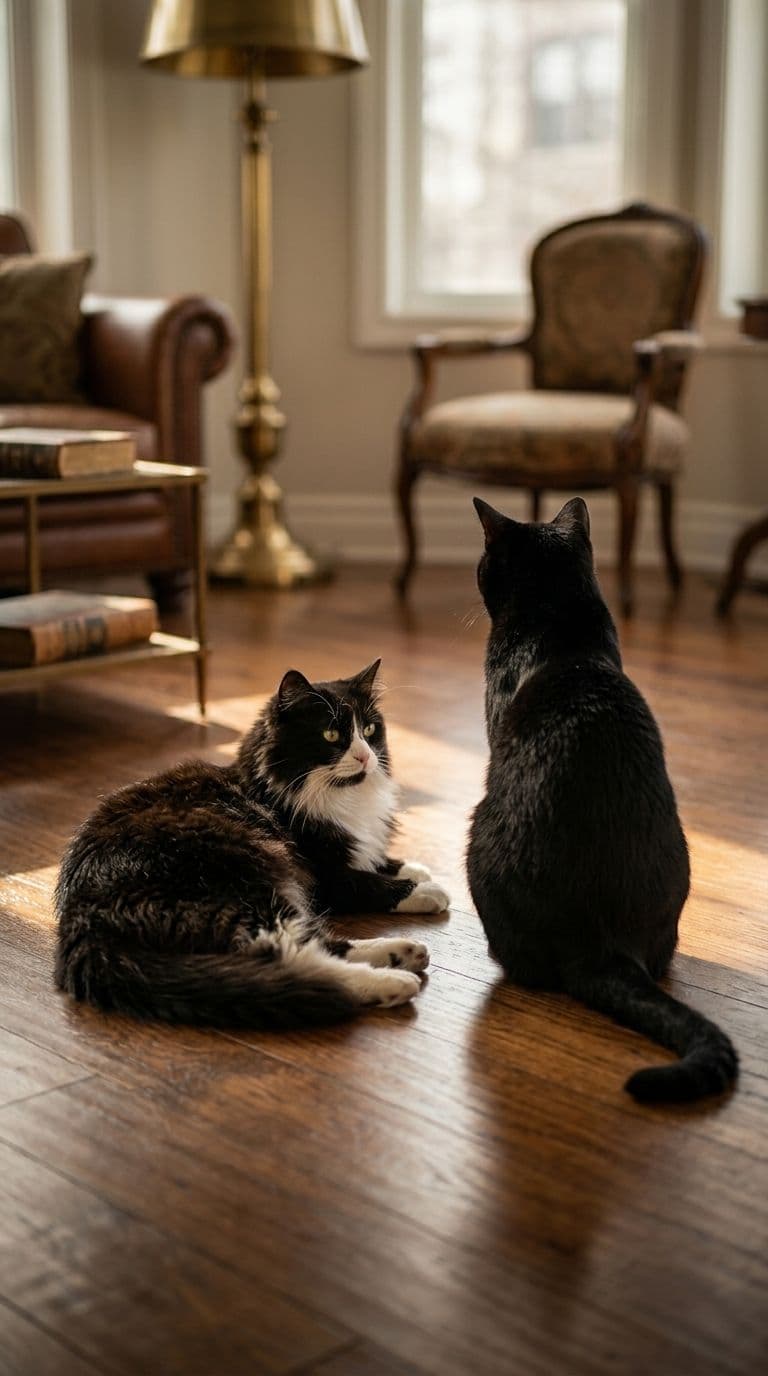
Zola arrived a few months after Vino, which means she's been in our home for nearly as long as he has. She is black, slender, and possessed of a small white patch on her tummy that she rarely shows to anyone who hasn't earned it. By disposition, she is the anti-Vino: reserved where he is loud, deliberate where he is relentless, serene in a way that appears effortless because, for her, it largely is.
She doesn't insert herself into things. She doesn't demand. She doesn't walk between people's legs or meow at closed doors for twenty minutes or drape herself across a keyboard to ensure the work stops and the attention starts. Zola simply exists in our home at a frequency several registers below Vino's, and the contrast is, frankly, architectural.
What she brought with her was equilibrium of a sort we hadn't previously had. Not peace, exactly. Vino was never going to allow actual peace. But a counterweight. A second gravity. A point of reference against which Vino's entire personality becomes measurable.
She also brought, whether she intended to or not, the single most effective tool for managing Viniferous "The Mischievous" Messiah that anyone in our home has yet discovered: the hiss. One hiss from Zola undoes an hour of Vino's careful composure. It costs her almost nothing. The results are immediate. She has no interest in explaining her methods, and I've long since stopped asking.
The Dynamic: Pursuit, Management, and the Unresolved Question of Love
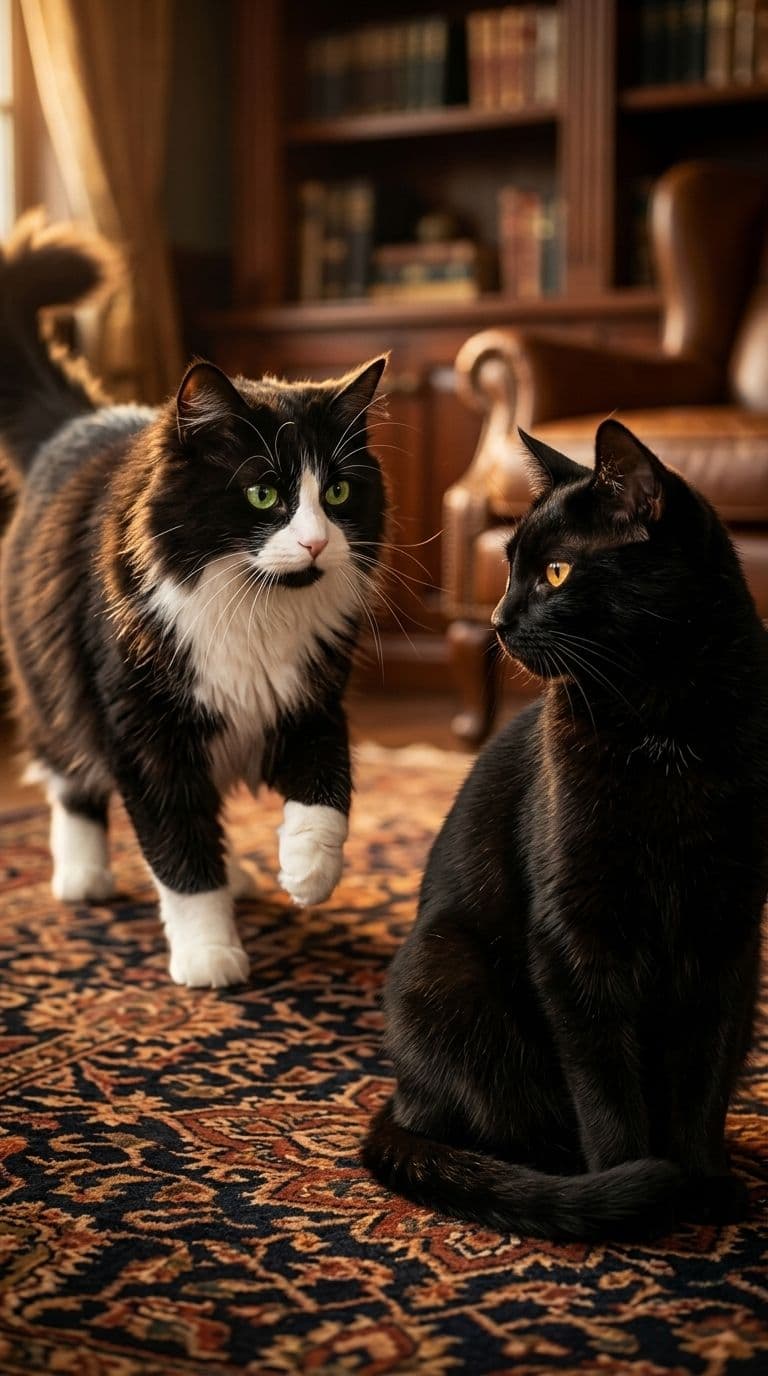
Vino loves Zola. This isn't a projection or a narrative convenience: it's observable. He wants to play with her constantly. He follows her from room to room with the energy of someone who genuinely believes that this time will be different, that this is the moment she'll turn around and decide the chase was charming all along. It never is. She finds him exhausting. She has always found him exhausting. She expresses this through hissing, through the particular slow blink that means not now, and through the elegant economy of simply leaving whatever room he's entered with too much enthusiasm.
And yet.
They smooch each other. They'll share a windowsill. They've been found sleeping close enough that the distinction between "near each other" and "together" becomes a matter of interpretation. They don't cuddle. They'd both deny that what they do constitutes anything soft. But the proximity is real, and it's chosen, and it happens with enough regularity that I've given up pretending it's accidental.
This is the foundational tension of their relationship: Vino loves Zola openly and without apparent self-consciousness, and Zola manages this love with the brisk efficiency of someone who has accepted a standing appointment she didn't ask for but keeps showing up to anyway.
My fiancée and I find this dynamic alternately charming and bewildering. We have formed opinions. Vino and Zola have not consulted those opinions.
The Hissing Question
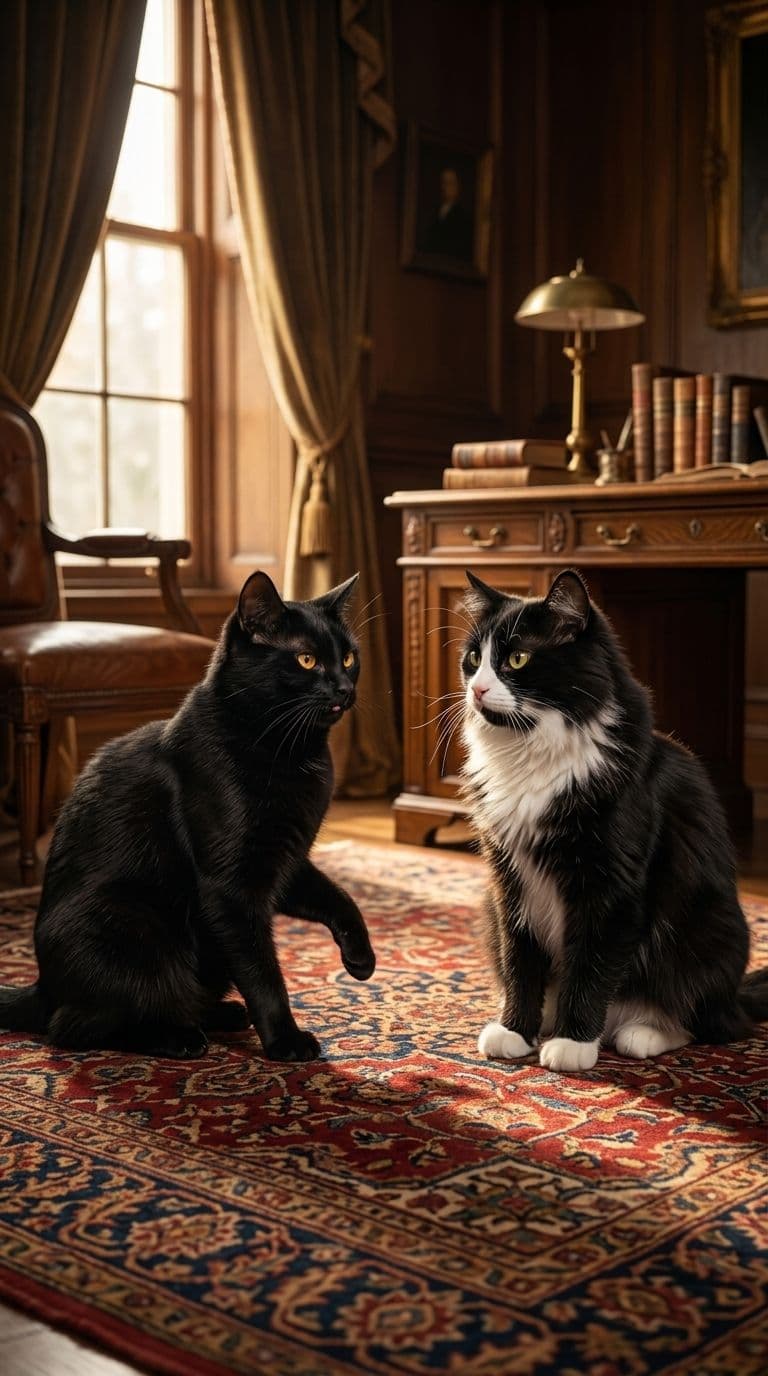
A word on the hissing, because it deserves its own section and I've earned the right to editorialize.
What the hissing is not: distress. It is not escalation toward genuine conflict. It is not the sound of two cats who want to be separated.
What the hissing is: my considered view, formed through extended observation, is that a significant portion of it is performance. The evidence is circumstantial but consistent. The dramas tend to escalate when we're home and watching. When the audience disappears, when we retire to another room or step outside, the hissing tends to follow us. The quiet that descends in our absence is a different quality of quiet than the quiet that follows a genuine dispute.
Zola is not particularly theatrical by nature. Vino, on the other hand, has never in his life missed an opportunity to make something of a moment. I suspect the hissing serves multiple functions simultaneously: it is partly Zola's genuine preference for a metre of personal space, partly a social correction delivered for our benefit, and partly the kind of communication between two animals that has its own grammar, one that humans aren't really equipped to parse.
What I know for certain: Vino never sulks after a hissing episode in the way he sulks after, say, a door closed against him. He recovers immediately. He is already plotting his next approach before the echo has finished. Which suggests the hiss lands differently than the door does. Which suggests he understands something about it that isn't immediately visible.
I have no further theories at this time. The investigation continues.
The Cat Tower Years, and the Current State of Affairs
For a period that my fiancée and I remember with the fondness of survivors: there was the cat tower standoff.
Both cats would position themselves in the tower and wait. Neither would leave. This was not a territorial dispute in the aggressive sense: it was something more like a negotiation conducted entirely in stillness. They'd sit there, each in their chosen level, for stretches of time that impressed and slightly concerned everyone watching. The implicit question between them was always the same: who blinks first?
The answer, apparently, was never observed. Because the standoffs don't happen anymore. They simply stopped. No incident preceded the cessation that anyone can identify. No resolution was announced. The general theory around our home is that one of them eventually blinked, privately, and that both parties have since agreed not to discuss it. The cat tower is now used normally, sequentially, without ceremony. It's unclear whether this represents growth, detente, or simply a change in preference, and neither Vino nor Zola is providing comment.
What remains is the current arrangement: proximity without commitment. They'll find the same warm patch of floor. They'll claim opposite ends of the same piece of furniture. Zola will present her tummy patch to no one in particular, and Vino will arrange himself nearby with the elaborate casualness of someone who absolutely wasn't following her. The windowsill, as noted, continues to be shared in that particular way they have: together, but technically independent. Deniable.
The hissing still happens. It's not gone. But it has the quality of a ritual now rather than a reaction: a known beat in a known sequence, performed by two animals who know each other's patterns well enough to be boring about it, if they chose to be boring, which they don't.
This is where things stand. I consider it neither resolved nor unresolved: it's simply the ongoing situation. Vino is in love. Zola is managing him. We watch. Season Two is already in production.
FAQ: Tuxedo Cat and Black Cat Together
Do tuxedo cats get along with black cats?
There's nothing in the colour pattern that determines compatibility. What matters is temperament, introduction method, and whether the cats in question have the patience for a slow adjustment period. Vino and Zola have coexisted for years, despite having almost nothing in common personality-wise. Vino is loud, persistent, and constitutionally incapable of leaving well enough alone. Zola is reserved, efficient, and deeply unbothered. They make it work. Whether "work" is the right word is a separate conversation.
How long does it take for two cats to get used to each other?
The standard advice is somewhere between a few weeks and several months, with a slow introduction: separate rooms first, scent swapping, supervised meetings, gradual expansion of shared space. The honest answer is that it varies enormously by individual animal. Some cats reach equilibrium quickly. Others maintain a formalised distance for years and call it a relationship. Vino and Zola were on speaking terms within a few months. Whether they have fully "gotten used to" each other is a question I would not presume to answer on their behalf.
Is it normal for cats to hiss at each other even if they live together?
It is extremely common. Hissing between cohabiting cats isn't automatically a sign of a troubled relationship. It's often communicative rather than hostile: a boundary being stated, a preference being registered. In a home where one cat is relentlessly pursuing the other, some hissing is less a symptom and more a management strategy. Context is everything. Frequency, intensity, and whether the hissing is followed by genuine avoidance or by business as usual are all more informative than the hiss itself.
Should I get a second cat to keep my tuxedo cat company?
It depends heavily on your cat's personality. Some tuxedo cats, and some cats generally, genuinely benefit from a companion: the stimulation, the play, the social contact. Others prefer to be the only animal in a household and make their feelings about rivals extremely clear. Vino falls into the former category, enthusiastically. His pursuit of Zola's company is relentless to the point of being inadvisable for anyone without her particular combination of patience and precision hissing. Know your cat before you commit to a second one.
What's the best way to introduce a new cat to an existing cat?
Slowly, with a closed door between them initially. Let them investigate each other through scent before they meet in person. Feed them on opposite sides of the door so they associate each other's presence with something pleasant. Expand access gradually. Expect setbacks. Keep introductions short and positive before letting them share full space. The goal isn't immediate friendship: it's coexistence that doesn't require either cat to feel threatened. Friendship, if it's coming, will arrive on its own schedule. As we discovered: sometimes that schedule takes years and looks nothing like friendship and still manages to be something.
My final note on the current state of the Vino and Zola relationship: it is not simple, and it has never been simple, and I suspect simplicity was never what either of them was going for. Vino has found, in Zola, a companion who doesn't bore him. Zola has found, in Vino, a problem she hasn't fully solved yet. This keeps both of them engaged.
The windowsill is still fit for one cat. They're both on it anyway. Whether that constitutes progress is left, as so many things in our home are left, as an exercise for the observer.
I'll continue to observe.