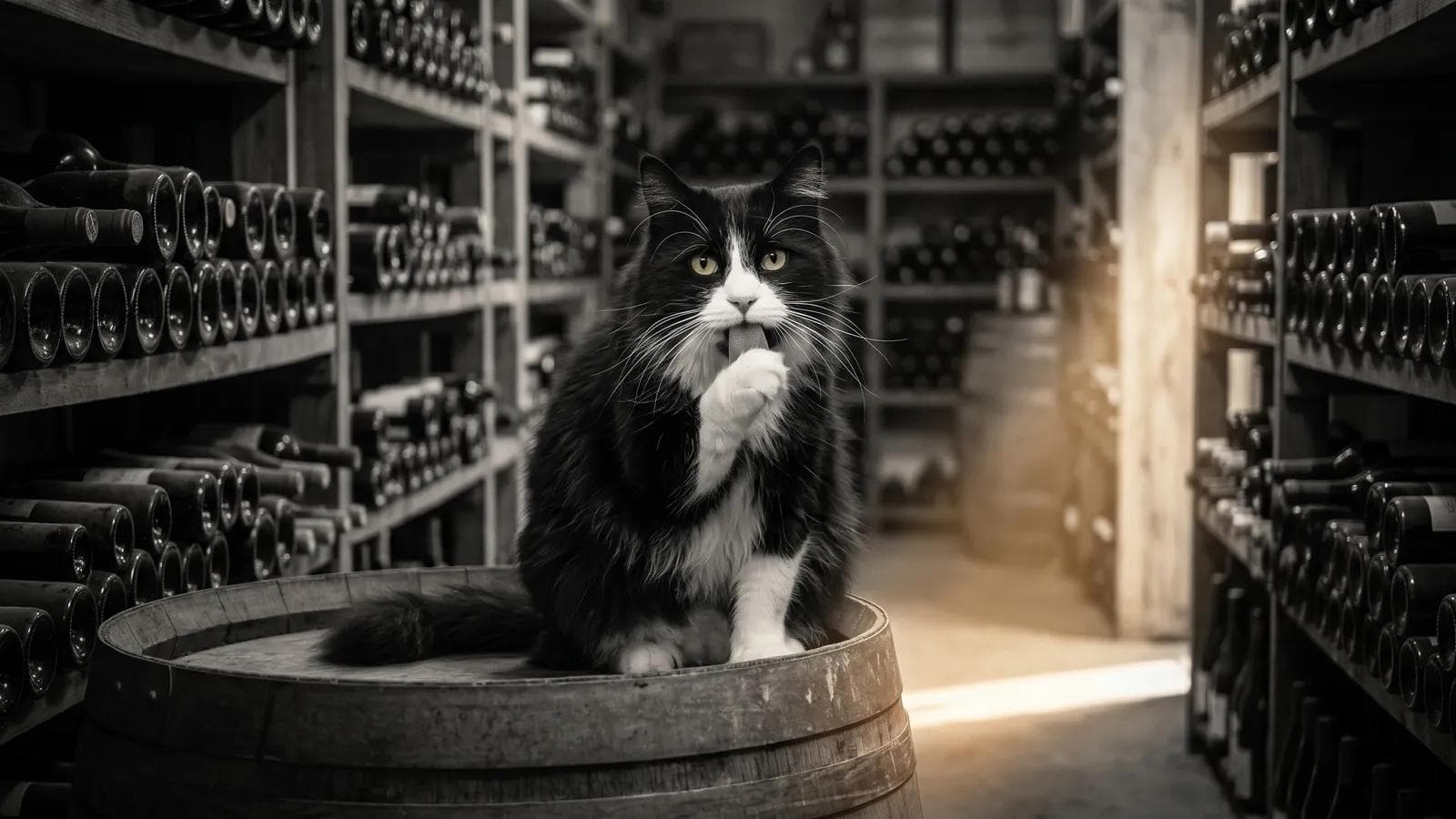
The winery barn smelled of fermentation and old timber, and the first thing that happened when I walked in was that a cat walked directly between my legs and nearly put me on the floor.
This is not, technically, the conventional opening chapter in a story about adopting a farm cat. Most accounts of that particular process involve shelter visits, application forms, or a deliberate act of choosing. Vino didn't operate on that model. He had identified the relevant candidate, made his assessment, and was simply waiting for me to formalise what had already been decided. I had come to collect something from the barn. Vino had an adjustment to make to that plan.
He'd been on the property for two years by then. He knew exactly where he was and what he was doing.
Who Was on the Property Before the I Arrived?
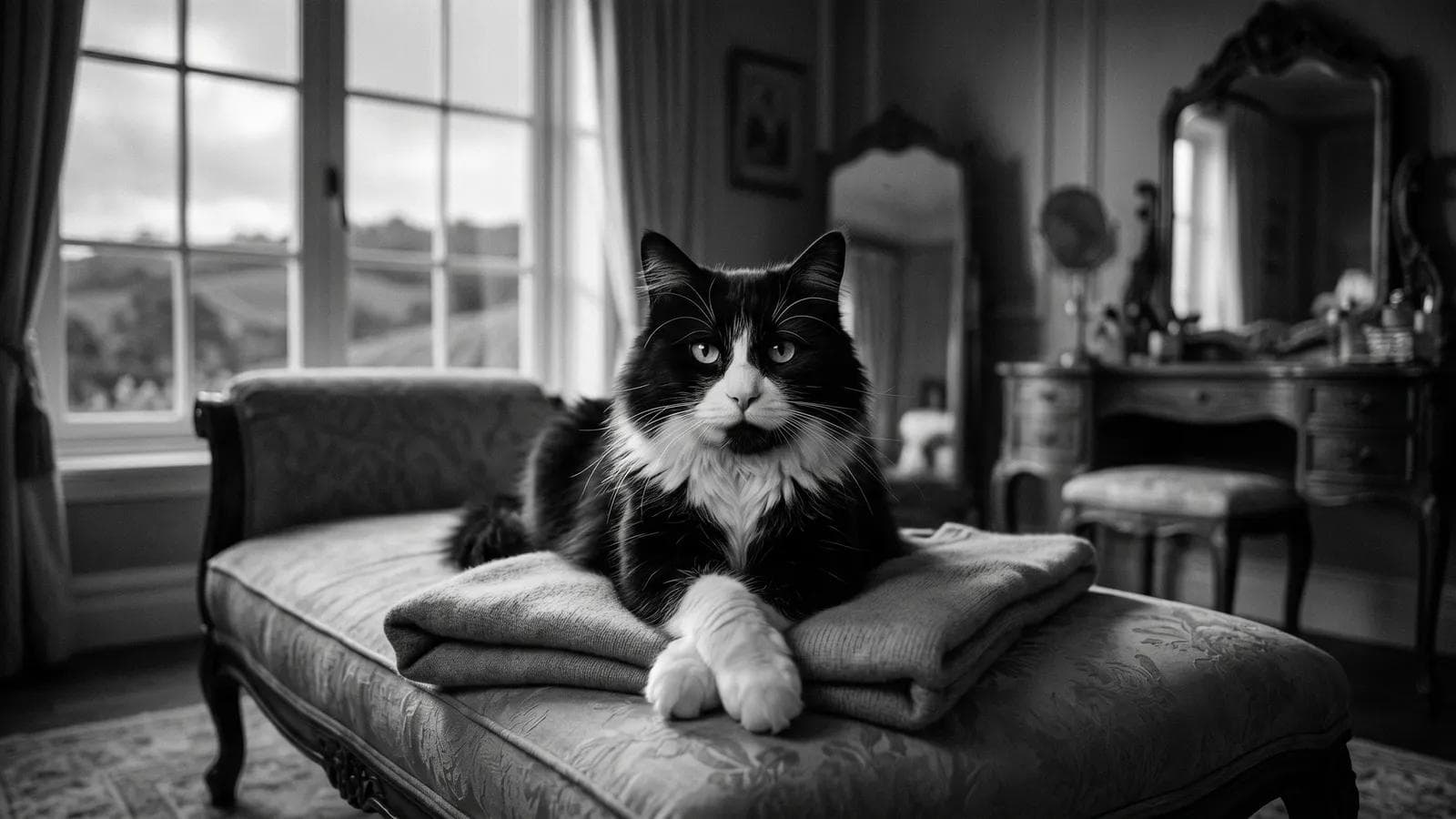
The vineyard was founded roughly forty years before any of this happened. An elderly couple had planted the vines and built the winery together, and over the decades their children had taken over the day-to-day operation while the founders remained part of the property's fabric. The grandfather was the one who'd kept Vino: had fed him, named him after a fashion, and presumably tolerated the same protocols I would later encounter in the barn.
The grandfather passed away about two weeks before I arrived to work at the winery. We never met.
By all accounts he'd been a lively character: someone with opinions and the inclination to act on them, someone who had a particular kind of presence. The family talked about him that way. Vino had belonged to him, and if the cat's character is any indication of the man who kept him, the description holds.
What Vino had been doing on the property in those two years was working. This isn't a sentimental characterisation. He was a barn cat: he caught mice, he patrolled the space, he made the structural assessments that barn cats make of any territory they're responsible for. He knew the building. He knew the rhythms of the winery. He'd been on the property long enough that nothing about it was unfamiliar, and nothing about it failed to include him. The family had been calling him Messiah. This was not an ironic choice.
What Happened When the New Staff Arrived?
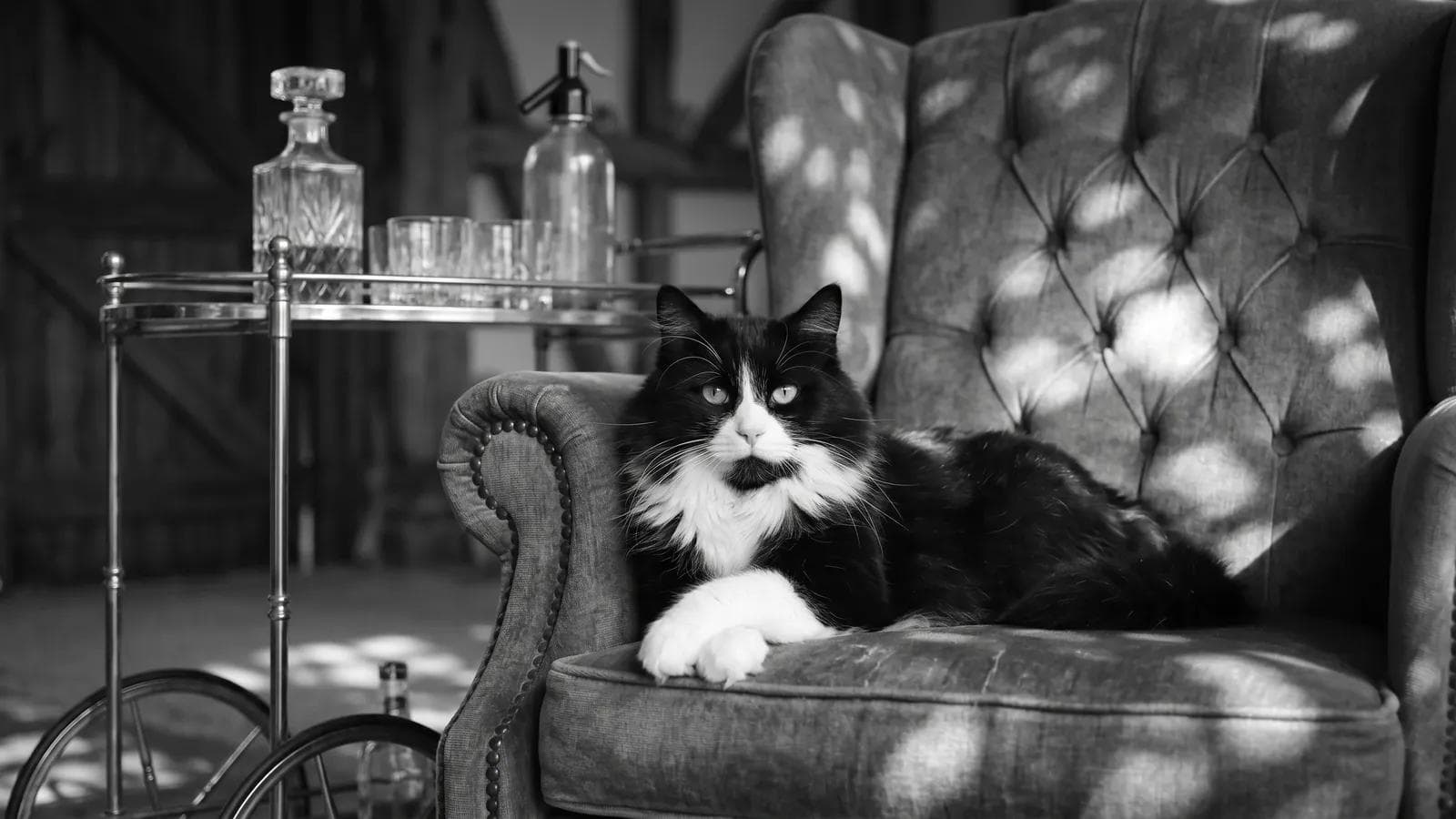
Every time I walked into the barn, the same sequence of events unfolded with a reliability that eventually stopped being surprising and started being an acknowledged feature of my working day.
First: the leg-walking. Not aggressive, not particularly urgent, simply efficient. Vino would walk directly between my legs at the precise moment when my momentum was committed in another direction. It was a reliable tripping hazard. It was not accidental.
Then: the jumping. Whatever I had come in to reach, whatever shelf or surface or piece of equipment was the actual purpose of the trip, Vino would jump onto it. The timing was precise in a way that suggested either genuine anticipation or excellent reflexes. Probably both. He'd position himself on top of the thing, directly in the path of access, and then begin the demands.
Pats. Food. Sustained attention. The specifics varied. The requirement didn't. He would not stop until he'd received adequate engagement by his own assessment, and his assessment of adequacy was not arrived at quickly. Once he was satisfied, and only then, he'd permit the work to continue.
The winery staff found this entertaining. I found it, initially, an obstacle, and subsequently an understood condition of operating in the barn. I worked out the protocol after a few days: greet the cat first, receive the greeting, proceed. If you skipped the greeting, the entire barn became unavailable until you went back and did it properly. Vino had established this system long before I arrived. He saw no reason to suspend it for someone new.
What's accurate to say about this behaviour is that it wasn't desperation or neglect expressing itself through clinginess. A barn cat who's been running his own operation for two years doesn't develop that kind of anxiety. He was making a preference clear, and the preference was that nothing in the barn happened without him being consulted first. It was management philosophy, not emotional distress. The two can look similar from a distance. They're quite different up close.
How Does a Barn Cat Become a Household Cat?
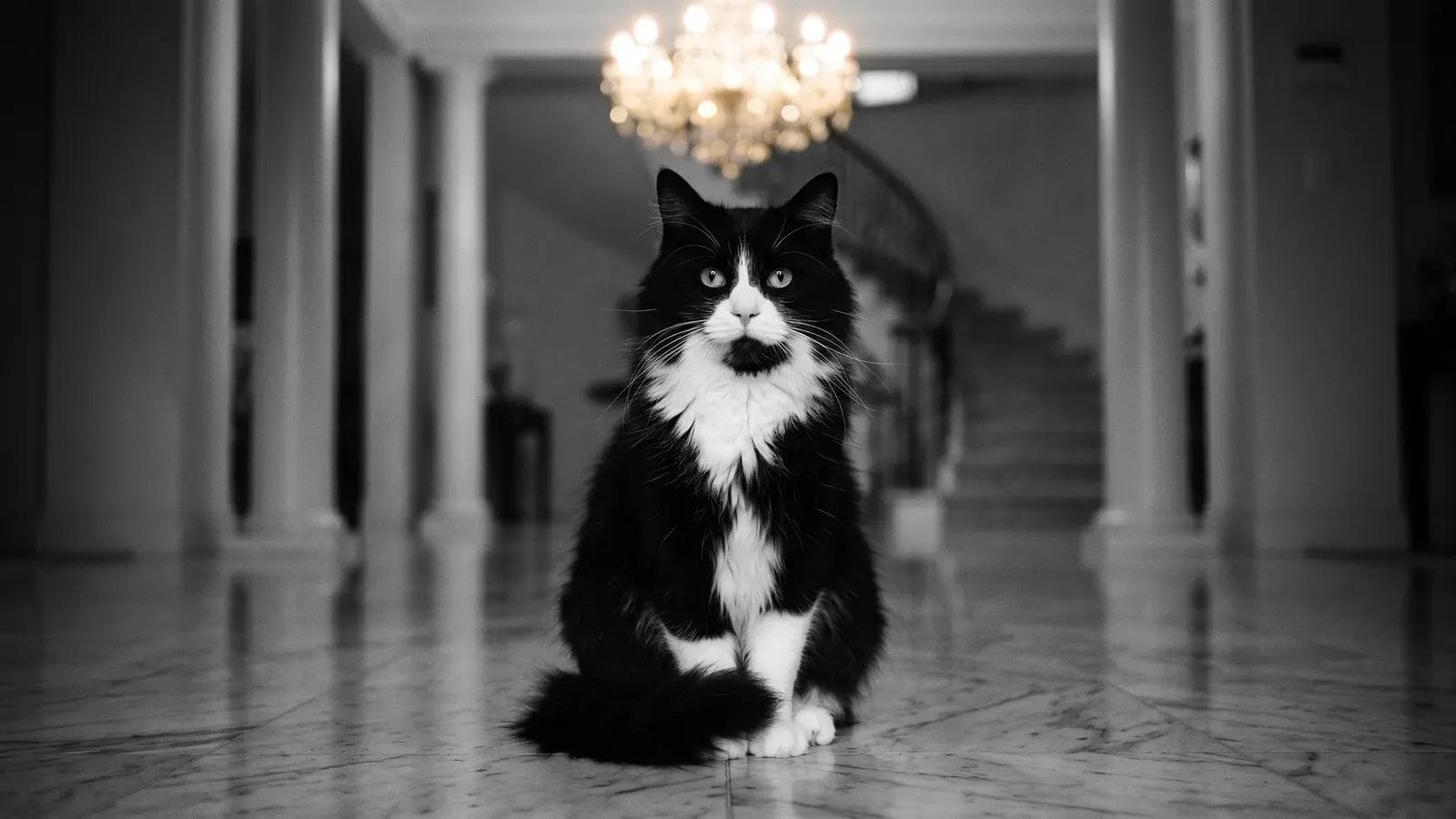
The decision to take Vino home was less a decision and more a conclusion that the available evidence had been building toward for some time.
My fiancée suggested the name Vino. The vineyard connection was apparent: he'd come from a winery, the name was clean and sharp and fit the origin without overexplaining it. I wanted something with more weight: Viniferous, a real wine-related term, something with the same character as the cat it was meant to describe. "The Mischievous" required no debate at all. It wasn't chosen so much as recognised as the only honest option.
The last piece was the winery family's contribution. When Messiah came up, it got added at the end. The full name: Viniferous "The Mischievous" Messiah. Half my household, half the family who'd kept him before, two sets of people who'd known the same cat and arrived at the same conclusion from opposite directions. That this particular animal had a quality that made ordinary naming feel insufficient.
The grandfather had kept him. The family had called him Messiah. I was taking him home. It's not, from any angle, a story of a human choosing a cat and welcoming it into their life on their own terms. It's a story of a cat who'd decided that the barn was no longer the right scale of operation, and who had identified the relevant vehicle for whatever came next. I provided logistics. The placement decision had already been made.
What Has Changed Since the Barn?
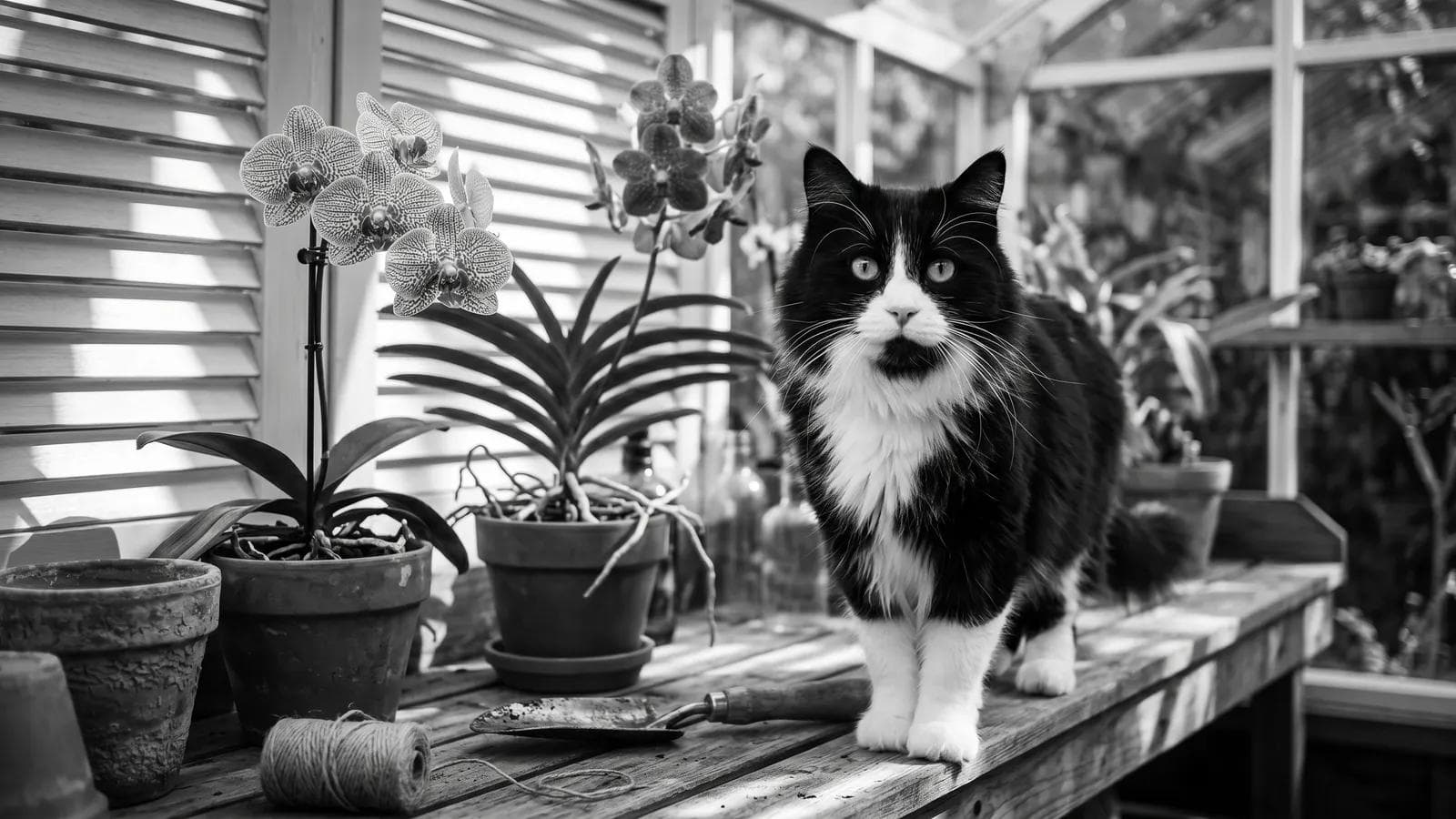
Vino has been in our home since April 2022. The barn protocol hasn't been retired. It has relocated.
In the yard, when I'm doing something, Vino walks between my legs. He follows along the fence line, between garden beds, from one end of the outdoor space to the other, meowing at a consistent volume about whatever he's decided warrants commentary. If I go back inside, Vino follows. If I go back outside, Vino follows that too. He's never needed a transition period. The outdoor space is managed on the same terms as the barn, and those terms have not been subject to renegotiation.
On the desk, the approach is modified for the furniture, but the principle holds: whatever is being worked on, Vino's presence is required. He sits in front of screens. He walks across keyboards. He finds the most precise point of inconvenience and occupies it with complete composure, as though that was the location he'd planned to be in from the beginning. In the barn he jumped onto shelves. At the desk he sits on the keyboard. The destination changes. The destination logic doesn't.
The meowing that follows the assistant through the yard is the same meowing that accompanied every barn visit: not distressed, not confused, simply present and continuous. He's narrating. He's maintaining the established terms. He's ensuring that no activity in his vicinity proceeds without acknowledgement from the relevant party, which is him.
The rooster at that house, who shared the outdoor space, was the only element that wasn't covered in the winery barn arrangement. Vino's approach to him has been adapted from first principles: find elevated ground when the rooster was in a difficult mood, sit peacefully among the birds when he wasn't. It's the same fundamental logic as the barn. Assess the environment, identify the best available position, occupy it without visible effort. The rooster has not been briefed on how this protocol works. Vino is patient.
What's clear now is that the barn wasn't formative in the sense of having shaped a particular behaviour through circumstance. Vino arrived at the household as a finished piece of work. The character he brought from the vineyard is the character he operates with now: particular about how things run, present in every room, constitutionally unable to allow anyone to do anything without inserting himself into it. The barn was where the assistant met him. The household is where the operation continues.
I have accepted this. I greet Vino when I walk into a room. I stop what I'm doing when the cat's assessment of the situation indicates that my attention is required. I go back and do the greeting properly if I've skipped it. This is how our home has always run, going back to a winery barn in northern Tasmania where a cat with two years of independent operation decided that I showed promise and began the evaluation process accordingly.
Frequently Asked Questions
What should you consider before adopting a farm cat like Vino?
Vino arrived with two years of barn management experience and an established protocol for staff interaction. The adjustment wasn't about teaching him to be domestic: it was about me learning his system. He'd already assessed the situation and approved the transfer before I realised what was happening. The barn leg-walking became yard leg-walking. The shelf-jumping became keyboard-sitting. Same cat, different furniture. Anyone considering a similar arrangement should understand that the cat's operating procedures transfer with them and are not subject to revision.
How quickly do cats like Vino adapt to indoor life?
Vino was operating at full capacity in our home within a week. The leg-walking transferred immediately from barn to hallway. The attention demands relocated from winery equipment to computer keyboards. The outdoor space presented new elements: a rooster, garden beds, different fence lines. His approach to all of them was immediate and characteristic. The adjustment period consisted of mapping the new territory and establishing his authority over it. This took roughly three days. The rest was implementation.
Is an older farm cat like Vino a reasonable choice over a kitten?
With Vino, the personality was apparent within ten minutes of the first barn encounter: persistent, systematic, constitutionally unable to allow work to proceed without his consultation. That character assessment has not changed. What you see in the barn is what you get at home, except the barn was smaller and had fewer keyboards. A kitten is a long-range bet. Vino was a known quantity from day one, and he was honest about it.
How do you know if a farm cat has decided on you the way Vino decided on me?
Vino didn't wait for me to begin an adoption process. He inserted himself between my legs, jumped onto whatever I was reaching for, and continued this pattern until the logical conclusion was reached. The selection process was conducted by the cat, not the human. It wasn't subtle: he made his expectations clear through consistent and targeted behaviour until the situation matched his requirements. I provided transportation. The placement decision had been made in the barn and was simply waiting for implementation.
Viniferous "The Mischievous" Messiah came from a winery barn without paperwork, without a pedigree, and without any apparent awareness that he was supposed to wait to be selected. He'd belonged to a grandfather I never met, been named by a family who'd landed on Messiah and meant it, and spent two years becoming the most thoroughly established presence on a biodynamic vineyard in northern Tasmania.
I, if pressed, might describe the adoption as something I chose to do. The evidence doesn't quite support that reading. But I'm staff. I understand my role. I've adapted accordingly.
Related reading: Why Cats Love Sitting in Sunbeams: A Morning Guide from an Expert.