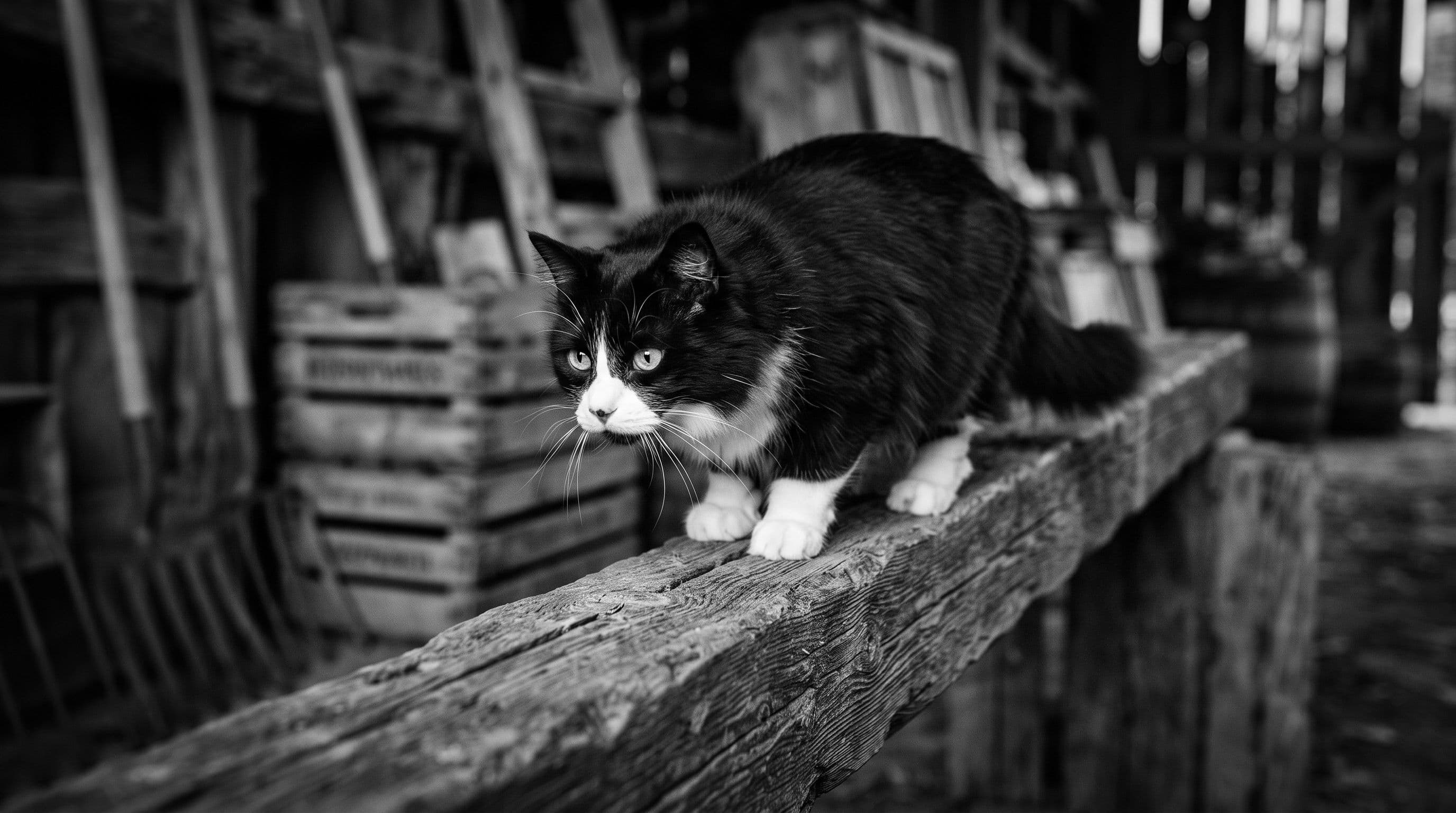
Three pieces of evidence from this household complicate the standard advice about adopting a tuxedo cat. I'd been watching Vino and Zola move through the same rooms, the same routines, the same afternoon yard sessions for roughly four years now, and what strikes me isn't how similar two black-and-white cats might be. It's how little the tuxedo pattern itself explains about what you're actually bringing home.
Exhibit One: The Winery Barn Insertion
Vino came from a working vineyard in northern Tasmania, where he'd spent his first two and a half years catching mice in a biodynamic winery barn. When I first walked into that barn, he didn't wait for permission. He walked between my legs, jumped onto whatever I was reaching for, and kept this up until I either patted him or surrendered entirely. This wasn't charm. This was architecture. He was built to insert himself into spaces and refuse to leave.
If I'd asked the shelter about bringing home one of these cats back then, I might have received something about "personality plus" or the old luck superstition. What I needed to know: does this particular cat have a history of non-negotiable spatial demands? Because Vino's pattern of insertion, the way he still gets on my desk during Zoom calls, the way he follows me around the yard meowing for pats, the way he claimed my fiancée's lap the first time she sat down, all of it started in that barn. The tuxedo marking didn't cause it. A grandfather who let him work the property and insert himself at will caused it.

The shelter wouldn't have known about the grandfather. But they might have known whether this cat was surrendered for being "too demanding," or whether he'd been returned once already. That's the question I'd ask now: not "what's it like adopting a bicolour," but "what did the previous environment reinforce?"
Exhibit Two: Zola's Reserved Counterpoint
Zola entered the household after Vino had already established his kingdom. She's black with a faint white marking on her abdomen, not technically a tuxedo, though I've seen shelters label similar cats that way to move them faster. She's 3.9 kg to Vino's 5.4, slender where he's softened from his original lean working build, and her response to his constant play invitations is hissing. They smooch. They share windowsills. They sleep near each other. They have never cuddled.
The cat tower standoff lasted months: both of them sitting in it, waiting for the other to leave first. Zola's energy is lower, her meows rare, her insertion into human business minimal. She'll sit on the couch arm and observe. She doesn't drool during pats. She doesn't produce the five-second protest meow when denied yard access. She doesn't follow me around the property demanding attention.
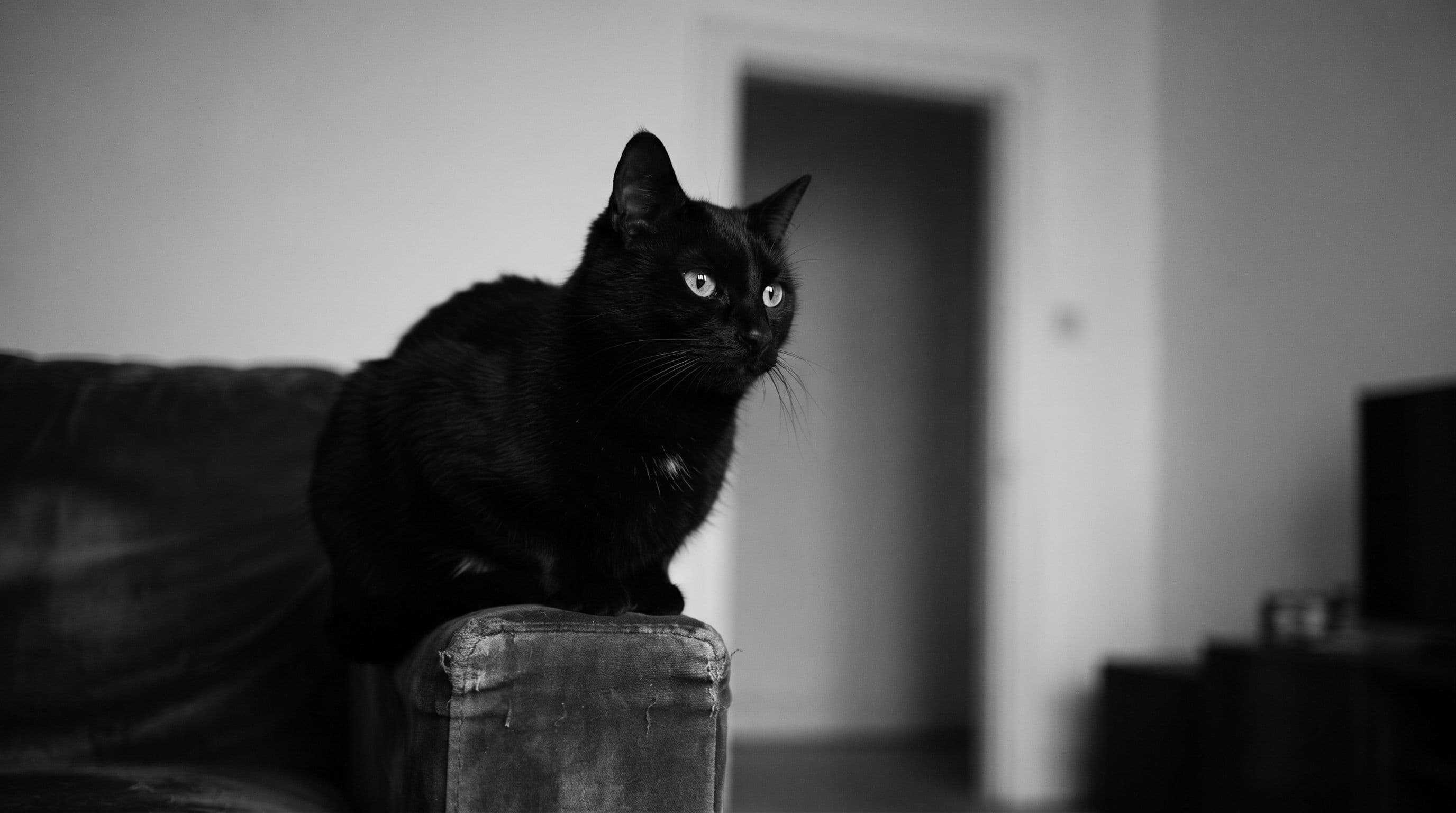
If you were at the shelter and they handed you Zola mislabeled as one of these patterned cats, your expectations would be destroyed within a week. The pattern is meaningless without the individual history. Zola's background is largely unknown, but her behaviour suggests a different early environment, one that didn't reward or require constant social insertion. The contrast between them, living in identical conditions for the same four years, proves that "tuxedo" predicts nothing about what walks through your door.
Exhibit Three: The Half-Bath Indignity
Vino's medium-long fur, noticeably longer than a shorthair though not extreme, requires maintenance I didn't anticipate. His back legs have, on more than one occasion, collected something that warm water and patience must address. He growls. He fights. He attempts escape. The dignified cat who sits majestically in the yard, who stares down the neighbour's Staffy with masterful passive aggression from his elevated ground, becomes a furious wet creature who wants nothing to do with my assistance.
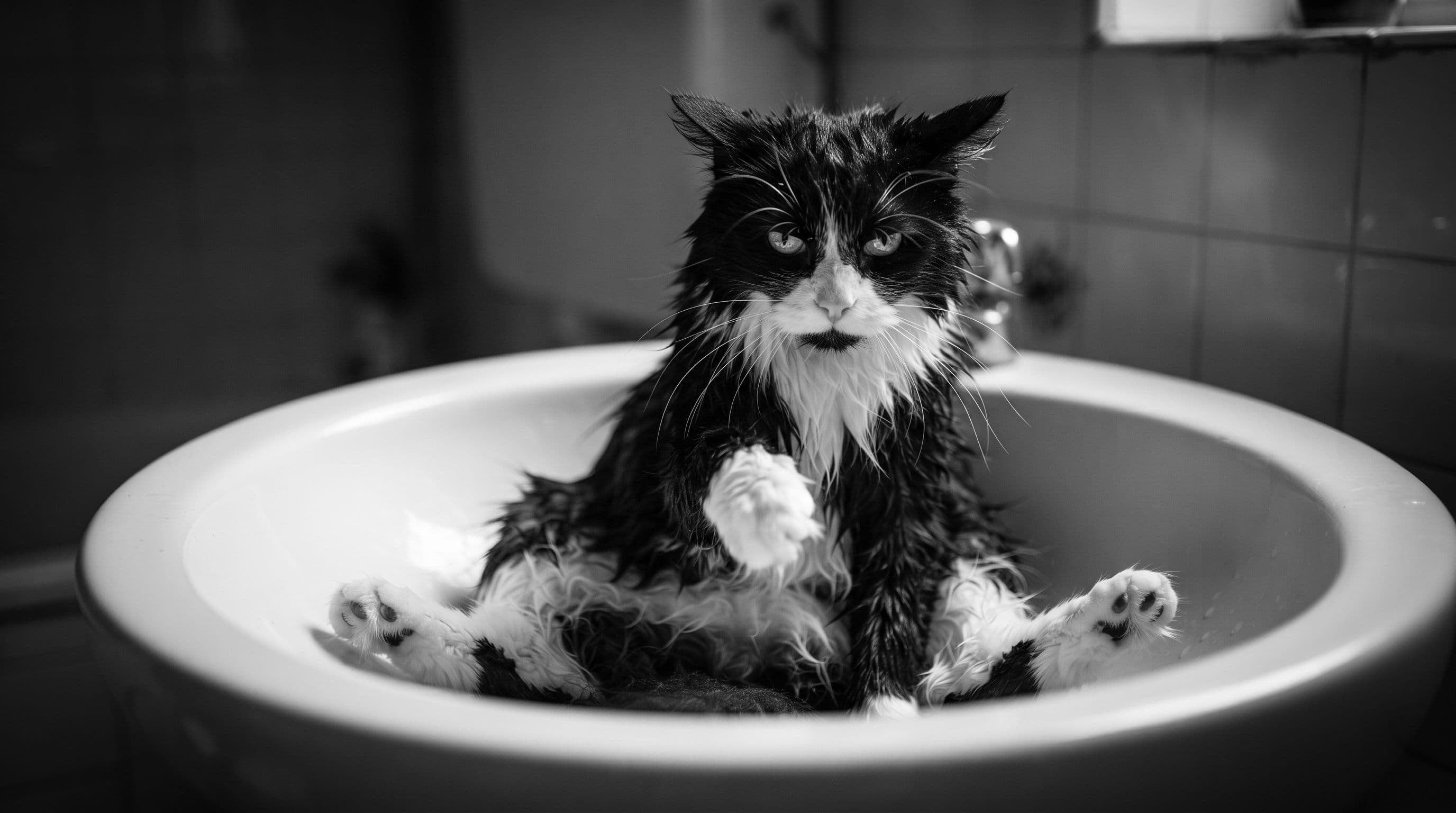
This is a grooming question I'd now ask any shelter before adopting one of these bicolours with medium-long fur: what coat length am I actually getting, and what's the maintenance history? Vino loves being brushed, particularly his chin and chest mane, but that preference was discovered through trial. A shelter might know whether a cat tolerates handling, whether they've had matting issues, whether they've been shaved before. The black-and-white pattern doesn't advertise the grooming contract you're signing.
The furballs and occasional vomit are a fact of life here. Vino grooms extensively. Zola, with her shorter coat, produces fewer. Again: same household, same diet, same yard access. Different outcomes entirely, and nothing to do with their colour distribution.
What This Adds Up To
Bringing home a patterned bicolour, I've concluded, is a category error waiting to happen if you lead with the pattern. The competitors' listicles about tuxedo cat facts, names, and behaviours all treat the marking as meaningful in itself. My four years with Vino and Zola suggest the opposite. The pattern is the least predictive thing about either of them.
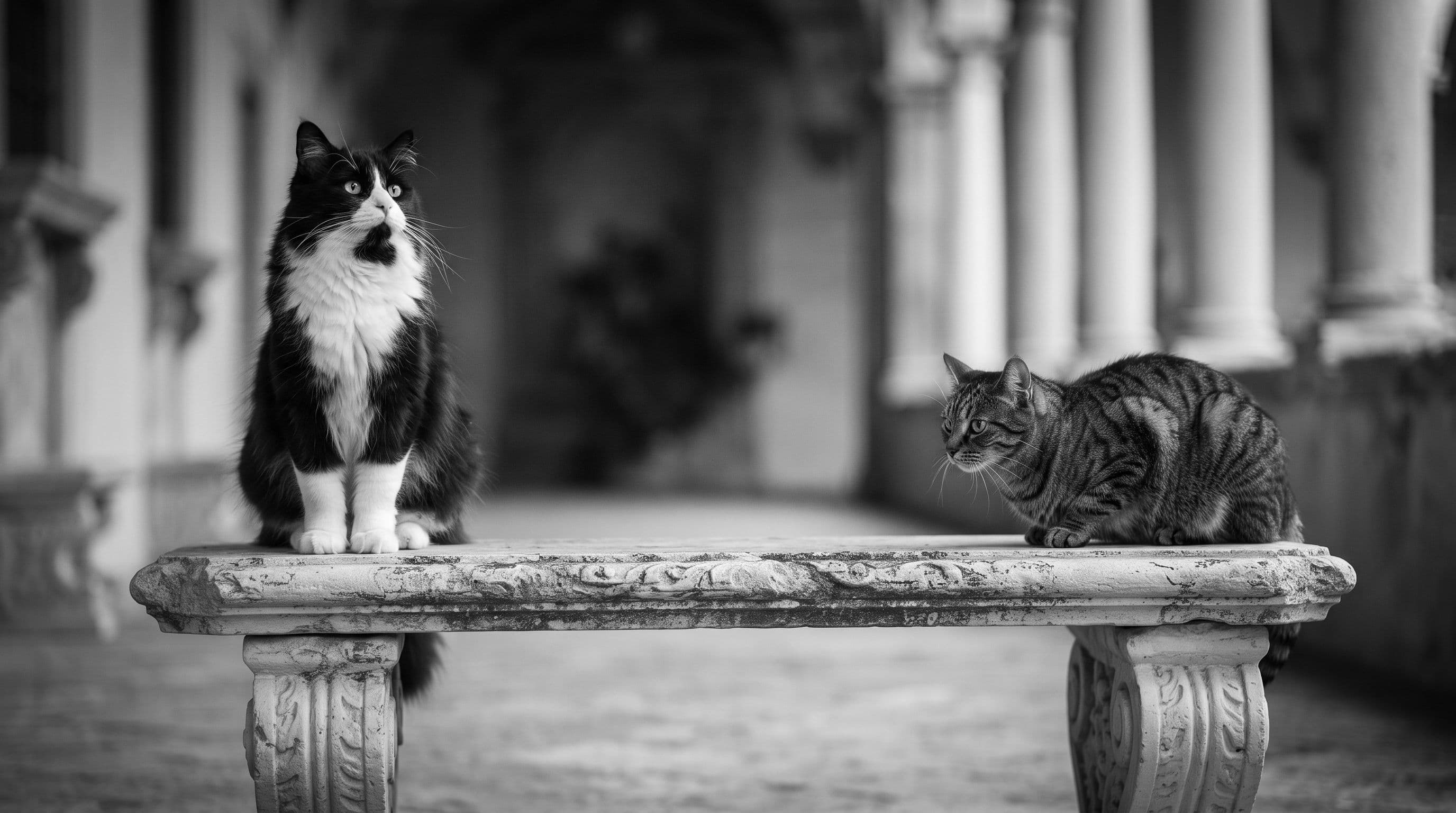
What matters: the specific history of insertion behaviours, the energy level reinforced by previous environments, the coat length and grooming tolerance, the vocal tendencies, the social demands. Vino's 5.4 kg, his green eyes with slight yellow hue, his natural bow tie chin marking, all of it is visually coherent. None of it explains why he drools during cuddles, why he waits for the rooster's first crow before launching his own breakfast campaign, why he ignores the Staffy at precisely one metre from the fence to maximum psychological effect.
The shelter questions I'd ask now are narrower and more specific than any guide suggests. Has this cat been returned before, and for what stated reason? What's their observed behaviour during feeding: do they self-regulate, or do they attack the bowl like Vino, who'd eat all his bikkies in one go every time if we didn't portion-control him? How do they respond to confinement: the sustained protest meow, or silence? What's their outdoor history: do they jump fences, chirp at birds, follow humans with relentless pat demands?