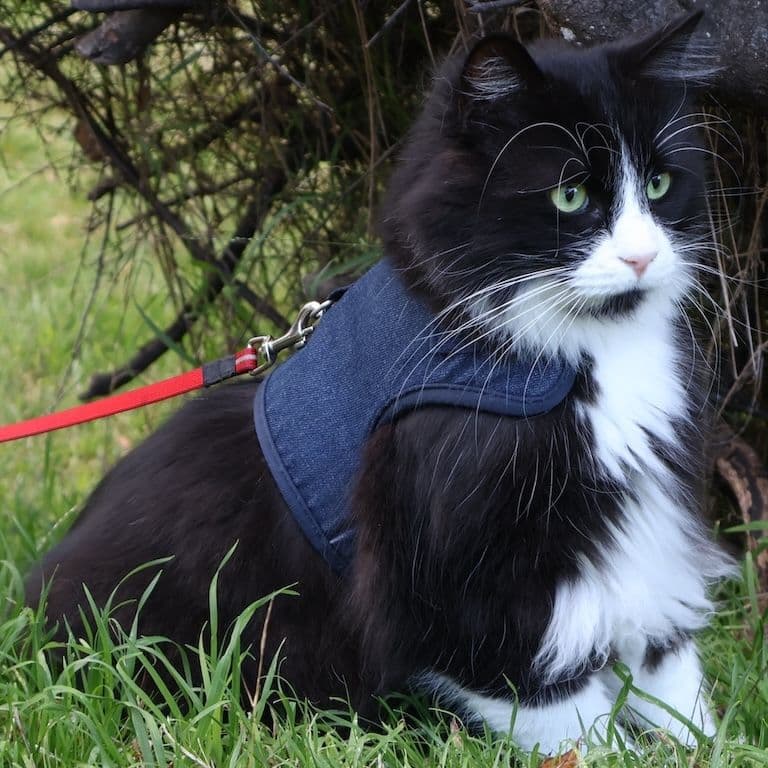
Vino was harness-trained in about a week. Zola took considerably longer, required more treats, and at one point staged what I can only describe as a passive protest where she sat completely still in the harness for twenty minutes and stared at the wall.
I'm telling you this upfront because most harness training guides present the process as linear: do these steps, get this result. The reality is that it depends almost entirely on the individual cat, and if you've got two cats like I do, you get a masterclass in just how different "individual" can be.
Why did I start harness training cats?
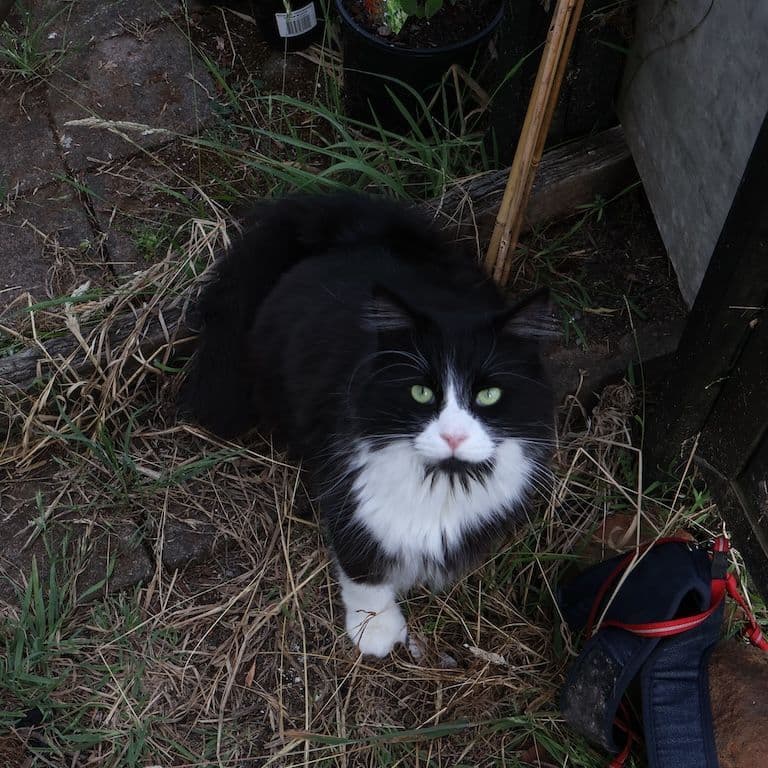
Vino came from a winery barn. I adopted him at about two and a half years old, which means he'd already spent most of his life with full outdoor access, a working territory, and his own agenda. Keeping him purely indoors was never really on the table. He'd been running a barn. He needed to go outside.
The harness was the obvious answer: outdoor access without the risk of him disappearing into the neighbourhood permanently, which, given his later discovery of the Staffy next door, was a prescient concern. He now positions himself about a metre from the fence and ignores the dog with an intensity that drives it absolutely mad. He comes back when he's ready. I've made my peace with it.
The winery where I found him was a working property. Vino had been the grandfather's cat, helping with mice in the barn and cellars. When I started working there, he immediately inserted himself into whatever I was trying to accomplish. Walk into the barn to get something, and Vino would appear between my legs, trip me up, jump onto whatever I was reaching for, and demand attention until he got it.
This behaviour didn't stop when I brought him home. It's simply who he is. The harness training had to work around this personality, not against it.
How long does harness training take?
For Vino: one week from introduction to outdoor walks. For Zola: closer to a month, with several setbacks and that memorable wall-staring incident.
The timeline depends entirely on your cat's background and temperament. Vino had spent years outdoors already. The harness was just a new piece of equipment for accessing familiar territory. Zola came from different circumstances and needed to build confidence both with the harness and with being outside.
The mistake most guides make is presenting a universal timeline. There isn't one. Your cat will tell you when they're ready for each step, and pushing faster than they can handle creates resistance that takes longer to overcome than just working at their pace would have.
What did the process look like with Vino?

Day one: I put the harness on the floor near his water fountain. He sniffed it for about thirty seconds, looked at me, and walked away. I took this as a good sign: no alarm, no avoidance, just assessment complete, nothing urgent.
Day two: I put it on him for the first time. Proper fit: snug enough it couldn't slip over his head, loose enough he could breathe and move normally. He wore it around the house for maybe twenty minutes. He knocked a few things over, which is his standard calibration process when something changes in his environment, then settled into his usual routine.
Day three through five: longer indoor sessions, up to an hour. I watched for signs of stress or discomfort. Vino showed neither. He adapted his movement to account for the new equipment, figured out doorway clearances, and continued demanding attention and treats as usual.
By the end of the first week he was outside. Two weeks in, he'd located the fence line and started scoping out the Staffy situation. Within a month, he'd established his current routine: perimeter patrol, strategic Staffy-ignoring, tree climbing, and return when satisfied.
The keys with Vino: don't rush the introduction, fit it properly from day one, and treat every stage as information-gathering rather than a milestone to tick off. He moved quickly because he'd made up his mind quickly. Once he'd decided the harness was acceptable, there was no reason to drag it out.
What went differently with Zola?

Zola took longer. Meaningfully longer. She's not a barn cat; she came from different circumstances and her relationship with the outside world is more considered. Where Vino sees an open space and immediately starts planning territorial expansion, Zola observes first. She'll sit at the back door and watch for a good five minutes before she commits to stepping out.
The wall-staring incident happened in week two. I'd put the harness on her for what should have been a routine indoor session. Instead of walking around the house as she'd done before, she sat down facing the living room wall and didn't move for twenty minutes. Not stressed, not fighting the harness, just. Motionless. Staring at paint.
I let her sit. Eventually she got up, walked to her food bowl, ate dinner with the harness still on, then came over for pats. The next day she was fine with it again. I never figured out what the protest was about, but it was clearly a protest.
She took more treats, more patience, and more sessions before she was comfortable outside. The first outdoor session lasted maybe five minutes. She wanted to come back in immediately. The second session was ten minutes. Gradual progression over weeks, not days.
She's completely fine with it now. She goes outside, surveys the yard methodically, sometimes follows Vino around, sometimes finds her own sunny spot to sit. But if I'd used Vino's timeline as the benchmark, I'd have concluded she was broken. She wasn't. She just needed more runway.
What works regardless of which type of cat you have?

Let them investigate the harness before it goes anywhere near them. Not for two minutes: leave it out for a day or two if needed. You want the harness to smell like your house before it becomes a thing that happens to them. Both Vino and Zola spent time sniffing it, and both seemed more comfortable once it had absorbed the household scent.
Fit matters more than most guides emphasise. Too loose and it's uncomfortable and insecure. Too tight and they're going to resent it. The two-finger rule under the straps is standard for a reason. I measured both cats and adjusted the harness properly before the first wearing, not during.
Start with short indoor sessions. Not because you're building tolerance in a slow, therapeutic way, but because your cat needs to understand how much clearance they have before they start moving normally. Vino's furniture-knocking in week one wasn't distress; he was figuring out the new geometry. Zola needed the same adjustment period.
Use treats strategically. Not just at the door, but on the way outside. The outdoor world has competing smells, sounds, and information that can overwhelm a cat who's processing a new experience. A treat at the threshold helps mark the transition as positive, and treats during the walk reward calm behaviour.
Watch what your cat tells you. Vino told me he was fine with the harness on day two by resuming his normal demanding-attention routine. Zola told me she needed more time by staging the wall protest. Neither response was wrong; they were just different communication styles for different processing speeds.
Why is harness training worth the effort?

Vino climbs trees outside. Real trees, not cat towers. He scratches actual wood and bark. His nails have never needed clipping because the outdoor surfaces handle the maintenance naturally. He does his perimeter patrol, conducts whatever ongoing psychological operation he has running with the Staffy next door, and comes back satisfied.
The harness has given him something that a purely indoor life couldn't: the ongoing sense that his territory is real and he's actively managing it. He's not just looking out windows at a world he can't access. He's in it, working it, maintaining his position in it.
For Zola it's different. She's less territorial about outdoor space, more observational. But she's clearly better for having access to it. She'll find sunny spots that don't exist indoors, watch birds from ground level instead of through glass, and experience weather directly instead of as something happening to other creatures.
Both cats are more settled indoors after outdoor time. Vino because he's completed his territorial obligations, Zola because she's satisfied her curiosity about what's happening outside. The harness makes that access safe and controlled.
What equipment actually works?
H-harness or figure-eight style that distributes pressure across the chest, not the neck. Collar-style harnesses put all the pressure on the trachea and create resistance even in cooperative cats. Both Vino and Zola wear chest harnesses that allow normal breathing and movement.
The leash matters too. Six feet gives enough room for normal cat behaviour without so much line that they can get tangled or bolt beyond your reach. Retractable leashes are tempting but create unpredictable tension that some cats find stressful.
For treats: whatever your cat already knows they love, broken into small pieces. Training time is not the moment to introduce new foods. Vino responds to his regular treats in smaller quantities. Zola needed higher-value options during the learning phase.
What mistakes should you avoid?
Don't use Vino's timeline for every cat. One week works for some cats, especially those with prior outdoor experience. Others need longer, and pushing faster creates resistance that takes longer to overcome than patience would have.
Don't skip the indoor adjustment phase. Even outdoor-experienced cats need time to understand how the harness affects their movement. Rushing outside before they're comfortable indoors sets up negative associations.
Don't assume protest means failure. Zola's wall-staring was communication, not breakdown. She was processing, not giving up. Some cats need dramatic pauses in their learning process.
Don't make it a battle. If your cat is actively fighting the harness, something about the fit, timing, or approach needs adjustment. Forced compliance creates lasting negative associations that are harder to overcome than starting over with a different method.
How do you know if your cat is ready for each step?
Indoor comfort first: work up gradually until your cat can wear the harness for a good stretch without obvious distress, excessive grooming of the harness area, or changes in eating or bathroom habits.
Outdoor readiness: they should be moving normally indoors with the harness, not avoiding doors or hiding. Vino started demanding to go outside. Zola began sitting by the door wearing her harness.
Independence markers: they stop trying to remove the harness, resume normal behaviours like playing or napping while wearing it, and respond to their name while outside without panic.
FAQs

How long does it take to harness train a cat?
It depends entirely on the individual cat. Vino, with prior outdoor experience, took one week. Zola needed closer to a month with setbacks. Between the two of ours, prior outdoor experience seems to have made the difference.
What's the best harness for cat training?
H-harness or figure-eight style that distributes pressure across the chest rather than the neck. Proper fit is more important than brand: snug enough it can't slip over their head, loose enough for two fingers under the straps.
Can indoor cats be harness trained?
Yes, but expect a longer timeline. Indoor cats need to build confidence with both the harness and outdoor environments simultaneously. Zola was primarily indoor before training and adapted successfully with patience.
What age should you start harness training?
Earlier is generally easier as kittens adapt more readily to new equipment. Adult cats can absolutely be trained, but may need more gradual introduction and higher-value treats during the learning phase.
What if my cat won't move in the harness?
Some cats freeze initially when wearing new equipment. Zola's wall-staring phase lasted twenty minutes but resolved on its own. If freezing persists beyond a few sessions, check the fit and consider a slower introduction.
How do you know if harness training isn't working?
Persistent stress signs: excessive grooming of the harness area, changes in eating or bathroom habits, hiding behaviour, or aggressive responses to seeing the harness after multiple positive sessions.
If you're wondering about specific outdoor challenges like other animals or escape prevention, the post on tuxedo cat personality traits covers Vino's relationship with the neighbour's dog in detail.
For broader outdoor safety considerations, tuxedo cat lifespan addresses what "barn cat" background means for longevity and risk assessment.
What's your cat's harness training story? I'm always curious whether the week-to-done timeline is unusually fast or actually pretty normal for cats with outdoor backgrounds. Drop your experience in the comments.