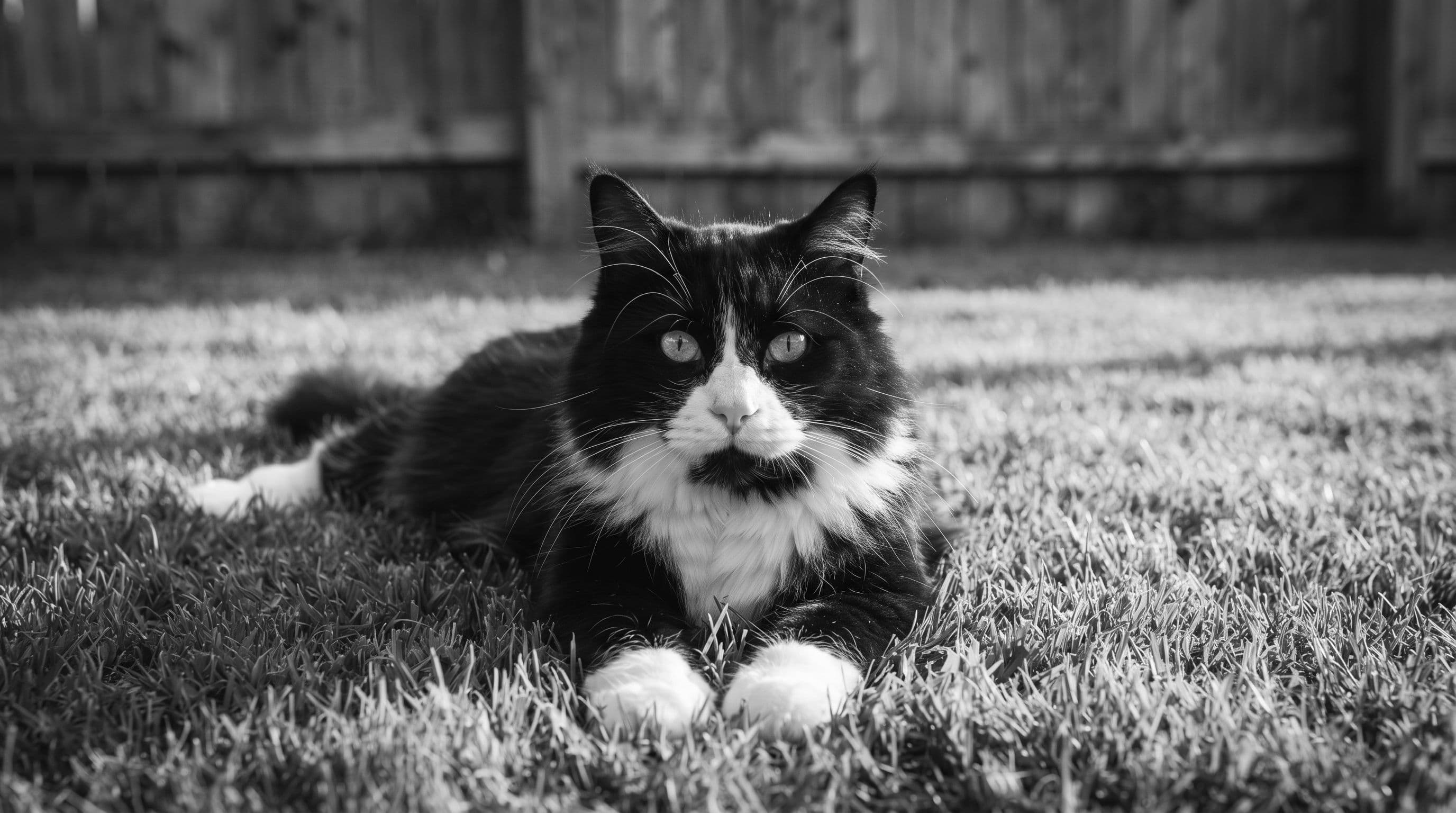
Whether a tuxedo cat should go outside has nothing to do with the coat and everything to do with the house. I have answered this question three different ways for the same two cats, because we have lived in three houses, and the right answer changed each time. The cats did not change. The roads did.
Three houses, three answers
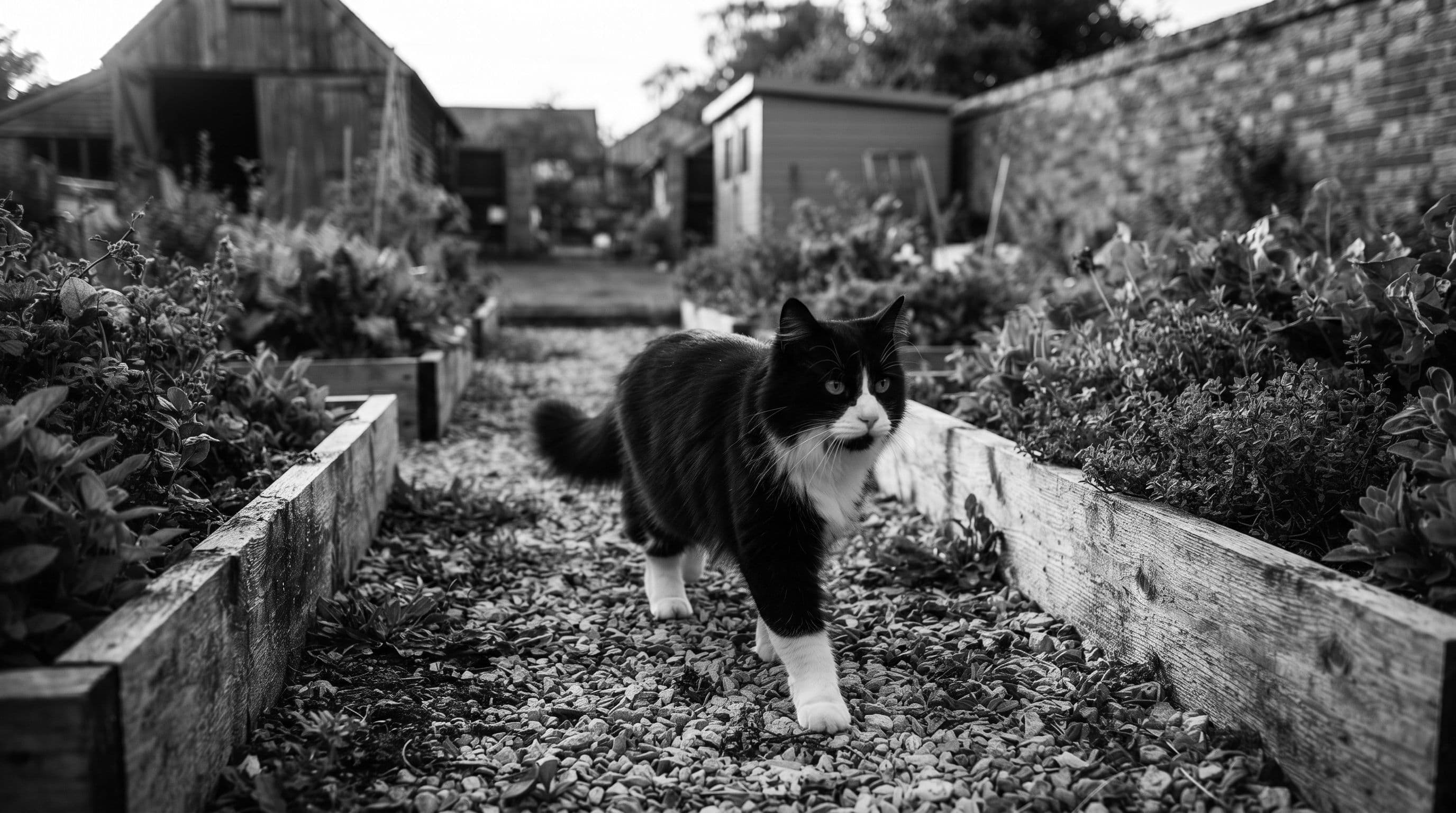
At the first house the cats were walked on leads and never let off. They would head straight down the driveway toward a busy road if they could. The rural house was the opposite. Both cats started on leads, then went off-lead with me out there with them, and eventually roamed on their own, because the property was surrounded by bushland and had few close neighbours. The current house is suburban, with too many busy roads around it, so there is no outdoor access at all for now. When it starts, it will be on the lead.
Both Vino and Zola have been lead-trained, so that is a plan rather than a hope. The current arrangement is a pause, not a permanent ruling. Vino is not an indoor cat by temperament. He has had real freedom and he remembers it.
What roaming looked like at the rural house
They went out about an hour before dinner, and that timing was deliberate: dinner is what brought them back when I called. Sometimes there was a shorter run in the morning too. Vino would wander and explore, sit and look majestic (a lot of his outdoor time was just that), chirp at wild birds, chase Zola, and follow me around the yard demanding pats at full volume, exactly as he did in the winery barn.
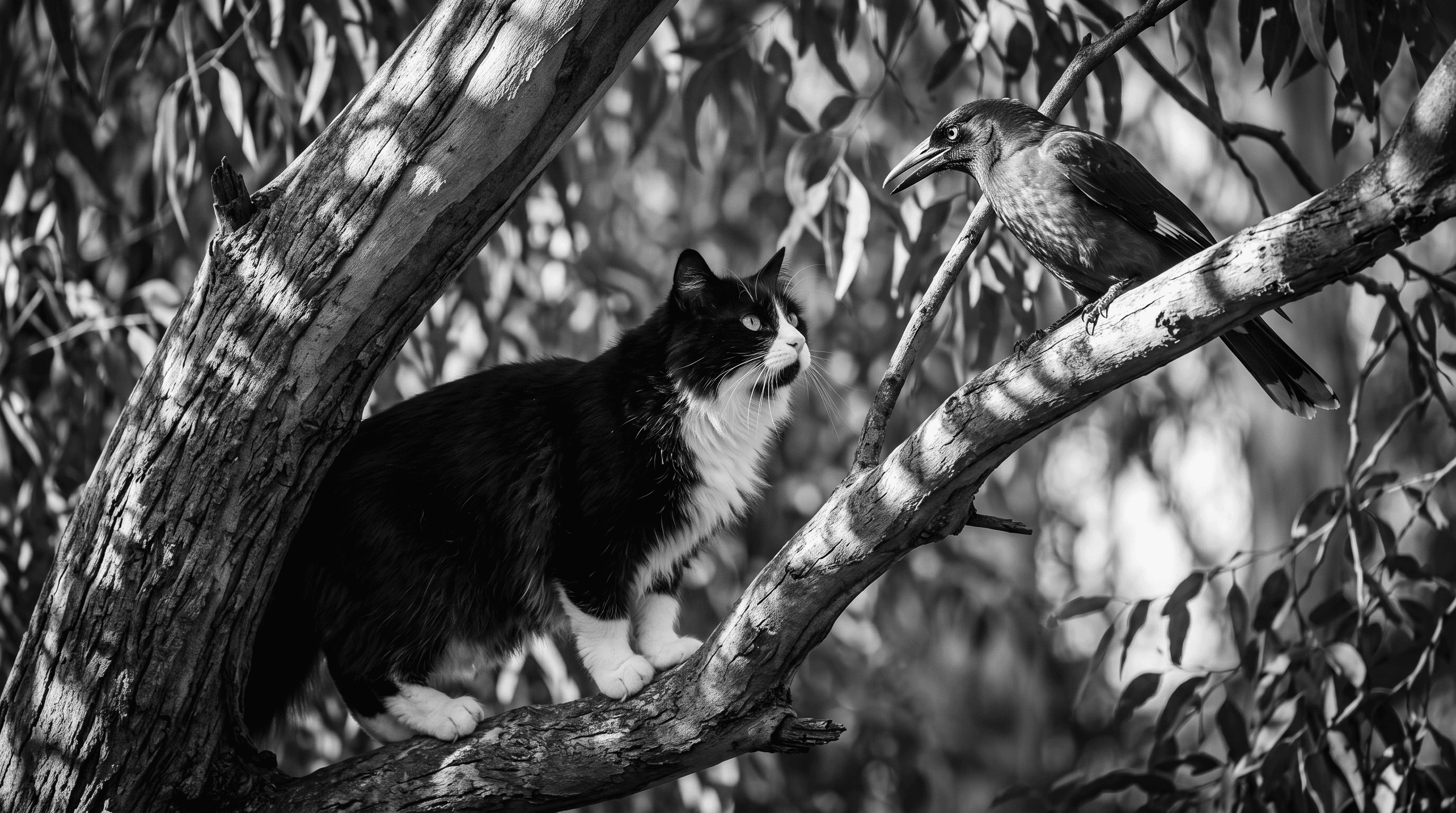
He also jumped the fence there. He went over into the bushland, but not far, and the thing I remember is that he meowed constantly once he was on the other side, so I always knew where he was. A cat who narrates his own whereabouts is useful. A couple of times I caught him snooping in the neighbour's yard. The neighbour's Staffy never had anything to do with it: his routine with the dog was to lie a metre or so from the fence on his own side and stare into the middle distance, pretending it did not exist. The Staffy lost its mind. Vino did not react.
That was a good setup for that property. It is not advice for yours. The fence-jumping stories belong to a house we have left, and I would not repeat that arrangement next to a busy road.
What the research says
The professional guidance is more cautious than my rural years were. The AAFP's Indoor/Outdoor Lifestyle position statement, updated in 2024, recommends that cats in urban and suburban areas be kept indoors or given only supervised or securely enclosed outdoor access, such as catios, harness walks or fenced enclosures, because of risks including traffic, predators, disease and human cruelty. If you decide to, letting a cat outside safely with a harness or an enclosure is covered in its own guide.
There is a wildlife side too. A 2020 study by Legge, Woinarski, Dickman and colleagues, published in the CSIRO journal Wildlife Research, estimated that Australia's roughly 3.8 million pet cats kill about 390 million native animals a year, averaging 186 animals per roaming pet cat. That is the pet-cat toll, separate from feral cats. Vino has caught a couple of small birds himself, roughly two, and the household discourages it. I do not share the figure to shame anyone, but it is part of why a lead suits our current suburb.
Coat colour does not change any of this
A tuxedo is a coat pattern, not a breed, and it shows up across many kinds of cat. Vino's black and white markings make him no safer and no more at risk than any other cat. What matters is temperament, the road outside, and how closely someone is watching. If you want the genetics, see why tuxedo cats look the way they do.
What we do now
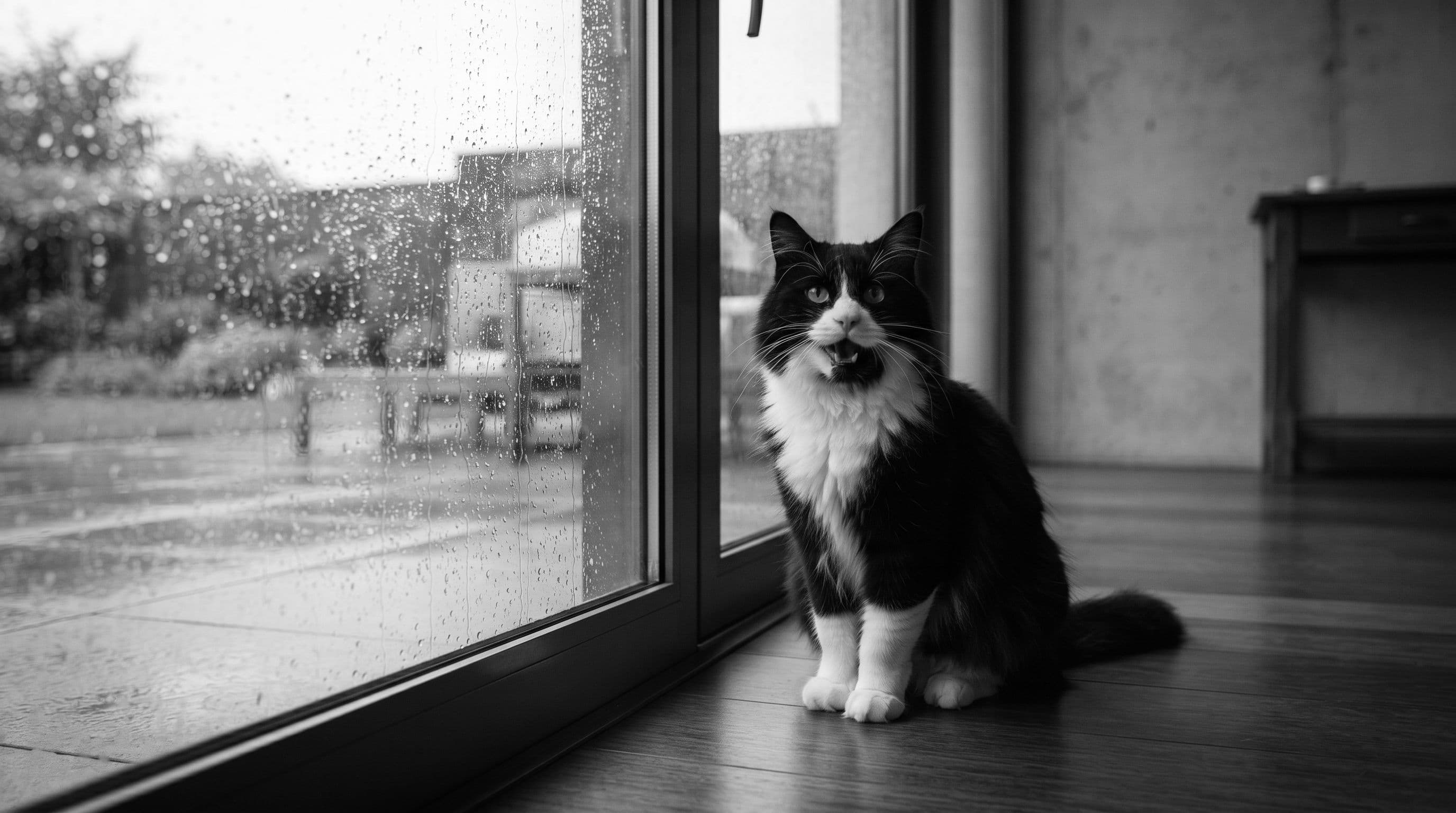
Right now the cats live inside, with two cat towers, the water fountain Vino drinks from constantly, and a lot of company. Vino notices the gap. When he does not get his way, most often when he is not let outside, he produces one sustained meow, the same tone and volume, for five seconds or more. It is not a question. It is a statement of grievance.
The plan is lead walks once the cats have settled into the new house. If you are starting that process, how to harness train a cat covers it. Whatever the setup, identification matters. Both cats are microchipped, and neither wears a collar. International Cat Care's position statement on microchipping describes a permanent microchip conforming to the ISO 11784/11785 standard as the safest and most permanent method of cat identification, enabling reunification through routine scanning by vets and shelters.
For the longer view on how outdoor access affects how long a tuxedo cat lives, see tuxedo cat lifespan, indoor and outdoor.
What it adds up to
Look at the road outside, not the colour of the cat. If you live near traffic, a lead, a harness or a secure enclosure is the safest way to give a curious cat the outdoors. If you live somewhere quiet with bush around, the answer may be different, but make it deliberately and keep an eye on where they are. Our answer was lead only, then off-lead, then roaming, and now lead only again. The cat who sat through all of it, loudly, is still the same cat.