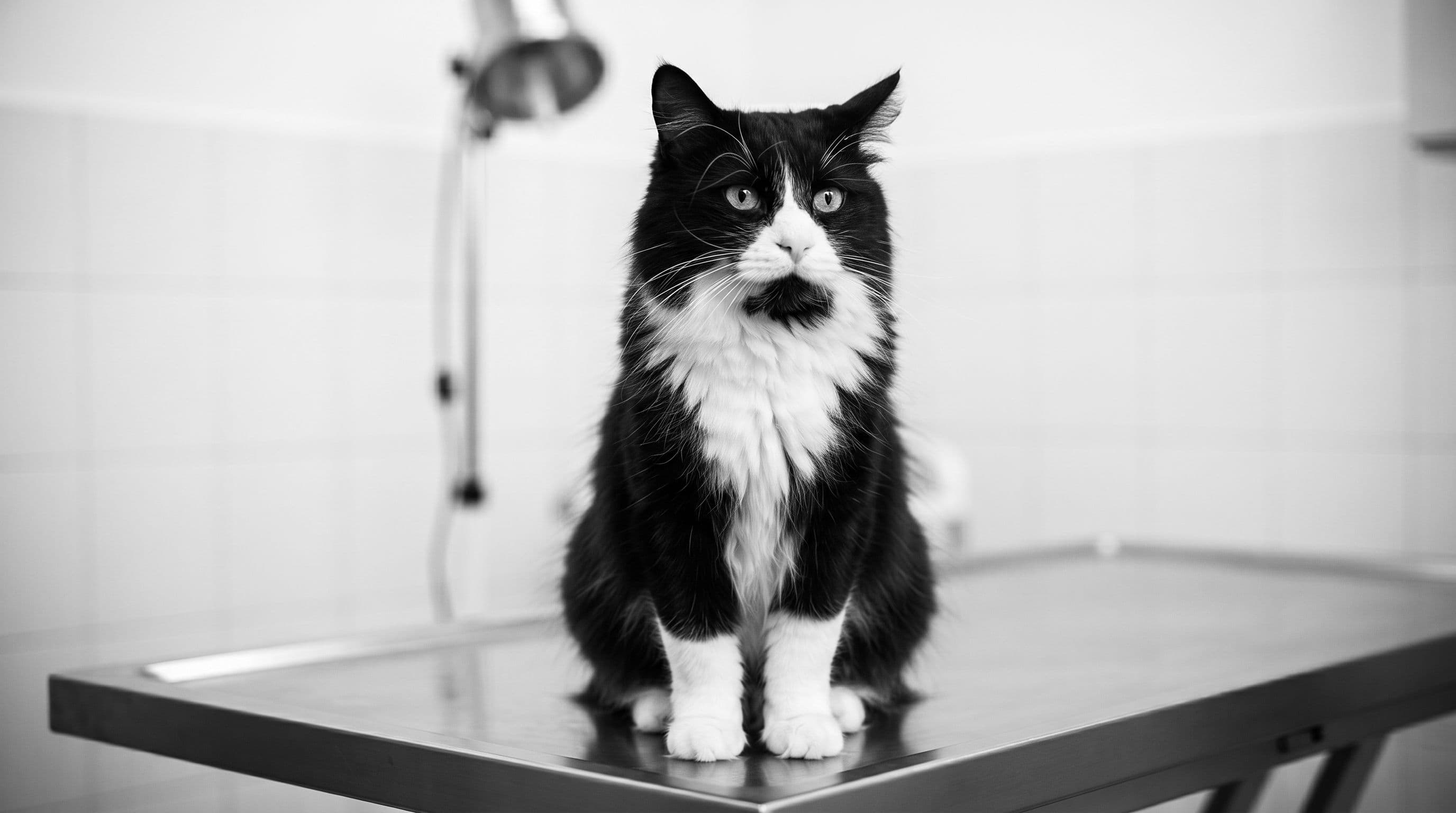
Most people assume cat microchipping hurts more than it does. I certainly did. I'd watched enough online footage of cats yowling on veterinary tables to build a small, irrational dread about the whole thing before Vino's appointment. The reality was so anticlimactic that I felt faintly embarrassed for having worried at all. The needle went in between his shoulder blades, he flinched once, and it was over in roughly 2 seconds. He's had longer reactions to me sneezing near his food bowl. International Cat Care's position statement describes a permanent microchip conforming to the ISO 11784/11785 standard as the safest and most permanent method of cat identification, enabling reunification through routine scanning by vets and shelters. That assessment lines up with what I saw firsthand: a procedure so brief it barely interrupted Vino's afternoon schedule of meowing at the kitchen window.
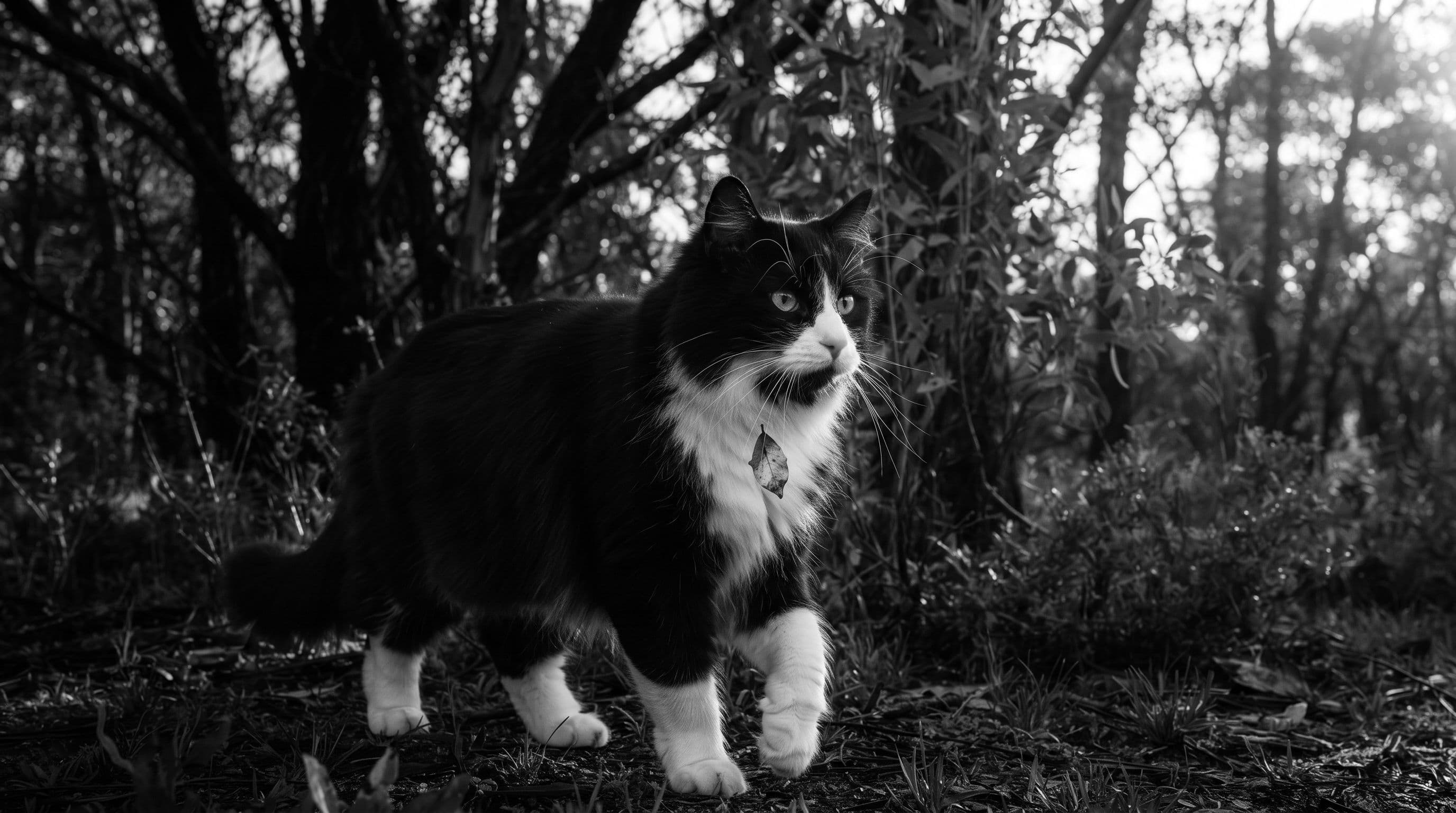
The reason I'm writing this now, though, isn't the procedure itself. It's what happened about a week after Vino got chipped. I was outside splitting kindling near the back fence when I noticed he wasn't in the yard anymore. He'd jumped the boundary, as he does from time to time, and wandered into the neighbouring bush. He came back 40 minutes later, strolling through the tree line with a leaf stuck to his chest bib and absolutely no awareness that I'd spent the interval scanning the hillside like a search-and-rescue volunteer. In that moment I understood, viscerally, the difference between hoping your cat comes home and knowing that if someone finds him, there's a chip between his shoulders that says he's mine.
The Collar Myth and Why It Misleads Cat Owners
The conventional wisdom around cat identification goes something like this: put a collar on your cat, attach an ID tag with your phone number, and you're covered. It sounds reasonable. It isn't.
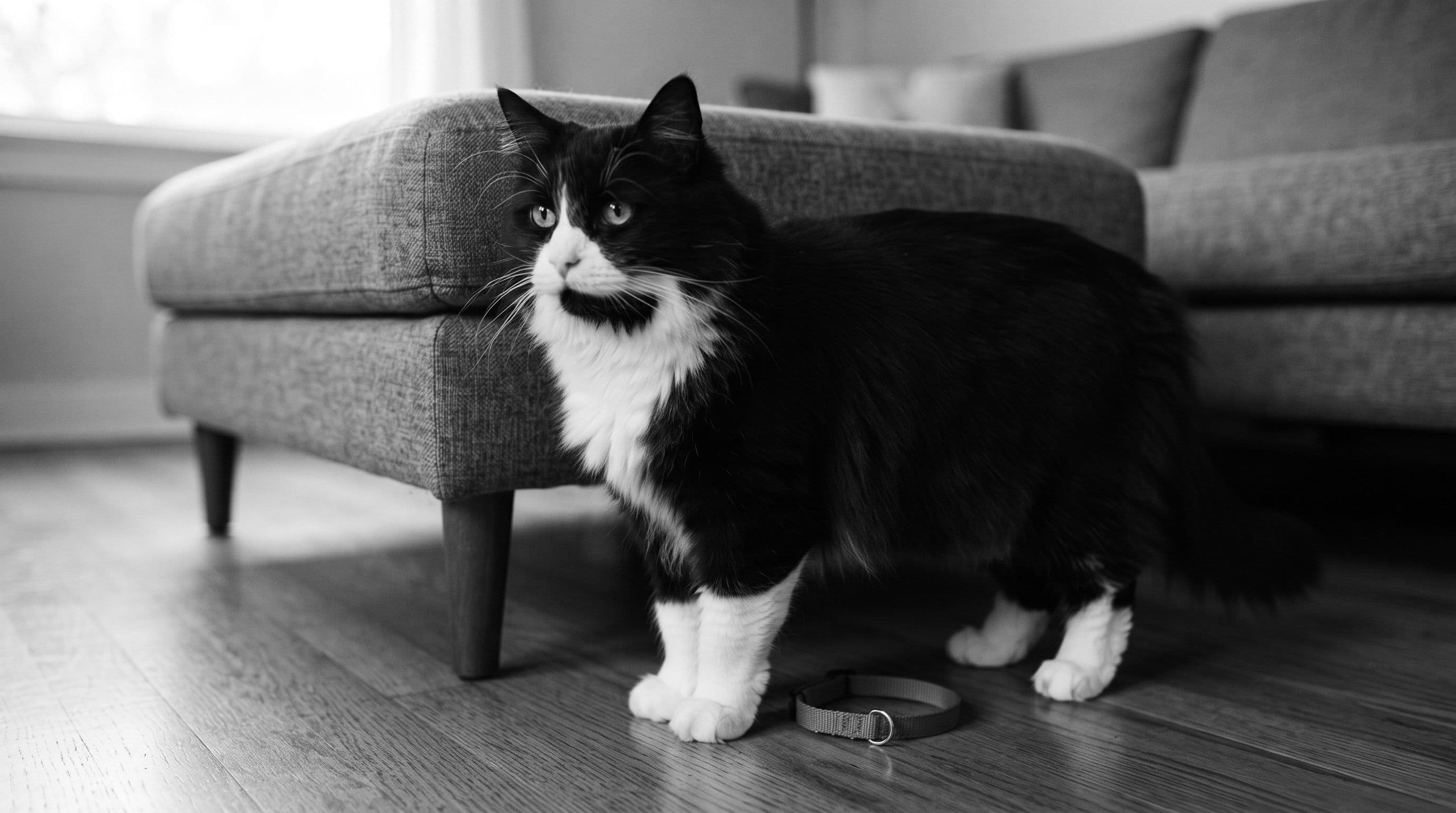
Collars are designed to come off. Breakaway collars, the only kind you should put on a cat, release under pressure to prevent strangulation on branches, fences, and anything else a cat might hook itself on during an outdoor session. That's a safety feature, not a flaw. But it means the collar is, by design, temporary. Vino has lost at least 3 collars in the years he's lived with us. One disappeared somewhere in the yard. Another came off during what I can only assume was an ambitious fence-clearing manoeuvre. The third was found under the couch, which suggests he removed it himself through sheer force of will.
Each time, his identification vanished with it. If he'd gotten lost during any of those collar-free windows, a stranger, a vet, or an animal shelter would have had nothing to work with. No name, no number, no way to connect a 6 kg tuxedo cat with green eyes to the increasingly anxious man in northern Tasmania searching for him.
The assumption that a collar equals identification has a second problem: it creates a false sense of completion. People tag their cat and mentally check the "identification" box, then never revisit it. Cat microchipping doesn't replace collars; it backstops them. The collar is visible and immediate. The chip is invisible and permanent. You need both, but if you can only have one, the chip is the one that won't end up under a couch.
How Cat Microchipping Actually Works
A microchip is a passive transponder roughly the size of a grain of rice. It doesn't have a battery. It doesn't emit a signal. It doesn't track your cat's location, despite what a surprising number of people seem to believe. What it does is store a unique identification number. When a scanner passes over the chip, it activates the transponder through radio frequency, and the number appears on the scanner's display. That number is linked to a registration database that holds your contact details.
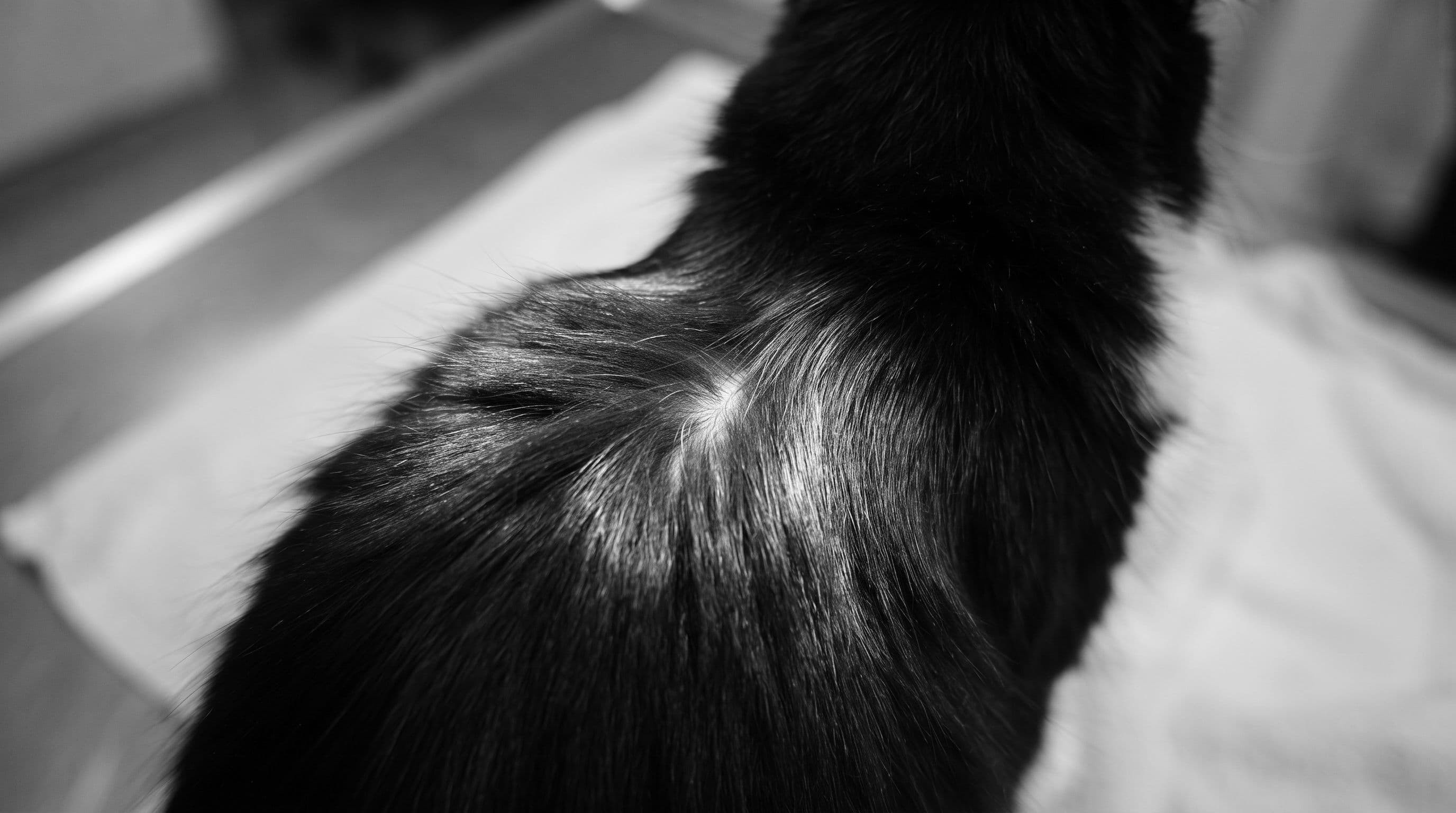
The implantation itself is done with a hypodermic needle slightly larger than those used for vaccinations. The chip goes into the subcutaneous tissue between the shoulder blades. No anaesthesia, no incision, no stitches. The whole thing, from needle in to needle out, took about 2 seconds for Vino. He was more agitated by being held still on the examination table than by the injection itself. The vet in Launceston who did it told me most cats react less than they do to a standard vaccination. Vino confirmed this by immediately attempting to knock a pen off the counter, which is his default response to any room he's in.
Once implanted, the chip migrates slightly as the tissue around it forms a thin capsule, and then it stays put. There's no maintenance, no charging, no replacement schedule. The chip conforming to the ISO 11784/11785 standard is readable by universal scanners, which means it works across clinics, shelters, and council facilities throughout Tasmania and the rest of Australia.
The only human responsibility after implantation is registration. This is the step people skip. A chip without updated contact details in the database is a locked door with no key. When we moved, I updated Vino's registration within the week. I did the same for Zola, who weighs about 3.9 kg and managed to sit through her own microchipping appointment with the stoic indifference she applies to most events that aren't Vino chasing her across the living room.
Vino as the Case Study: One Tuxedo Cat, One Chip, and a Lot of Fence Jumping
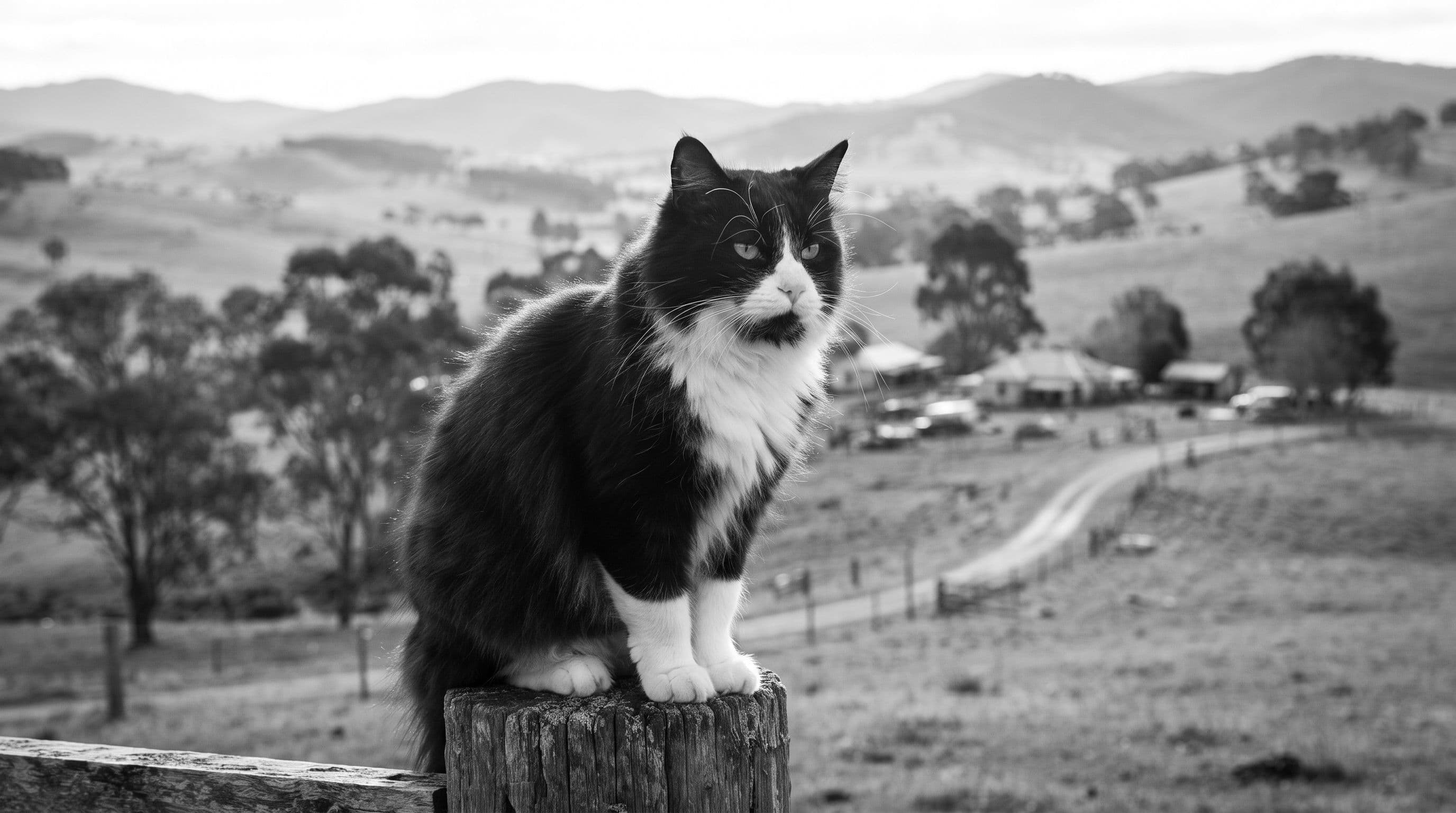
Vino came from a small, family-run biodynamic vineyard and winery in northern Tasmania. He'd spent roughly two years there as a working cat, catching mice in the barn and inserting himself into the daily operations with the same diplomatic subtlety he brings to everything: none. When I took him home in April 2022, he was an outdoor-savvy, confident, deeply opinionated animal who'd never worn a collar in his life.
His transition to domestic life didn't dampen his instinct to roam. Every afternoon before dinner, Vino and Zola go outside for one to two hours. Vino will wander, sit on elevated ground looking majestic, chirp at wild birds, and, at the old house, occasionally jump the fence and disappear into the surrounding bush. He doesn't go far, and he always comes back, but the point is that he leaves our property. He is, for a window of time, an unaccompanied cat in a landscape that includes roads, other properties, and the neighbour's Staffordshire Bull Terrier, who loses its composure whenever Vino positions himself a metre from the fence and pretends it doesn't exist.
This is the context in which cat microchipping stopped being theoretical for me. Vino isn't a strictly indoor cat. He has a routine, he has territory, and he has a personality that pulls him toward fences, not away from them. A collar can't keep up with that lifestyle. A chip doesn't need to.
One afternoon last spring, Vino didn't appear at the back door at his usual time. I walked the yard. I checked the fence line. I checked with the neighbour on Banksia Lane, who hadn't seen him. Twenty minutes later he trotted out of the tree ferns near the eastern boundary, completely unbothered, and meowed at me as though I were the one who'd gone missing. In those 20 minutes, the only identification on his body was the chip between his shoulder blades. If someone in the Tamar Valley had found him, any vet or shelter with a scanner could have pulled up my details and called me.
That's the point. Not that the chip saved him that day. It didn't need to. The point is that it would have if the situation had gone differently. For context on how Vino handles the rest of his outdoor adventures, I've written more about his daily routine and outdoor behaviour in an earlier post.
What Happens After the Chip Goes In
The 48 hours following implantation are uneventful, which is the whole idea. Vino had a tiny bump at the injection site that I could feel when I ran my hand between his shoulder blades. It resolved within a few days. He didn't lick at it, didn't scratch it, didn't slow down. He was back on the desk getting in the way of my keyboard within the hour. The vet recommended keeping him indoors for 24 hours to let the site settle, which Vino expressed his feelings about through a series of sustained protest meows at the back door: one tone, one volume, held for 5 seconds or more each, repeated at intervals. He was not consulted about this decision and wanted that on record.
There's no ongoing care involved. You don't need to charge it, replace it, or have it serviced. The only task is keeping your registration details current. If you move house, change phone numbers, or transfer ownership of the cat, you update the database. This is free or costs a nominal fee depending on the registry. I've updated ours twice.
If you're curious about other aspects of keeping a tuxedo cat healthy and well-groomed at home, I covered brushing, coat maintenance, and general grooming in a separate post that pairs well with this one.