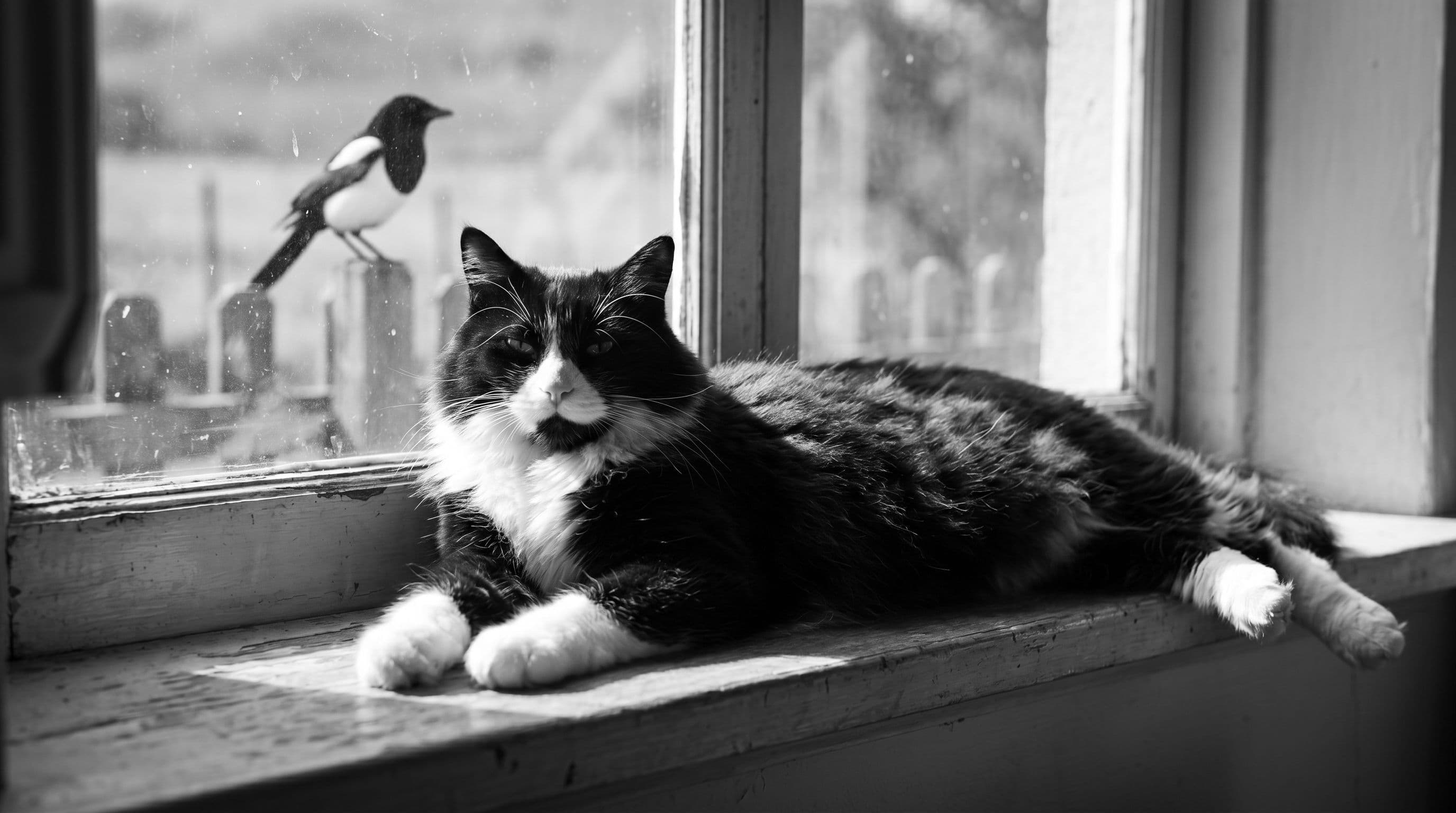
A tuxedo cat's coat does not set how long it lives. Tuxedo is a colour pattern, not a breed, and the cats wearing it are mostly ordinary household cats, so a question about tuxedo cat lifespan is really a question about the life the cat gets. Vino came to me in April 2022, vet-estimated at two and a half, after a stretch as a working cat in a winery barn in northern Tasmania. Since then I have managed his outdoor time three different ways, which is why I take this question more seriously than most.
How Long Do Tuxedo Cats Live?
The best figure I can give you comes from a VetCompass study of 4,009 cats that had died after attending 90 vet practices in England, published by O'Neill and colleagues in the Journal of Feline Medicine and Surgery in 2015. The median longevity was 14.0 years, and the middle half of the cats died between 9.0 and 17.0 years. Crossbred cats, the group most household tuxedos fall into, had a median of 14.0 years against 12.5 years for purebred cats.
Those numbers cover every cat in the sample, indoor and outdoor, so treat them as a starting point rather than a promise. A median of 14 also means half of those cats lived past it, and a quarter lived beyond 17. I haven't found a study showing a coat-pattern effect on lifespan, so I won't invent one. The lever is not the white bib.
Indoor vs Outdoor: What Changes the Odds
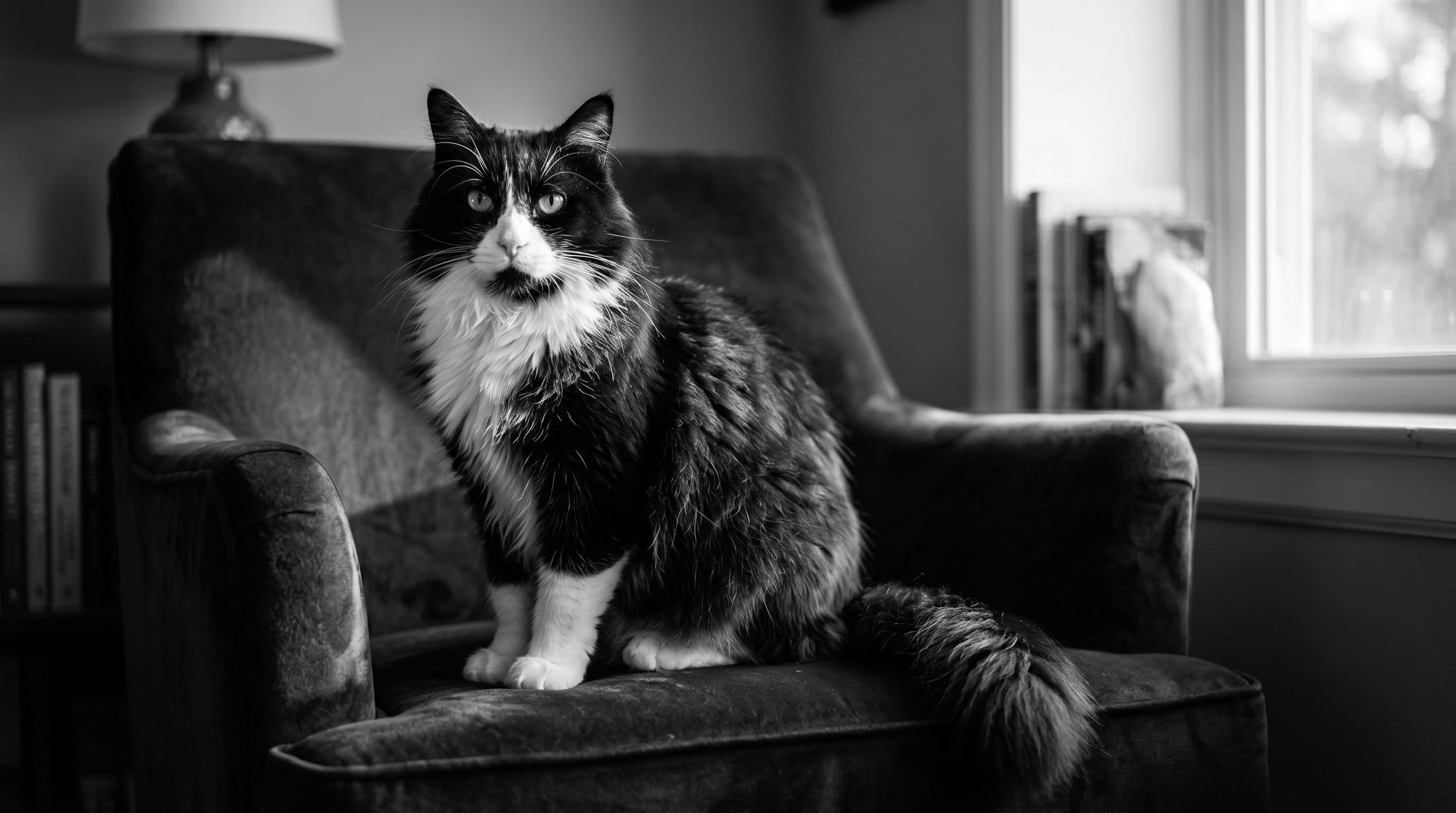
You will see tidy figures online for indoor and outdoor cats, usually something like "indoor 10 to 15 years, outdoor 2 to 5". I can't trace them to a primary source, so I don't repeat them. What I can point to is the American Association of Feline Practitioners' 2024 position statement on indoor and outdoor lifestyle. It recommends that cats in urban and suburban areas be kept indoors or given only supervised or securely enclosed access, such as catios, harness walks or fenced areas, because of traffic, predators, disease and human cruelty. In the VetCompass study, trauma was the most frequently attributed cause of death across all ages, at 12.2%.
Vino is a useful case because he has lived all three versions. At the first house he never got past lead walks, because the cats would head straight down the driveway toward a busy road. At the rural house, where bushland and few neighbours made it possible, he went from lead, to off-lead with me out there, to running around unsupervised. As of September 2026 we are in a suburban house with busy roads nearby. He isn't going outside yet, and when he does it will be on the lead.
The cat didn't change. The roads did. That is the honest shape of the decision: it isn't indoors versus outdoors as a moral position, it is what is actually outside your door. If you are weighing it up for your own cat, I have written separately about whether tuxedo cats should go outside at all.

What Keeps an Indoor Tuxedo Cat Healthy for Longer
Weight is the indoor cat's quiet risk. Vino is 6 kg, measured at the vet in September 2026, and that is the number I watch. Clark and Hoenig's 2021 review in the Journal of Feline Medicine and Surgery reports that obese cats are two to four times more likely to develop diabetes mellitus than cats in ideal condition.
The yearly check-up matters more than it sounds. Both cats go once a year, and it is how a vet spotted Vino's dental problem, an immune condition where his own immune system rejects his teeth. Sixteen teeth came out in late August 2026. The AAHA/AAFP Feline Life Stage Guidelines call annual wellness exams the minimum and note that twice-yearly exams are often recommended, because health can change quickly between visits. Desexing is another early vet decision, and the neutering a male cat post covers the procedure and recovery.
The long game is the kidneys. The Cornell Feline Health Center states that chronic kidney disease affects up to 40% of cats over the age of 10 and 80% of cats over the age of 15. You can't lap-comb your way out of that, but you can catch it early, which is the argument for the check-up. For what that looks like in the later years, I've covered senior cat care in its own post.
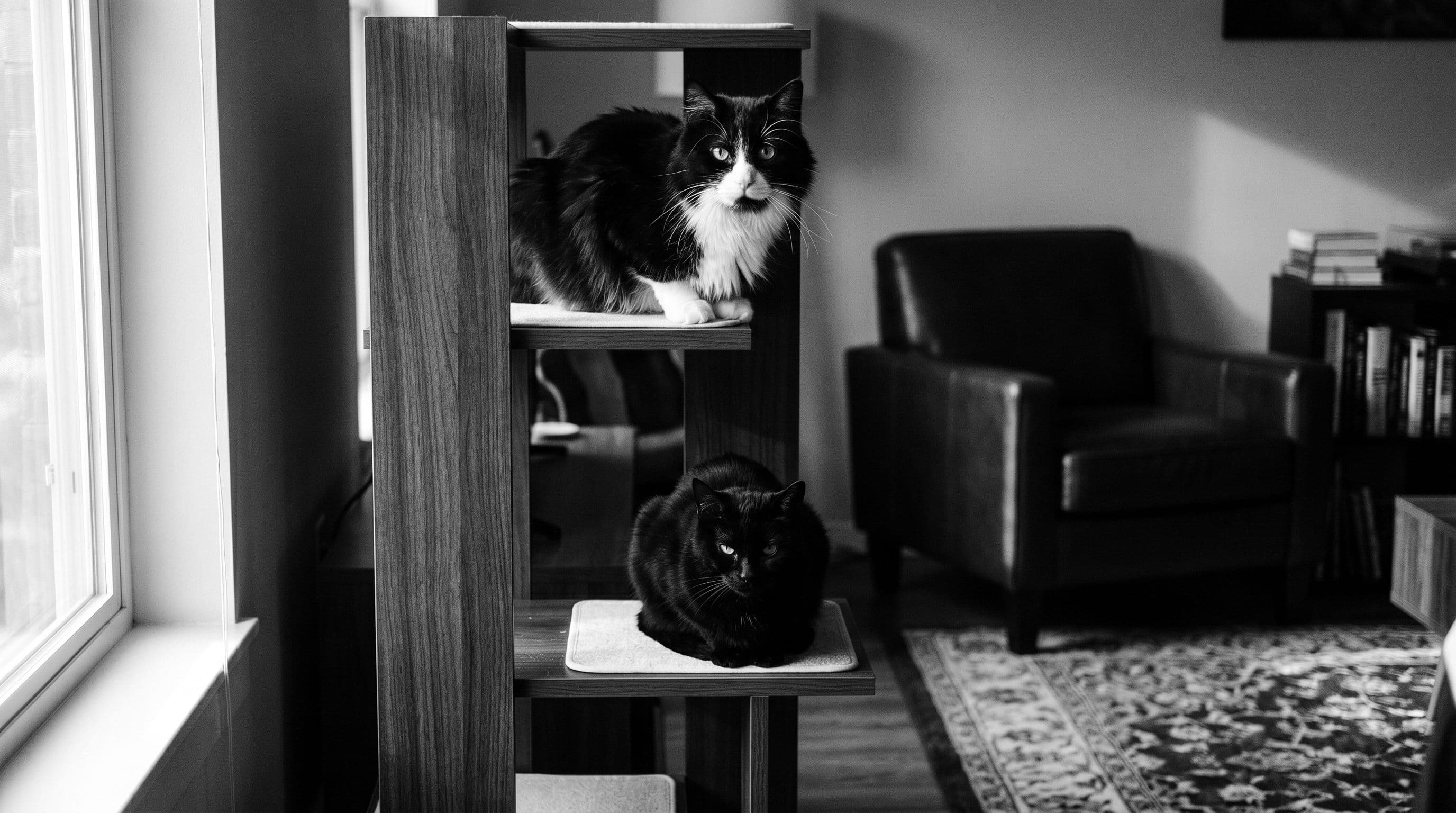
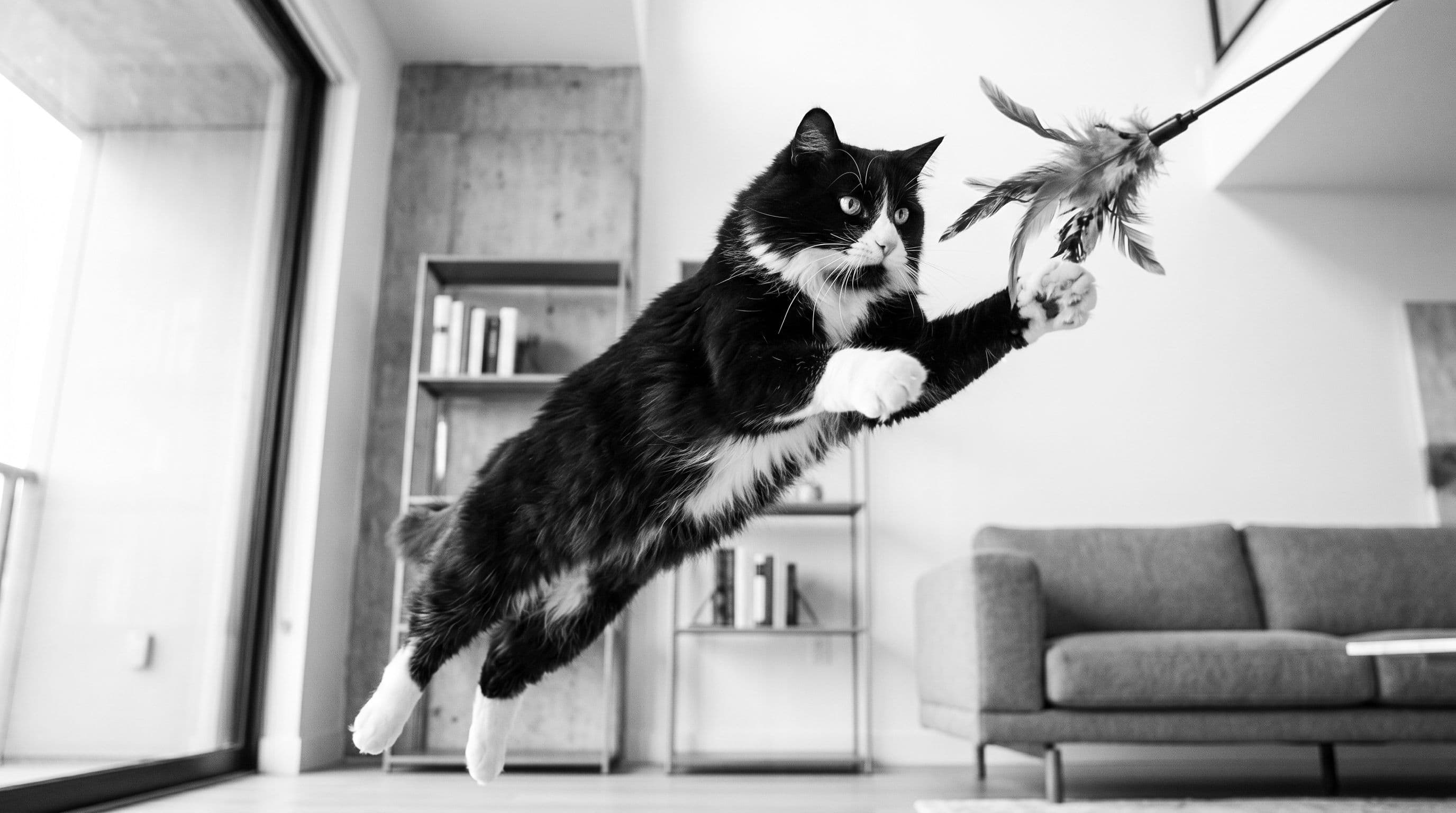
Then there is boredom. Vino has two cat towers and Zola to chase, and on days when neither is enough he finds something of mine to stand on. An indoor cat needs that outlet built for him, and the indoor cat enrichment guide on this site goes through what has worked here.
What the Later Years Bring
Age changes the questions. The Merck Veterinary Manual states that hyperthyroidism in cats is most common in cats over the age of 7, which is one more reason a yearly exam isn't optional once a cat is past middle age. Landsberg, Denenberg and Araujo's 2010 paper in the Journal of Feline Medicine and Surgery reports that behavioural changes consistent with cognitive dysfunction, such as increased clinginess and attention-seeking, affect about 28% of cats aged 11 to 14 and 50% of cats over 15. It also stresses that pain, hyperthyroidism and other medical conditions must be ruled out before putting a change down to age.
I find that last point useful as a rule of thumb: a cat who changes is a cat to have checked, not a cat who is just getting old. That is the whole case for keeping the vet relationship boring and regular while they are young.
The Short Version
Plan on a cat that could live well into the teens, because the best data we have says the typical cat does. Then spend your effort where an owner has real control: where the cat spends its time, its weight, and a vet who sees it every year. If you're thinking about the health side beyond lifespan, the tuxedo cat health problems post pairs well with this one.
> Vino's Verdict: He has been a lead-walker, a free-roaming barn-to-bushland cat, and now an indoor cat with a plan to get back outside. His coat never changed in any of it. The setup around him did, and that is the part I can actually do something about.