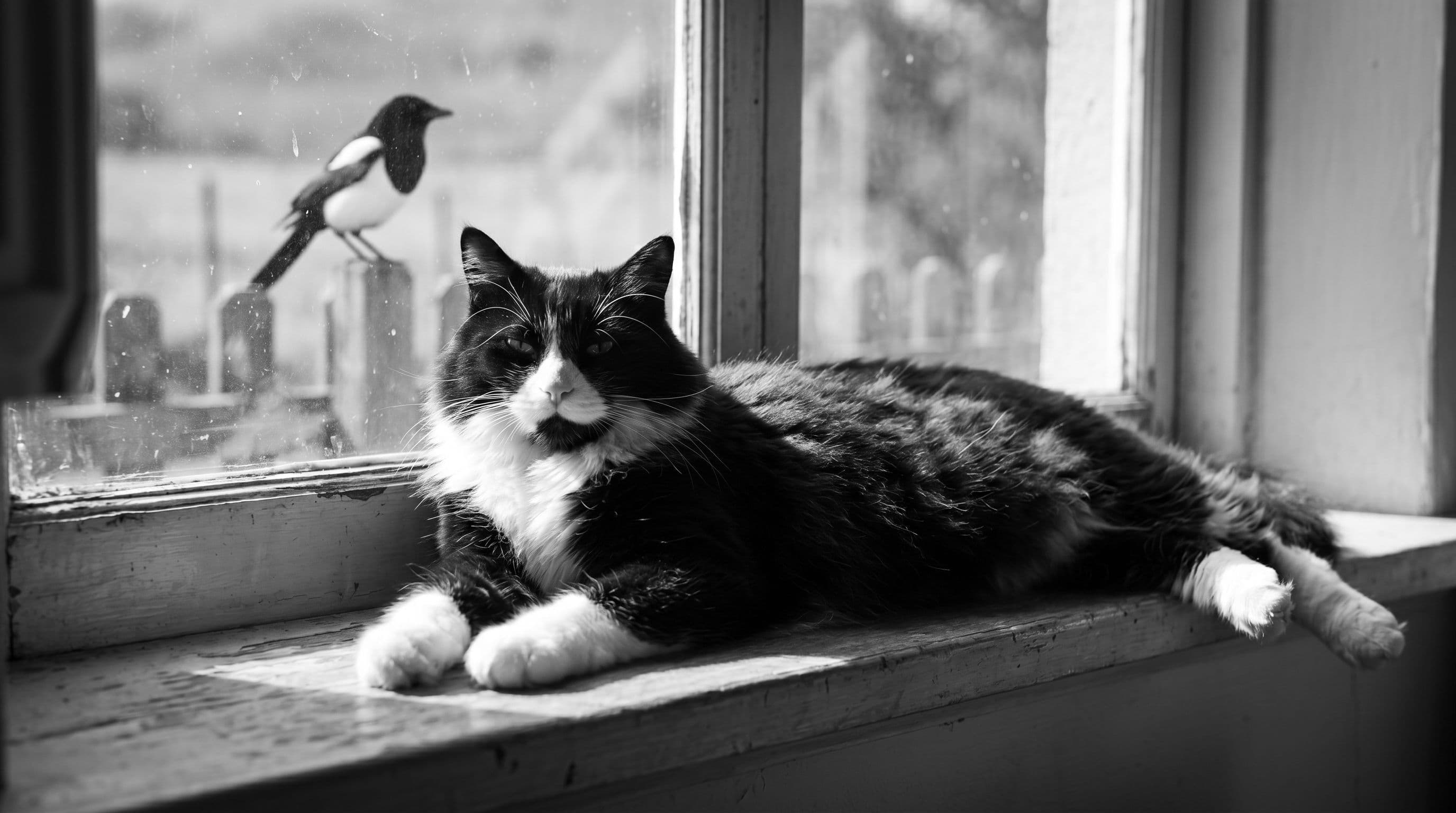
Last Tuesday afternoon, Vino was stretched across the windowsill in a stripe of late sun, his white chest rising and falling in that slow, contented rhythm I've come to read as "all is well in the kingdom." Zola sat two feet away on the cat tower, pretending he didn't exist. Outside, a magpie landed on the fence post, and Vino's ears rotated like satellite dishes, his green eyes narrowing to slits. He chirped once, softly, then settled back down. He didn't bolt for the door. He didn't need to. The indoor versus outdoor question is one I think about constantly, and Vino's supervised arrangement shapes that reality more than any genetic factor I've encountered. For years he's lived with me, healthy and thriving, and I'm convinced the single biggest reason is how we've managed that boundary between inside and out.
Why the Indoor vs Outdoor Question Matters More Than Coat Pattern
Here's the thing most tuxedo cat content won't tell you: the coat pattern itself has zero clinical impact on lifespan. Tuxedo is a colour distribution, not a breed. Vino's bicolour markings don't come with a unique genetic health profile any more than my brown hair predicts my cholesterol. What does predict longevity is environment, and the data here isn't ambiguous.
Indoor cats average 10 to 15 years, while cats that live outdoors average as little as 2 to 5 years. I don't need a calculator to tell me that's alarming, but I'll do the math anyway: that's a threefold to ninefold multiplier on expected lifespan, depending on where you land in each range. Trauma from vehicle strikes and animal attacks, plus exposure to infectious disease, are the obvious culprits for outdoor cats dying young. I've watched Vino press his nose against the window and chatter at squirrels like he's filing a complaint, and I won't pretend the guilt doesn't flicker when I don't let him out. But the numbers aren't ambiguous. Keeping him indoors isn't a lifestyle preference. It's a longevity strategy.
The general lifespan expectations for tuxedo cats haven't changed since I started paying attention to them. But I've noticed that most lifespan content treats "indoor vs outdoor" as a single bullet point in a longer list. It deserves more than that, because the decision to keep a cat inside, outside, or somewhere in between is the single largest variable most owners actually control.
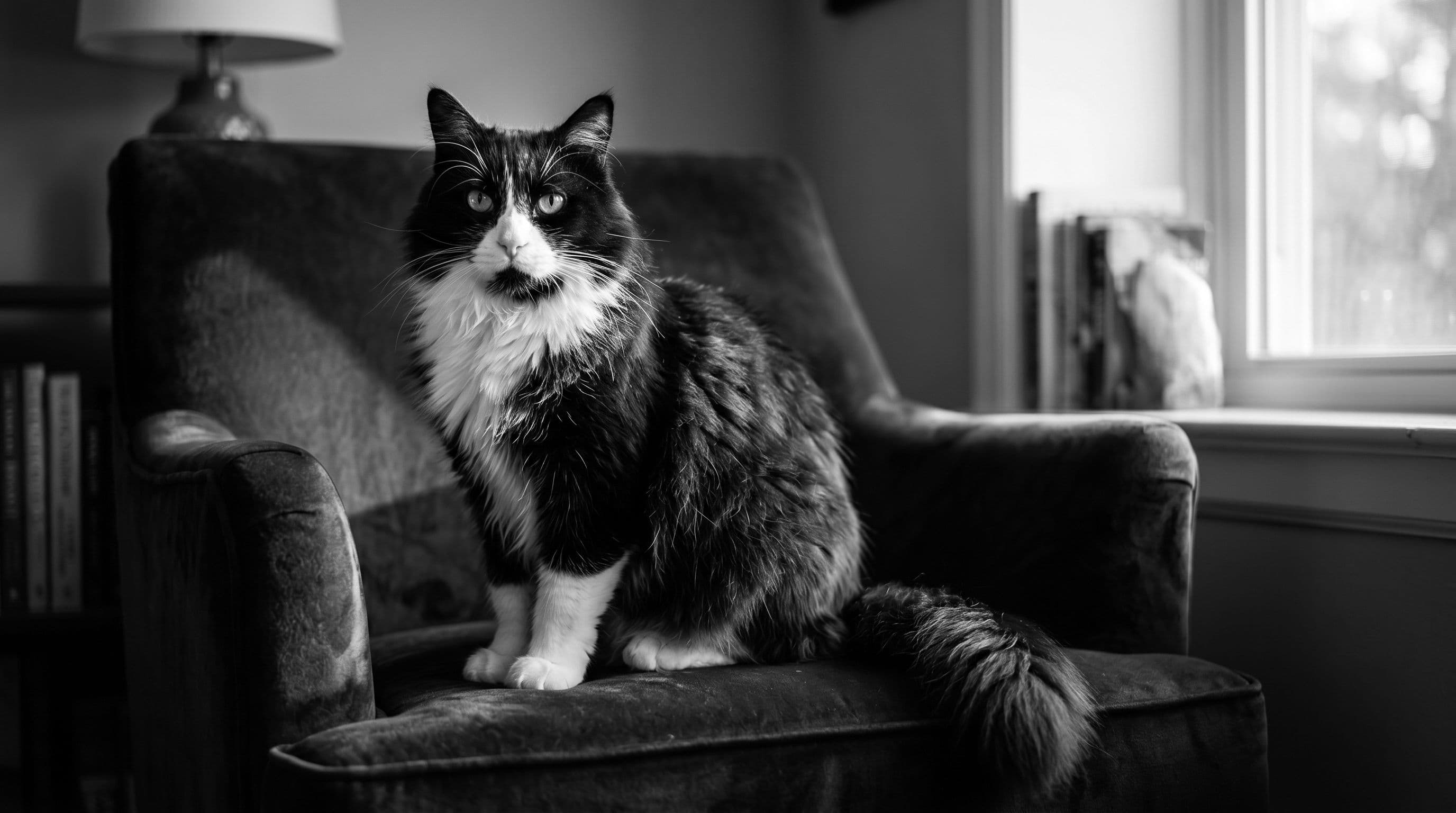
Vino spent his first couple of years as a working cat at a small biodynamic winery in northern Tasmania, catching mice in the barn. He was outdoor-only during that period. When I brought him home, he transitioned to a primarily indoor life with supervised outdoor sessions of one to two hours each afternoon. That transition wasn't seamless; he protested with his signature sustained grievance meow for weeks. But the tradeoff in safety and health monitoring has been enormous.
What the Research Says (and What My Living Room Confirms)
The statistics I cited above come with an important caveat: they're averages across enormous populations. Any sensible vet will tell you that individual outcomes depend heavily on the specific risks present in a cat's environment, and I've seen this firsthand watching Vino's world differ so completely from what an outdoor cat would face. A rural outdoor cat in Tasmania faces different threats than a feral cat in downtown Melbourne or a barn cat in the English Midlands.
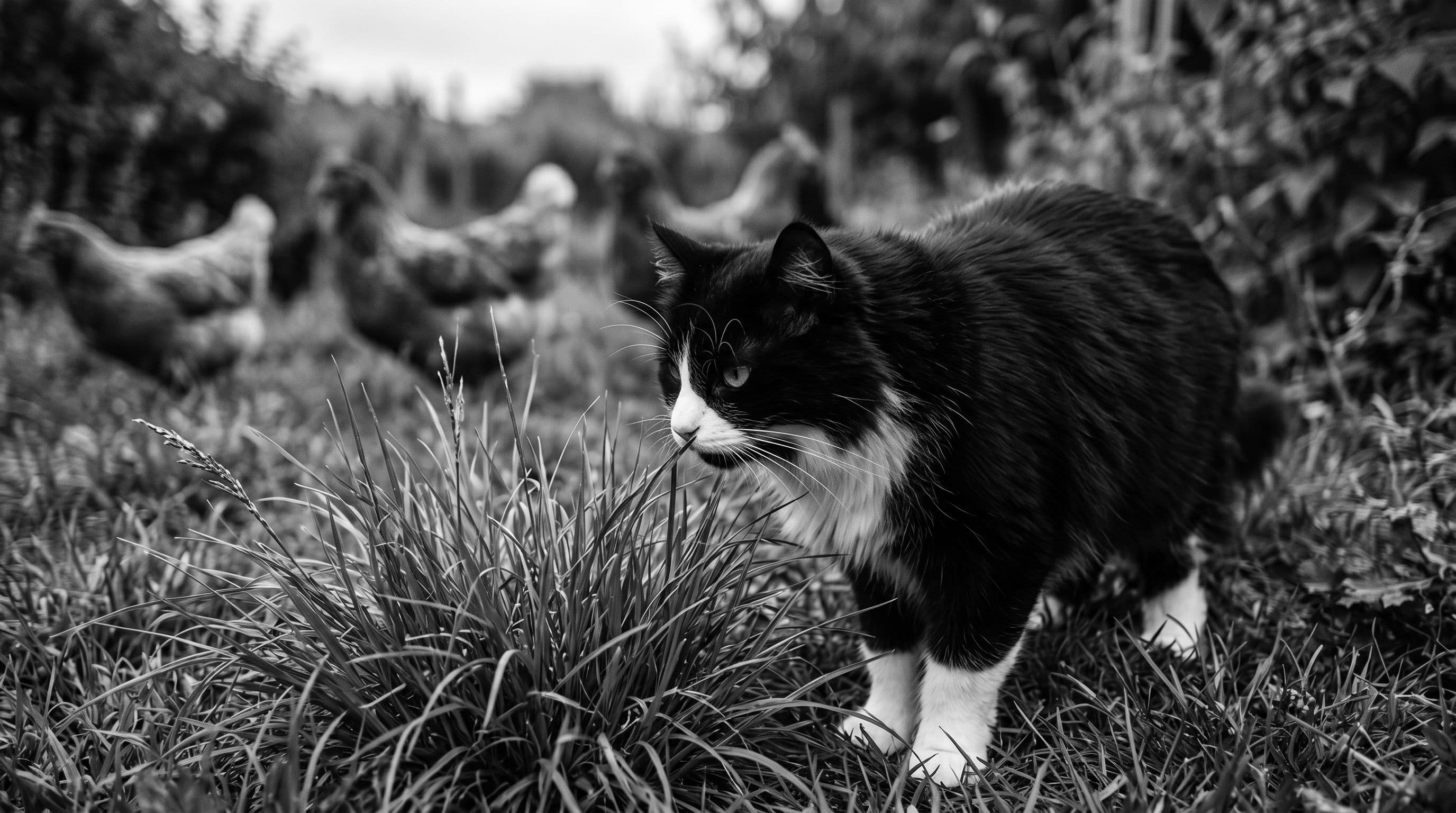
For Vino, the outdoor risks during his winery years included snakes (Tasmania has three venomous species), vehicle traffic on the property, and exposure to other animals. Since moving indoors with supervised outdoor access, those risks have dropped to near zero. He still goes out every afternoon before dinner, and sometimes in the mornings. He wanders the yard, chirps at wild birds from a safe distance, occasionally chases Zola through the grass, and sometimes sits peacefully among our four chickens and one rooster. At the old house he was never unsupervised for long, and if he went over the fence into the bush, I went after him.
The contrast with a fully outdoor tuxedo is stark. Indoor cats average 10 to 15 years, while cats that live outdoors average as little as 2 to 5 years, and diseases like feline immunodeficiency virus and feline leukaemia virus are a big reason why. Both diseases suppress the immune system and shorten lifespan dramatically. An indoor cat simply doesn't encounter the infected saliva from bite wounds that transmits these viruses.
But here's where I'll push back against the pure-indoor absolutism that dominates a lot of cat content: a cat that never goes outside isn't automatically thriving. Vino weighs roughly 6 kg, and maintaining that weight requires active management. I've watched what happens when I slack off on portion control or skip a play session for a few days running. He gains weight fast, and I can feel it when I pick him up. Obesity in cats raises the risk of diabetes (obese cats are two to four times more likely to develop it) and joint disease, and an obese cat who suddenly stops eating is at serious risk of hepatic lipidosis. Indoor cats average 10 to 15 years, a massive improvement over the 2 to 5 years averaged by cats living outdoors, but longevity alone isn't the whole picture. An indoor cat who eats too much and moves too little isn't living its best 15 years; it's living a compromised version of them.
This is the angle I don't see competitors covering: the indoor vs outdoor question isn't binary, and treating it as one creates a false sense of security. The healthiest arrangement, at least in my household, is indoor-primary with structured outdoor enrichment. Vino gets his bird-watching, his grass-rolling, his fence-perimeter patrols. Then he comes inside, where I can monitor what he eats, how much water he drinks (a lot, always), and whether anything's off with his behaviour.
Practical Steps for Extending Your Tuxedo Cat's Life
If you're reading this with a tuxedo cat on your lap, or aspirationally browsing before adoption, here's what I'd actually recommend based on years of living with Vino and the veterinary literature I've consumed along the way.
Keep them primarily indoors, but don't stop there. The lifespan benefit of indoor living only holds if you're also managing weight, providing enrichment, and maintaining veterinary care. Vino gets a full checkup every year, with the plan to move to twice-yearly as he approaches senior age. Given his previous outdoor life, we also watch for anything that could have originated during his barn years.
If you allow outdoor time, supervise it. I don't use a harness with Vino; he's got reliable recall (mostly because he associates my voice with food), and our property is semi-rural with good fencing. But in an urban setting, a secure outdoor enclosure or leash walks make the supervised model workable. The point isn't to eliminate outdoor access. It's to eliminate uncontrolled outdoor access.
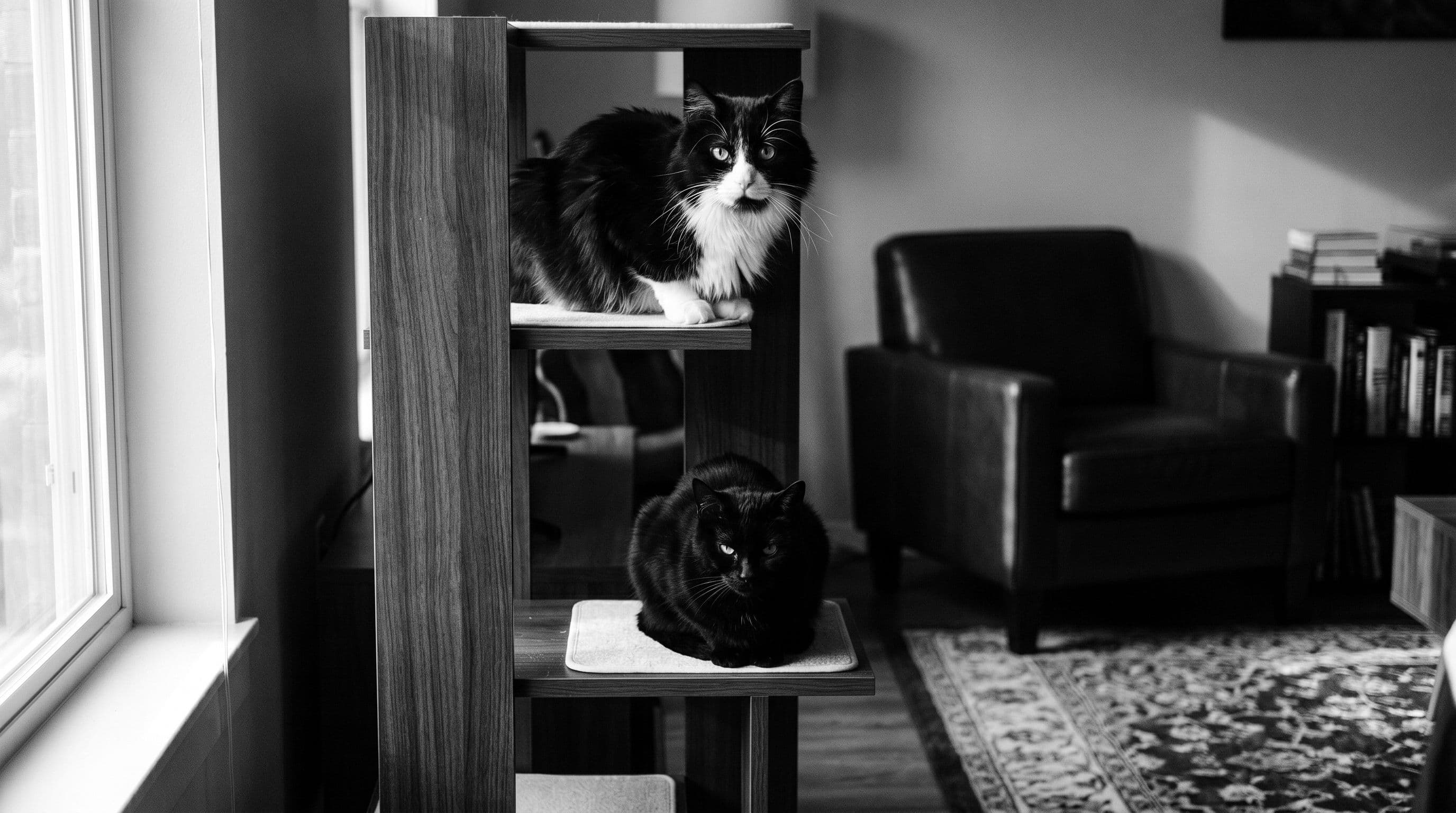
Address the enrichment gap honestly. Indoor cats need more from you than outdoor cats do. Vino has a cat tower, a rotation of toys, window perches, and, critically, another cat. Zola provides social stimulation that I simply can't replicate. They chase each other, engage in their performative hissing standoffs, and share windowsills; both of them stay mentally sharp because of it. If you have a single indoor cat, you'll need to compensate with more interactive play: I'd suggest at least two dedicated sessions a day, fifteen to twenty minutes each, based on what I've seen keep Vino engaged on the rare occasions Zola isn't in the mood.
Watch for indoor-specific health issues. Urinary tract problems, obesity, and dental disease are the indoor cat's version of the outdoor cat's trauma and infection risks. They're slower-moving, less dramatic, and just as capable of shortening a life. Vino's medium-long fur also requires regular grooming with a stainless-steel deshedding comb to prevent mats, which can mask skin issues underneath. I've learned this the hard way, involving warm water and a cat who despises every second of it.
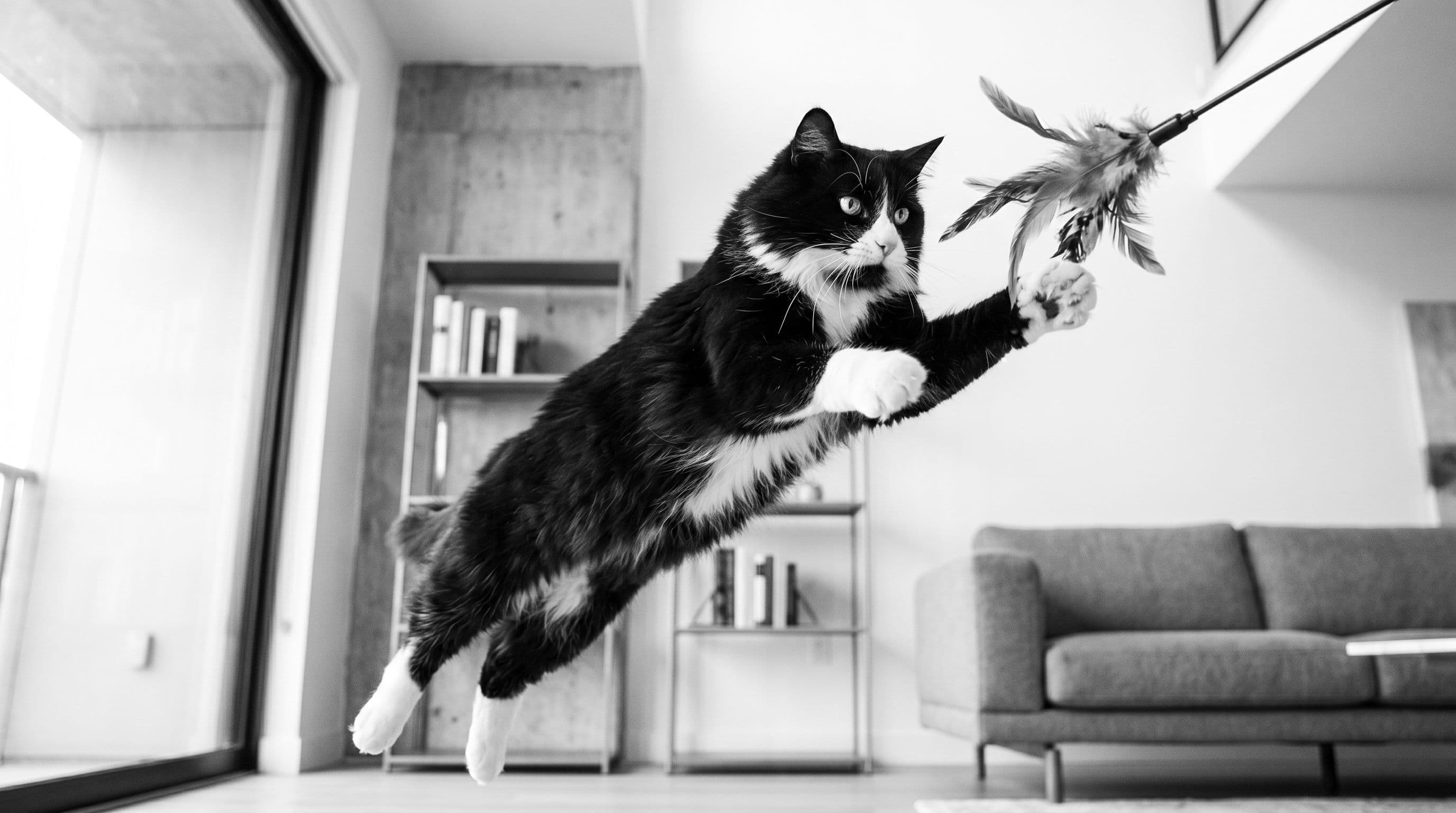
Don't underestimate mental health. A bored indoor cat is a stressed indoor cat, and chronic stress suppresses immune function. I've noticed that Vino's most restless, loudest-meowing days are the ones where weather keeps him inside all day. On those days, I'll pull out a puzzle feeder or spend extra time with a wand toy. It's not optional enrichment. It's preventive medicine.
For more on keeping your tuxedo cat healthy through all life stages, I've covered common health considerations in a separate post that pairs well with this one.
> Vino's Verdict: Vino spent his early years as a fully outdoor barn cat and now lives primarily indoors with supervised afternoon sessions. He's healthier, heavier in the right way, and loud enough to confirm he's not suffering. If his experience proves anything, it's that the indoor vs outdoor decision isn't about deprivation; it's about trading uncontrolled risk for managed enrichment.