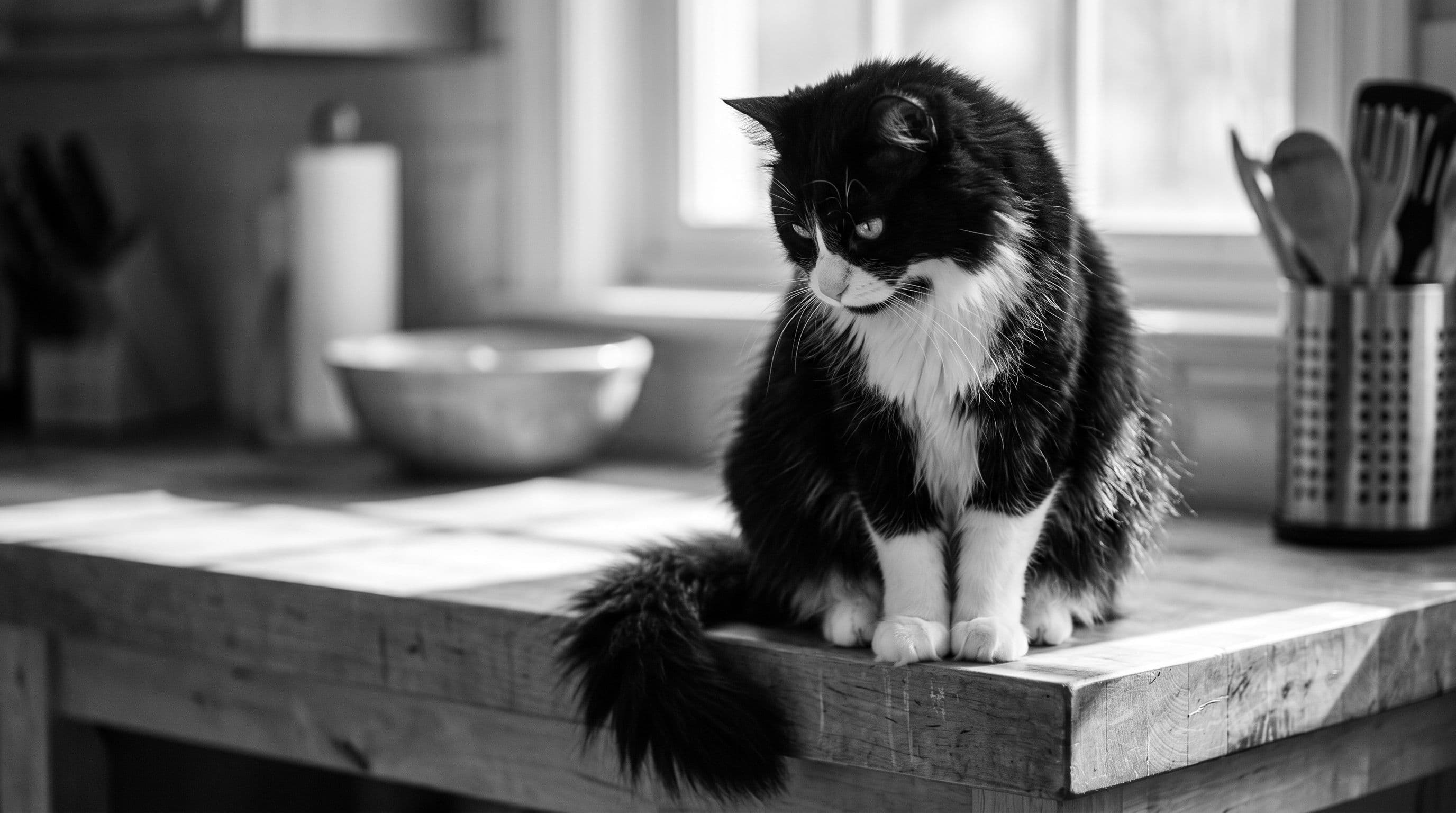
Three observations from my own household have started reshaping how I think about senior cat care, and not one of them involves a grey muzzle or a slowing gait. Vino was born around late 2019. He still barrels onto my bedside table each morning, still drools through every cuddle session, still produces that legendary five-second protest meow when I won't open the back door. He's not a senior cat yet. But I have watched him hesitate before jumping from the floor to the kitchen counter: a pause so brief most people wouldn't clock it, so uncharacteristic that I replayed it in my head for the rest of the evening. That tiny flicker of calculation told me something I already knew intellectually but hadn't felt in my bones: the planning starts now, not at age eleven.
The angle I keep returning to is one I haven't seen addressed anywhere online. There's plenty of general senior cat guidance from organisations like the American Association of Feline Practitioners and the International Society of Feline Medicine. What doesn't exist, as far as I can find, is a frank account of how a specific household with a specific medium-long-haired tuxedo cat intends to prepare for the shift. So here it is: three exhibits from life with Vino and Zola that are already informing the changes I'll make when Vino crosses the senior threshold, which the AAFP places at approximately 11 years of age.
If you've read my earlier post on understanding your tuxedo cat's personality, you know Vino isn't the type to quietly accept limitations. That's precisely what makes this worth thinking about early.
Exhibit One: The Counter Pause and What It Means for Senior Cat Care
Let me set the scene properly. Our kitchen counter sits about 90 centimetres off the ground. Vino has been launching himself onto it since the week I brought him home from a small biodynamic winery in northern Tasmania in April 2022. He doesn't approach the counter like a cat weighing options; he approaches it like a cat who has never once considered that gravity applies to him.
So when he paused at all, I noticed.
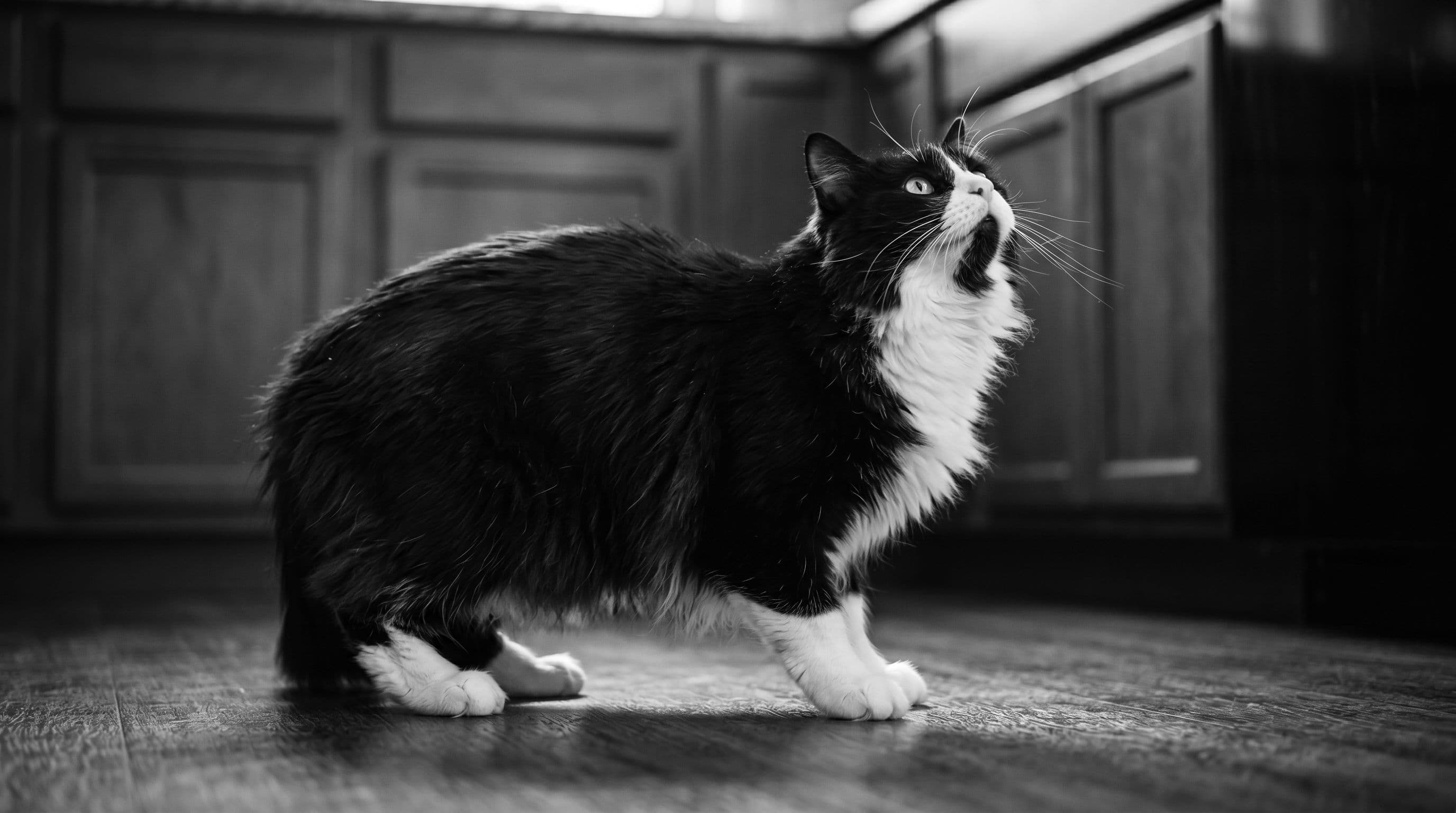
He made the jump fine. Landed cleanly, immediately began yelling at me about dinner. Nothing was wrong. But I've learned that subtle changes in how a cat jumps, even ones you'd barely register, can show up well before any clinical signs of joint trouble. Osteoarthritis is surprisingly common in cats: a 2011 study found 61% of cats aged six and over had it in at least one joint on X-ray, yet only 13 of the 100 owners in that study had noticed any lameness. And most owners never notice because cats are, to put it diplomatically, pathological about hiding discomfort.
Here's my plan: by the time Vino turns eight, I'll have repositioned furniture to create intermediate stepping points between the floor and every elevated surface he uses regularly. His cat tower already has multiple levels, but the spacing assumes a young cat's explosive vertical. I'm also planning to replace our current wool area rug near the kitchen with something that offers more traction; his paws slide on the fibres after a running start, and right now that's funny, but at twelve it won't be.
The counter pause may have been nothing. It may have been him spotting a shadow, recalculating, or simply having an off moment the way any living creature does. But it crystallised something: I don't want to be the owner who retrofits the house in a panic after a diagnosis. I want to be the one who made the environment forgiving before it needed to be.
Exhibit Two: Zola's Quiet Withdrawal and the Social Dimension of Ageing
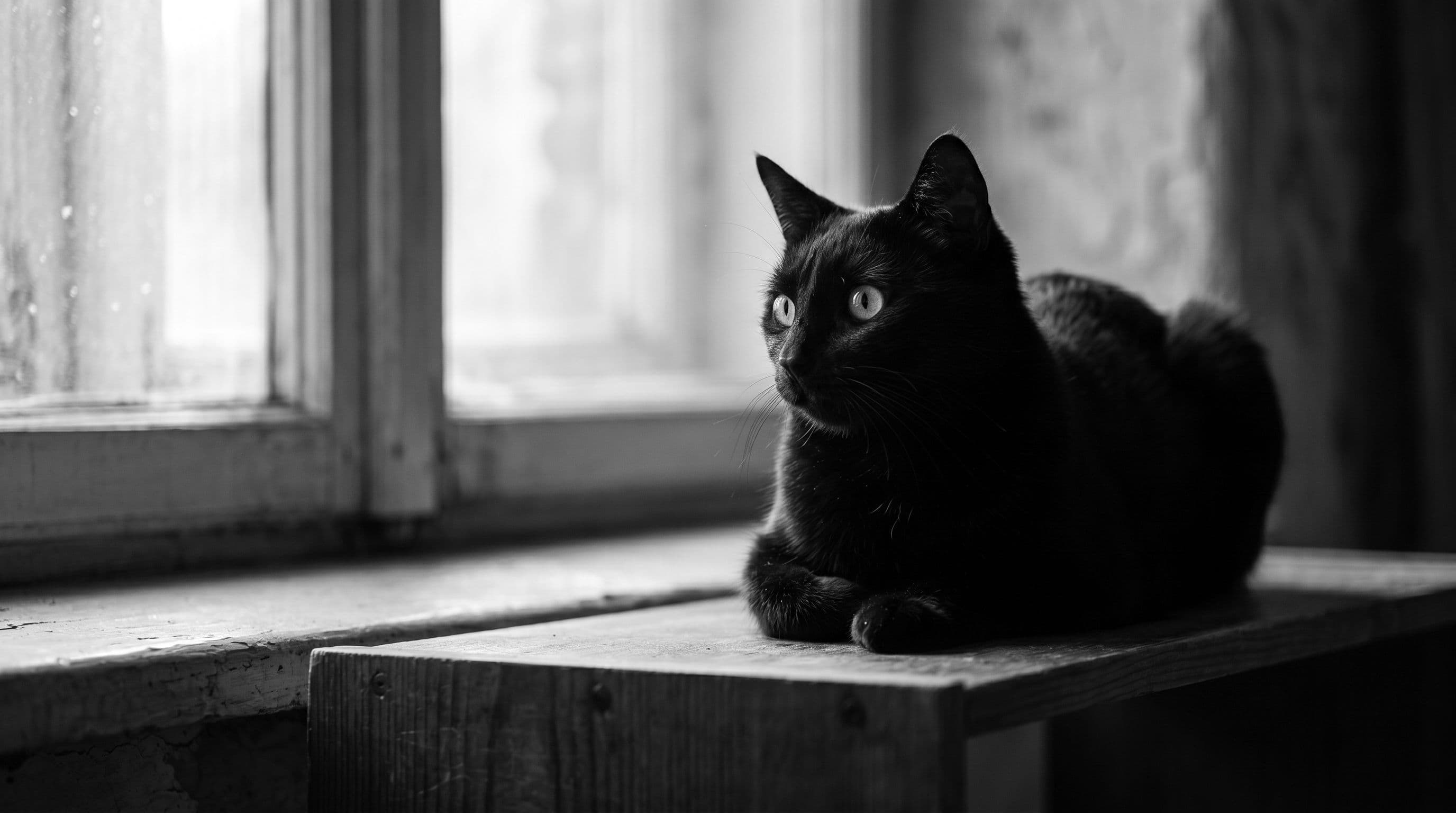
Zola, our black cat, is the household's other half. She's slender, reserved, and maintains a permanent air of mild disapproval toward Vino's entire existence. They'll share a windowsill, smooch each other on the forehead, sleep within 30 centimetres of each other on the bed; they will not, under any circumstances, actually cuddle. Their hissing matches escalate almost exclusively when my fiancée and I are home and watching, which tells you everything about the performative nature of the arrangement.
But about three weeks ago, Zola stopped participating in the cat tower standoff. For months, the ritual was predictable: both cats would occupy separate tiers of the tower and stubbornly wait for the other to leave first. Neither would yield. It was magnificent. Then Zola simply stopped going to the tower during Vino's hours.
She isn't sick. She's eating, playing, grooming normally. She's just recalibrated her social boundaries. And it made me realise how much the dynamic between two cats can shift as either one ages.
Dr. Sarah Ellis, feline behaviour specialist at International Cat Care and a visiting fellow at the University of Lincoln, co-wrote The Trainable Cat (2016) with John Bradshaw, setting out low-stress handling and training techniques for cats. Her work speaks to something I think about more and more: the subtle ways cats in the same household shape each other's routines. I think about what happens when Vino's energy eventually declines: it's likely to open up a kind of vacuum in the household. Zola could end up anxious, territorial, or paradoxically more clingy as a result, simply because the balance she's used to will have shifted. In a household like ours, where Vino is the social engine and Zola is the reluctant passenger, his eventual slowdown won't just affect him. It'll reshape her entire daily experience.
My plan for this is less about furniture and more about infrastructure. By the time Vino's around ten, I want to ensure Zola has at least two retreat spaces that are entirely hers: separate feeding stations, a second self-cleaning litter box (we already use a Litter-Robot, so scaling up isn't unfamiliar territory), and vertical territory that Vino either can't or won't access. Right now they share everything amicably enough, with the usual theatrical hissing. But "amicably enough" is a young-cat luxury. Senior cats need clarity in their spatial arrangements, and the cat who lives with a senior cat needs it just as much.
I touched on some of this household complexity in my post about tips for living with a tuxedo cat, but the senior dimension adds layers I hadn't considered at the time.
Exhibit Three: The Fur Problem That Will Only Get Worse
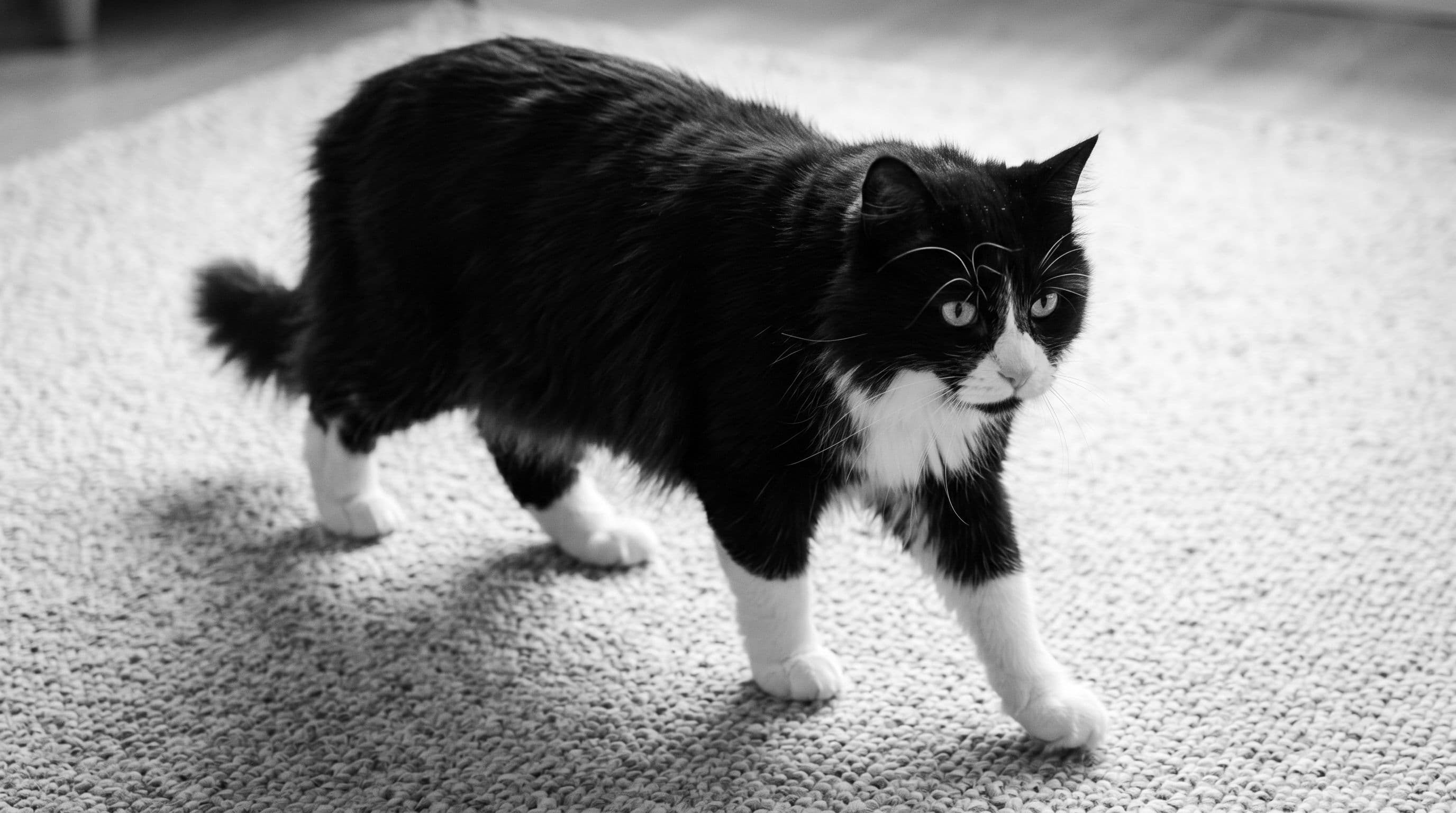
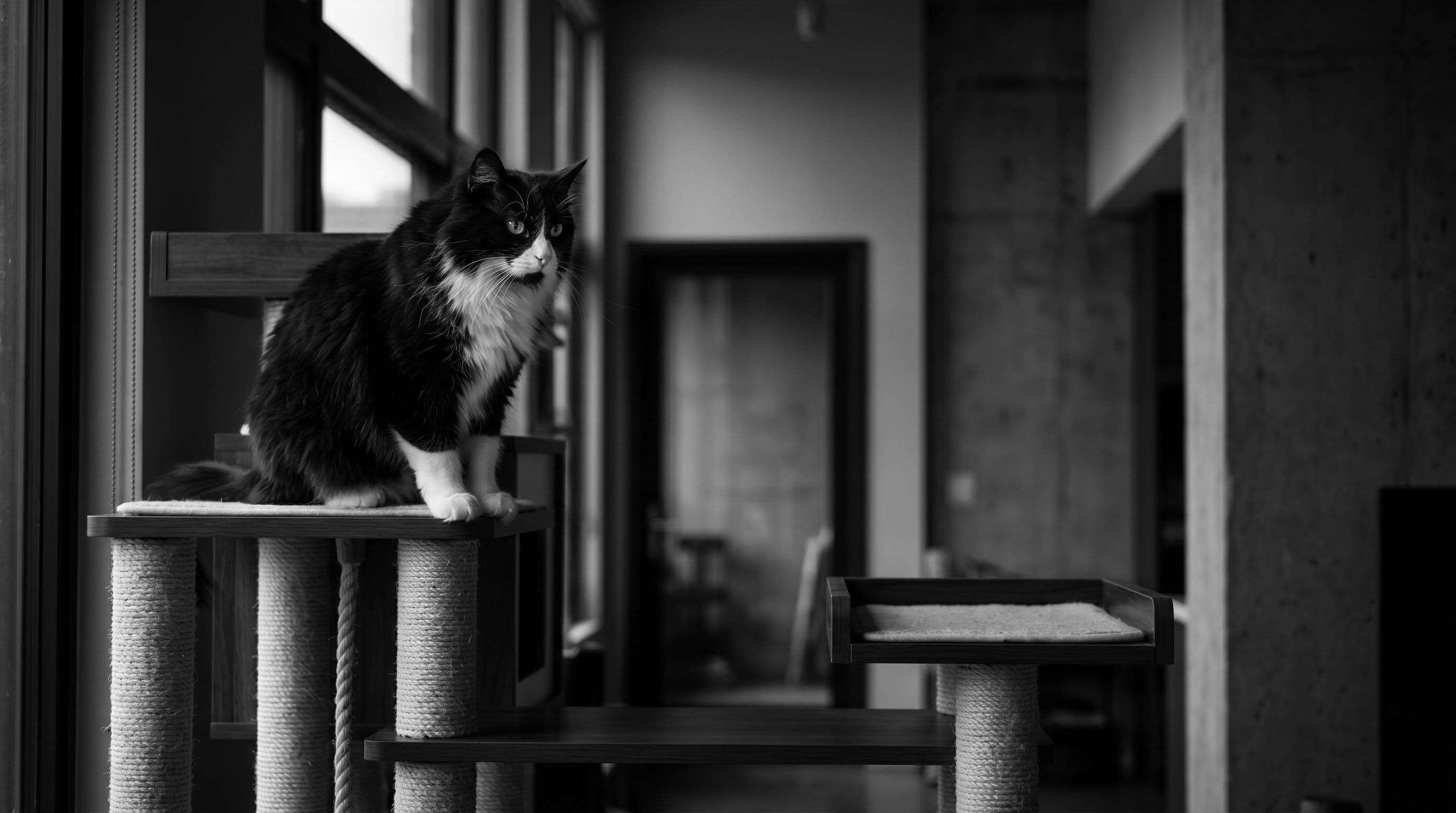
Vino's medium-long coat is, objectively, gorgeous. The tuxedo pattern is almost geometrically precise: white chest, belly, and paws against black everywhere else, with a black chin that extends downward to create something uncannily like a bow tie. When he's freshly brushed and sitting in a patch of afternoon sun by the kitchen window, he looks like he should be on the cover of a magazine.
The reality behind that coat is less photogenic.
His back-leg fur has, on more than one occasion, caught something it absolutely should not have. I won't belabour the details, but I will say this: getting faecal matter out of medium-long cat fur requires warm water, a basin, patience measured in geological time, and a cat who possesses none of those qualities. Vino hates water with a passion that borders on ideology. He growls. He fights. He attempts escape routes that defy physics. The contrast between his usual dignified bearing and the indignity of a forced half-bath is total.
Now, here's what keeps me up at night about senior cat care and grooming. A young, healthy Vino grooms himself extensively. He's fastidious about it; I'll hear him working on his coat for 20 or 30 minutes at a stretch. Cats spend a large share of their waking hours grooming themselves. But as cats age, grooming efficiency declines. Stiff joints and reduced flexibility mean older cats simply can't twist around to reach the spine and hindquarters the way they used to, and matting builds up in exactly those spots. The 2021 AAHA/AAFP Feline Life Stage Guidelines recommend at minimum annual wellness exams for healthy adult cats, with exams every 6 months recommended once a cat is around 7 years old, and body weight and condition assessed at every visit. I'd personally love to see coat condition added to that checklist, because a dull or matted coat tells you something real about mobility, pain, and overall wellbeing. For a shorthaired cat, age-related grooming decline is manageable. For a medium-long-haired tuxedo cat who already has a documented hygiene vulnerability in the trouser region, it's going to require intervention.
My grooming plan starts well before the senior years. I'm increasing brushing sessions from roughly three times a week to daily, starting now, so that Vino remains completely desensitised to being handled all over his body. He already loves having his chin and chest brushed; the challenge is his belly and back legs, where he's more protective. I'm using a stainless-steel deshedding comb for the dense undercoat and a softer bristle brush for the outer layer. I'm also considering a sanitary trim for the back-leg fur, done by a professional groomer every 8 to 10 weeks once he hits about nine years old, to pre-empt the half-bath disasters that will only become more frequent and more stressful for both of us as his self-grooming declines.
There's a broader point here about tuxedo cats specifically. The bicolour coat pattern doesn't carry any inherent health risks; it's a pigmentation thing, not a genetic predisposition. But medium-long tuxedo fur, with its mix of coarser black guard hairs and finer white undercoat, mats differently depending on the colour zone. The white chest and belly fur on Vino is softer and tangles faster than the black fur on his back. Any grooming routine for an ageing tuxedo cat needs to account for this variation rather than treating the whole coat as uniform.
What This Adds Up To
The common thread across all three exhibits is the same: the best senior cat care doesn't begin when the cat becomes a senior. It begins the moment you notice the first hint that your household's rhythms will eventually change.
For Vino, the counter pause was a physical signal. Zola's withdrawal from the tower standoff was a social one. The grooming reality is a logistical one I've been living with for years but haven't yet projected forward with any seriousness.
What I'm building, slowly, is a transition plan. Not a crisis response. The AAFP recommends that cats over seven begin receiving veterinary check-ups every 6 months instead of annually, and I'll be adopting that schedule for Vino within the next two years. Blood panels, kidney function, thyroid levels, joint assessments: the full picture, caught early, updated regularly. He weighed 6 kg at his September 2026 check-up, and the vet had nothing to say about it. Maintaining that through his senior years will mean adjusting portion sizes and protein ratios as his metabolism shifts, and monitoring his notable water consumption, which right now reads as a quirk but in an older cat could signal something worth investigating.
The house will change. The routine will change. The dynamic between Vino and Zola will change. None of this has to be a crisis if I'm honest about the timeline.
Frequently Asked
Exhibit Two: Zola's Shelf Preference and the Senior Cat Care Lesson Hiding in It
Zola, at about 3.9 kg, has always preferred the lower shelf of our living room bookcase to any elevated perch. I used to chalk this up to her temperament; she's a ground-level operator who'd rather watch the world from behind a pot plant than survey it from the top of the fridge. But sometime around March this year, I noticed Vino had started joining her on that lower shelf after his afternoon nap, folding his 6 kg frame into a space clearly designed for a smaller cat.
[PHOTO: Vino wedged onto the lower bookshelf beside Zola, his back legs hanging slightly off the edge]
He wasn't being forced down there. The cat tree in the corner still got plenty of use in the mornings. But the pattern was new, and it made me reconsider what our household furniture layout will need to look like in five or six years. Right now, Vino's favourite resting spots sit at four different heights: floor level, the bookshelf (about 40 cm up), the kitchen counter (90 cm), and the top of the wardrobe (roughly 190 cm). If I'm being honest about senior cat care, I should already be thinking about intermediate steps between those heights, not scrambling to install ramps after he's lost the spring in his back legs.
What I'm Actually Changing Now, Not Later
I've started leaving a folded wool blanket on the dining chair that sits closest to the kitchen counter. It's not a ramp, and I didn't buy anything from a pet store. It's just a stable halfway point that happens to be there if Vino ever wants it. He ignores it completely, which is fine. The point is that the infrastructure exists before the need does.
[PHOTO: Vino mid-leap from dining chair to counter, wool blanket visible on the chair seat behind him]
I've also rearranged the water stations. We used to keep one bowl in the kitchen and one on the back verandah. I added a third in the hallway near the bedroom, at floor level, so neither cat has to walk the full length of the house at 3 a.m. if they're thirsty. Vino drinks from it almost nightly now. I can hear the quiet lapping through the wall. That single addition cost nothing and took thirty seconds, and it's the sort of small senior cat care adjustment that compounds over years.
If you've read my post on tuxedo cat grooming and shedding, you'll know that Vino's medium-long coat already demands regular attention. As he ages, that grooming routine will matter even more; cats who slow down physically tend to groom themselves less thoroughly, and mats form faster on a coat like his.
How Do You Know When to Start Preparing for Senior Cat Care?
You don't wait for a specific birthday. I started paying closer attention the moment Vino paused before that counter jump. He's only about six, and he's still athletic, still ridiculous, still capable of stealing a bread roll off the bench before I can blink. But that two-second hesitation told me his body is already doing calculations his brain used to skip entirely. If your cat has a routine you know inside out, any deviation from it is your signal.
Does Senior Cat Care Require Expensive Equipment?
Not in this household. A folded blanket, a third water bowl, and paying closer attention to where Vino chooses to rest have been the only changes so far. I haven't bought a heated pet bed or an orthopaedic ramp or any of the products that crowd search results when you type "senior cat care" into Google. I'm not ruling those out for the future, but the most useful preparation has been free: observation, small repositioning of things we already own, and a willingness to let the cats' own habits tell me what they need.
[PHOTO: Vino drinking from the hallway water bowl at night, caught on a dim phone camera]
Should You Change a Cat's Diet Before They Reach Senior Age?
I'm not qualified to answer that for anyone else's cat, and I won't pretend otherwise. What I can say is that Vino weighed 6 kg at his September 2026 check-up, and keeping an eye on that number feels like one of the most practical things I can do for his joints and organs over the long term. Keeping him lean now means less strain on a body that will inevitably slow down. Zola, lighter at about 3.9 kg, has never needed an adjustment, but I watch her portions with the same attention. The food conversation belongs between you and whoever advises on your cat's health; I'm only sharing what's worked in our specific household with these two specific cats.