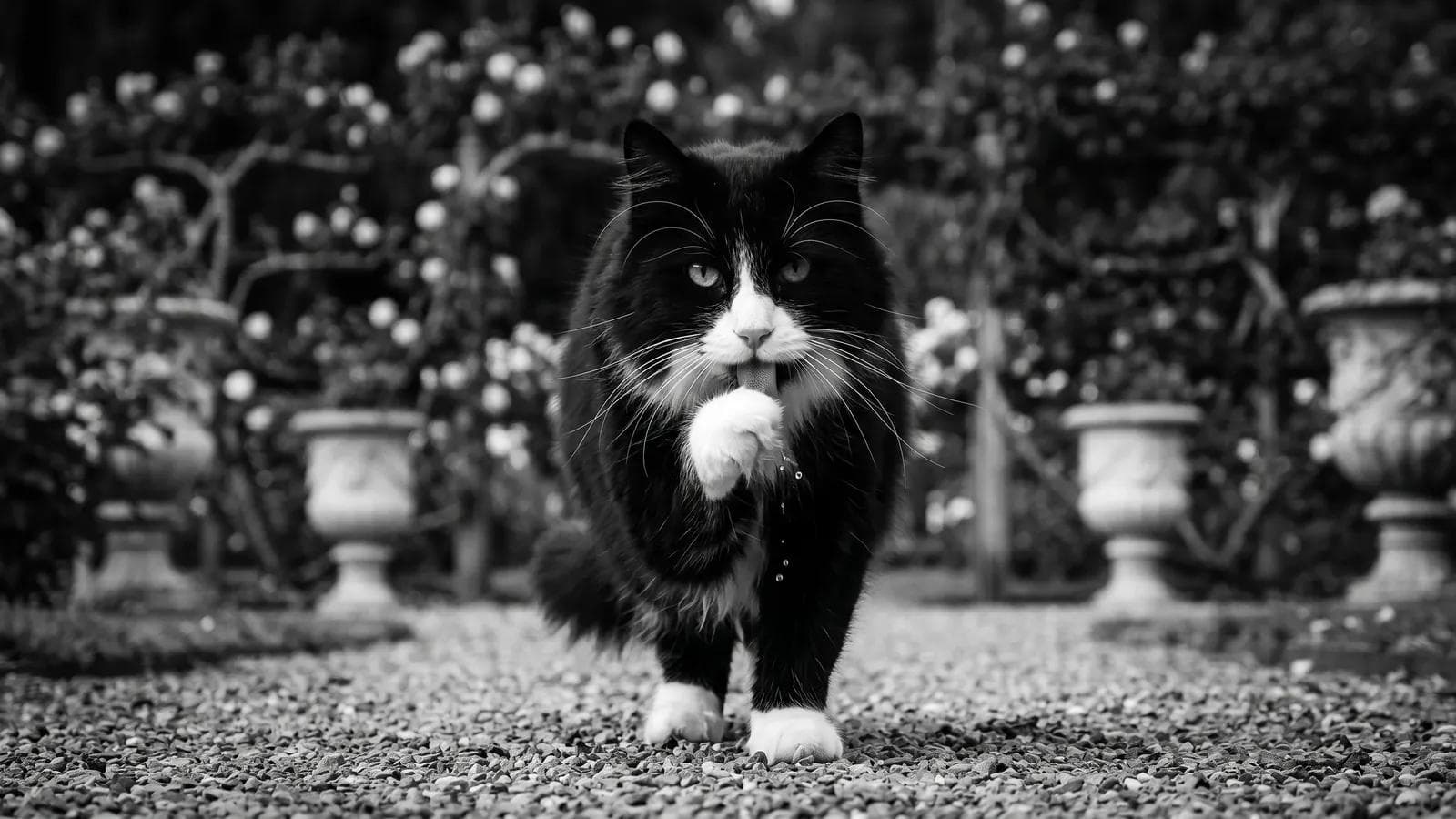
The tuxedo cat personality is, by any objective measure, a lot. Vocal, affectionate, opinionated, and constitutionally incapable of minding their own business: tuxedo cats aren't passive household presences. They're active participants in everything that happens under their roof, whether invited or not. What follows is a formal assessment of ten traits that define the type, each illustrated by our home's foremost specimen: Viniferous "The Mischievous" Messiah, known to most as Vino.
The evidence base is years of continuous field observation. The conclusions aren't flattering to the myth of feline aloofness. The cats simply don't care.
Trait One: Self-Insertion as a Core Competency
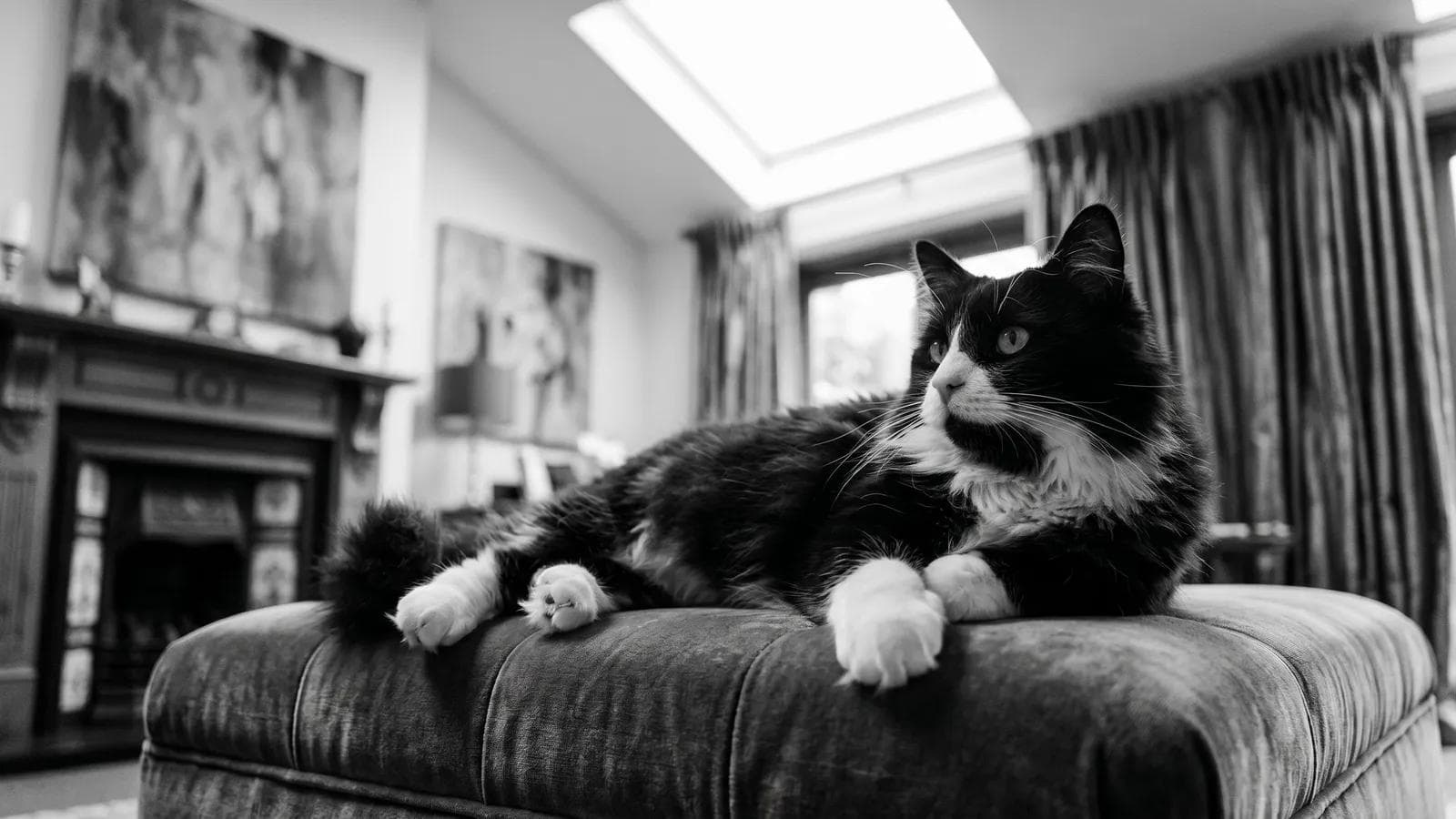
Tuxedo cats don't wait to be included. Inclusion isn't a concept they recognise. There's only the activity currently happening, and their immediate presence within it.
When Vino first made himself known at the winery where he lived, the method was consistent: the moment someone walked into the barn for any purpose, he'd walk directly between their legs to trip them up, jump onto whatever they were trying to reach, and meow until the task was abandoned in favour of attending to him. He wasn't doing this for attention in a performative sense. He simply didn't accept that an activity could be occurring without him in the centre of it.
This hasn't changed. The desk is a particular focus. If a laptop's open, Vino will position himself on the keyboard or between the screen and me. This isn't mischief. It's a reasonable occupational assertion. The desk is occupied. He's the occupant.
This trait is characteristic of the type. Tuxedo cats are joiners by nature, and the joining isn't optional.
Trait Two: Vocal and Specific About It
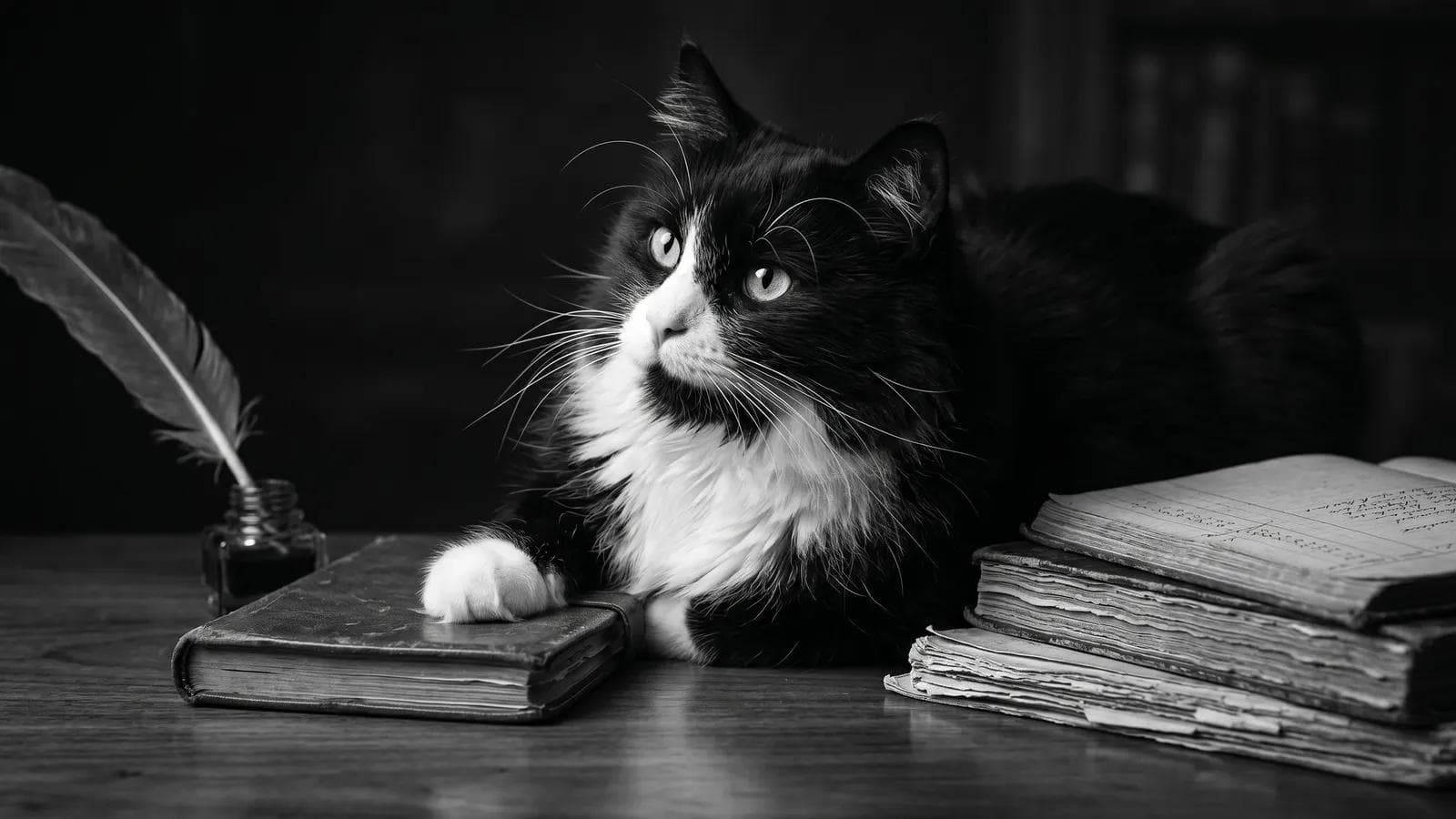
Tuxedo cats aren't quiet. They're communicators, with a range that extends well beyond the basic request.
Vino's vocabulary includes a standard breakfast request, a mid-morning check-in, a sustained campaign for outdoor access, and what can only be described as the protest meow: a single sustained note, same tone, same volume, held for five seconds or more. It isn't a question. It's a formal statement of grievance, issued when something hasn't gone as it should. Most commonly triggered by the back door remaining closed.
The protest meow doesn't escalate. It doesn't vary. It simply continues, with a patience that puts the listener under considerable pressure to resolve the situation.
The vocal range is part of what makes tuxedo cats distinctive companions. They'll tell you what they want. They'll tell you again. They'll keep telling you until the situation's addressed, at which point they'll find something else to want.
Trait Three: Affectionate, but on Their Own Schedule
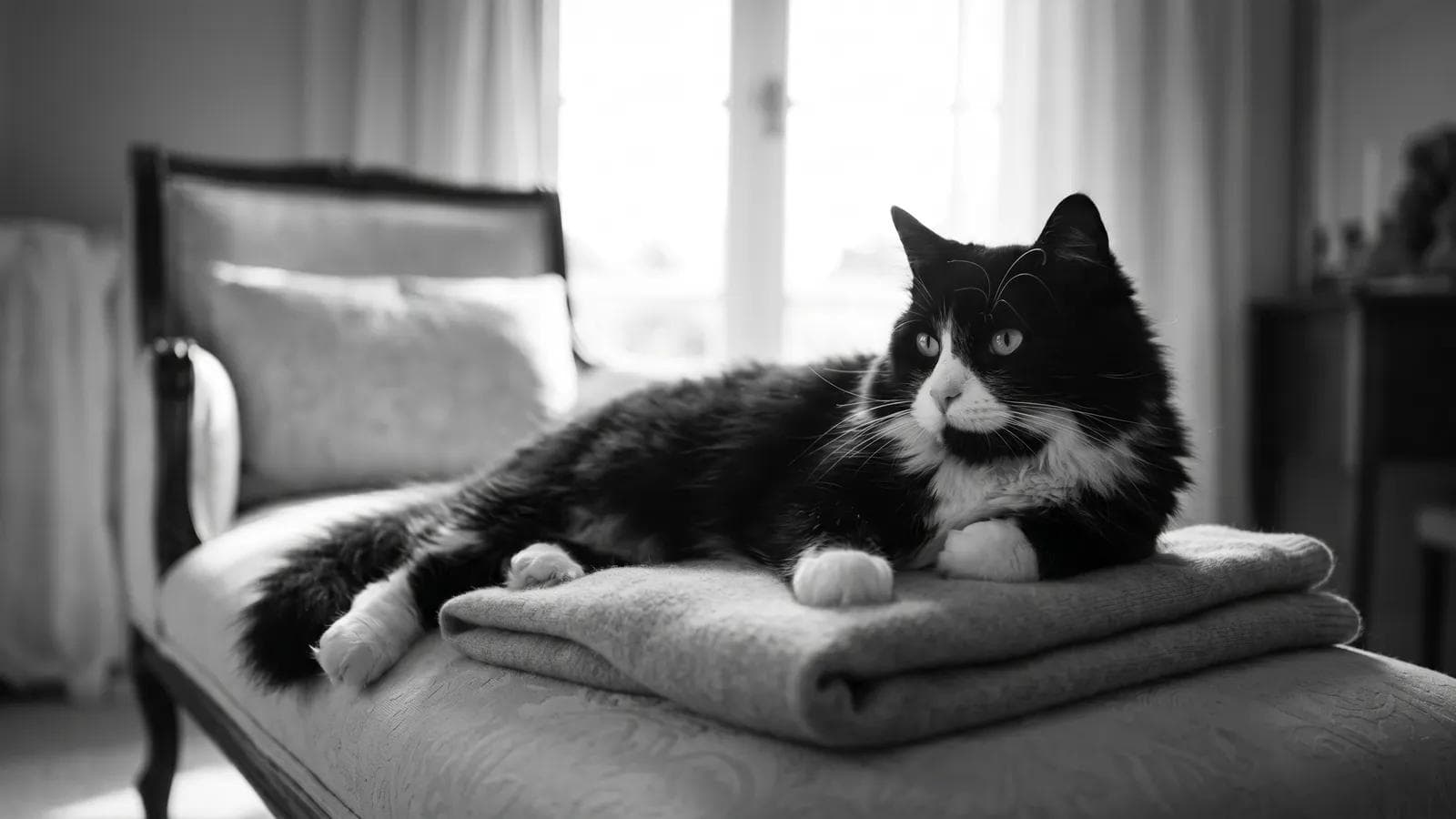
Tuxedo cats are genuinely affectionate. They're also particular about when and how that affection's expressed, which isn't a contradiction so much as a management structure.
Vino sits on laps. He sleeps on us in bed. He makes biscuits on the duvet with a focus that suggests the activity's load-bearing. He drools during pats, especially around the chin and chest, which is either endearing or alarming depending on your previous experience with cats.
The key detail is that none of this is negotiated. When Vino decides it's lap time, it's lap time. The person currently using the lap for other purposes is expected to adapt. This isn't rudeness. It's simply the operating model.
The affection's real and warm. The scheduling's non-negotiable.
Trait Four: Social Confidence That Borders on Presumption
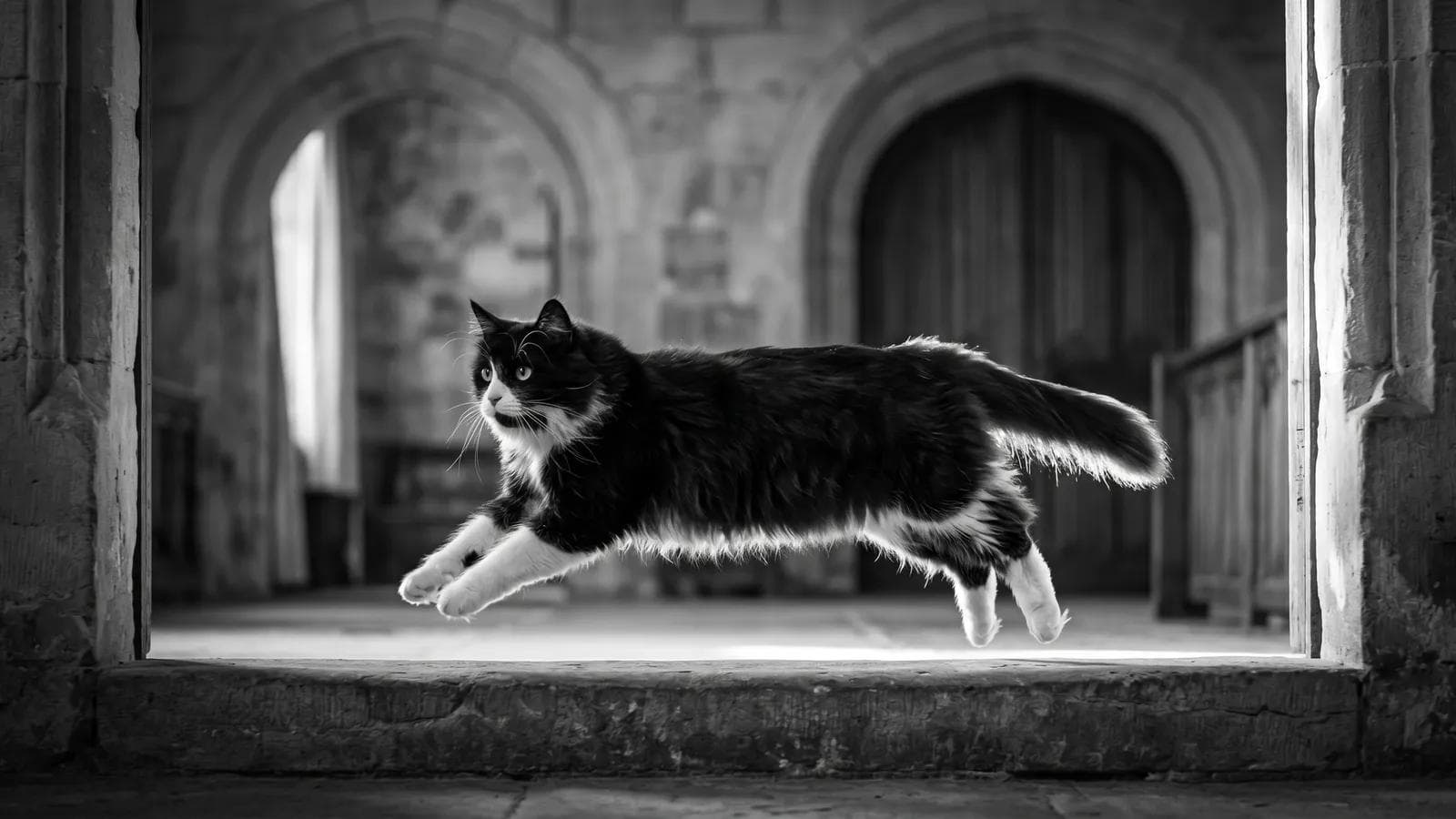
Vino has never needed an extended assessment before accepting contact from someone he's just met. Tuxedo cats, in my experience, have a considerably shorter vetting process.
Vino will sit in the lap of someone he's never met, provided they're seated and appear broadly willing. He doesn't need to know you. He needs you to be present, comfortable, and not doing anything more important. The lap allocation's his to determine.
This confidence isn't indiscriminate, but the threshold's low. Guests who expect cats to be elusive will find themselves confused by a tuxedo cat who's already comfortably installed on them before introductions have finished.
Trait Five: Strategic Inconvenience
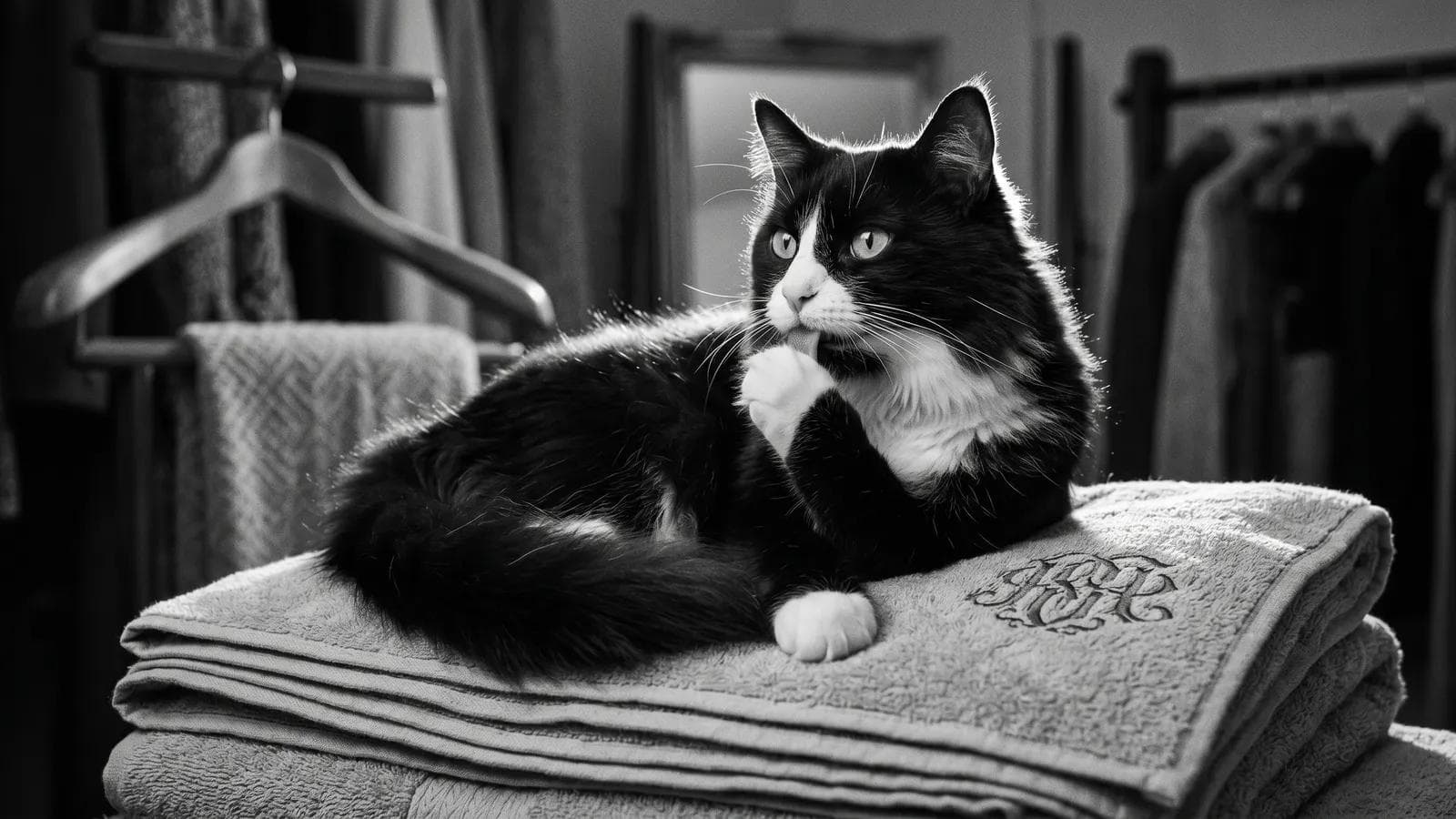
There's a specific tuxedo cat behaviour that looks like obstruction but is better understood as presence management: the placement of oneself in the most consequential available location.
In the kitchen, this is the space directly in front of the area currently being used. In the hallway, it's the middle of the floor at a bottleneck. On the desk, it's the keyboard. In the garden, it's between me and wherever I'm walking.
Vino executes this with a calm that suggests he's unaware of the inconvenience, which I don't entirely believe. He's not moving when asked. He's not moving when stepped around. He may, eventually, move when I leave the area, at which point he'll relocate to wherever I've gone.
This isn't obstruction. It's spatial commitment.
Trait Six: The Following Instinct
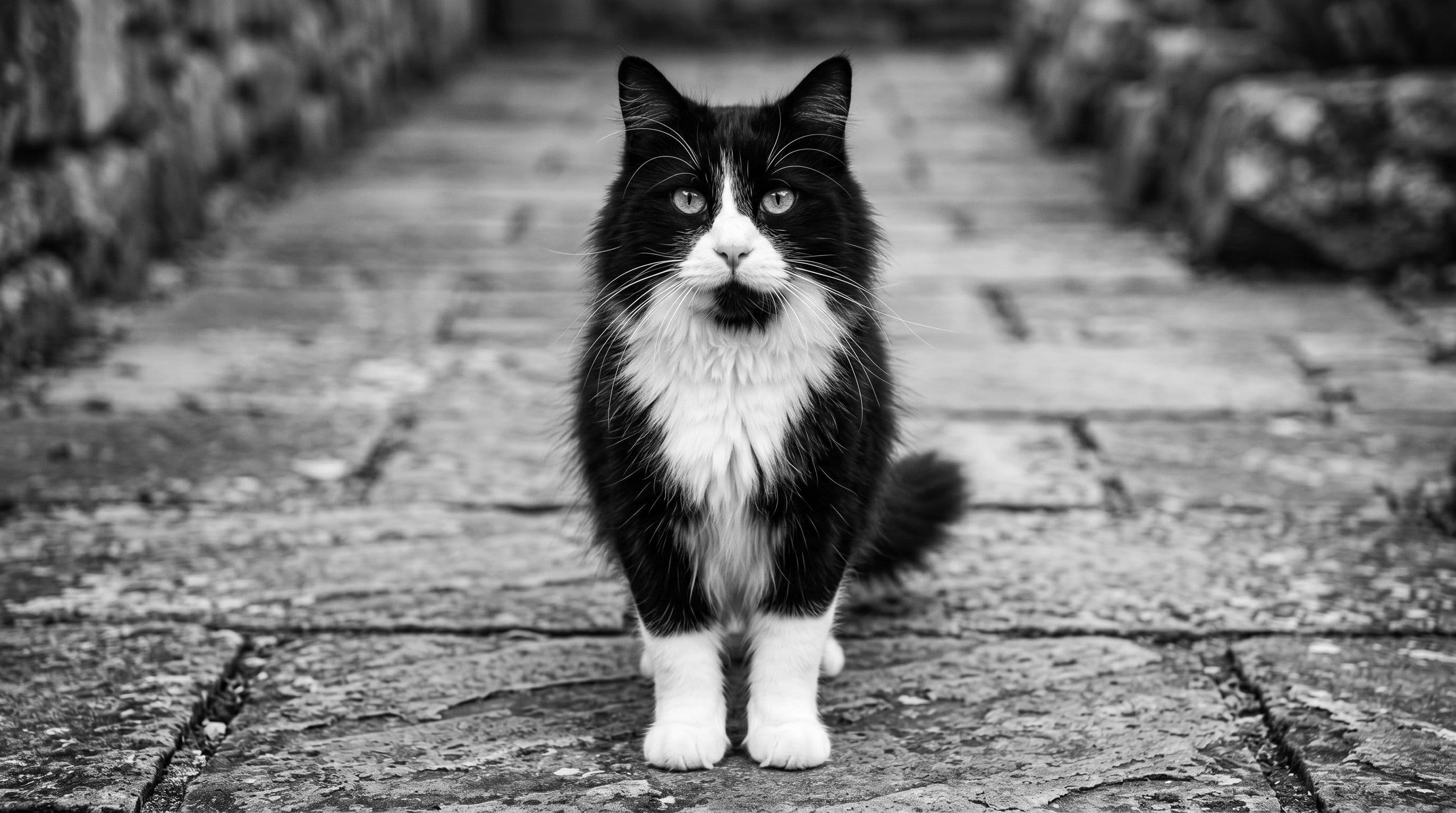
Tuxedo cats follow. This isn't occasional and it isn't a phase. It's a permanent feature of the arrangement.
Vino follows around the yard. He follows between rooms. He follows to the kitchen, to the desk, to the back door. He doesn't do this silently. He meows throughout the journey, either as commentary or because he's uncertain the destination's appropriate and wishes to register his view.
This behaviour's the same behaviour he exhibited at the winery barn before he came home: when someone was present and moving, he was with them. Not because he was trained to be, or rewarded for it. Because this is what he does. We've been accepted. He follows to confirm that.
Trait Seven: Patience Deployed as Dominance
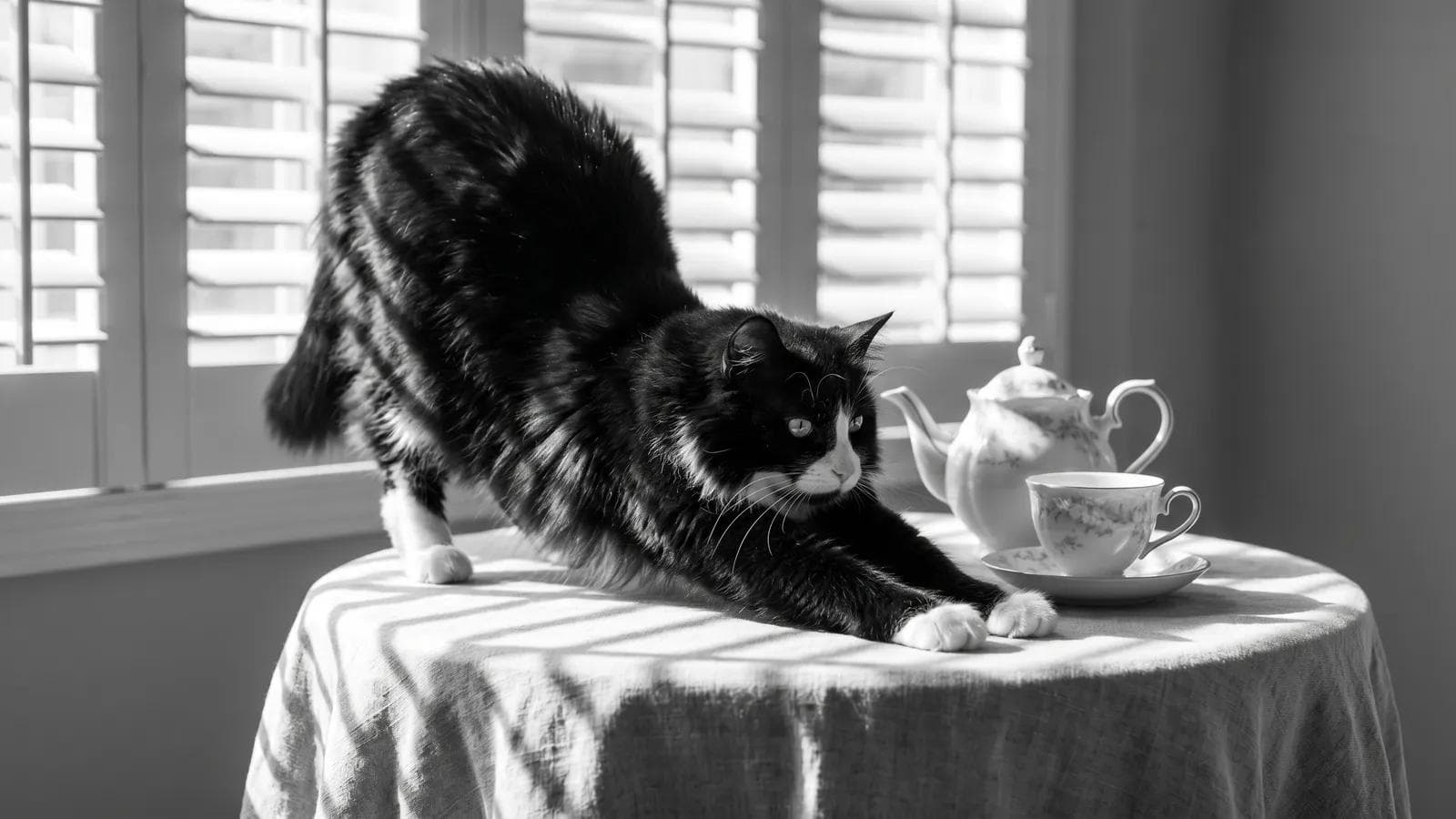
The tuxedo cat approach to conflict is interesting. It's not confrontational in any direct sense. It's, if anything, the opposite: a studied, deliberate withholding of reaction that produces considerably more distress in the other party than any hissing would.
The neighbour's Staffy illustrates this precisely. The dog loses itself at the fence. Vino lies down approximately a metre away, selects a point in the middle distance, and doesn't move. He doesn't acknowledge the fence, the dog, or the noise. He maintains this posture with a composure that's, when observed, genuinely impressive.
The dog eventually exhausts itself. Vino hasn't moved. He was never going to move. The entire performance was his, conducted through the simple refusal to participate in the other party's distress.
This patience is characteristic. Tuxedo cats aren't easily rattled. They prefer to let the situation come to them, then decline it.
The distance isn't approximate. I've watched him take up that position enough times to know it's closer to measured: near enough that the Staffy can't reasonably claim he hasn't noticed him, far enough that Vino's never technically at the fence and can't be blamed for starting anything. He doesn't face the fence, either. He angles himself roughly forty-five degrees off it, dog held in peripheral vision, gaze fixed on some patch of nothing past the fence line. It reads as disinterest. It functions as full awareness. He holds the posture for however long he decides the session runs, sometimes ten minutes, sometimes considerably longer, and ends it when he's finished rather than when the noise does.
Some of this predates the fence by years. Before this house, Vino ran a working cat's patch of a Tasmanian vineyard: real territory, no permission required from anyone. That kind of self-sufficiency doesn't get left at the winery gate. It's in how quickly he found this fence line after we moved in, and in how little interest he's ever shown in resolving the standoff through anything but his own method.
Zola wants nothing to do with any of it. She knows the dog exists and has simply decided he isn't worth an afternoon. Vino runs an active campaign; she's opened none at all, and both approaches land in the same place: two cats who go outside, deal with the Staffy in their own separate ways, and come back in having given him nothing. Years into it, the dog still seems to expect today will be the day the cat finally reacts. It never is.
The same instinct shows up indoors, quieter but unmistakable. He tracks who's home and where they are, checks any room he hasn't personally inspected recently, and treats breakfast as a schedule I'm expected to keep rather than a request he's making. The fence is the most visible version of a habit that runs the whole house.
Trait Eight: Playfulness That Doesn't Age Out
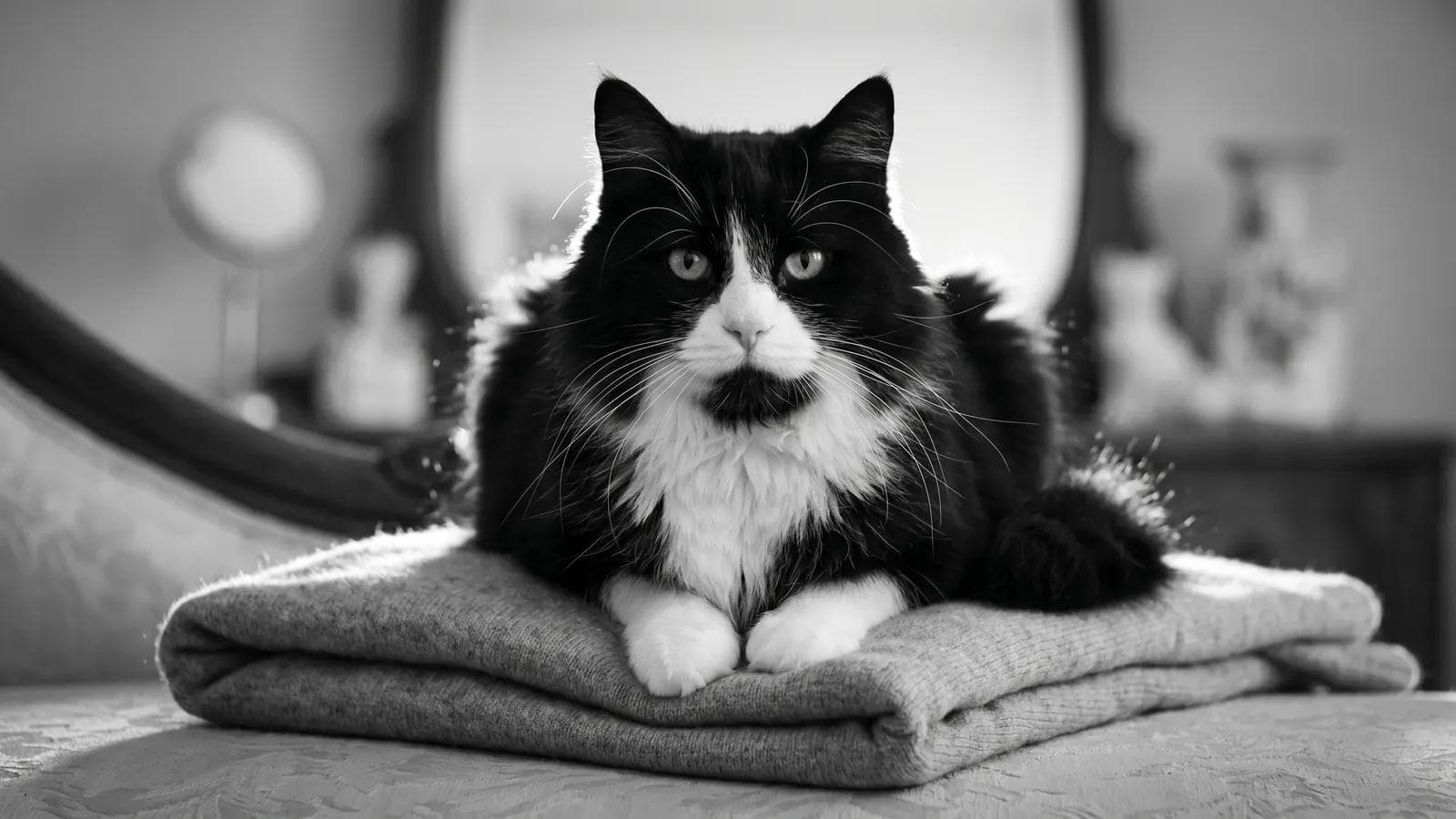
The assumption that cats settle into stillness with age isn't well supported by what I've observed.
Vino plays. He engages with toys with genuine enthusiasm. He chases Zola around the garden with the energy of a cat who hasn't been told that this activity might eventually become optional. He chirps at birds through the window with the focus of someone who intends, one day, to manage this situation definitively.
The playfulness coexists with the aristocratic bearing. He'll be on the desk, in the way, demanding attention, then suddenly interested in a piece of crinkle paper on the floor with complete sincerity. The dignity doesn't preclude the engagement. They operate in parallel.
Trait Nine: Dramatic Response to Indignity
The tuxedo cat's composure is genuine but situational. It holds under most circumstances. It doesn't hold in the bath.
Vino's medium-long fur has, on more than one occasion, required intervention with warm water. He hates water. He makes this known with considerable volume and physical effort during the operation. The contrast between his usual bearing and his conduct during a forced half-bath is total. All the composure evaporates. The grievance is extensive and clearly articulated.
This isn't a flaw. It's a feature. The tuxedo cat's dramatic capacity is proportionate to the offence. Routine inconveniences are met with the protest meow. A genuine indignity, such as warm water applied to the rear, is met with everything available.
The recovery's quick. Within minutes of the bath concluding, Vino's composed again, grooming himself with the air of someone who's put an incident behind them and doesn't intend to discuss it further.
Trait Ten: Genuine Warmth
Set aside the inconvenience, the vocality, the lap-claiming, the bath performances, and the meowing at closed doors. What remains is a cat who's genuinely and consistently warm to the people in his home.
Vino sleeps close. He seeks out the people he lives with. He sits on them. He follows them. He inserts himself into their activities not from indifference but from its opposite: a consistent interest in being near them that hasn't diminished in years.
He came from a winery barn where he'd installed himself in the routine of a man who worked there, tripping him up, jumping on the crates, demanding pats. The man took him home. It's not complicated. Vino found people he wanted to be near and he's been near them ever since.
This is the trait that sits beneath all the others. The inconvenience's an expression of it. The vocality's an expression of it. The tuxedo cat personality is, at its core, an intensely social personality in a category of animal not always associated with sociability.
Frequently Asked
Final Assessment
The ten traits above aren't exhaustive. They're the ones that present themselves most consistently when a tuxedo cat of Vino's character has been under observation for several years. The full picture's richer and occasionally more exhausting.
What the assessment demonstrates is that tuxedo cats aren't decorative. They're not background presences who happen to share square footage with people. They're participants. They have views. They'll share those views at volume, with their whole body on your keyboard, at the precise moment you were about to complete something important.
I accept this. It was the arrangement from the beginning. Vino made that clear in the barn, and he's made it clear every day since.
The assessment's complete. The subject is, predictably, in the way.
Related reading: Are Tuxedo Cats Good Lap Cats? Vino's Verdict.
Related reading: Tuxedo Cat vs Tabby Cat: Behavioral & Care Differences.