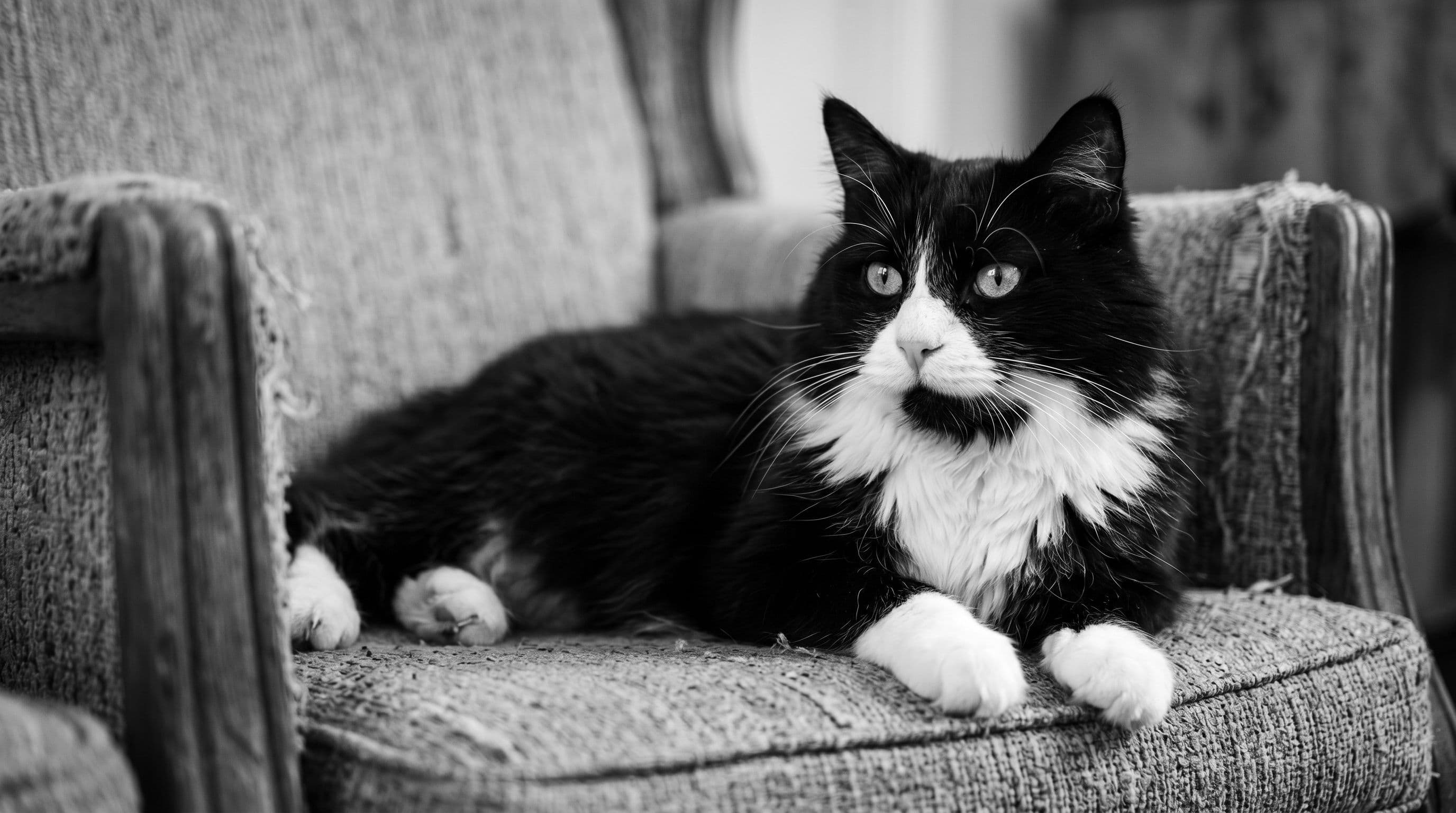
Our couch has witnessed many negotiations over the years, but none so one-sided as Vino's nightly claim on any available lap. He doesn't ask. He doesn't circle politely or offer a tentative paw. He simply arrives, settles his medium-long tuxedo frame across whatever limbs happen to be horizontal, and begins to drool with the quiet satisfaction of someone who's won an argument no one else realized was happening. It's a pattern that started in a winery barn in northern Tasmania and hasn't evolved one bit since. For anyone wondering whether tuxedo cats are lap cats, Vino has been issuing his answer, unsolicited and emphatic, for years.
The Lap Protocol: How Vino Handles Horizontal Humans
Vino's relationship with laps follows a precise internal logic that he hasn't shared with me. The broad strokes, observed over years of data collection, are these: if a person is seated, they're a candidate. If they're reclined, they're a priority. If they're a guest who's never visited before, they're a target of particular interest.
The guest lap claiming is one of Vino's more reliable performances. He's slightly selective; not every visitor receives the honour. But "slightly selective" in Vino's case means roughly nine out of ten laps will do. He doesn't need an introduction. He doesn't need to warm up to a new scent or spend twenty minutes observing from across the room. He needs you to be sitting down. That's the entire vetting process.
Once installed, he drools. This isn't a mild, occasional dampness. It's a commitment. Guests who arrive in dark clothing leave with evidence. Guests who arrive in light clothing leave with different evidence. The drooling intensifies during chin scratches and chest brushing; his white chest and that natural black bow-tie marking become a sort of ground zero for the operation. He'll knead whatever surface is available. He'll purr at a volume that makes conversation difficult. He won't leave until he decides to leave, and he rarely decides quickly.
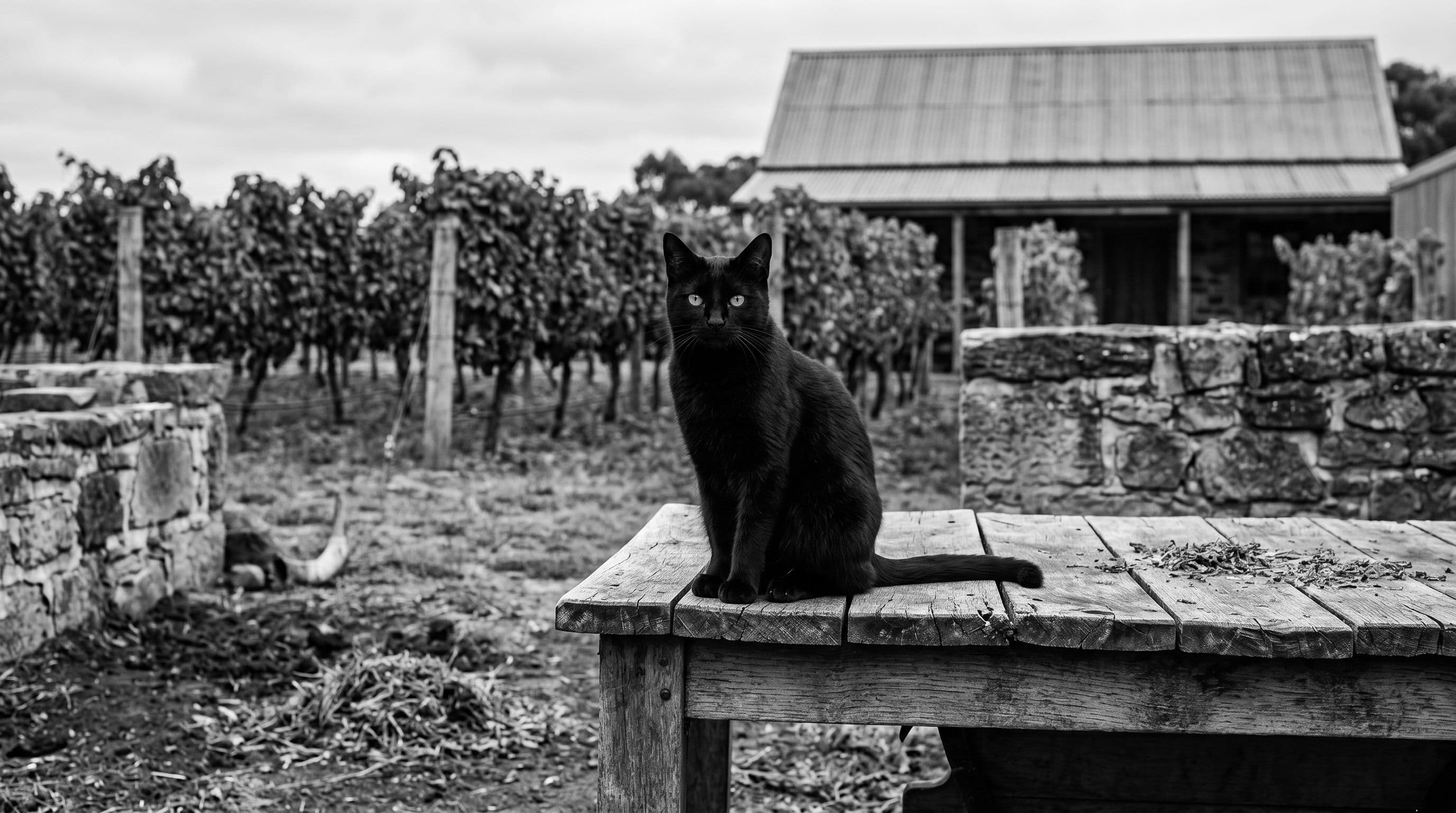
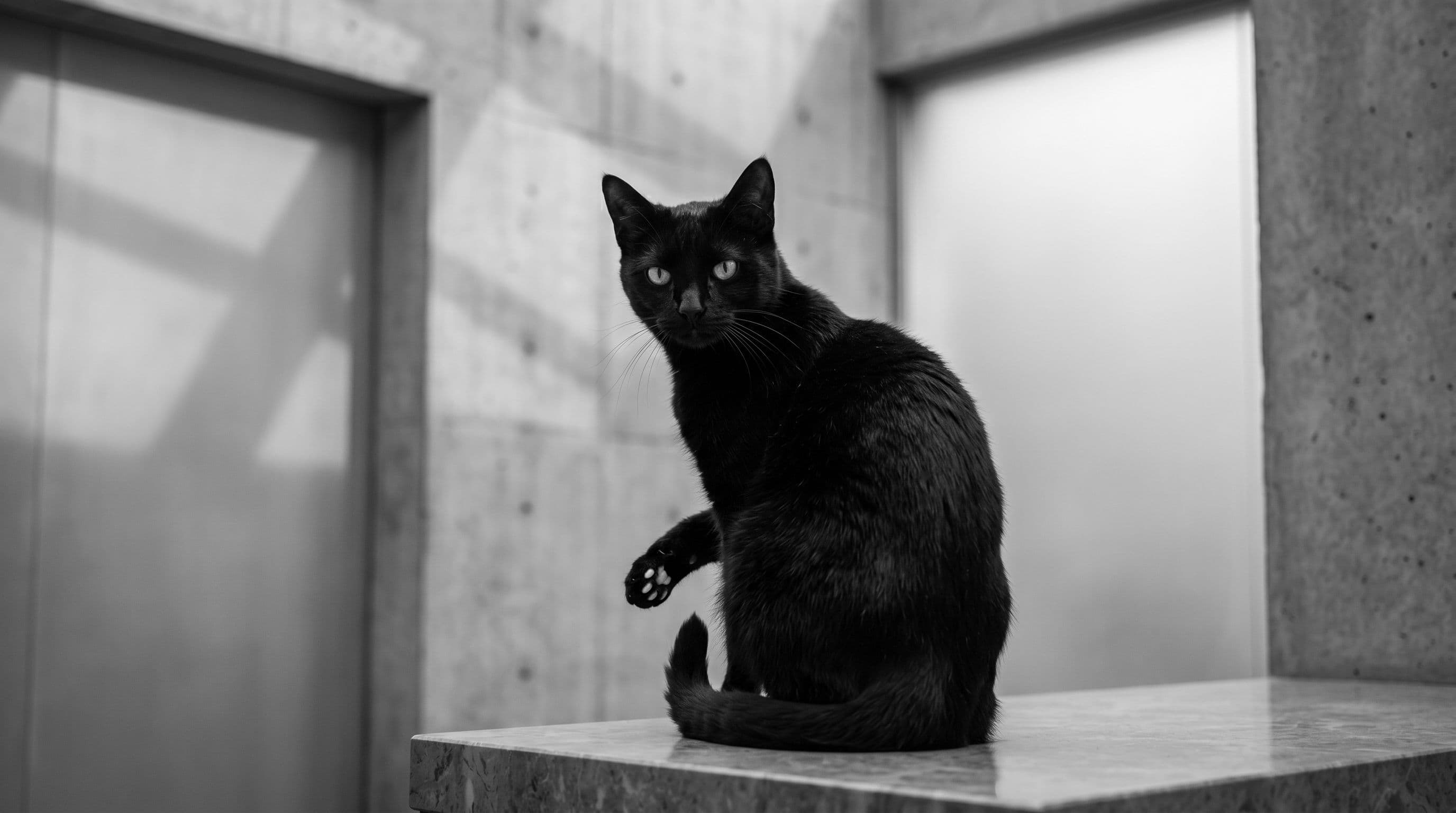
Zola, it should be noted for contrast, handles the lap question with the cool detachment of someone who's read the invitation and declined. She's black, slender, reserved, and operates on a social calendar that doesn't include spontaneous physical affection with strangers. She'll share a windowsill with Vino. She'll tolerate his attempts to play. She won't, under any observable circumstances, throw herself onto a guest's lap and begin producing saliva. The two cats exist on opposite ends of the affection spectrum, and my fiancée and I have learned to set expectations accordingly.
What Makes a Cat a Lap Cat in the First Place?
Behaviourists point to a handful of factors: early socialisation, breed tendencies, individual temperament, and the quality of the bond with their human. The AAFP and ISFM's Feline-Friendly Handling Guidelines note that habituation to human handling, starting between 2 and 7 weeks of age, improves feline-human relationships, including a cat's comfort with contact as an adult. A cat from a breed known for companionability; Ragdolls, Burmese, Scottish Folds; will skew toward lap-sitting more than, say, a Bengal who'd rather be scaling your bookshelf.
Vino's early life was spent on a small, family-run biodynamic vineyard and winery in northern Tasmania. He belonged to the property's elderly founder, a man described by everyone who knew him as colourful and lively. Vino lived and worked on that property for a couple of years, catching mice and presumably charming anyone who stood still long enough. When I first encountered him in the winery barn, his approach to human interaction was already fully formed: walk between legs, jump on things, demand attention, refuse to be ignored. This wasn't a cat learning to be social. This was a cat who'd arrived socially complete and expected the world to accommodate him.
The barn behaviour maps directly onto the lap behaviour. In the barn, Vino wouldn't let anyone reach what they were reaching for without physically interposing himself. On the couch, he won't let anyone sit without physically interposing himself. On the desk during computer work, he won't let anyone type without physically interposing himself. The venue changes; the principle doesn't. Vino's position on personal space is that it belongs to him, and he's generous enough to let humans share it.
The Airborne Exception: When Even Vino Adapts
There's a particular anecdote involving a private jet cabin that deserves a brief mention, if only because it's one of the rare instances where Vino's lap protocol showed any flexibility at all. The confined space, the ambient hum, the unfamiliar textures of leather seating at altitude: none of these things deterred him from seeking a lap. They did, however, produce a slight delay. He spent approximately ninety seconds surveying the cabin before selecting his target, which, by Vino's standards, constitutes profound restraint. The drooling commenced on schedule.
The point isn't that Vino adapts his behaviour to new environments. He doesn't, not really. The point is that his default setting; seek lap, occupy lap, drool on lap; is so deeply embedded that even airborne sophistication can't override it. He simply performs the same ritual in a nicer chair.
Breed Myths vs. Individual Cats: The Tuxedo Temperament Question
The internet is awash with claims about tuxedo cat personalities. They're smarter than other cats (unproven). They're more affectionate (anecdotal). They have "tuxeditude" (a word that should be retired immediately). The truth is less tidy: coat colour and pattern don't determine personality with any scientific reliability. What coat colour does influence is human perception. A cat in a tuxedo pattern looks put-together, intentional, like someone who chose that outfit. Owners project accordingly.
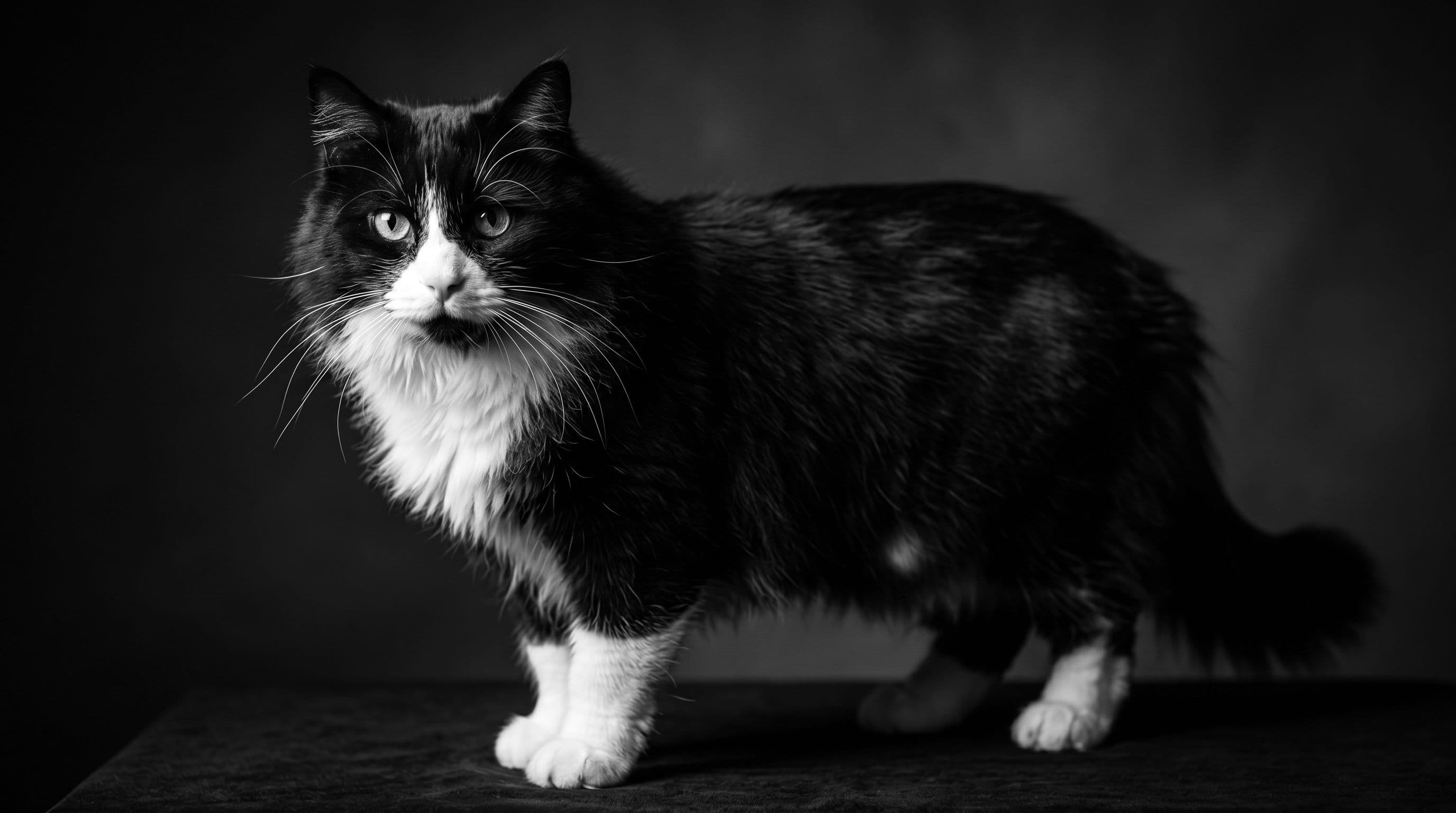
Vino happens to be affectionate, demanding, and profoundly committed to lap occupation. He also happens to wear an almost perfect tuxedo pattern, complete with a black chin that extends into a natural bow-tie shape against his white chest. Are these things connected? There's no genetic evidence that says so. But watching him settle onto a lap with the air of someone who's been expected, his green eyes carrying that slight yellow hue, his medium-long fur already shedding onto whatever fabric is nearest: it's hard not to feel like the outfit matches the personality. He carries himself like a cat who knows he looks the part.
Zola, who's nearly all black with just a small white patch on her tummy, doesn't carry herself this way. She's content to observe from a distance, to hiss at Vino's play invitations, to share proximity without sharing contact. They'll sleep near each other but won't cuddle. They'll smooch and then pretend it didn't happen. Zola's approach to laps is the same as her approach to most things: she'll consider it, and she'll usually decide against it.
Are Tuxedo Cats Lap Cats? The Honest Assessment
They can be. Many are. Vino emphatically is. But the honest assessment is that any individual cat's willingness to sit on a lap depends on a constellation of factors that coat pattern doesn't control. Socialisation matters. Breed background matters. The specific cat's history and personality matter most of all.
What Vino demonstrates isn't a tuxedo trait. It's a Vino trait. He was a lap cat before he had a lap to sit on; in the winery barn, he was already demanding the same physical proximity he demands now, just without the furniture to formalize it. The couch simply gave structure to an impulse he'd always had.
If you're considering adopting a tuxedo cat and hoping for a lap companion, the odds aren't bad. Tuxedos do tend toward sociability, even if the science behind that tendency is thin. But the best predictor of a lap cat is spending time with the individual cat before bringing them home. Does the cat approach you? Does it seek contact? Does it, perhaps, walk between your legs and jump onto whatever you're trying to reach and refuse to stop until you give it what it wants?
If so, congratulations. You've found your Vino.
The next instalment from our home will address a topic Zola feels strongly about, though she'd never admit to feeling strongly about anything: the politics of shared sleeping arrangements and why proximity isn't the same as cuddling. Vino, predictably, has opinions. He's been making biscuits on the bed about it.
Lap by Day, Chest by Night
The couch isn't actually where the lap behaviour starts. It starts before either of us is properly awake. At first light, Vino is on the bedside table, meowing for breakfast. He doesn't crow first. He waits for confirmation the household's awake before making his case, but he doesn't wait long once he has it, and the case is rarely subtle.
Nighttime runs the same operation in reverse. Once the lights go off, Vino doesn't settle somewhere nearby the way a more independent cat might. He sleeps directly on me, chest or legs depending on the season, and stays there for as much of the night as I let him. It's not the same posture as the couch lap claim; there's no drooling negotiation, no guest to impress, just a cat who has decided proximity is non-negotiable at every hour he's allowed to enforce it. The couch lap is the public performance. The overnight version is the same instinct with the audience removed.
Refuse him either one and you get the protest meow: one sustained note, same pitch, held for five seconds or longer, repeated until the situation resolves in his favour. It shows up most reliably when he's removed from a lap before he's decided he's finished, or shut out of the bedroom on a night I've decided the paw-related interruptions have gone on long enough. He's not being subtle about the complaint, and he's not going to let the matter drop quietly. The lap, in whatever form it takes, is treated as an entitlement first and a request a distant second.
There's a ritual to how he actually settles once he's claimed the spot, too. Before he commits to a lap or a stretch of blanket, he kneads it first, slow and deliberate, front paws working in alternating presses like he's checking the surface meets some standard only he knows. Guests find it endearing. I've had years to notice it's less about comfort and more about staking the claim properly before he lies down on it. Once the kneading stops, he's down for the duration, and moving him before he's ready is its own small negotiation.