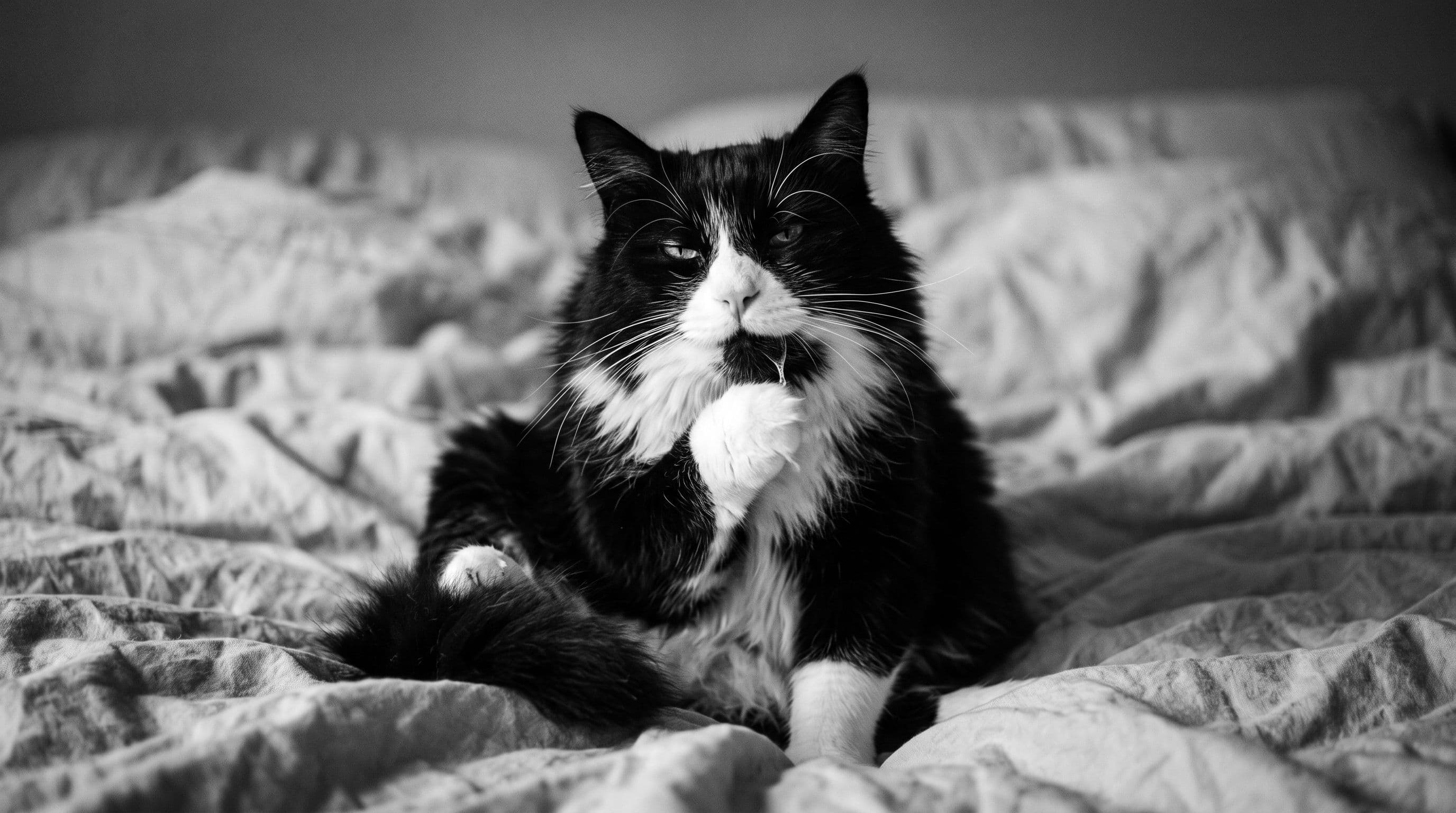
People keep asking me whether tuxedo cats are hypoallergenic, usually while looking at Vino's tidy black and white coat. The short answer to “are tuxedo cats hypoallergenic?” is no, and living with him has shown me why the pattern is the wrong thing to look at. Vino will occasionally make himself comfortable on a guest's lap. The trigger is duration, not familiarity: someone has been sitting at the table a while, chatting away, and then he arrives and settles in. He doesn't need to know you. What he brings with him isn't his colouring. It's drool.
Exhibit One: The Drooling Cuddle and the Fel d 1 Question
Vino's pattern is nearly perfect: white chest, belly, paws, that black bow-tie shape against the white. But the pattern has nothing to do with what comes out of him during a cuddle session. He drools. A lot. Especially when he's being patted, when he's purring, when he's decided you're his furniture for the evening. What he produces isn't a small damp spot. It's a visible, trackable production of saliva that soaks into fabric and skin.
Satyaraj, Wedner and Bousquet, writing in Allergy in 2019, established that Fel d 1 is the major cat allergen, accounting for up to 96% of human allergic sensitization to cats and 60% to 90% of the overall antigenicity of cats and cat dander. All cats produce it regardless of breed, age, hair length, sex, housing, or body weight. There are no allergen-free or hypoallergenic cats. The American College of Allergy, Asthma and Immunology confirms the same: no non-allergenic cat or dog breeds exist.
What Vino's drooling adds to this picture is distribution. Fel d 1 is present in saliva, sebaceous glands, and skin. A cat who deposits saliva generously and frequently isn't producing more allergen than a cat who doesn't, but he's moving it around more efficiently. Vino is that cat. His medium-long coat, longer than a shorthair, not extreme, then carries that saliva to surfaces, to clothing, to the air when he grooms. The tuxedo pattern is irrelevant. The drool is not.
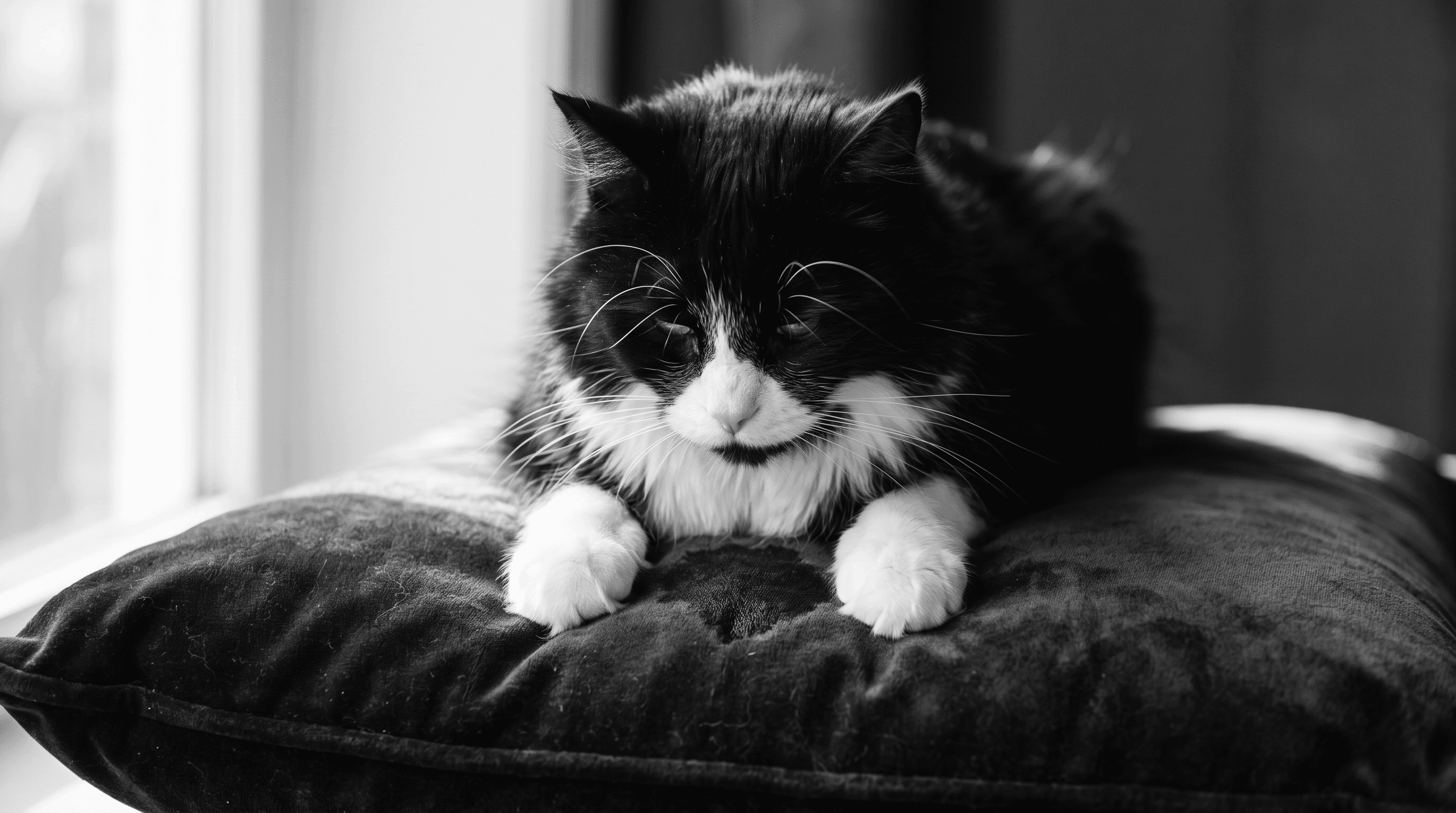
This is where I'd love a tidy story about a sneezing guest, but I don't have one, and I'm not going to invent it. What I do know is where the saliva goes. Vino drools most during cuddles and while being patted, so the person closest to it is whoever he's lying on. On a guest's lap, that's the guest. At night, it's me, because his spot is my chest. His colour has no part in any of that. This is the first exhibit: a tuxedo cat whose allergen travels with his temperament, not his coat.
Exhibit Two: Zola's Contrast and the Coat Genetics Context
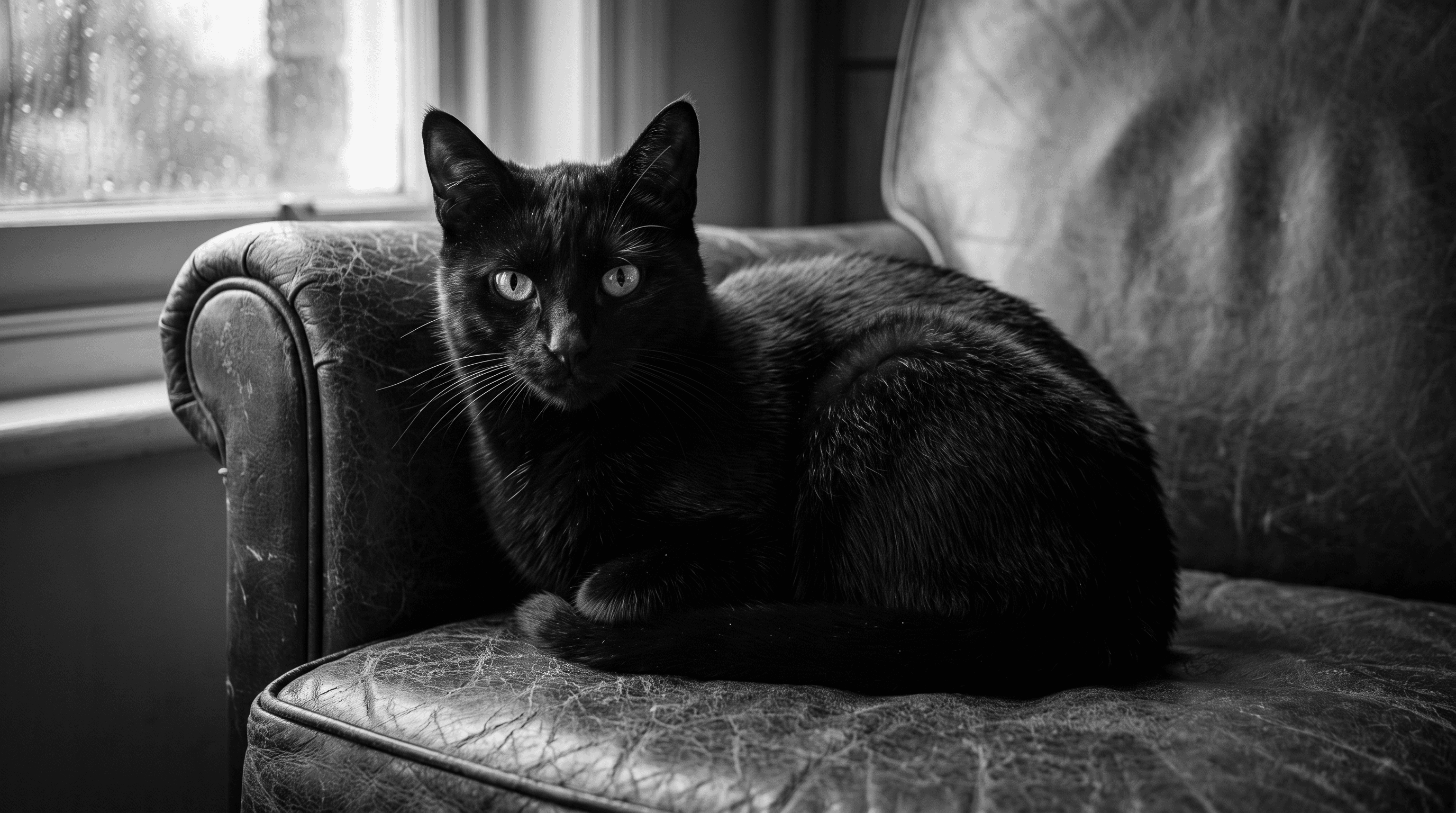
Zola is about 3.9 kg (September 2026) of sleek black composure, and a small white mark on her belly. She's not a tuxedo cat, and she takes up space differently. At night she waits until everyone has settled, then sneaks in quietly and parks on my leg. Vino goes straight for my chest.
That isn't because one cat is hypoallergenic and the other isn't. Both produce Fel d 1. The difference is where each of them puts it: one cat at my face, one at my knee.
This contrast matters for the tuxedo question because it reveals what people are actually asking when they ask about hypoallergenic cats. They're asking whether a particular visual pattern, the tuxedo, correlates with lower allergen production. The answer is no. The bicolour pattern is a coat genetics phenomenon, not an immunological one. I've written elsewhere about tuxedo coat genetics, about how the white spotting gene produces the piebald pattern, about how this is a colour variation appearing across multiple breeds and in random-bred cats like Vino, not a breed in itself. None of that genetics has any bearing on Fel d 1 production.
What does bear on the lived experience of allergies is whether your particular cat drools, whether they groom extensively, whether they insist on sleeping on your chest every single night, as Vino does, or whether they settle further down the bed, as Zola does.
The second exhibit, then, is two cats in one house who share the same allergen and put it in different places. The tuxedo pattern isn't the variable. Individual cat behaviour is.
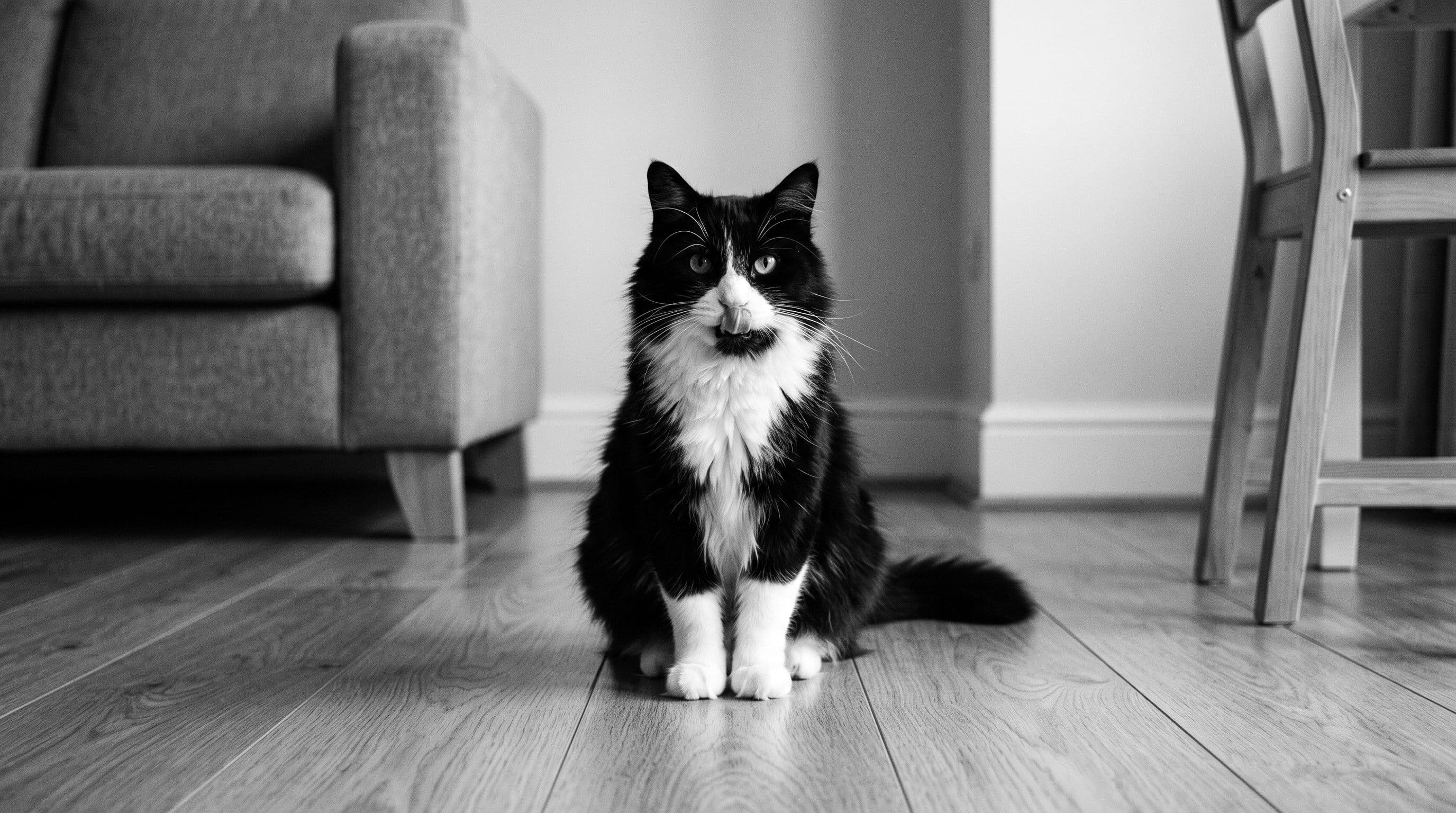
Exhibit Three: The Post-Surgery Drool Reduction and What Changed
Vino had sixteen teeth extracted around late August 2026, following an immune-mediated condition where his own immune system attacked his teeth. The surgery was already booked; he brought it forward by knocking his top left canine loose while jumping off a couch. Since then, I've noticed something specific: his drooling has reduced, but it hasn't stopped. He still drools during cuddles. He still deposits saliva on my shirt, on guests, on the bed where he sleeps on my chest every night. The reduction is noticeable to me because I live with him. It hasn't turned him into a hypoallergenic animal. His breath, which used to smell really bad, no longer does. His lip catches now, and he licks his mouth constantly while adjusting to the changed landscape in there. But the drooling continues, just less voluminously.
This is the third exhibit because it isolates a variable. Something changed in Vino's mouth: sixteen teeth removed, gums healed, breath improved, and his drooling changed in degree, not in kind. He still produces Fel d 1. He still spreads it around. The tuxedo pattern remained identical throughout. The only thing that shifted was one route the allergen travels, and it shifted slightly, not categorically. Tested against a real, specific animal, the pattern never mattered, and even a significant physical change didn't produce a hypoallergenic cat.
What This Adds Up To
The standard answer to “are tuxedo cats hypoallergenic?” is already no, and the science is firm on this. What living with Vino adds is a demonstration of why the question persists, and why it's the wrong question. People see a tidy pattern, a formal-looking cat, and they want the pattern to mean something about livability. It doesn't. What decides whether a particular cat triggers your allergies is the combination of that cat's physical traits (coat length, saliva, grooming) and their behaviour: how much they touch you, how much they drool on you, how much they insist on being in your breathing space.
Vino's medium-long coat carries more material than a shorthair would. His drooling deposits allergen directly onto skin and fabric. His nightly spot on my chest puts him, fur and all, right under my nose. Zola, on my leg, sits further away. Neither cat is hypoallergenic. Neither cat's coat pattern predicts anything about allergen production. The question is asking for a breed-level or pattern-level rule where none exists, and it ignores the individual variation that actually shapes household experience.
I've had cats essentially my whole life. I've never had a cat who drooled like Vino, who distributed himself across human bodies with such thoroughness, who made the physical fact of living with a cat so unavoidably apparent. This isn't a complaint. It's an observation about specificity. If you're asking whether a tuxedo cat will trigger your allergies, you're asking about the wrong feature. Ask instead about that individual cat's behaviour, their coat length, their saliva production, their insistence on contact. Vino's tuxedo pattern is beautiful. It's also irrelevant to whether he'll make you sneeze. If you live with a cat and an allergy, I'd like to know which mattered more for you: the coat or the cuddles.