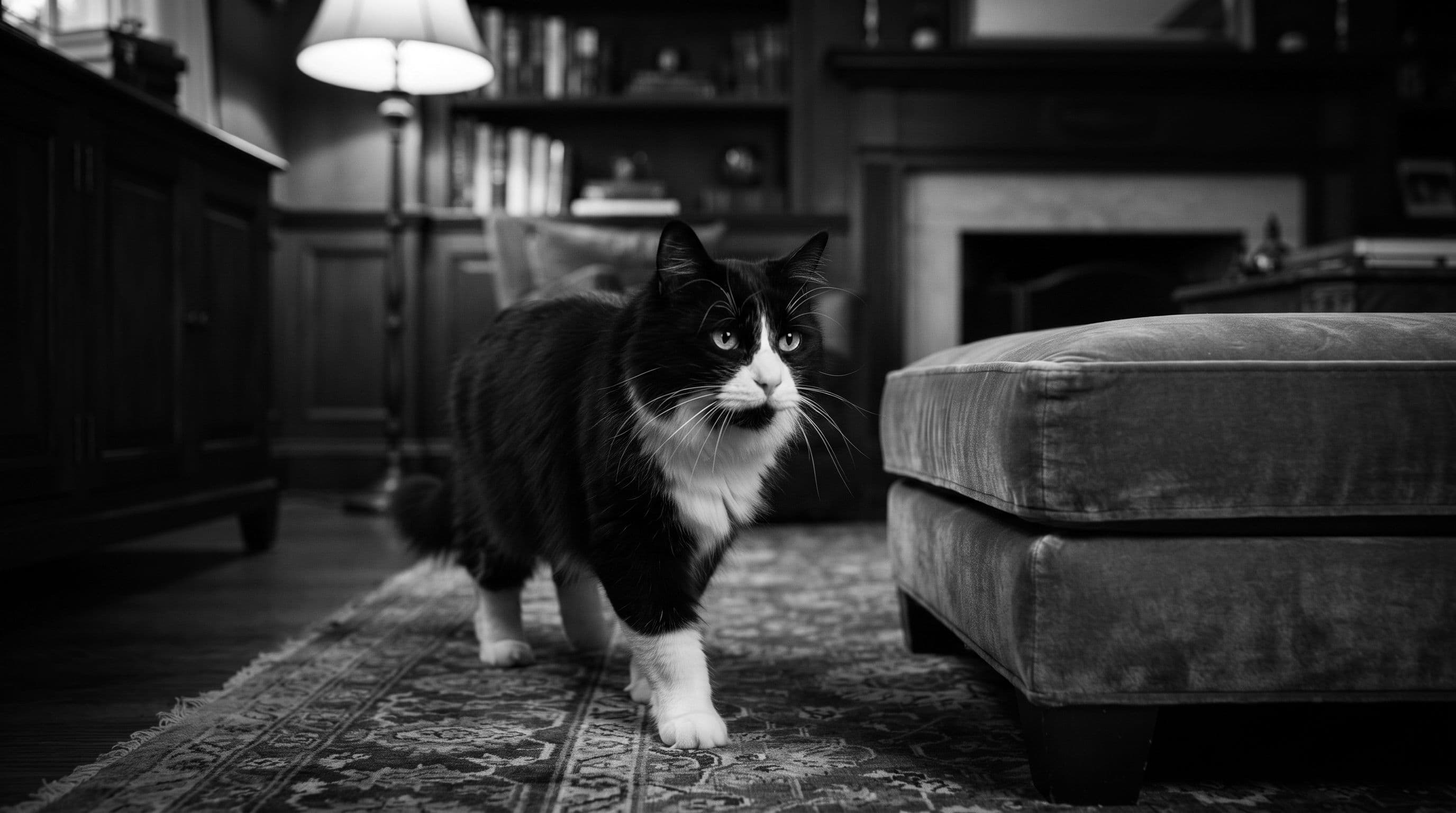
Marcus hadn't even finished lowering himself onto our couch before Vino materialized from behind the living room curtain, crossed the hardwood with the purposeful stride of a hotel concierge, and planted himself squarely on Marcus's lap. Eleven seconds, if I'm being generous. Marcus doesn't own cats. He's told me on more than one occasion that he's "not really a cat person," a disclaimer Vino has never once acknowledged. What Vino acknowledged was a warm, stationary human who hadn't yet developed the lap-defense reflexes I've spent years building. That selective targeting sits at the heart of why does cat sit on strangers, and it isn't affection so much as strategic resource allocation. Vino has refined the whole routine into something close to an art form.
Stranger Laps Represent Unclaimed Territory
Most of the popular explanations for this behaviour lean on a single idea: cats are drawn to people who ignore them. There's a grain of truth there, but it's incomplete. A 2019 study by researchers at Oregon State University found that 64.3% of cats showed a secure attachment to their caregiver, closely mirroring the rate seen in human infants. That figure lines up with the framework developmental psychologist Mary Ainsworth established for human infant bonding in the 1970s, and it tells us something I've watched play out in my own living room a hundred times. When Vino wanders over to a guest and parks himself on their lap, he isn't rejecting me. He's secure enough in what we've built that he can afford to be curious. A majority of cats aren't choosing strangers because they're indifferent to their owners; they're choosing strangers because the bond at home is already solid.
Vino fits that profile precisely. He'll follow me around the yard, meow relentlessly at my desk, drool on my chest at 2 a.m., and then abandon me the instant someone new crosses the threshold. It's not disloyalty. It's confidence. He knows I'm not going anywhere, so he's free to invest his social capital elsewhere.
Zola, for contrast, vanishes. When guests arrive, she retreats to the bedroom or finds a spot behind the washing machine that I didn't know existed until I heard a small, disapproving hiss emanating from behind it. Zola's attachment style skews anxious. New people represent unpredictability, and she wants no part of it. Same household, same humans, completely opposite social strategies.
Scent Investigation Drives the First Approach
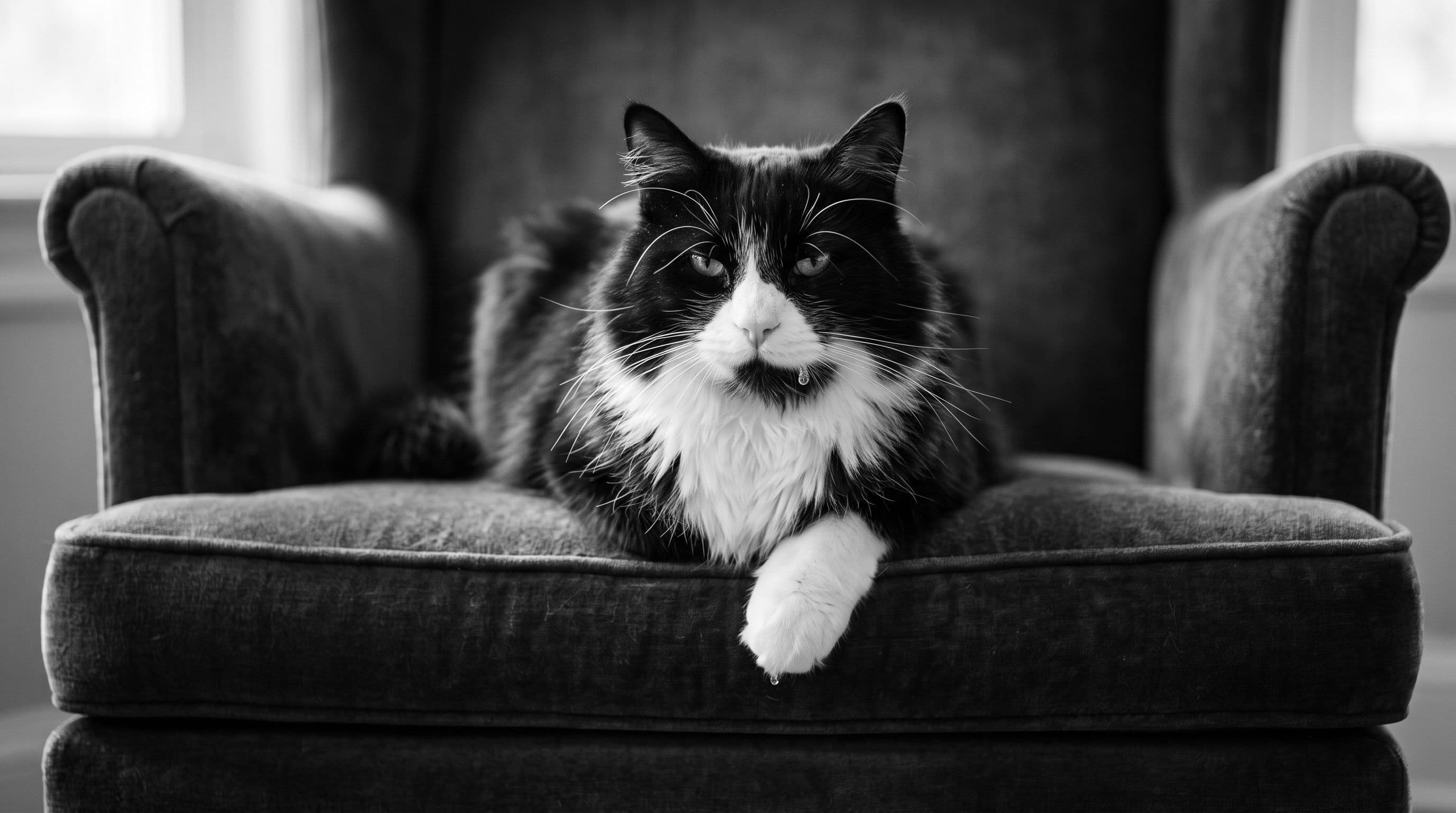
Before Vino commits to a lap, he conducts reconnaissance. He'll walk past a guest's legs, brush his flank against their ankle, and pause. This isn't casual friendliness. A cat's sense of smell is vastly sharper than ours, built on far more scent receptors than the human nose carries. That first pass is an information download: where this person has been, whether they have other animals, what they've eaten recently, and probably several data points I can't begin to guess at.
I've watched Vino do this with at least a dozen different visitors over the past three years. The pattern is consistent. One pass along the legs. A brief pause. Then he either commits or walks away. The people he walks away from tend to be wearing heavy fragrance or have a dog's scent on them. The neighbour's Staffy owner, for instance, has never once received Vino's lap attention, which feels like poetic justice given how much time Vino spends psychologically tormenting that dog through the fence.
When Vino does commit, he doesn't ease into it. He jumps up, turns twice, and drops his full weight, which hovers around 6 kg, onto the guest's thighs. There's no tentative perching. He's in. He's already drooling.
The Warmth Economy of a Tuxedo Cat's Coat
Here's an angle I haven't seen anyone else discuss: coat type matters. Vino's medium-long fur means he retains body heat efficiently, but it also means he's more sensitive to ambient temperature shifts. Our house in Tasmania sits at roughly 42 degrees south latitude, and winter evenings can drop to 3 or 4 degrees Celsius without much warning. When it's cold, Vino's lap-seeking behaviour intensifies dramatically, and he becomes less selective about whose lap he claims.
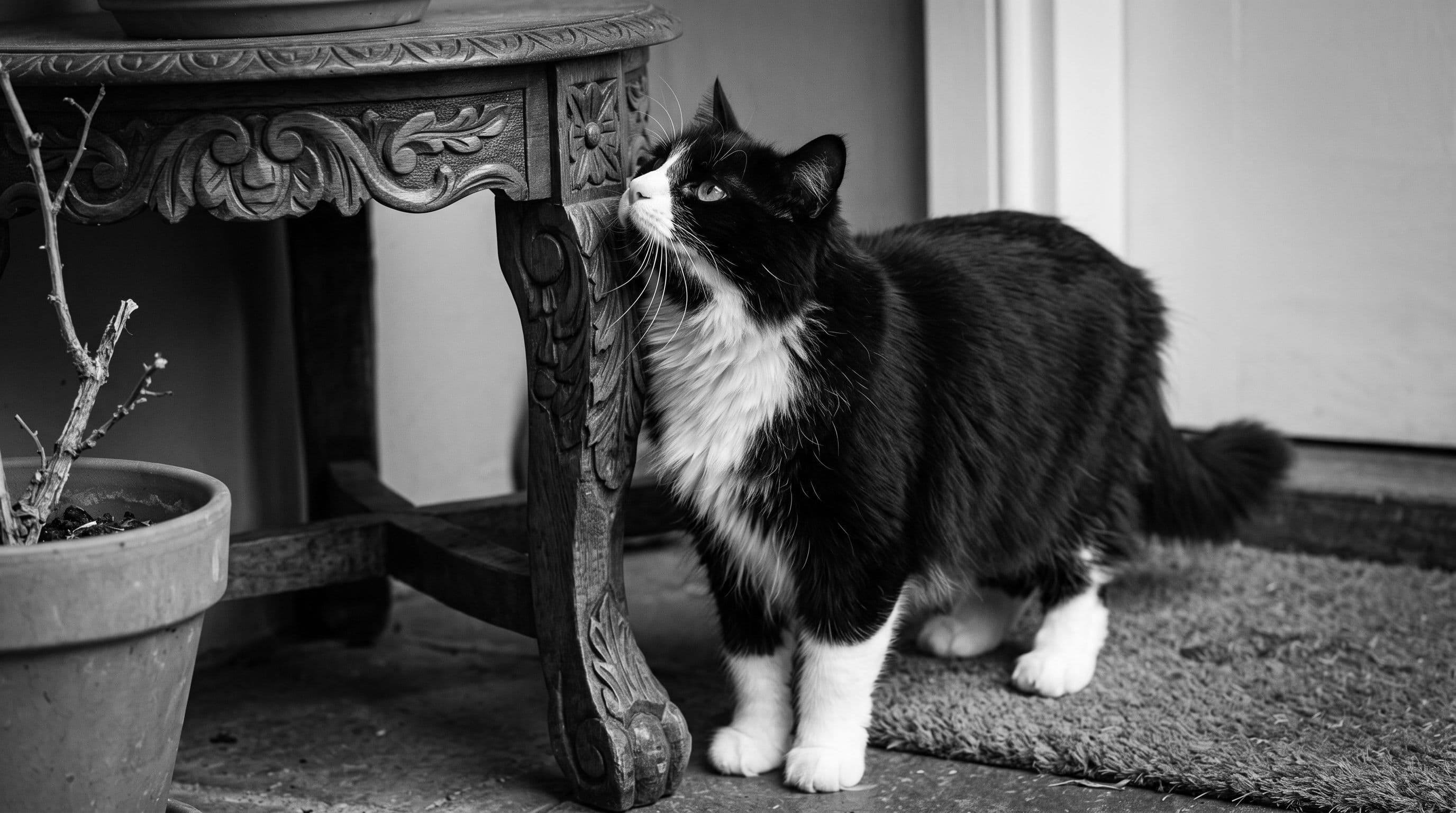
I've tracked this informally over two winters. During the colder months, Vino will approach guests within about 30 seconds of them sitting down. In summer, he might take 10 minutes, or he might not bother at all and just stretch out in a sun patch by the kitchen window instead. Temperature isn't the whole story, but it's a bigger variable in Vino's case than I expected before I started tracking it.
John Bradshaw, the anthrozoologist who founded the Anthrozoology Institute at the University of Bristol and wrote Cat Sense, argues that much of how cats communicate with people is learned rather than innate. That means Vino's lap-seeking behavior isn't some hardwired survival script but something he's picked up through repeated experience: warm human, good outcome, repeat. Feral colonies do form sleeping clusters, and I'd bet warmth plays as big a role as social hierarchy in those arrangements, but that's my own speculation based on years of watching Vino commandeer the nearest body-temperature surface. He isn't feral, but his body doesn't know that. A new, warm lap is a new heat source, and his tuxedo coat's insulating properties make him particularly attuned to the difference between a 19-degree room and a 37-degree human.
Vino's Selectivity Isn't Random; It's Hierarchical
I said Vino is "slightly selective," and I should explain what that means. He doesn't sit on everyone. He has preferences, and they follow a loose but observable pattern.
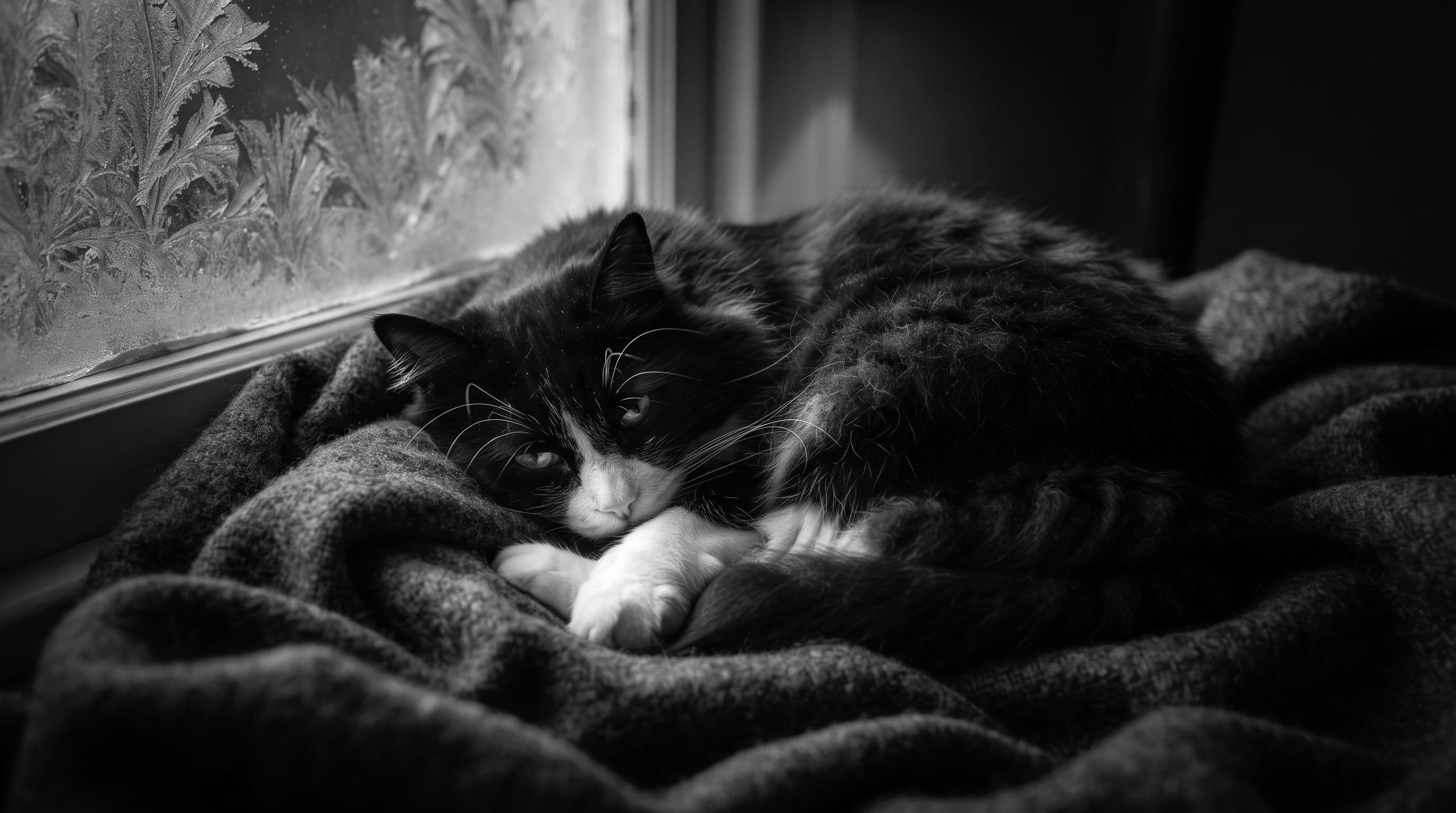
People who sit still get chosen first. Fidgeters, leg-crossers, and people who gesture dramatically while talking tend to get passed over. My fiancée's mother, who sits like she's posing for a Renaissance portrait, is Vino's absolute favourite guest. She's received more lap time in her last four visits than I've accumulated in a month. She finds this flattering. I find it instructive.
People who reach for Vino first almost never get him. I've watched this play out dozens of times with guests in our living room. He doesn't want to be pursued. He wants to be the one making the selection. John Bradshaw, the anthrozoologist who founded the Anthrozoology Institute at the University of Bristol and wrote Cat Sense, argues that much of how cats communicate with people is learned rather than innate, and I think Vino's learned exactly this: that ignoring a human who's beckoning gets him a better interaction on his own terms five minutes later. The distinction matters to him enormously, even if it looks like the same outcome to a human observer.
If you've read my post on tuxedo cat personality traits, you'll recognise some of these signals. Vino's ears rotate forward, his tail lifts to a slight curve, and his whiskers fan out before he commits to a jump. It's a three-step launch sequence, and once you know it, you can predict the landing zone with about 90% accuracy.
Why Your Cat Might Prefer Guests Over You
This is the part that stings, so I'll be honest about it. Vino prefers guests partly because I'm boring to him. Not emotionally boring; I'm the person he follows, meows at, and drools on every single day. But I'm a known quantity. Every scent, every movement pattern, every predictable response to his protest meow: he's catalogued it all. A guest represents novel stimulation without novel threat, which is the sweet spot for a securely attached cat.
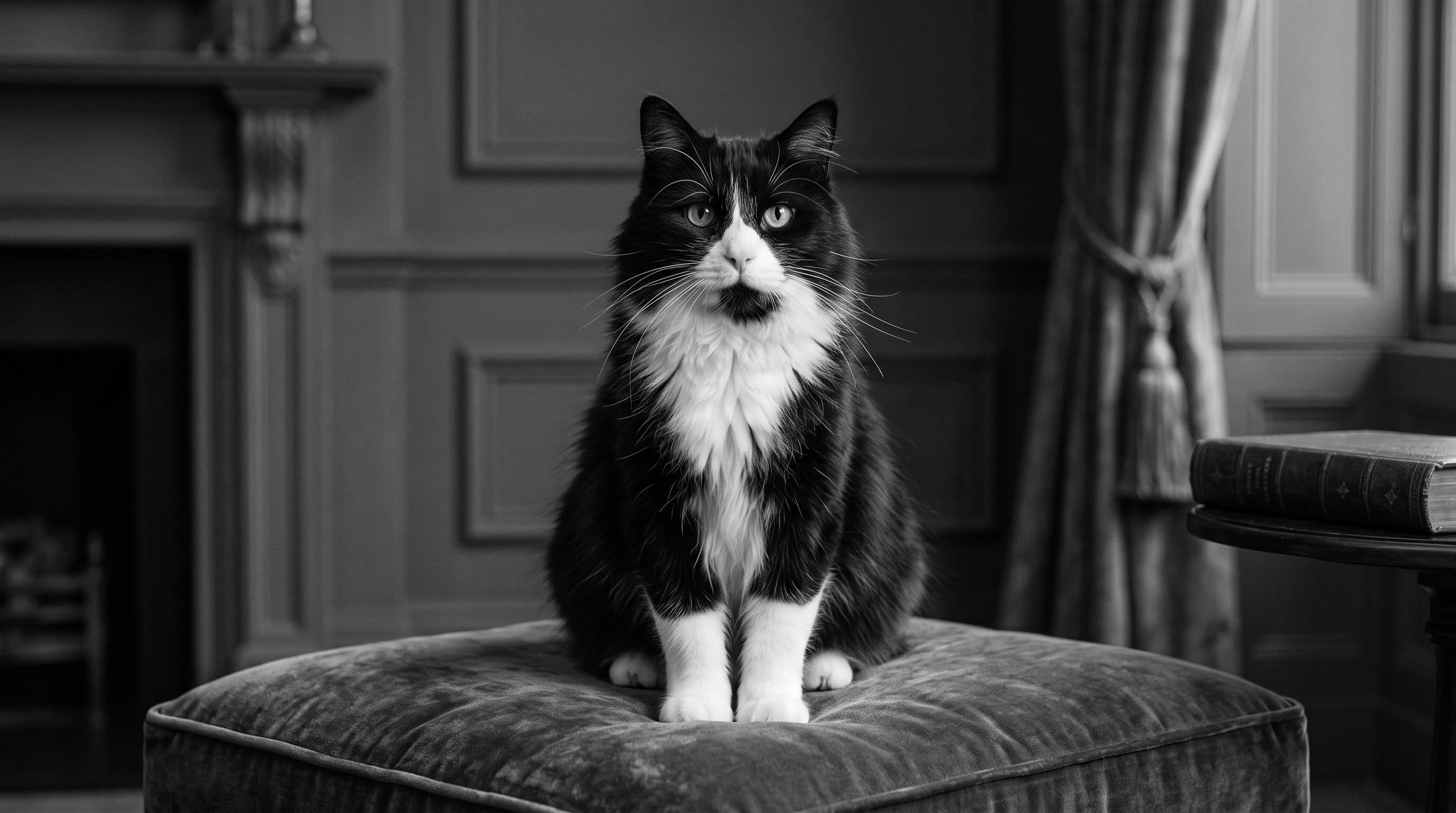
I've watched Vino do this a hundred times. He'll be sitting on my lap, perfectly content, and the moment a guest settles into the armchair he'll cross the room and park himself on the stranger's knees like I don't exist. It'd be easy to take it personally, but I don't think he's forgotten about me for a second. A 2019 Oregon State University study published in Current Biology found that 64.3% of cats showed a secure attachment to their caregiver, closely mirroring the rate seen in human infants, which tells me the bond doesn't just evaporate when a new lap appears. Cats know exactly where you are. They've simply decided, for the moment, that the stranger's lap offers a better return on investment.
I've made my peace with this. Mostly. It helps that Vino always comes back to me at bedtime, when the guests have left and the house is quiet and there are no other laps available. Romance isn't dead; it's just pragmatic.
Zola, meanwhile, has the opposite problem. She's so bonded to her known humans that strangers represent a disruption to her carefully maintained equilibrium. If you're curious about how different cats handle household stress, I wrote about managing multi-cat dynamics a few weeks back, and Zola features prominently in that one.
Frequently Asked
The Warm-Seat Experiment
I've been running an unscientific but telling experiment over the past year or so. When we have visitors, I'll note where Vino ends up within the first five minutes. The results are consistent enough to be boring: he picks the person who sits still, runs warm, and hasn't yet learned to preemptively cross their arms over their midsection. That last part matters more than most people think when asking why does cat sit on strangers.
Zola, at about 3.9 kg, takes the opposite approach. She'll watch from the hallway bookshelf, judge the new arrivals with the silent intensity of a customs agent, and retreat to the bedroom. Same upbringing, same living room, completely different strategy. Vino, at roughly 6 kg of tuxedo confidence, treats an unfamiliar lap like a park bench with his name on it.
[PHOTO: Vino sprawled across a guest's lap on the grey sectional, one paw dangling off the edge]
What I've noticed is that he doesn't just sit on anyone. He skips fidgety people. He bypasses anyone eating. He avoids children entirely, which I respect as sound judgment. The strangers he selects share a profile: relaxed posture, hands at their sides or holding a phone, and a core temperature that apparently meets his standards. He's not randomly sociable. He's screening candidates.
There's also a timing element. Vino almost never approaches a guest in the first thirty seconds. He watches from the curtain, or from the arm of the grey sectional, or from the kitchen doorway. Then he commits. Once he's on a lap, he goes boneless within a minute, which makes removal feel like peeling wet dough off a countertop. The guest, now pinned, looks at me with a mix of flattery and alarm. I offer no rescue. They should've crossed their arms.
[PHOTO: Vino mid-approach across the hardwood floor, tail high, white chest bib catching the overhead light]
The honest answer to why does cat sit on strangers comes down to opportunity cost. I move too much. I shift, stand up to refill coffee, reach for the remote. A guest on my couch is temporarily paralyzed by politeness. Vino has learned that social convention works in his favour; nobody wants to be the person who shoves their host's cat onto the floor. He exploits that hesitation with a consistency I'd admire if it weren't so personally insulting.
Why Does My Cat Only Sit on Guests and Not on Me?
Your cat likely does sit on you, just less reliably, because you're a moving target. In this house, Vino spends hours on my lap when I'm editing photos or reading. But the second a guest arrives, I become irrelevant. Familiar laps come with a track record of interruptions: standing up, shifting weight, reaching for things. A guest sits down and stays down, making them a more stable heat source and a more predictable resting spot. It's not rejection; it's logistics.
Does a Cat Sitting on a Stranger Mean the Cat Is Poorly Bonded to Its Owner?
Not at all. The opposite is usually closer to the truth. Vino is glued to me for most of his waking hours. He follows me room to room, yells at me from the bathroom door, and drools on my pillow at night. His willingness to approach strangers comes from security, not from indifference. A cat who felt uncertain about its home base would more likely hide when visitors arrived, the way Zola sometimes does. Confidence in the primary bond is what frees a cat to be curious about new people.
Should I Stop My Cat from Sitting on Visitors Who Don't Like Cats?
I keep a light blanket on the arm of the couch for exactly this reason. If a guest seems uncomfortable, I'll drape it over their lap before Vino arrives, which buys them a barrier and gives Vino a texture he dislikes. Picking him up mid-settle tends to backfire; he just returns with more determination. Redirecting works better than removing. A treat tossed toward his cat tree will pull him off a lap faster than any amount of gentle lifting. I've also found that warning guests in advance helps: "He will sit on you" sets expectations and gives people permission to stand up without guilt.
[PHOTO: Vino perched on the arm of the grey sectional, watching the front door, ears forward]
The Lap Is a Platform, Not a Preference
Marcus stayed for dinner. By dessert, Vino had rotated through three positions on his thighs, each one slightly more committed than the last. The final arrangement involved Vino's black chin pressed against Marcus's belt buckle, green eyes half-lidded, a thin string of drool descending toward a napkin that wasn't there. Marcus sat frozen, afraid to move, while Vino purred loudly enough to compete with the kettle. I watched this from my usual chair, the one Vino had abandoned forty minutes earlier without ceremony.
That abandonment is the detail people misread. They see a cat leave its owner for a stranger and assume some feline preference for novelty, some bred-in indifference to the hand that fills the bowl. Vino's behaviour runs opposite. He doesn't sit on strangers because he prefers them. He sits on them because he already owns me completely.
My fiancée noticed this first. She pointed out that Vino's most elaborate lap performances always follow his most demanding sessions with me: the morning window patrol where he narrates every bird with a low chirrup, the evening treat negotiation where he stands on his hind legs and pats my knee with one white paw. After exhausting his daily quota of my attention, he treats new humans as fresh surfaces to project onto. They're not replacements. They're expansions.
Unclaimed Territory Has Better Terms
The strategic element crystallised for me after an expensive lesson. I'd bought a second cat tower, AUD $320, convinced Vino needed vertical escape options for when guests overwhelmed him. He ignored it for six months. Then a plumber visited, and Vino immediately scaled it to observe from above, returning to the man's lap only after establishing his surveillance post. The tower wasn't refuge. It was reconnaissance. I'd misread the entire purchase, spending on anxiety relief when Vino was operating on opportunism.
Strangers offer something I cannot: a lap without history. My lap carries accumulated protocol. Vino knows I'll shift after twenty minutes to save my lower back. He knows I'll eventually need to retrieve a glass, answer a door, check a pot. Marcus's lap came with no such baggage. No established terms. No prior negotiations about drool tolerance or claw pressure. Vino could write the contract fresh, and he wrote it aggressively.
His physical insistence matters here. That black bow-tie marking against his white chest isn't decorative when he's pressing it against a stranger's ribcage. It's visible pressure, a deliberate claiming. I've watched him wedge his sixteen-tooth grin upward until a chin rest becomes mandatory. The stranger always complies. They don't know they have options yet.
The Science of Secure Base Exploration
What looks like disloyalty is developmental psychology in fur. Vino uses our bond as launch infrastructure. The secure attachment lets him range outward without distress because his return is guaranteed. I've seen him sprint from a guest's lap to mine when a car backfired, verify my presence with one head bump, then return to his project. The stranger was experiment. I was home base.
This reframes the behaviour entirely. Cats who avoid strangers aren't more loyal; they're less secure. Vino's promiscuous lap-sitting is a credential he earned through years of reliable return. I paid for that reliability in early mornings and disrupted sleep. The strangers receive the dividend without the investment.
Vino's Verdict
Photographed mid-lap on Marcus, chin tilted, one green eye visible and slightly yellow in the lamp light: he appears to be smiling. He isn't. He's assessing. The drool patch on Marcus's khakis measured roughly the size of a fifty-cent piece when Marcus finally stood, stiff-legged, and asked if this was normal. I told him it was. I didn't mention that Vino saves his most theatrical performances for people who claim not to like cats. That part felt like boasting.
FAQ
Why does my cat sit on guests but ignore me when people are over?
Your cat isn't ignoring you. They're using your bond as permission to investigate. A cat who stays glued to you during visits may be anxious rather than devoted. The one who ranges outward is operating from confidence that you'll still be there when the novelty fades.
Should I stop my cat from sitting on strangers?
Not unless the stranger objects or your cat shows stress signals. Vino's routine involves obvious choice: he approaches, he assesses, he settles. Forced proximity looks different. Flat ears, twitching tail, rigid posture mean retreat. Vino's loose limbs and exposed belly mean he's writing his own rules and finding them satisfactory.
Does my cat prefer strangers if they always choose visitor laps?
Preference isn't the mechanism. Vino still sleeps on my chest at 2 a.m., still follows me room to room, still performs his morning window patrol with me as required audience. The stranger lap is additional, not alternative. Think of it as portfolio diversification rather than reinvestment.