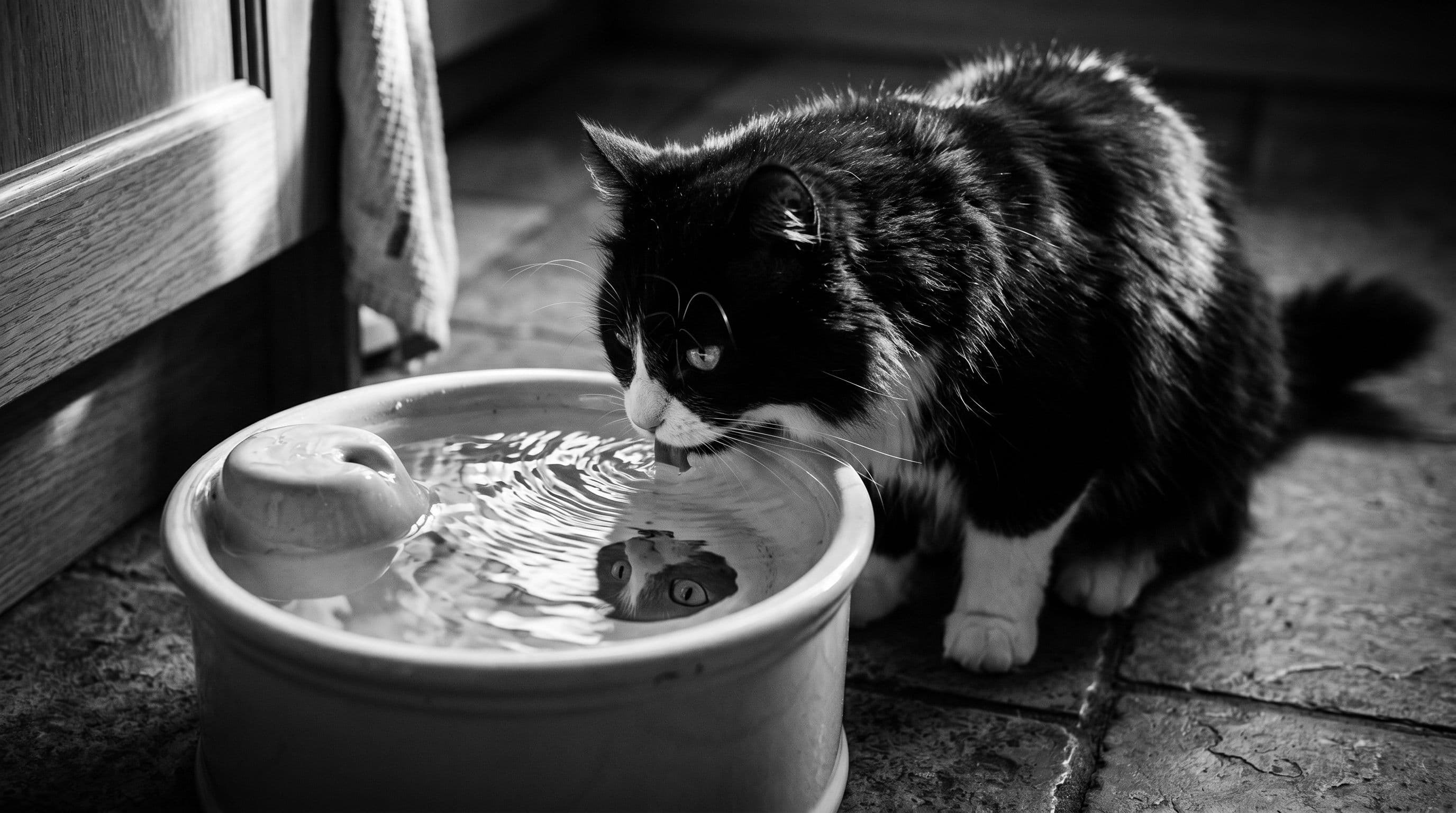
I noticed it on a Tuesday in March. Vino was parked at his stainless-steel water fountain in the kitchen, and I could hear the steady lapping from the couch in the next room. That wasn't unusual on its own; he's always been a cat drinking lots of water compared to Zola, who treats hydration like an optional hobby. What caught my attention was the timing: he'd already emptied the bowl twice that morning, and it wasn't even noon. My fiancée and I looked at each other. She said, "That's a lot, even for him." She was right. Over the next 48 hours I started measuring what went in and what came out, and that simple act of paying closer attention probably saved us from a much bigger scare down the line.
Establishing a Baseline Matters More Than Guessing
Here's the thing most cat owners don't do, and I include my past self in that group: measure. Before Vino's March water binge, I had no real data on how much he drank in a normal day. I just knew he drank "a lot." That's not clinically useful. According to the Merck Veterinary Manual, a healthy cat's total daily water need, food moisture included, runs roughly 44 to 66 ml per kilogram of body weight in a normal environment. For Vino at 6 kg, that puts his full daily requirement somewhere between 264 and 396 ml, and only part of that comes from the bowl since wet food supplies the rest.
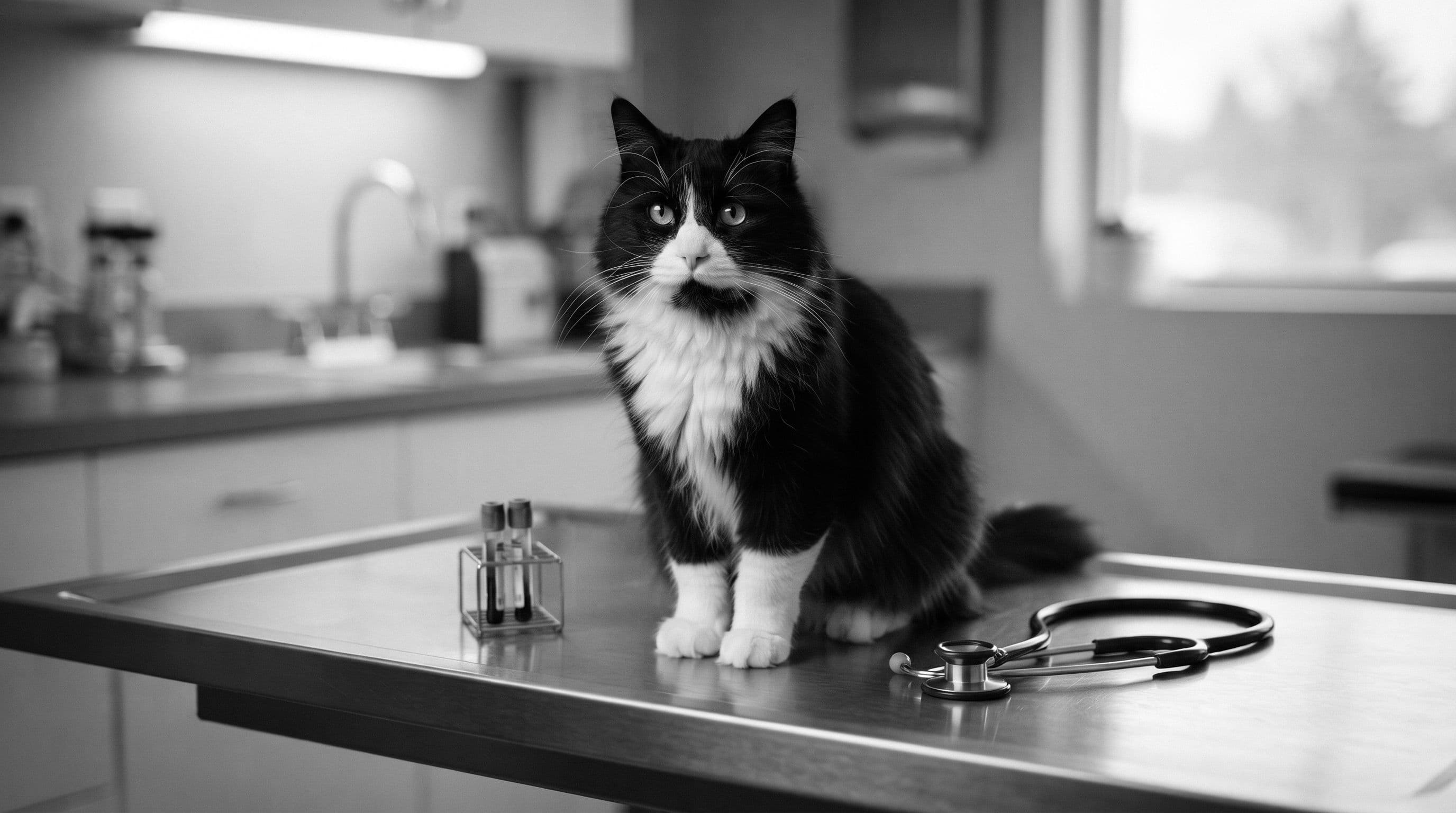
I bought a cheap kitchen scale, started filling his water fountain to a precise 500 ml line each morning, and logged what remained at night. Within a week I had a pattern. Most days he was landing between 200 and 240 ml: healthy range. But on those two March days, he'd blown past 350 ml each time. The difference between "my cat drinks a lot" and "my cat drank 60% more than his seven-day average" is the difference between a vague worry and a conversation your vet can actually act on.
If you're feeding primarily dry kibble, your cat's going to drink more water than one eating wet food, and that's perfectly normal. I've seen it firsthand with Vino: when we're heavier on dry food in a given week, his water bowl empties noticeably faster, but even with all that extra drinking, his total moisture intake still doesn't match what he'd get from wet food alone. Vino eats a mix of both, which puts him somewhere in the middle, but the ratio shifts week to week depending on what we've stocked.
The Medical Reasons Behind Increased Thirst
The formal term is polydipsia, and it usually shows up alongside polyuria: drinking more, urinating more. Before assuming anything benign, I sat down with the veterinary literature, because three conditions, chronic kidney disease, diabetes, and hyperthyroidism, are the most common medical causes of excessive water consumption it cites.
Chronic kidney disease is common in older cats, especially those over 12. The kidneys lose their ability to concentrate urine, so the cat compensates by drinking more. It's the first thing a vet will want to rule out with bloodwork if the numbers stay high, and worth knowing: early-stage kidney disease doesn't always show up on standard panels, which is why more sensitive markers like SDMA exist.
Diabetes mellitus is the second big one. It's more common in overweight cats, and obese cats are two to four times more likely to develop it than cats at a healthy weight. Vino's on the stockier side of healthy, so it stays on my watch list.
Hyperthyroidism rounds out the trio. It's driven by an overactive thyroid gland and is most commonly diagnosed in cats over the age of 7, per the Merck Veterinary Manual. Vino's too young for it to be a primary suspect, but it belongs on the list for completeness.
In Vino's case, though, the explanation turned out to be hiding in plain sight.
Environmental and Dietary Triggers That Mimic Disease
This is the angle I don't see discussed nearly enough. Before reaching for the scary stuff, two simple questions are worth asking: has anything changed in his environment, and has his diet shifted recently? In that March week, both answers were yes.
That particular week in March, the wet-to-dry ratio in his meals had tilted harder toward dry than usual. Doesn't sound like much, but across two meals a day for a 6 kg cat, that's a meaningful drop in dietary moisture. Vino's body did exactly what it was supposed to do: it told him to drink more.
On top of that, we'd had an unusually warm stretch in northern Tasmania. Our house doesn't have air conditioning; we rely on cross-ventilation and ceiling fans. Vino had been spending his afternoon outdoor time sprawled on the warm pavers near the chicken run rather than in his usual shaded spots under the hedge. More heat, more panting (yes, cats pant when they're warm, though Vino does it rarely), more water loss.
The combination of reduced food moisture and increased ambient temperature accounted for nearly all of his spike. Once the ratio swung back toward wet food and the weather cooled, his intake dropped back to the 200 to 240 ml range within 3 days.
Zola, for comparison, barely changed her intake during the same period. She weighs about 3.9 kg and consistently drinks around 120 to 150 ml per day. She also spent that warm week indoors, draped across the bedroom windowsill where a breeze comes through, because Zola has always been smarter about self-preservation than Vino.
Tracking Methods That Actually Work at Home
I've tried a few approaches since March, and I'll share what stuck. The kitchen scale method I described above is the most accurate for a single-cat household, but we have two cats sharing water sources, which complicates things.
My workaround: Vino and Zola each have a dedicated water station. Vino's stainless-steel fountain stays in the kitchen. Zola has a ceramic bowl on a raised stand in the hallway near the bedroom. They do occasionally poach from each other's supply, but 80% of the time they stick to their own stations. Close enough for a home monitoring setup.
I log the numbers in a simple spreadsheet on my phone. Nothing elaborate: date, starting volume, ending volume, food type that day. After 3 months of data, I've got a reliable personal baseline for both cats, and I can spot a deviation within 24 hours. Any vet will tell you how rarely owners bring them actual numbers; a three-month baseline turns "he seems thirsty" into something they can genuinely work with.
The other thing worth doing: monitor the litter box. We use a self-cleaning litter box for each cat, which makes it easier to notice changes in clump size and frequency. If Vino's producing noticeably larger urine clumps for more than 2 consecutive days, that correlates with the water data and tells me something real is happening.
If you want to understand how we keep our multi-cat setup running smoothly, I've written about that separately.
When the Numbers Say "Call Your Vet"
I don't want to be alarmist, but I also don't want to undersell this. Increased water intake that persists for more than 48 to 72 hours without an obvious environmental explanation deserves a vet visit. Full stop.
Kidney disease and diabetes both respond better to early detection. Dr Sarah Schmid, DVM, DACVIM (SAIM), writing in Today's Veterinary Practice (Nov/Dec 2023), defines polydipsia and polyuria in dogs and cats as water intake that consistently exceeds 100 mL per kilogram of body weight per day and urine output exceeding 50 mL per kilogram per day, respectively. Those are the numbers worth watching for, not just a vague sense that your cat "seems thirstier than usual." I don't wait around hoping everything's fine. When I notice Vino parking himself at his water bowl more than normal, or when the litter box clumps start looking suspiciously large and frequent, I book a vet appointment. By the time weight loss, vomiting, or lethargy show up in a cat's daily routine, the underlying disease has often progressed well past the early window where treatment does the most good.
For Vino, that threshold sits at 540 ml. For a smaller cat like Zola, it's about 390 ml. These aren't arbitrary numbers; they're derived from your specific cat's weight. Your vet can help you calculate it if the maths feels daunting.
Other warning signs that should accompany a vet call: sudden weight loss (more than 5% of body weight over a month), changes in appetite in either direction, increased urination outside the litter box, vomiting, or lethargy. Vino displayed none of these during his March spike, which was the main reason we stayed calm while we worked through the environmental explanations.
I've written about recognising subtle health changes in tuxedo cats before, and the water piece fits squarely into that broader picture.