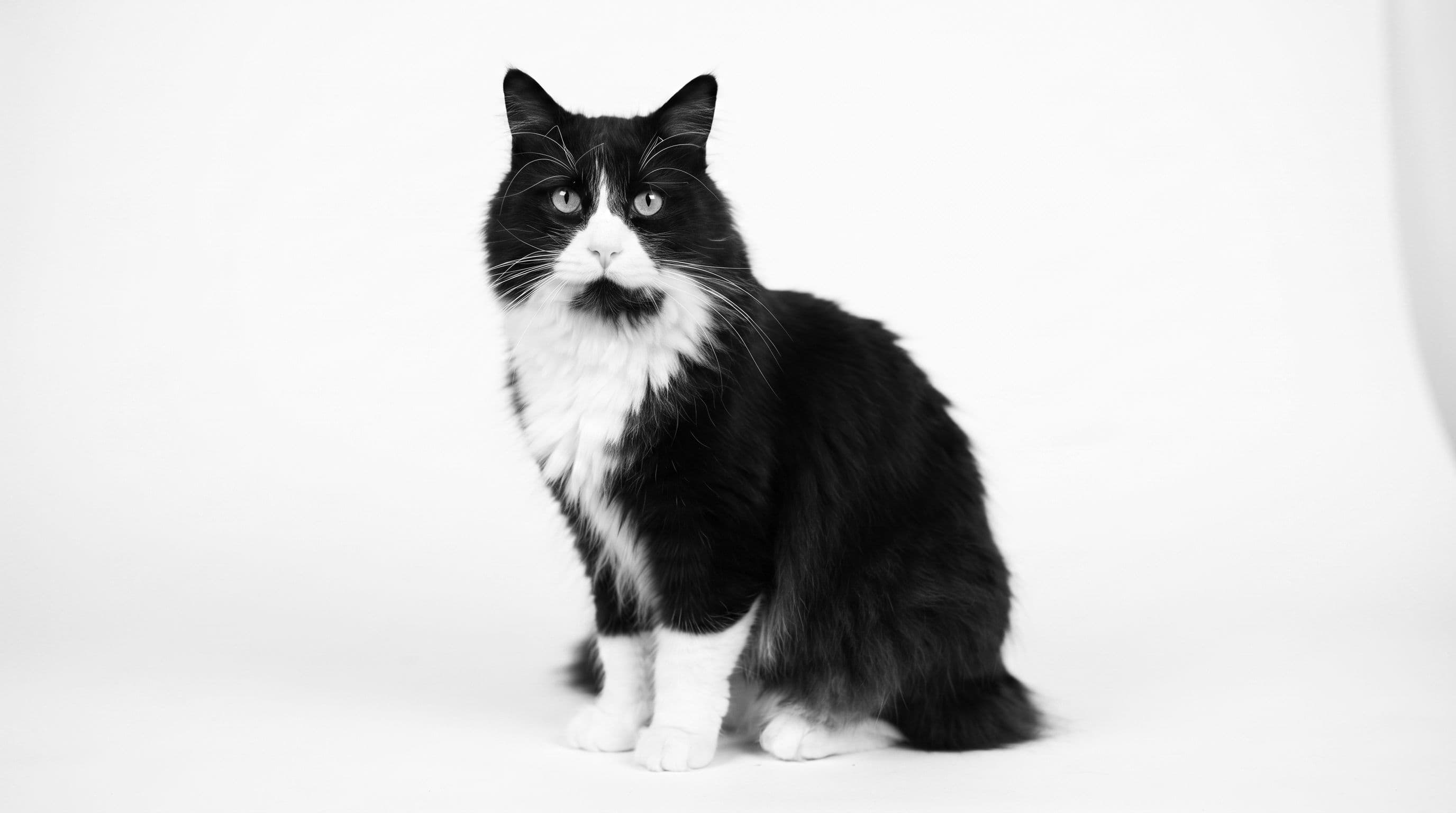
The internet's fascination with famous tuxedo cats has produced a small industry of listicles attributing intelligence, mischief, and even luck to the black-and-white pattern itself. What these compilations rarely acknowledge is that the tuxedo marking is simply a colour distribution, not a breed, not a genetic cluster for behaviour, and not a reliable predictor of anything except how photogenic a cat looks against a white background. I find this worth pushing back against because I live with a tuxedo cat whose personality is fully accounted for by documented circumstances, not by the shape of his chest patch.
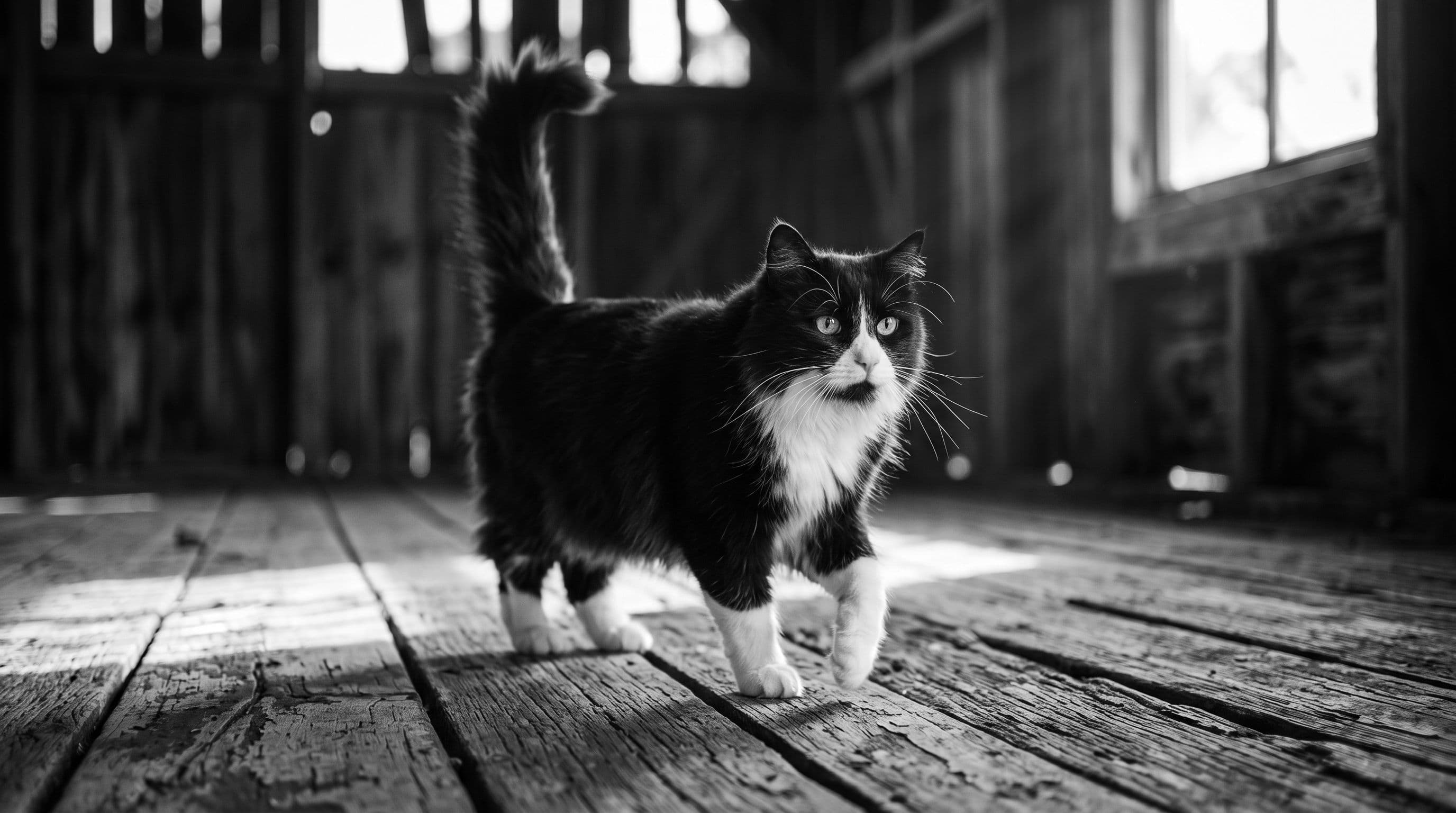
Vino arrived from a working vineyard in northern Tasmania roughly four years ago, already neutered, already vocal, already convinced that human attention was his birthright. He'd spent his first two and a half years catching mice in a winery barn, inserting himself between the legs of anyone who entered, and refusing to leave until he'd been adequately acknowledged. The family who ran the property had started calling him "Messiah" before I ever met him. His tuxedo pattern was incidental to this reputation. What mattered was his relentless operational certainty that the world revolved around his immediate desires.
This distinction matters when we talk about famous tuxedo cats. The pattern is common enough that any behavioural generalisation will find confirming examples, and photogenic enough that those examples get disproportionately shared. But the cats themselves became famous for specific, situated reasons: a particular video, a historical association, a human narrative attached to their presence. The coat didn't generate the fame. The fame attached to the cat, and the coat made the image memorable.
Why the "Tuxedo Cat Personality" Is a Misleading Frame
The conventional wisdom holds that tuxedo cats are smarter, more vocal, or more mischievous than other cats. This framing appears in most popular articles about famous tuxedo cats, usually supported by anecdote and the observation that many viral cat videos feature black-and-white patterns. The problem is selection bias. The high-contrast appearance photographs well in both colour and black-and-white media. They're overrepresented in viral content because they're visually striking, not because they're behaviourally distinct.
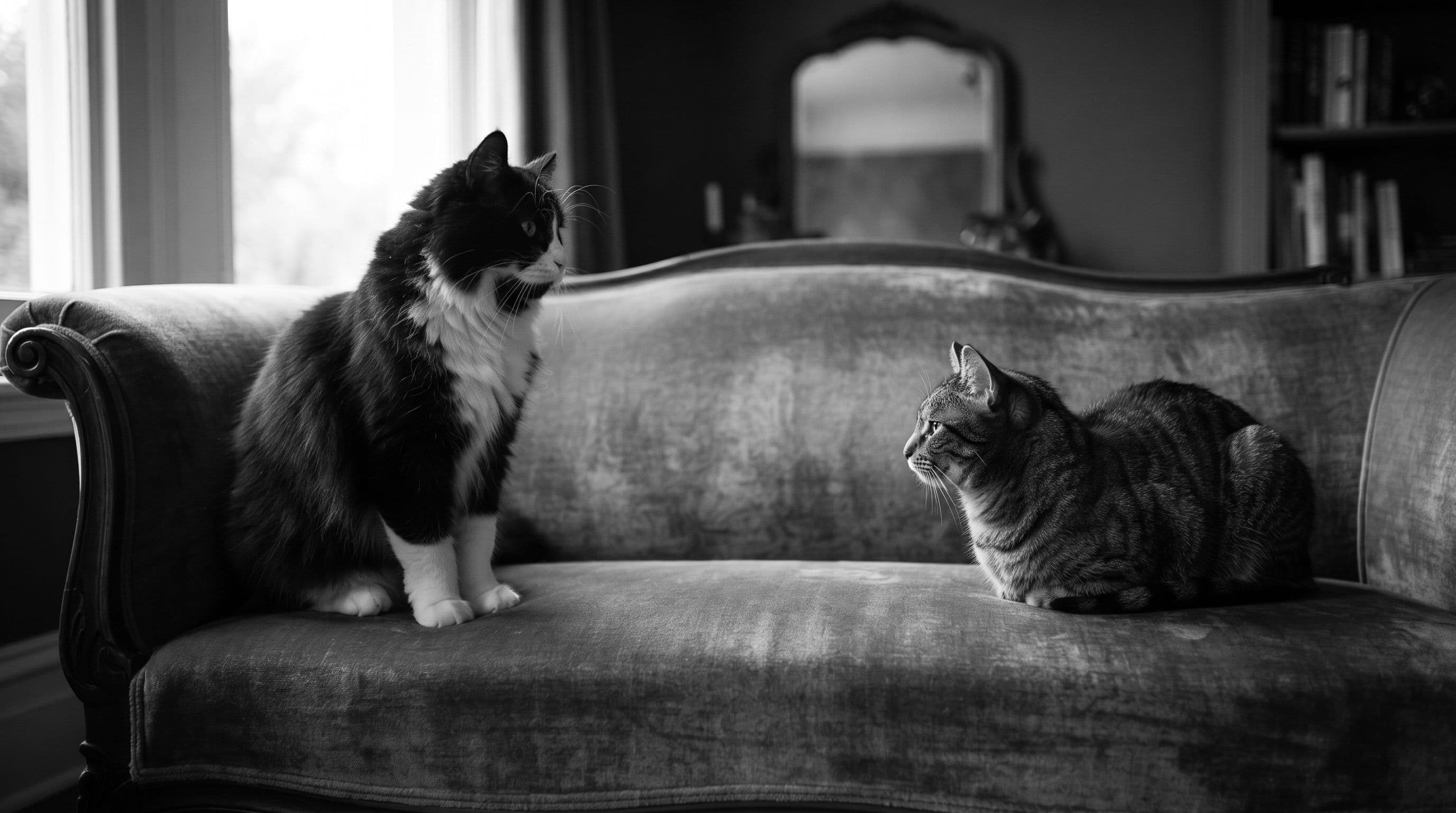
I've watched Vino and Zola, our black cat with a small white belly patch, for the same four years under the same conditions. Vino is louder, more demanding, more physically intrusive. Zola is reserved, selective about affection, prone to hissing at Vino's overtures. Their differences map onto their origins and early experiences, not their coat patterns. Vino was a working cat who learned that inserting himself into human activity produced results. Zola came to us as a kitten from a different environment, with different lessons. The tuxedo pattern explains none of this.
The misleading frame persists because it's satisfying. It offers a ready-made personality for a cat based on visible characteristics, the same way people once assigned temperaments to human faces. It's simpler than acknowledging that cat personality emerges from specific histories, early socialisation, and individual variation. When we look at famous tuxedo cats, we're looking at cats who became famous for reasons that had to attach to some visible feature, and the tuxedo pattern was available.
What Actually Produces the Observed Pattern of Famous Tuxedo Cats
The mechanism is cultural, not biological. Tuxedo cats appear frequently in media and history because they're visually legible, not because they're behaviourally uniform. A black cat in a dim interior becomes a silhouette. A white cat against snow or pale walls disappears. The tuxedo pattern maintains definition across lighting conditions and backgrounds, making it a practical choice for photographers, animators, and anyone trying to produce a striking image.
Consider the historical examples. President Bill Clinton's cat Socks became the most photographed pet of the 1990s partly because the tuxedo pattern read clearly in newspaper photographs and early internet images. Simon, the ship's cat aboard HMS Amethyst during the Yangtze Incident in 1949, became famous for his rat-catching and his survival of shelling; his tuxedo markings made him instantly recognisable in the newsreels and photographs that followed. In both cases, the coat facilitated fame without causing the behaviour that earned it.
The same mechanism operates in fiction. The Cat in the Hat, Sylvester, Felix, all tuxedo-patterned, all visually distinctive in animation and print. Their creators chose the pattern for graphic clarity, not for any assumed personality trait. The mischief of the Cat in the Hat or Sylvester's frustrated pursuit of Tweety are narrative choices, not expressions of tuxedo cat nature. Yet the accumulation of these famous examples creates an impression of a type, a coherent category where none exists.
Vino as Case Study: What Actually Produces This Particular Tuxedo Cat
Vino weighs 5.4 kg, down from a brief peak of 5.8 kg when domestic comfort first overtook his working life. He holds this weight through portion control that he resents daily. His medium-long fur requires regular brushing, which he loves on his chin and chest, and occasional half-baths when his back legs collect matter they shouldn't, which he hates with sustained vocal complaint. He drools during cuddles, produces a single five-second protest meow when denied outdoor access, and would consume an entire bag of bikkies in one sitting if permitted, his stomach's limit being the only constraint he recognises.
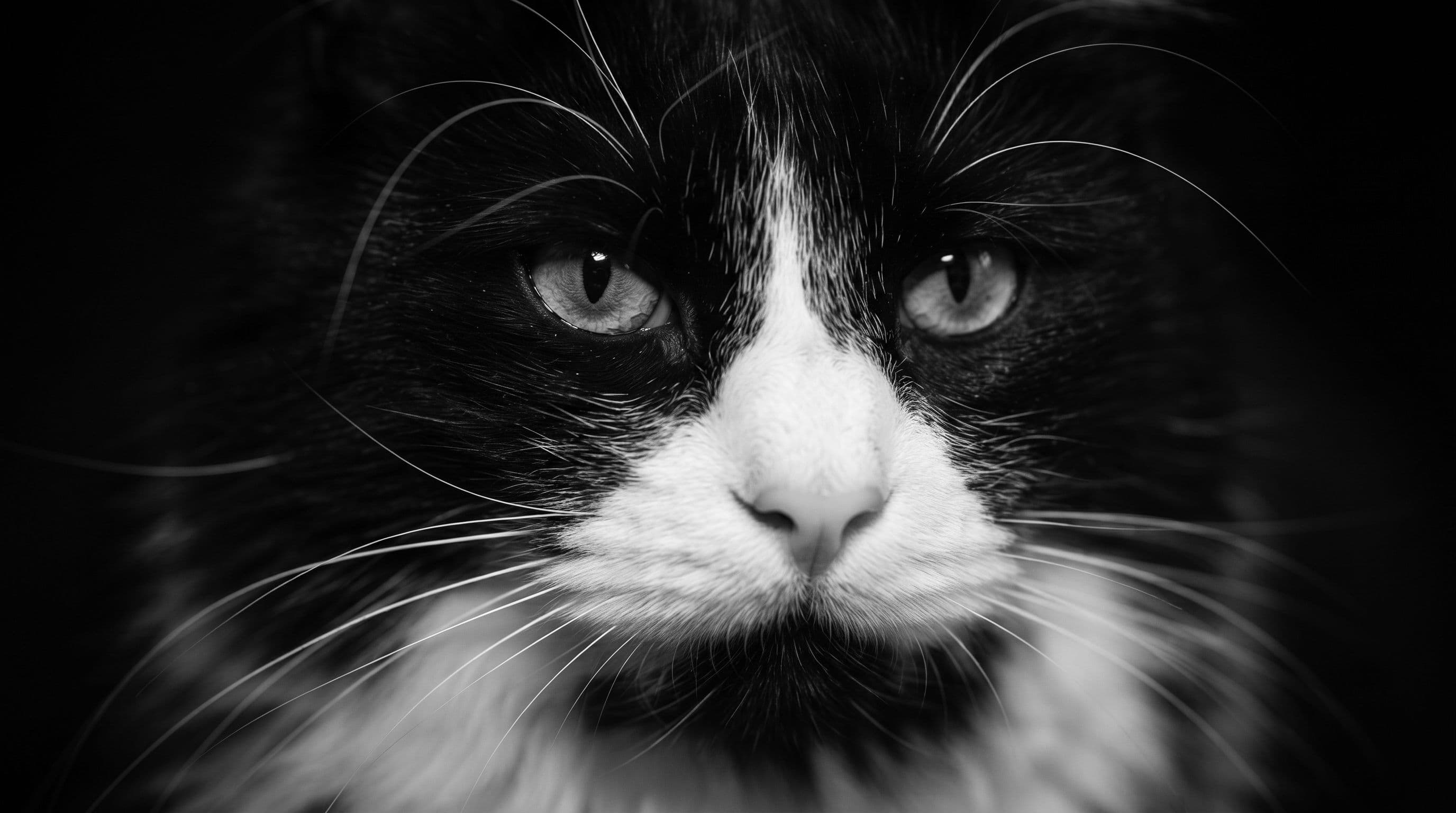
None of these traits correlate with his tuxedo pattern. They correlate with his history as a vineyard cat who learned that demanding attention works, with his medium-long coat that catches debris, with his individual metabolism and appetite regulation. When he positions himself a metre from the neighbour's Staffy and ignores the dog into apoplexy, he's deploying a learned strategy, not expressing tuxedo cat superiority. When he follows me around the yard meowing for pats, he's continuing the behaviour that got him removed from the winery barn in the first place.
The specific household moment that clarifies this: last winter, during a period of heavy rain that kept both cats inside for three consecutive days, Vino's protest meows reached a frequency and duration that tested the household's patience. Zola, meanwhile, slept more, played less, and expressed her displeasure through pointed avoidance rather than vocalisation. Same house, same conditions, same enforced confinement. Different responses, neither of them predictable from coat pattern. Vino's tuxedo marking was as relevant to his behaviour as the colour of my socks was to mine.
Frequently Asked
Famous Tuxedo Cats: A Category Held Together by Appearance Alone
The roster is genuinely impressive. Socks Clinton. Simon of HMS Amethyst. Tuxedo Stan, the Halifax mayoral candidate. Sparky, the YouTube sensation. The various tuxedo cats of Instagram and TikTok whose accounts accumulate millions of followers. But what they share is photographic memorability and human narrative attachment, not behavioural or genetic commonality. Socks was described as aloof and independent. Simon was noted for his rat-killing efficiency and his capacity to boost crew morale. Tuxedo Stan ran for office to raise awareness of feral cat populations. Different cats, different contexts, different reasons for fame.
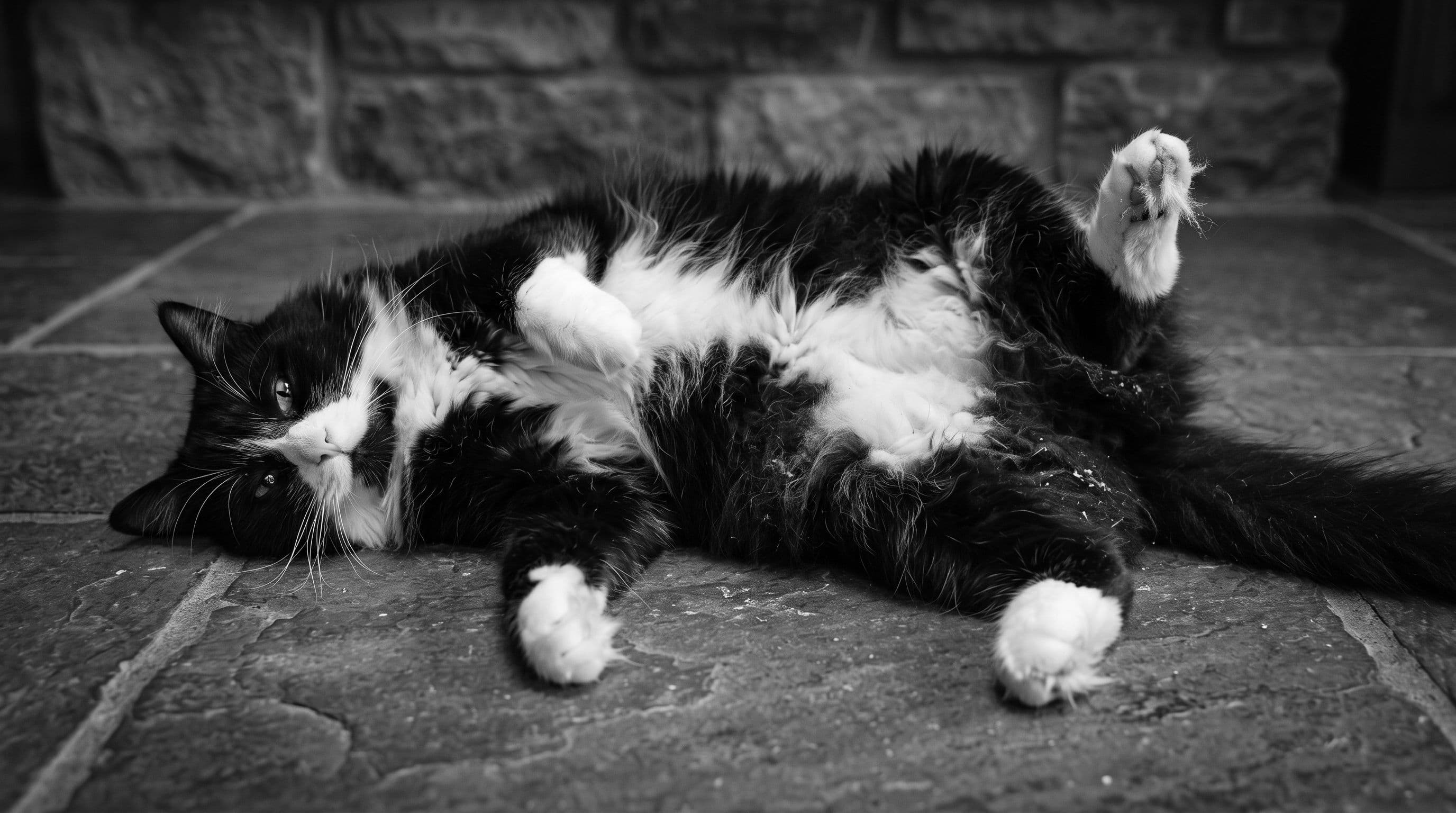
Vino will not be joining this roster. He lacks the discipline for scheduled content creation, the patience for costume photography, and the tolerance for travel that internet fame requires. What he offers instead is a daily demonstration that tuxedo cat behaviour is cat behaviour, shaped by specific circumstances rather than pattern. His 5.4 kg of insistence, his medium-long fur requiring maintenance, his vineyard-learned confidence that the world exists to notice him: these are his, not his coat's.
The fascination with famous tuxedo cats is understandable. The pattern is elegant, photographically forgiving, and common enough that most people know at least one example. But the category is an optical illusion, a grouping by surface feature that obscures deeper sources of variation. When I watch Vino ignore the rooster he fears while dominating the Staffy he doesn't, or when he produces his sustained protest meow at 5:47 in the morning because the bedroom door has closed, I'm watching a specific cat with a specific history. The tuxedo is just what he wears to the performance.