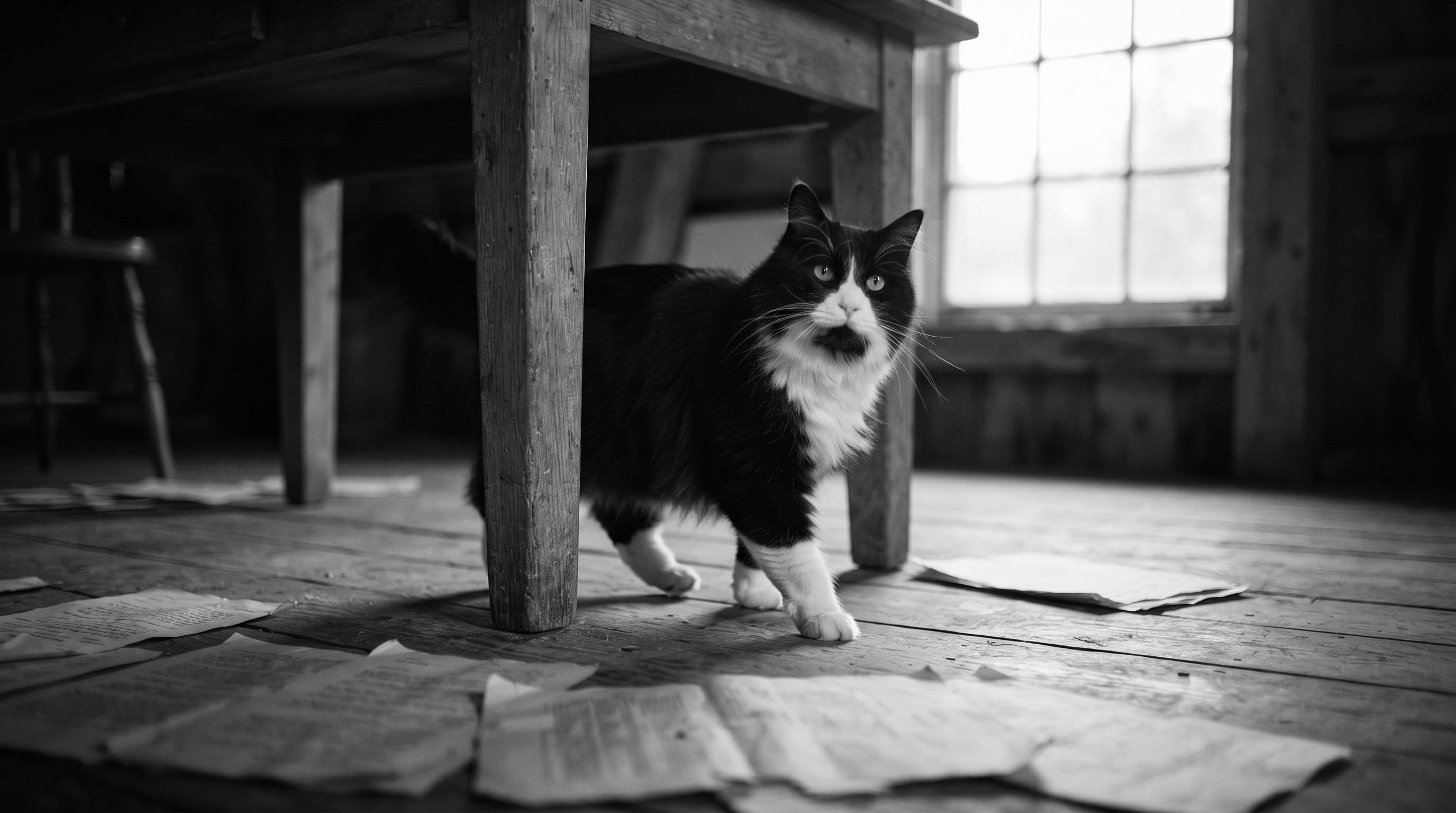
The standard playbook for tuxedo cat social media says to lead with the tuxedo. Post the bow tie chest, lean on the formal-wear pun, and treat the pattern as the whole personality. I tried it. The pattern stops being novel after about three scrolls. What doesn't stop being novel is Vino doing what he did the day I met him: walking between my legs in the winery barn, jumping onto whatever I was reaching for, and refusing to move until he got what he wanted.
This isn't a hashtag strategy or a posting schedule. It's an account of what makes one particular cat worth watching, and why the coat pattern is the least interesting part of him.
The Myth of the "Tuxedo Personality"
The conventional wisdom says tuxedo cats are smarter, more mischievous, more dog-like and somehow luckier. You'll find it repeated in listicles that never cite anything sturdier than folk observation. A tuxedo is a coat pattern, not a breed, and it turns up across all sorts of cats. If Vino seems mischievous, that came from his history: the vineyard, the grandfather who passed away about two weeks before I started working there, the working life catching mice in the barn. It did not come from the arrangement of black and white fur on his body.
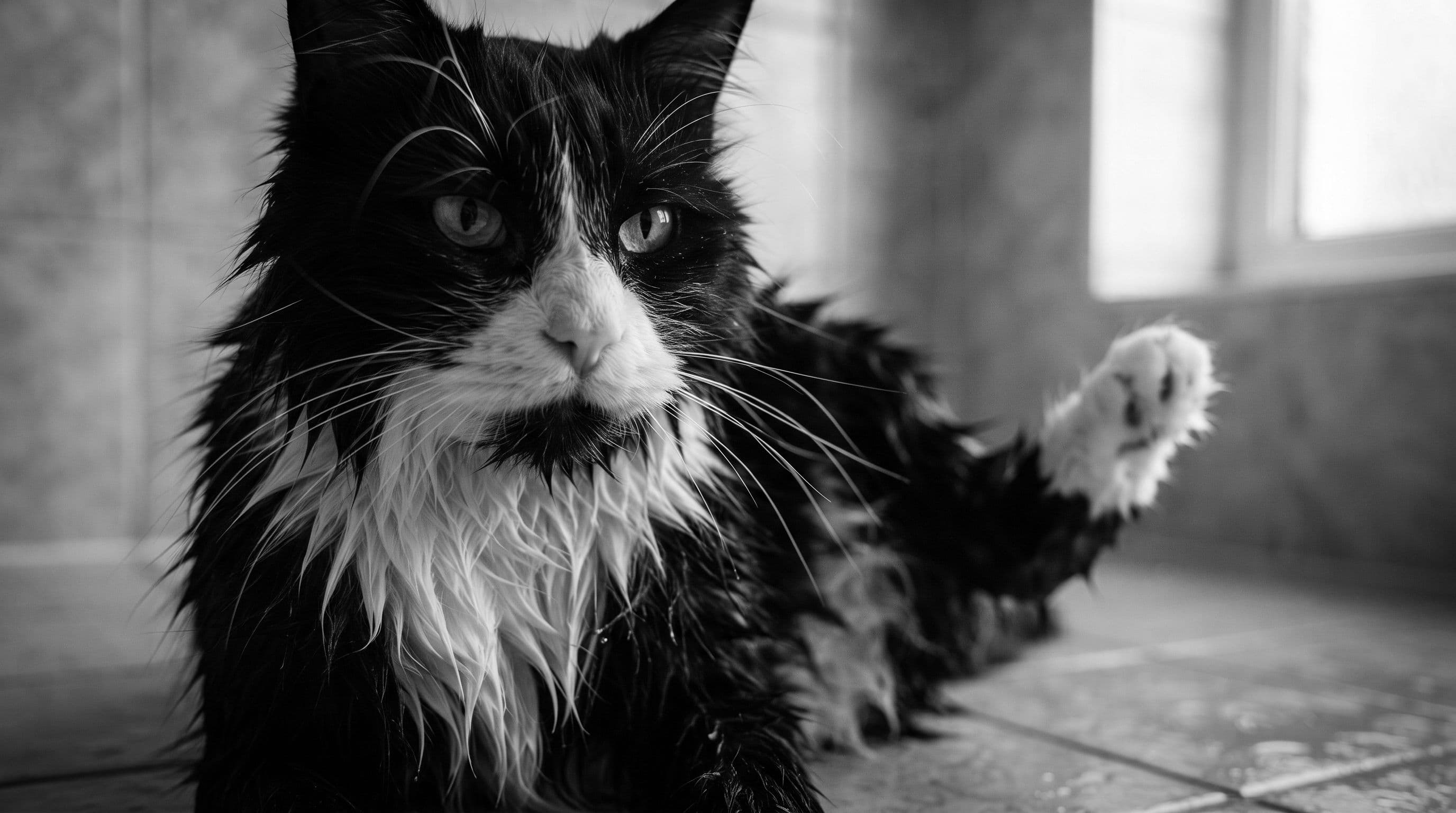
I fell into the trap early. My first posts leaned on the pattern: the bow tie against the white chest, the almost symmetrical markings. People who follow cat accounts have already seen ten thousand perfect bow ties. They haven't seen Vino's specific indignity during the half-bath he is occasionally given, or his medium-long fur catching what it shouldn't, or his growling escape attempts set against the dignified bearing he keeps the rest of the day. That contrast is the material. The tuxedo is just the frame.
What Makes Tuxedo Cat Social Media Worth Following: Specificity Over Symbolism
The mechanism is simpler than the marketing gurus suggest. Dr Mikel Delgado, a certified applied animal behaviourist who completed her PhD in psychology at UC Berkeley and researched feline behaviour as a postdoc at the UC Davis School of Veterinary Medicine, co-wrote Total Cat Mojo and Play With Your Cat! Her work starts from the idea that cats are individuals, not interchangeable. Neither are cat accounts. The ones worth watching read like a documentary, not stock photography.
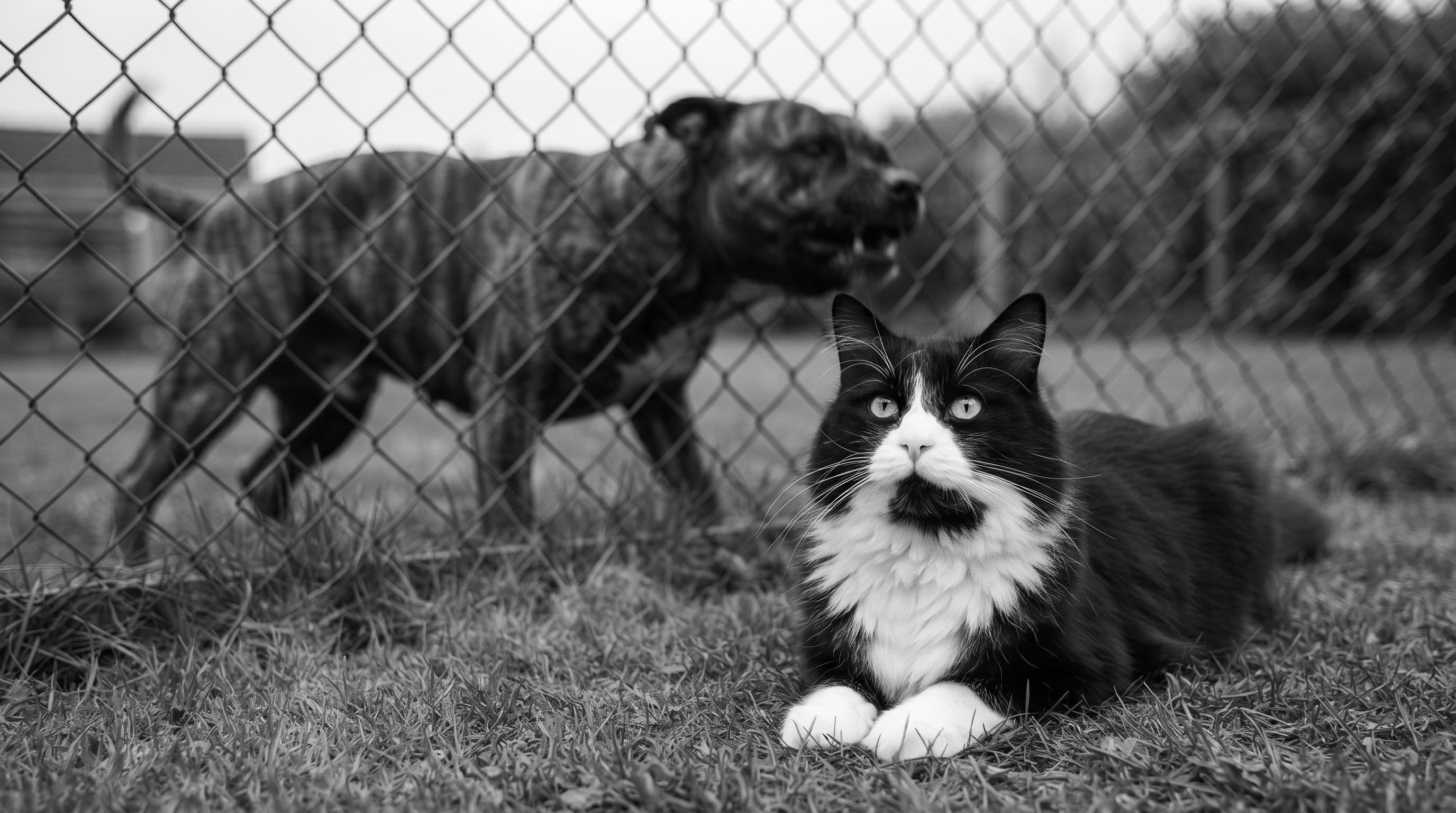
So I stopped posting "tuxedo cat sits handsomely" and started showing what Vino actually does: the pre-dawn invasion of the bedside table, the breakfast demand, the protest meow, a single sustained tone of five seconds or more, issued when something hasn't gone his way. There was also a Staffy next door at our old house. Vino would lie down about a metre from the fence and stare at nothing in particular, pretending the dog didn't exist. The dog lost its mind. Vino didn't react. The ignoring was the provocation. That is not generic cat content. It is one specific cat's social strategy.
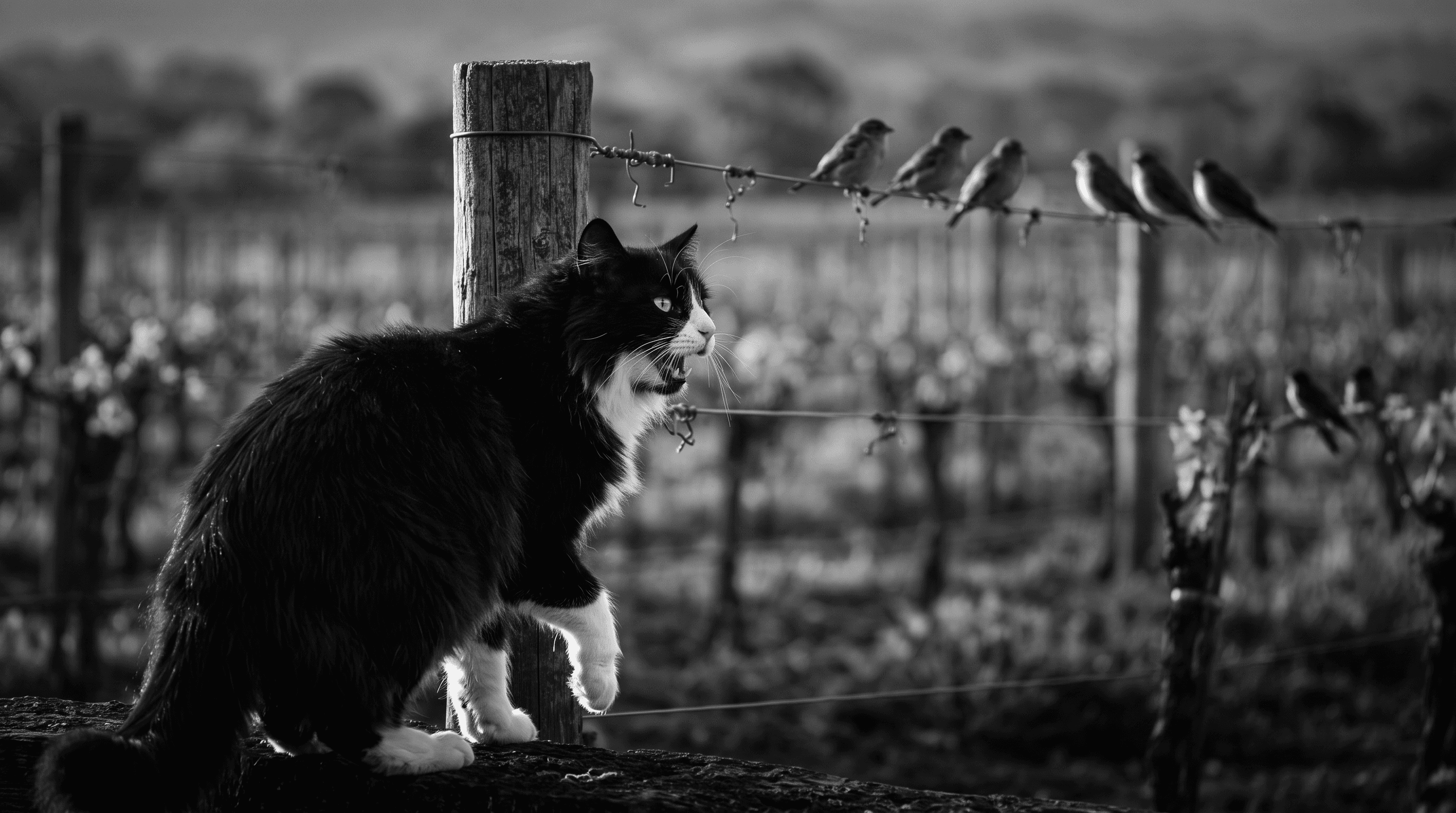
The same goes for the sounds. Once you've heard Vino's protest meow, you know it. Nobody comes back for the tuxedo. They come back for his timing, his vocal signature, and his predictability within his unpredictability.
Vino as Case Study: The Vineyard to the Feed
Vino came from a small, family-run biodynamic vineyard and winery in northern Tasmania, founded around the mid-1980s by an elderly couple whose children later took over. The grandfather passed away about two weeks before I started working there, and I never met him. Vino had been his cat, living and working on the property for a couple of years, catching mice. When I walked into the winery barn, Vino inserted himself immediately: between my legs, onto whatever I reached for, loudly demanding pats and food, and he kept it up until I took him home in April 2022.
That insertion is the core asset I failed to recognise at first. The refusal to wait for an invitation. The sustained campaign until the human gives in. It isn't a tuxedo trait. It's a Vino trait, shaped by a working barn where getting in the way of people paid off in pats, food and attention.
It has outlasted every house we've lived in. These days he does it from the hallway: he turns up between my ankles when I'm carrying something to the desk, stops me dead and delivers a sustained meow that is less a request than a statement that I haven't acknowledged him yet. I set the things down, give him the chin scratches he likes, and wait for him to end the interaction on his terms. That isn't staged for the camera. The camera just records what would happen anyway.
Zola complicates the picture in useful ways. She's about 3.9 kg, black with a small white patch on her tummy, and reserved where Vino is relentless. They used to fight over the one cat tower, both sitting in it waiting for the other to leave, until a second tower ended the standoff. That contrast, the relationship and the small domestic theatre of two incompatible personalities sharing a house, gives me material Vino alone couldn't.
How I Decide What to Film
Neither cat wears a collar, though both are microchipped. That's household policy, not content strategy, but it shapes what I can shoot: no decorative bow ties, no bandanas, no costume to make Vino "more tuxedo." The pattern speaks or it doesn't. What speaks louder is the drool during cuddles, the extensive grooming that produces furballs, and the way he will eat as much as he is given and ask for more.
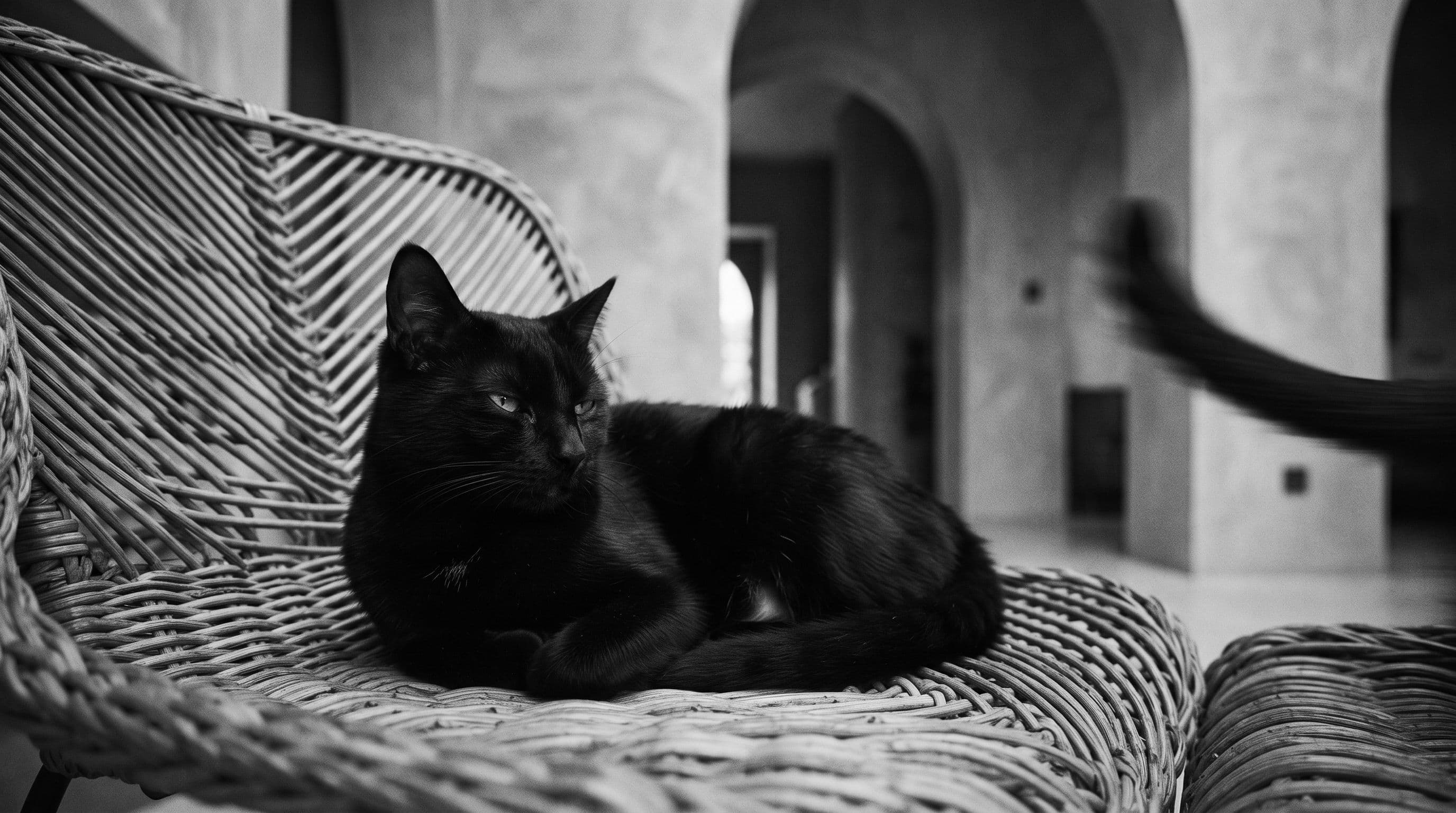
I also don't chase trends that contradict his established behaviour. If a viral sound needs a startle reaction, I don't use Vino, because he doesn't startle on cue. I'd rather film the real thing, like the desk takeover, where he stands on the keyboard, sits on it and spreads himself across as much of the desk as he can, than invent a stunt. People who found him through that passive-aggressive Staffy stare expect that specific Vino, not a generic cat performing generic cat.
The things in our house appear as themselves, not as sponsored content. The cat towers, the drinking fountain Vino uses constantly and the brush he demands for his chin and chest show up because they are part of how he lives.
The Core Argument, Restated
Tuxedo cat social media that lasts treats the tuxedo as incidental, not essential. The inventory that matters is Vino's vineyard origin, his learned insertion behaviour, and his documented relationships with Zola and the neighbour's Staffy. The black-and-white pattern is merely how you recognise him in the feed. What makes you stay is the specific mechanism of his demands, and the consistency of a cat who walked between a stranger's legs in a Tasmanian barn and never stopped inserting himself into whatever space you occupy. I didn't build an audience around a tuxedo cat. I built it around Vino, who happens to wear one.