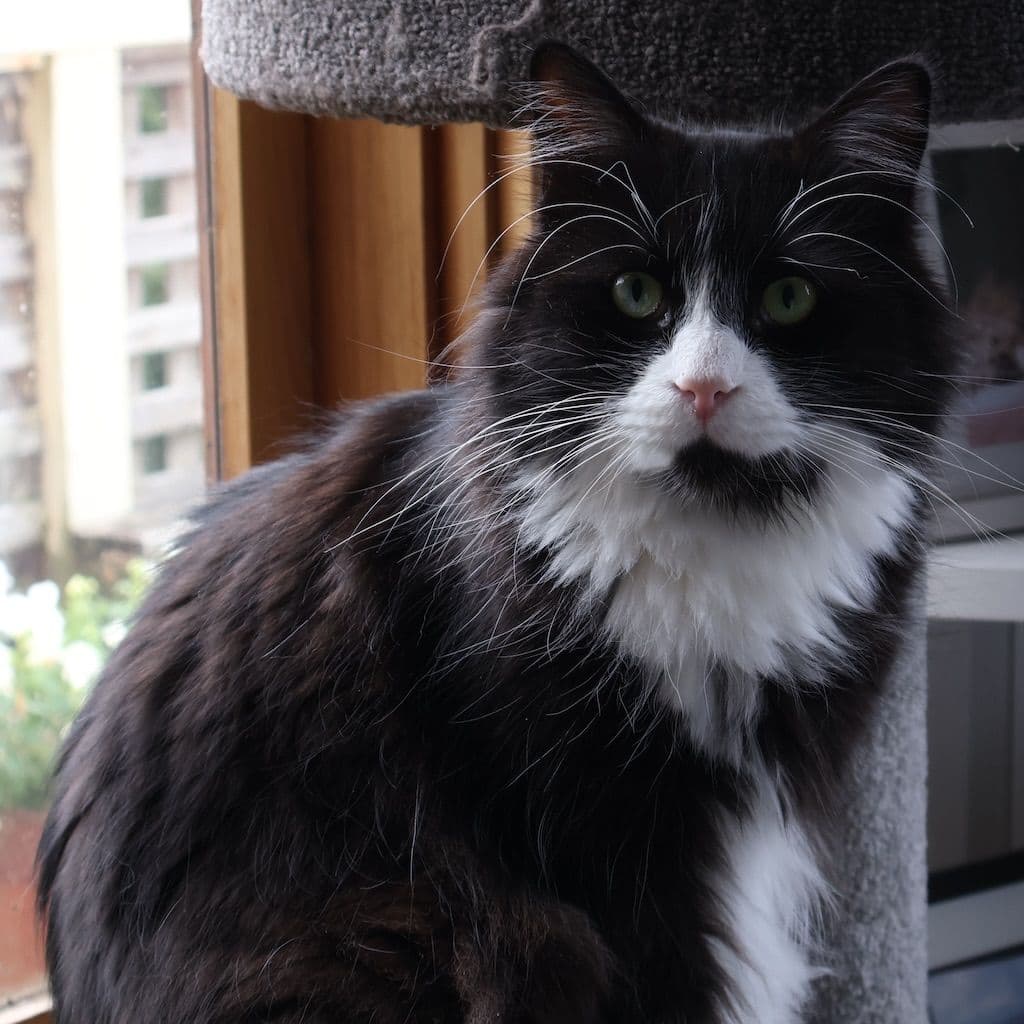
Vino arrived at my gate wearing what appeared to be formal attire. He had not been asked to dress. He had not consulted anyone. He simply appeared in the markings he'd always had, which happened to constitute, in the opinion of everyone who has ever seen him, a very convincing dinner jacket. The name "tuxedo cat" is not, it turns out, a casual affectation. It is a precise description of a specific aesthetic phenomenon, and the story behind it is considerably more interesting than the question suggests.
The short answer: tuxedo cats are called tuxedo cats because their coats look like tuxedos. The longer answer involves a wealthy New York enclave in the 1880s, a gene that misfires in a very photogenic way, and a cultural lineage that stretches from silent film to the White House. Vino, who came from a winery barn in northern Tasmania without a pedigree to his name, slots into all of it without having made the slightest effort.
The Visual Logic, Which Is Entirely Self-Evident
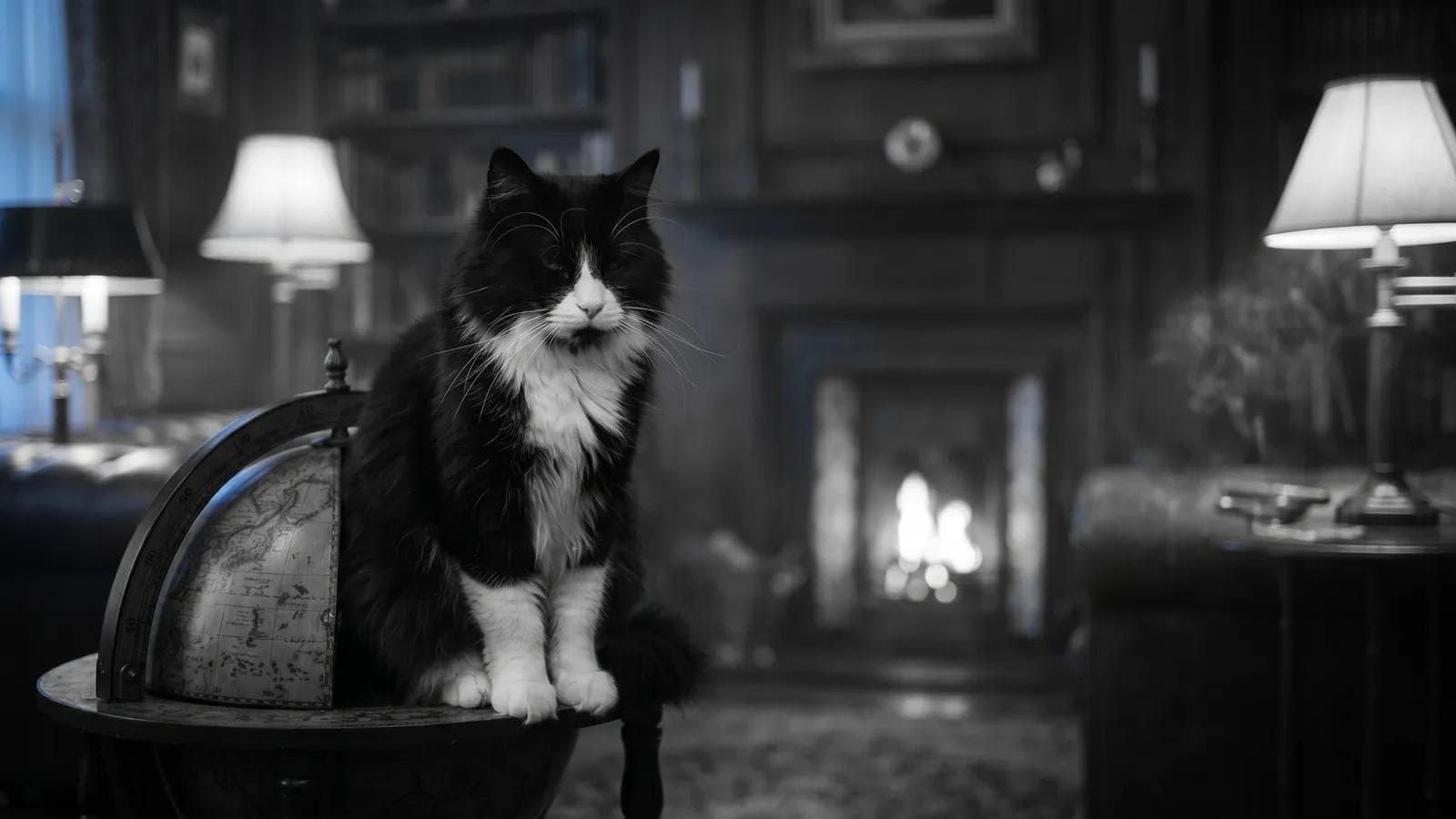
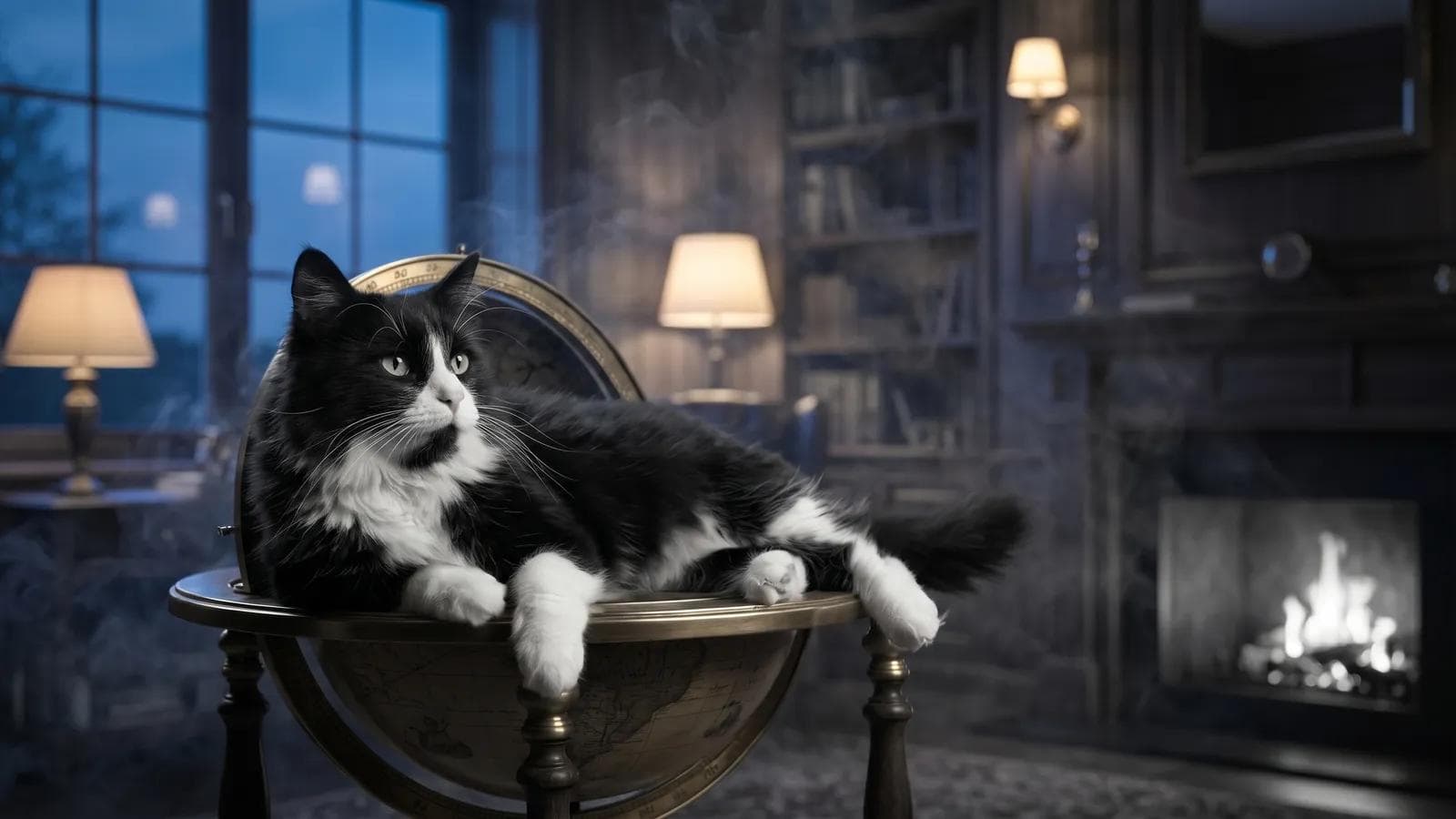
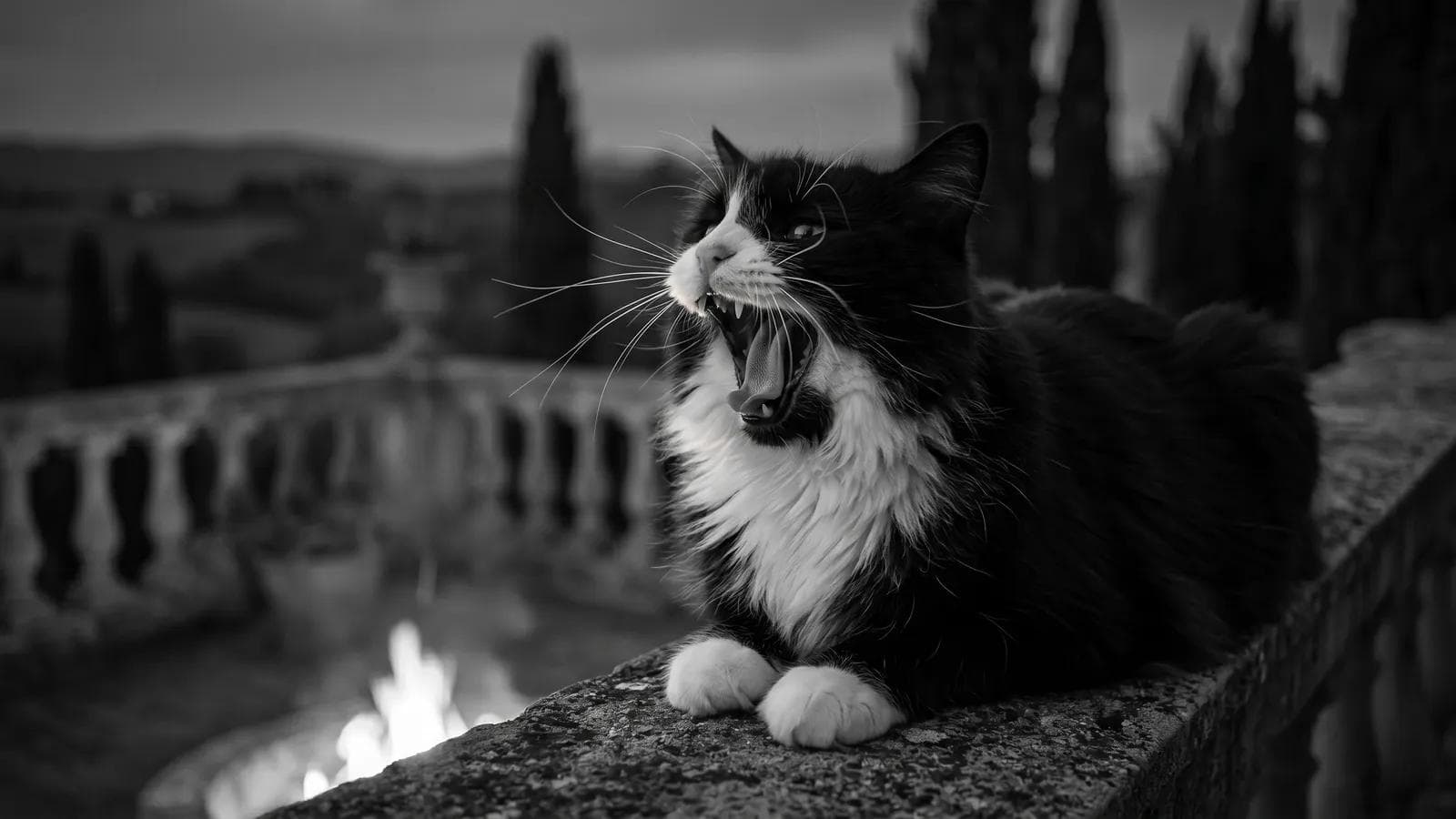
Stand Vino in good light and the question answers itself. Black coat across the back, shoulders, and head. White chest bib, precise and clean. White socked paws, four of them, like he's made a deliberate choice about footwear. And then the chin: a black stripe that drops from the jaw to a point, creating against the white chest what is, by any reasonable interpretation, the silhouette of a bow tie. No breeder selected for this. No groomer arranged it. It simply is, and it is unmistakably formal.
The effect is consistent enough across tuxedo cats that the comparison is not merely decorative. A cat in these markings does not look like a cat who happens to have some white on its chest. It looks like a cat who has dressed. The distinction matters because one of those is coincidence and the other carries implication. Vino seems aware of this, or at least behaves as though he is. He moves through our home with the bearing of someone who knows they are appropriately turned out for whatever occasion presents itself, including occasions that no one else has recognised as occasions at all.
The markings are, to be specific: white on the chest and belly, white extending down all four legs to the paws, and that black chin stripe tapering to its point against the white below. Medium-long fur. Green eyes with a slight yellow hue. The total effect, at a reasonable distance, is a cat in a suit. The name is not metaphor. It is description.
The Jacket Came Before the Cat
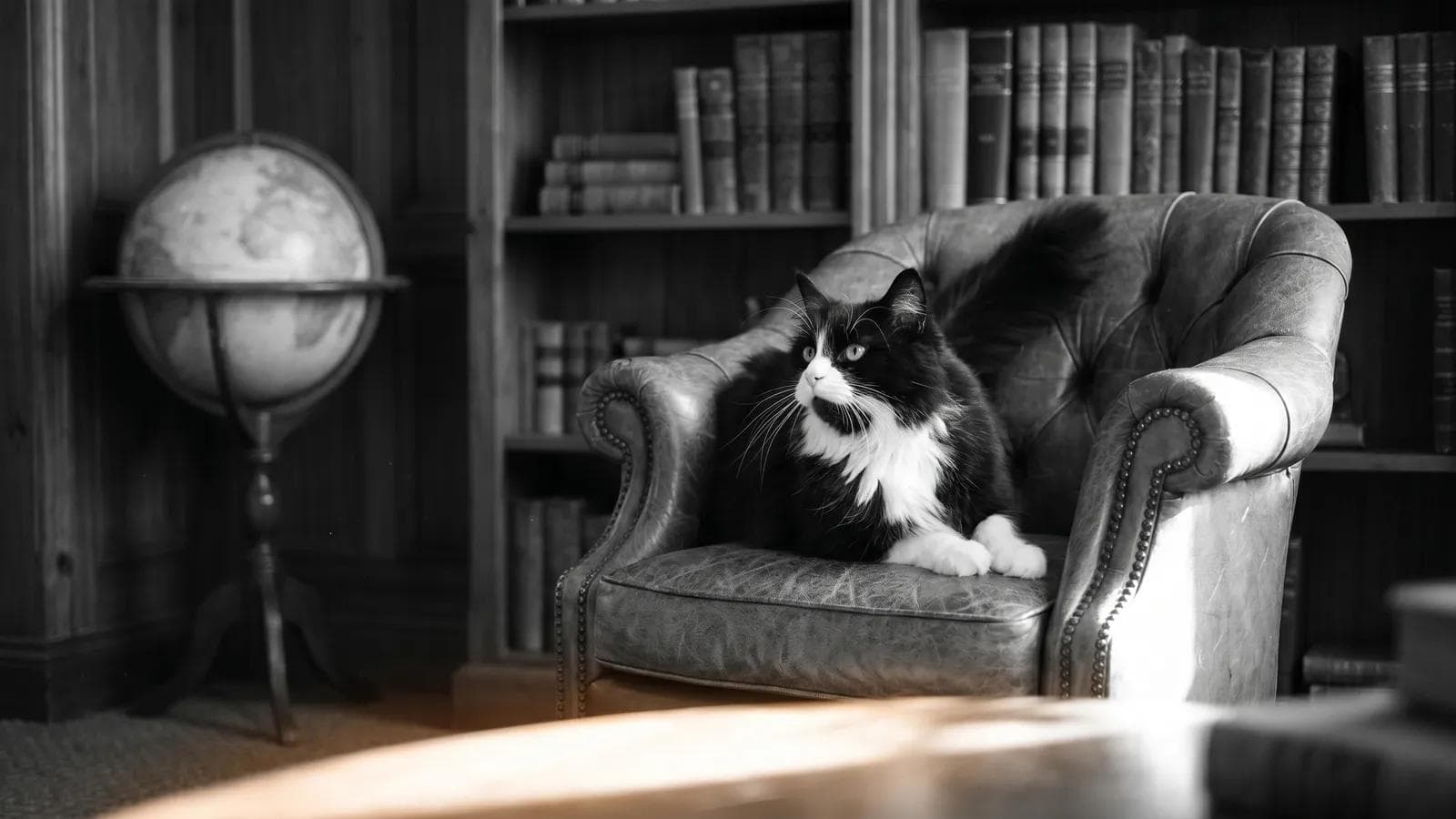
The word "tuxedo" as applied to formal menswear is approximately 140 years old, and its origin is specific. In the late 1880s, a wealthy residential enclave called Tuxedo Park was established in New York's Orange County. The property drew the kind of guests who arrived in tailcoats for evening occasions, because that was what one wore. At some point, young men in that social circle began appearing at formal events in dinner jackets without the tails. The style spread. The name of the place where it reportedly caught on was attached to the garment. The tuxedo jacket entered the language.
The name of the place is older still. Tuxedo Park takes its name from an Algonquian word whose precise meaning has been variably translated as "crooked river" or "place of the bear," depending on the source. Neither interpretation connects obviously to black-and-white formalwear, but language rarely concerns itself with such consistency. What matters is the chain: Algonquian place name, wealthy New York enclave, tailless dinner jacket, and eventually a category of cat who never asked to be named after any of it.
When the name migrated from jacket to cat is harder to pin down. There is no recorded moment where someone pointed at a black-and-white cat and wrote the word "tuxedo" for the first time. The comparison is too obvious to have required invention. The coat looks like the jacket. The jacket had a name. The name moved across.
The Gene That Makes the Jacket
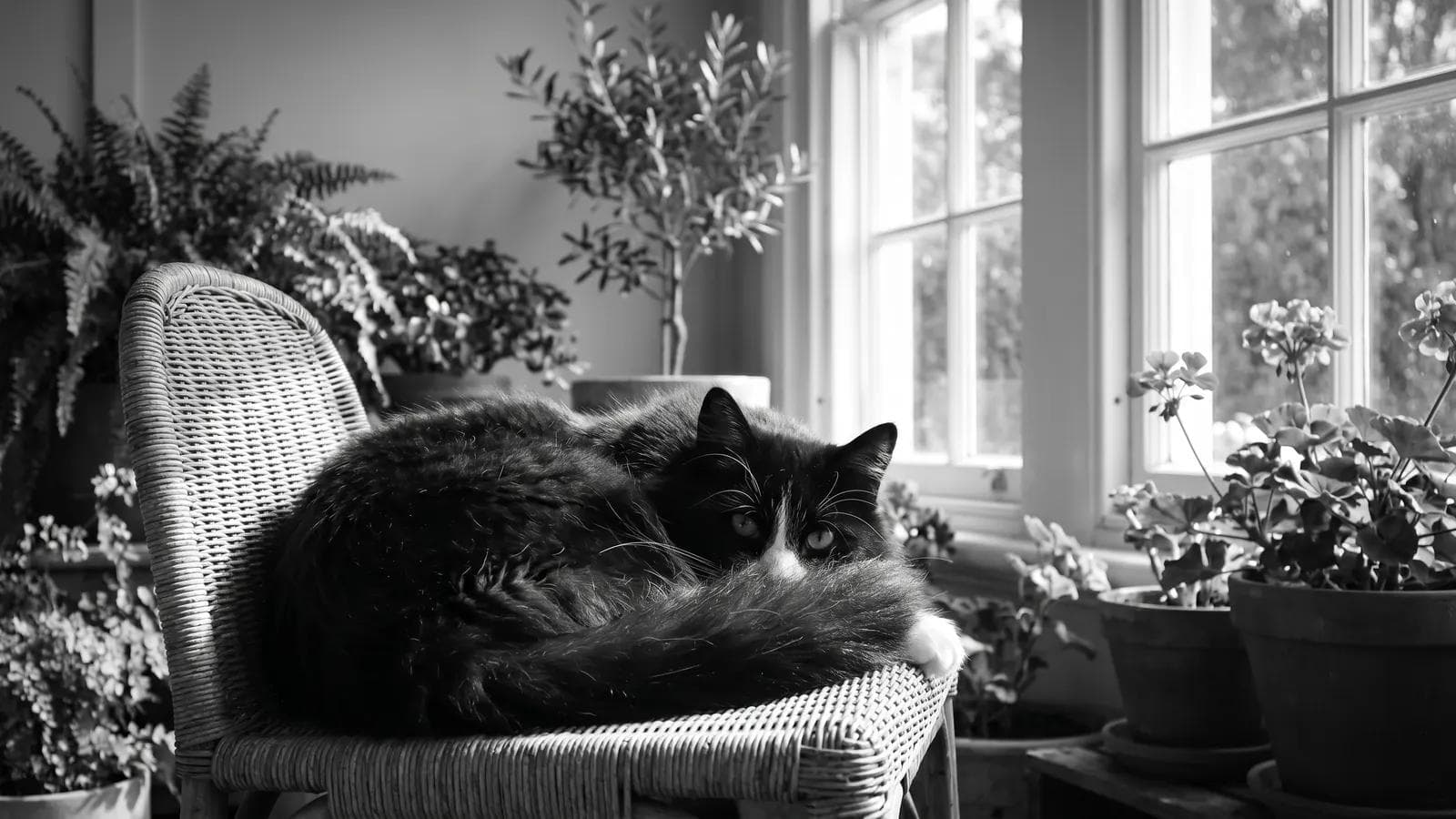
The tuxedo pattern is produced by a gene that affects white spotting. During fetal development, pigment-producing cells migrate outward from a specific point to populate the skin and fur. In cats carrying the white spotting gene, those cells fail to reach certain areas. The chest, belly, and paws are typical sites of incomplete migration, which leaves white fur where pigmentation never arrived. What remains of the pigmented coat is black, or whatever the cat's base colour is. In Vino's case: black.
It is a dominant gene. One parent carrying it is sufficient to pass it on. The expression varies considerably: some cats carry just enough to produce a white bib and socked front paws, others have so much white that the tuxedo effect is partially lost in the noise. The classic range, which Vino occupies, is enough white to be immediately readable as formal attire, not so much that the structure of the pattern dissolves.
The pattern is not breed-specific. It appears in British Shorthairs and Maine Coons and Norwegian Forest Cats and in barn cats from Tasmanian wineries with no documentation to their names. What produces a tuxedo cat is not selective breeding or a particular lineage. It is a gene, and the gene does not care about credentials. Vino arrived from a property where no one was tracking pedigrees. The coat arrived with him regardless.
What the Name Captures Beyond the Visual
The interesting argument about the name is that it describes more than the markings. There is something about tuxedo cats, experienced across the breadth of people who have kept them, that the word "tuxedo" reaches further than it should.
When a visitor arrives at the property and Vino is outside, he walks in with them. Not alongside them, exactly, and not to be polite. He simply falls into their path and proceeds to the house, treating the arrival as a shared itinerary. He was not trained to do this. It is not a behaviour anyone requested or shaped. It is Vino's interpretation of how arrivals should proceed, and his interpretation has been consistent enough that I have stopped finding it remarkable. Visitors still do.
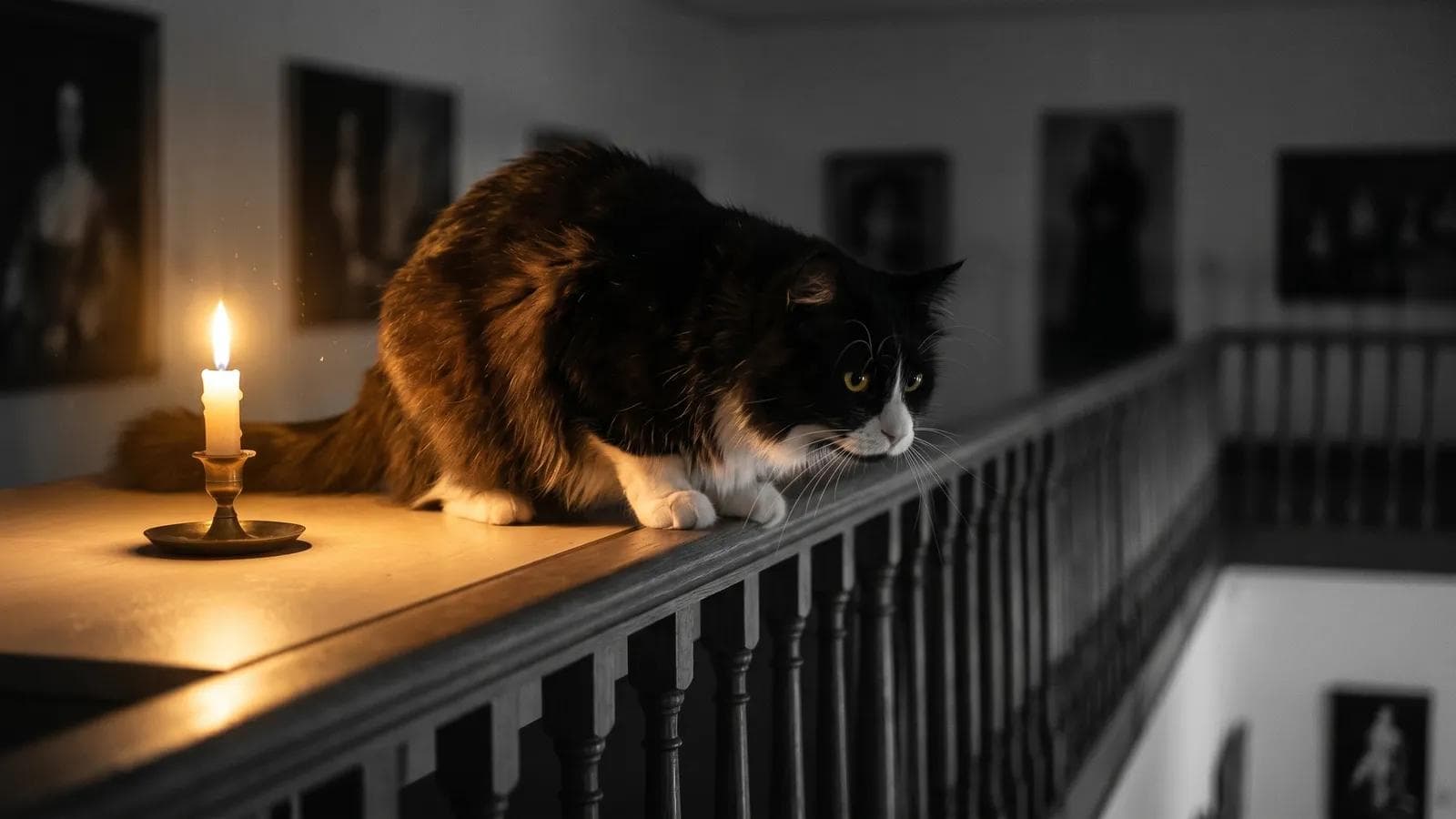
The rooster was a related case. The chickens on the property represent no particular challenge to Vino's composure. The rooster was a different matter, being larger, louder, and occasionally aggressive. Vino's solution is elevation: he finds higher ground near the flock, somewhere the rooster cannot easily reach, and maintains his position there with no visible concession to the politics below. He does not leave. He does not confront. He simply ensures that any engagement would require the rooster to put in more effort than it's worth. This is, in its way, a formal approach to an informal problem.
The neighbour's Staffy would complete this picture. Vino has developed what can only be described as a protocol for that dog. He lies down approximately a metre from the shared fence. He does not look at the fence. He stares into the middle distance with the focused disinterest of someone at a function they've attended out of obligation and will not be acknowledging anyone from. The Staffy lost its composure entirely. Vino does not react. The ignoring is the provocation; the formality is the weapon.
These are not isolated observations. They are Vino behaving in a way that the word "tuxedo" half-predicts. The jacket implies a certain deliberateness, a certain attention to the staging of an entrance or an exit or a strategic non-acknowledgement. The cats named for formalwear have, by some informal consensus among the people who know them, a slightly formal quality. Particular about things. Not casually indifferent. Present in a way that you notice and cannot quite account for.
The Cultural Lineage
Tuxedo cats have been arriving in the cultural record for a long time, and they have been arriving in character.
Felix the Cat appeared in animated silent films in 1919, a black-and-white cat with a particular self-possession and a tendency to walk into situations that could not be walked out of easily. Sylvester, who appeared in the first Looney Tunes short featuring him in 1945, brought the tuxedo coat into postwar American living rooms and kept it there for decades. Socks was the Clinton family's cat, photographed at the White House in a way that no previous presidential cat had been; he had, by all accounts, a functional understanding of occasion. The Cat in the Hat wore a hat but not a jacket, which is arguably the exception that proves the rule.
The pattern across all of them is not accidental. The tuxedo cat has been cast repeatedly as the cat with a certain presence, an animal who reads as a participant rather than merely a subject. They are not just cats in scenes. They are cats who appear to have opinions about the scene. Felix endured. Sylvester persisted with implausible commitment. Socks conducted himself at state functions.
Vino fits this lineage with a degree of precision that I find both gratifying and slightly exhausting. He came from a winery barn in northern Tasmania, where his previous household had already named him Messiah before I arrived to add the rest. The winery family arrived at that conclusion from knowing him. It is consistent with the evidence.
Frequently Asked Questions
Why are tuxedo cats called tuxedo cats?
The black coat with white chest, belly, and paw markings visually resembles a formal tuxedo suit, specifically the combination of a dark dinner jacket and white dress shirt. The resemblance is direct enough that the name required no particular invention. The word "tuxedo" entered formal English from a wealthy New York enclave in the 1880s; the application to cats followed the logic of the comparison.
Are tuxedo cats a specific breed?
No. Tuxedo is a coat pattern, not a breed designation. The white spotting gene that produces the pattern appears across dozens of different breeds and in mixed-breed cats equally. Vino has no documented pedigree. He came from a barn. His coat is no less a tuxedo for it.
What exactly makes the tuxedo pattern?
A gene affecting white spotting causes pigment-producing cells to fail to migrate to certain areas during fetal development, leaving white patches on the chest, belly, and paws. The black base coat provides the contrast. The specific distribution of white in the chest and paw areas produces the formalwear silhouette. In cats like Vino, the bow-tie effect is additionally provided by a black chin stripe that tapers to a point against the white chest.
Are tuxedo cats common?
They are. The white spotting gene is widely distributed across domestic cat populations, and tuxedo cats appear regularly in shelters and rescue populations. Their visual distinctiveness tends to make them feel rarer than they are. Every one of them looks like it has somewhere to be.
Do tuxedo cats have a distinct personality?
There is no genetically determined personality attached to the coat pattern. The personality and the coat are produced by different mechanisms entirely. However, the people who have lived with tuxedo cats describe a particular quality with some consistency: deliberate, opinionated, present in a way that registers. Whether that is observation or selection bias is a question I haven't fully resolved. Vino does not help me resolve it.
What famous cats have been tuxedo cats?
Felix the Cat (1919), Sylvester from Looney Tunes (1945), Socks at the Clinton White House, and by loose visual convention, the Cat in the Hat. The pattern appears throughout the cultural record at moments where a certain kind of cat was required: theatrical, self-possessed, not easily ignored.
Vino, for his part, received visitors at the gate again this week. He walked in with them, found the best chair in the room, and accepted attention in the manner of someone who had arranged for it. The name continues to suit him. It always has.