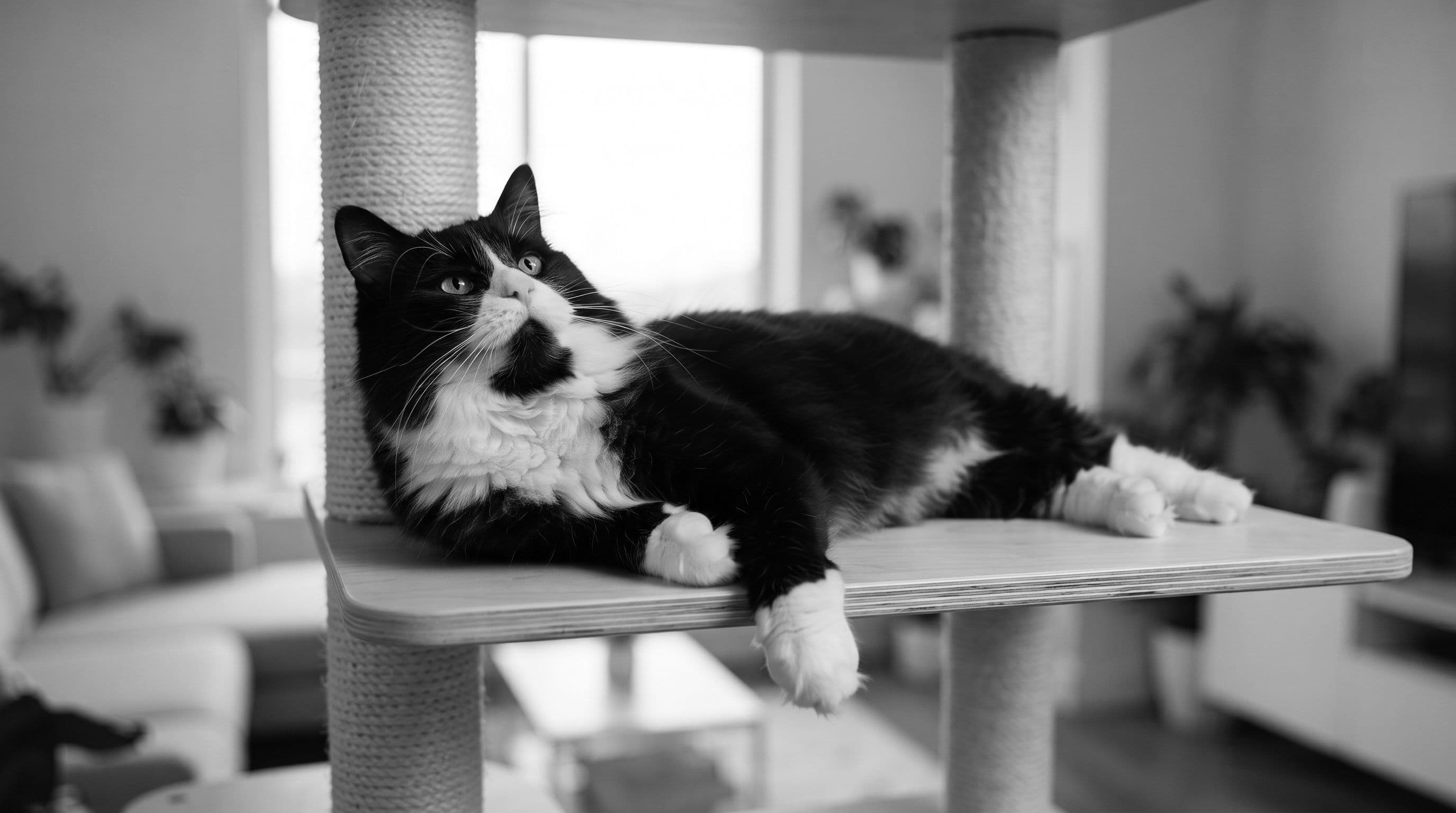
Zola was on the top platform. Vino was on the middle shelf. Neither cat was moving. It was a Saturday afternoon sometime last winter, and my fiancée watched from the couch beside me as this silent negotiation stretched past the 40-minute mark. Finding the best cat tree for large cats wasn't something I'd thought much about before owning these two, but moments like this one made the stakes clear. Zola, all 3.9 kg of sleek black composure, had her eyes half-closed in what amounted to weaponised indifference. Vino, his white chest puffed out like a diplomat refusing to leave the negotiating table, stared at the ceiling with theatrical calm. Nobody blinked. Nobody yielded. The cat tower standoff had entered its second act, and both performers knew their audience was captive.
Why the Best Cat Tree for Large Cats Isn't About Height
That standoff taught me something I haven't seen addressed in any buying guide: a cat tree doesn't just need to hold weight. It needs to hold egos. When you've got two cats north of 4 kg each, both claiming vertical territory at the same time, the structure has to accommodate not just mass but politics. The average mass-market tower sold at PetSmart is designed for a hypothetical 3.5 kg shorthair who politely uses one level at a time. That's not my household. That's not most multi-cat households.
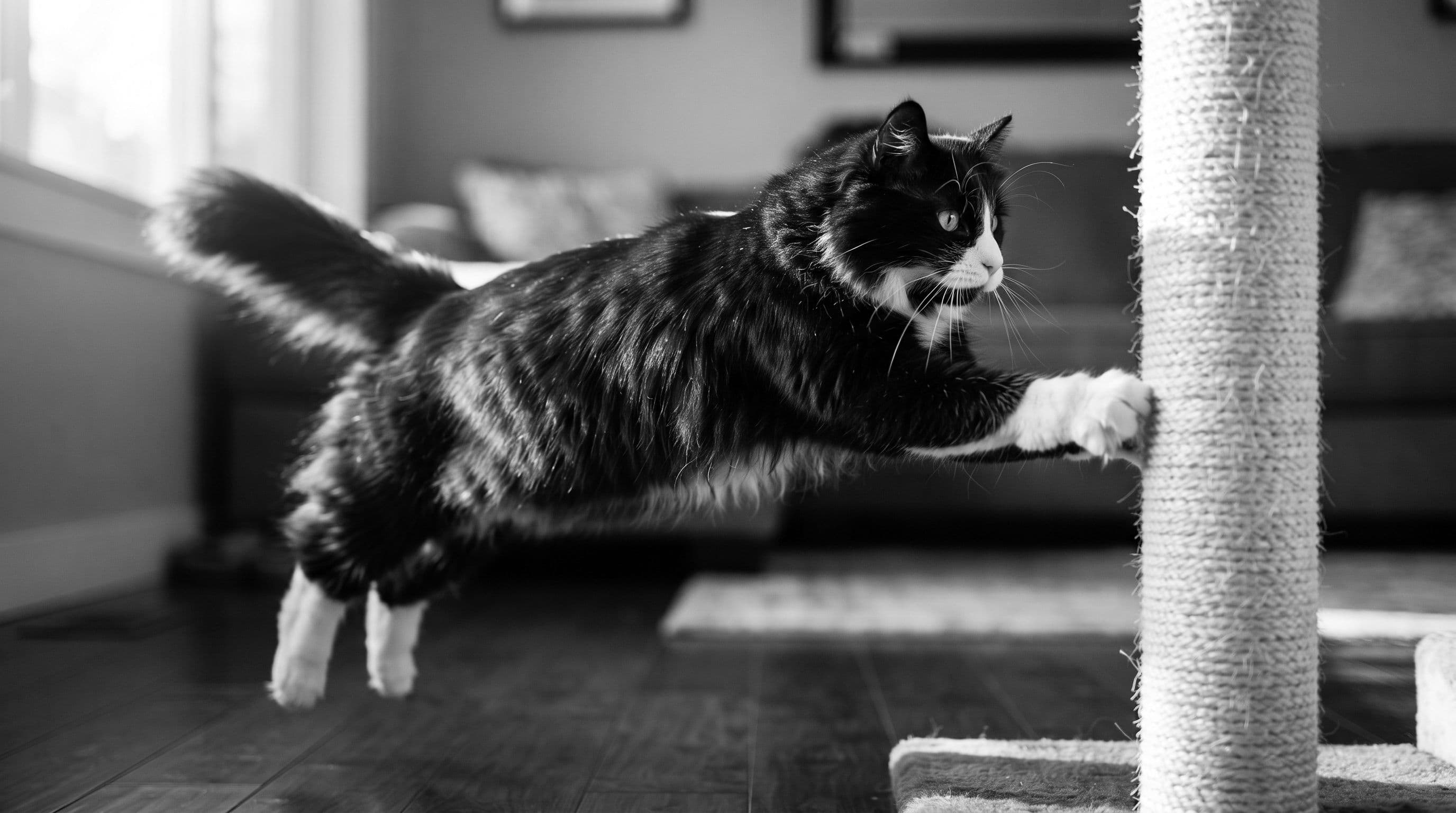
Vino weighs 6 kg. He's a medium-long-furred tuxedo with the dense, barrel-chested build common to bicolour cats who spent their early years as working mousers on a Tasmanian vineyard. When he launches himself from floor to mid-platform, the physics are non-trivial. I've watched a budget cat tree slide 15 cm across hardwood flooring from a single Vino dismount. That tree lasted about six weeks before the sisal started shredding and the base developed a lean you could measure with a spirit level.
The problem isn't just structural failure. It's that most cat trees treat large cats as an afterthought. Cats with real mass avoid and underuse furniture that wobbles, and owners of larger cats report exactly that, constantly. Cats aren't being difficult when they refuse a flimsy tower. They're being rational. A Norwegian Forest Cat or a Maine Coon, breeds that routinely exceed 7 kg, will simply stop using a structure that doesn't feel stable under their centre of gravity. And once a cat decides a piece of furniture isn't trustworthy, good luck changing that verdict.
What I've learned from watching Vino and Zola over the years is that the best cat tree for large cats comes down to three non-negotiable qualities: base weight, platform width, and post diameter. Everything else, the dangly toys, the hidey-holes, the aesthetic choices, is secondary.
How Our Setup Differs from What Most Guides Recommend
Most top-ranking articles on cat trees will point you toward a tall, multi-tiered tower with carpet-wrapped platforms and pressed-wood construction. Cats prioritise horizontal security on elevated surfaces; they want enough room to shift position, stretch, and redistribute weight without feeling the edge. For a cat over 5 kg, that means platforms of at least 45 cm in any direction, the figure I settled on after watching Vino use, and refuse, a range of perches.
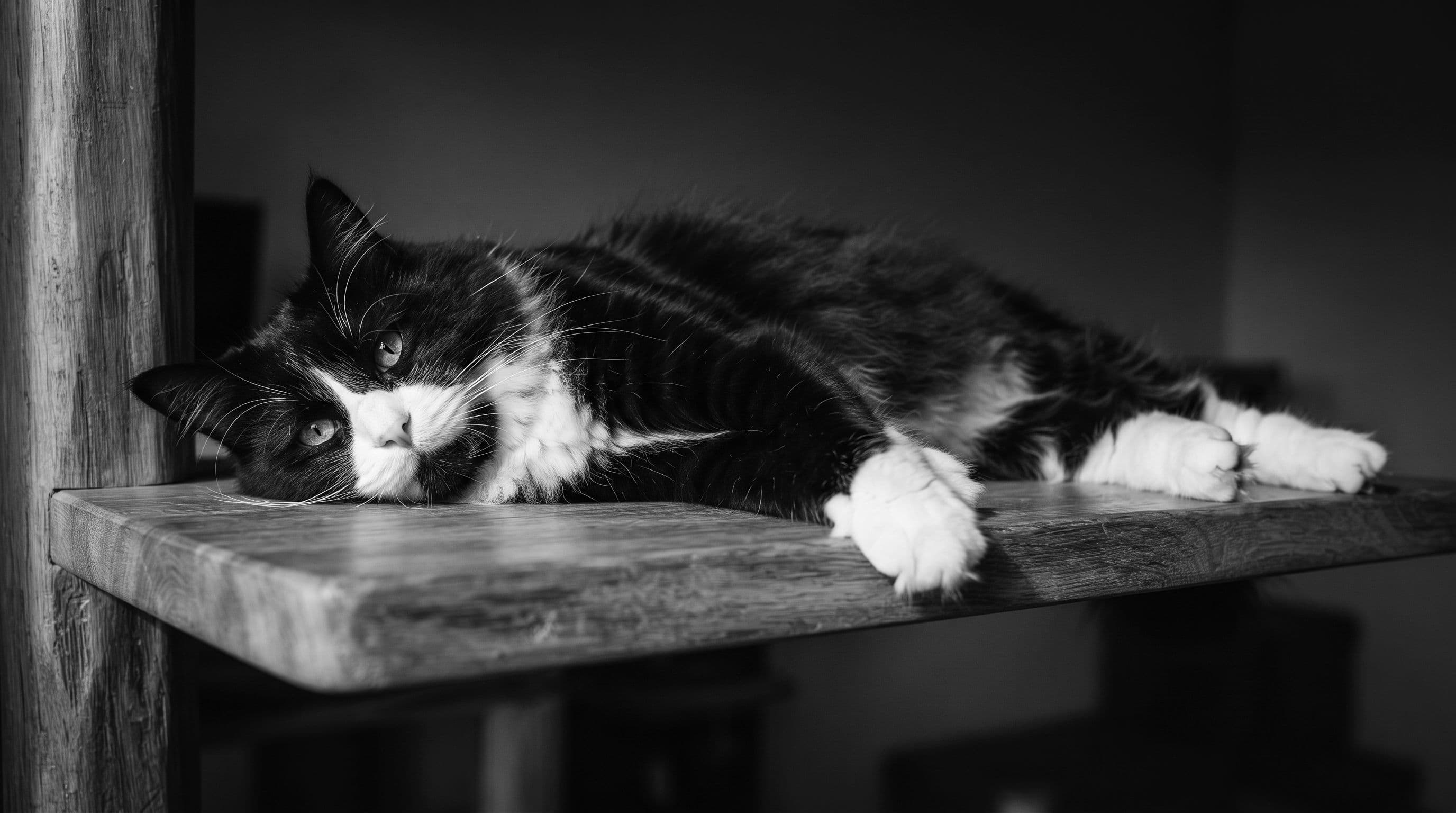
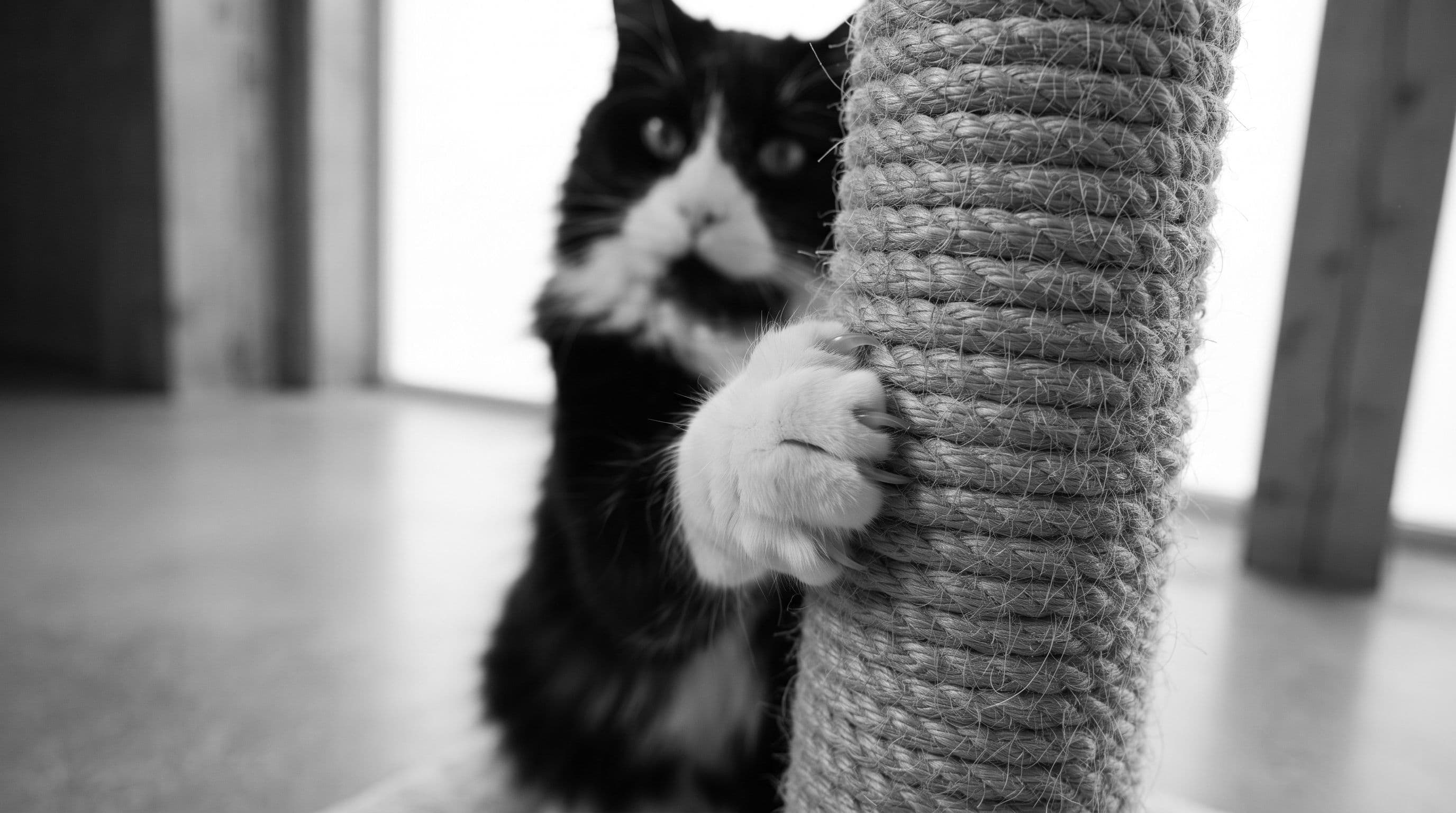
Our current setup is a heavy, floor-to-ceiling cat tree with solid pine posts wrapped in sisal rope, each post about 12 cm in diameter. The platforms are untreated birch plywood, wide enough that Vino can sprawl fully on his side with his legs extended and still have margin. It doesn't wobble. It doesn't slide. It weighs about 28 kg assembled, which is more than both cats combined and then some.
I'll contrast this with a friend's experience. She has a 6.2 kg British Shorthair named Fergus who went through three cat trees in 18 months. Every one was the same basic design: lightweight MDF board, carpet-covered platforms barely 30 cm wide, hollow cardboard tubes pretending to be posts. Fergus would use each one for about a month, then the wobble would start, and Fergus would relocate permanently to the back of the sofa. She finally switched to a heavy hardwood model and Fergus has been using it daily for over a year.
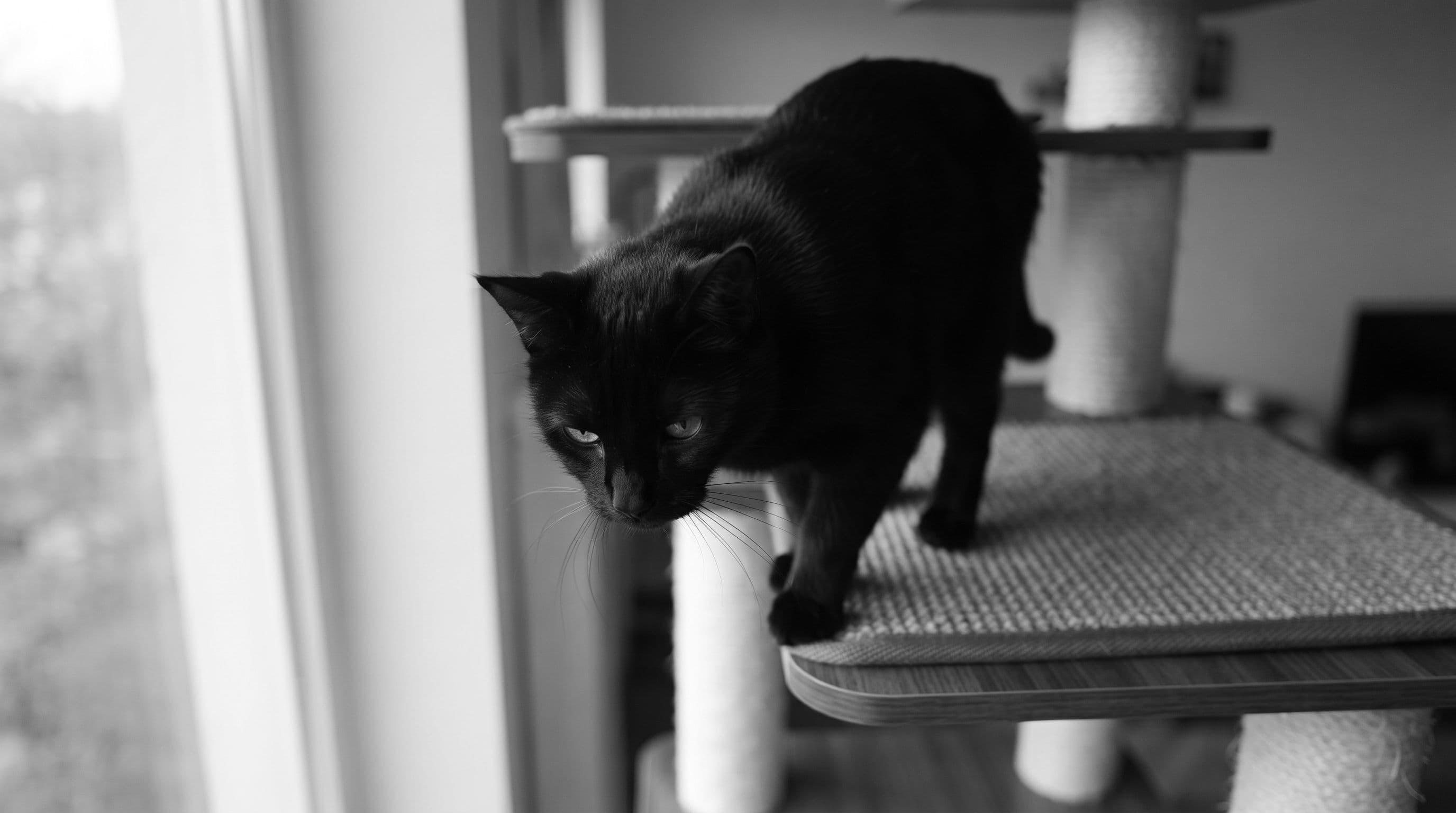
This mirrors what I've seen with Vino. He doesn't care about features. He cares about whether the thing moves when he's on it. Zola, who's lighter and more cautious by temperament, actually cares even more; she won't even approach a structure that shifted once under Vino's weight. Their hissing and drama is largely performative, but their furniture preferences are deadly serious.
The standoff I described earlier only happens on stable furniture. It's a sign of trust in the structure. If the tree wobbled, there'd be no standoff because neither cat would stay long enough for one to develop.
What to Actually Look for When Shopping
Here's my practical advice, earned through trial, error, and one moderately expensive lesson involving a toppled cat tree and a shattered ceramic planter.
Base and total weight. The assembled tree should weigh at least 20 kg for any household with cats over 5 kg. Heavier is better. If the listing doesn't state the weight, that's a red flag. A wide, solid base matters more than a ceiling bracket, though a ceiling bracket on top of a heavy base is ideal for floor-to-ceiling models.
Post diameter and material. Solid wood posts, minimum 10 cm diameter. Sisal rope wrapping is standard and holds up well; sisal fabric tends to last even longer. Avoid any post you can flex with your hand. If it bends for you, it'll bend for a cat in motion.
Platform dimensions. 45 cm minimum in every direction. Deeper is better. Raised edges or a slight lip can help larger cats feel secure, but aren't essential if the platform is wide enough. Skip any platform covered in long-pile carpet; it traps fur, collects odour, and Vino's medium-long coat already generates enough grooming and furball challenges without adding a carpet lint factory to the equation.
Replaceable parts. Sisal wears out. Posts should be individually replaceable or re-wrappable. A tree you have to throw away when one post frays isn't worth the investment.
Multi-cat spacing. If you've got two or more cats, the vertical distance between platforms matters. Ours has roughly 50 cm between each level, enough that Vino on the middle shelf can't casually swat at Zola on the top. This is, I suspect, the only reason their standoffs remain cold wars and never escalate into open conflict.
<a href="https://www.tuftandpaw.com/collections/cat-trees" rel="nofollow sponsored">Tuft + Paw</a> makes some of the better-designed options I've seen for larger cats, with solid wood construction and platforms wide enough to accommodate breeds like Ragdolls or Maine Coons without the wobble issue. Their aesthetic is cleaner than most, which counts for something when the tree sits in your living room on permanent display.
Here's something nobody seems to bring up in buying guides: stress-test the tree yourself before your cat gets near it. Push down on each platform with about 8 kg of force. Grab the top and try to rock it. If you can feel lateral movement, your cat will feel it too, and a 6 kg cat landing from a jump generates more lateral force than you'd expect. The Jackson Galaxy Foundation has long championed environmental enrichment that respects a cat's instinct to claim secure vertical territory; stability sits at the core of that principle.
Vino's Verdict: Vino has used cheap cat trees and heavy ones. He ignores the cheap ones within weeks and still uses the heavy one daily after two years. His standoffs with Zola on the current tree are proof it works; neither cat would hold position on something they didn't trust. Buy the heaviest, widest-platformed tree you can afford and skip the gimmicks.