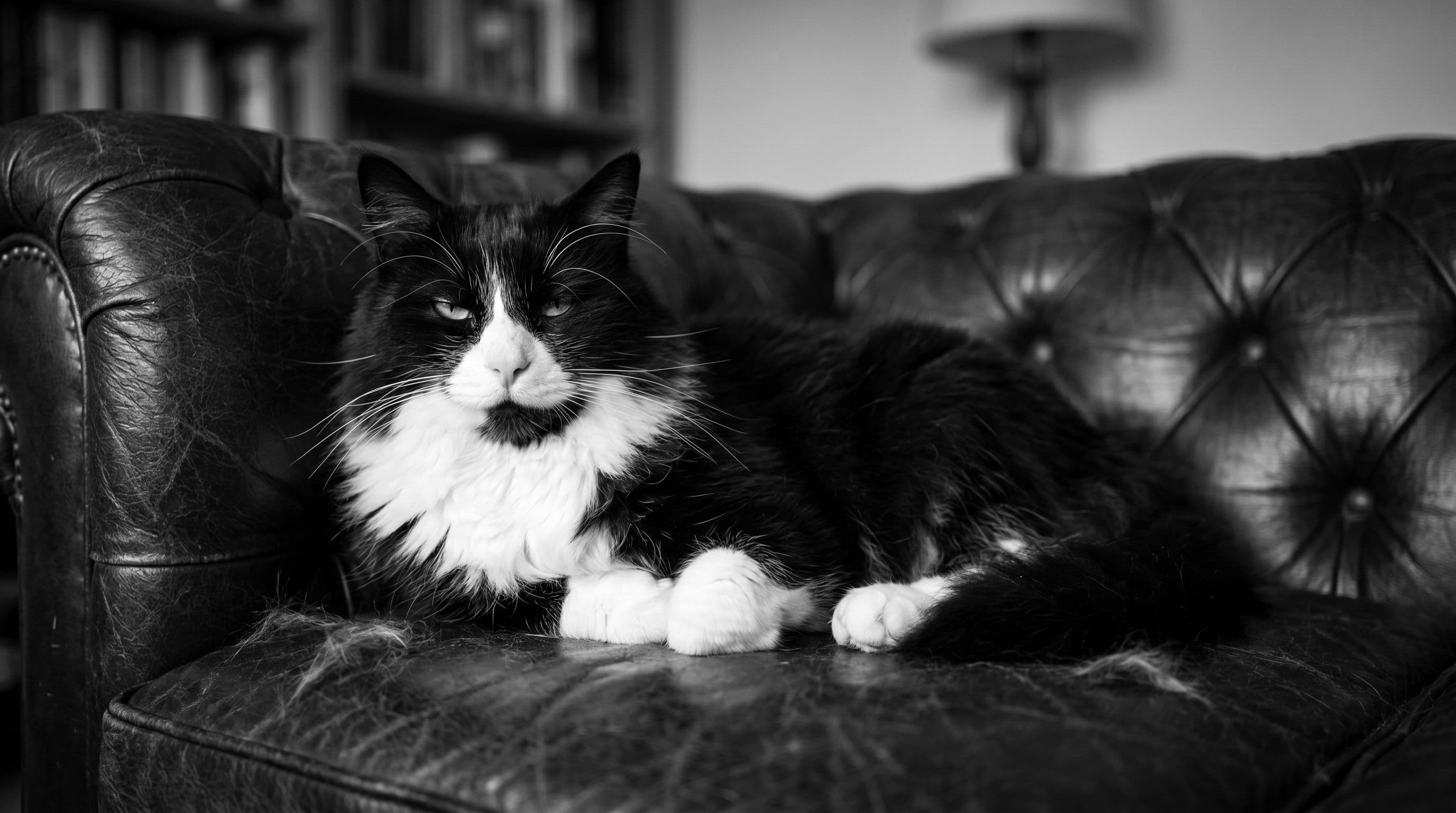
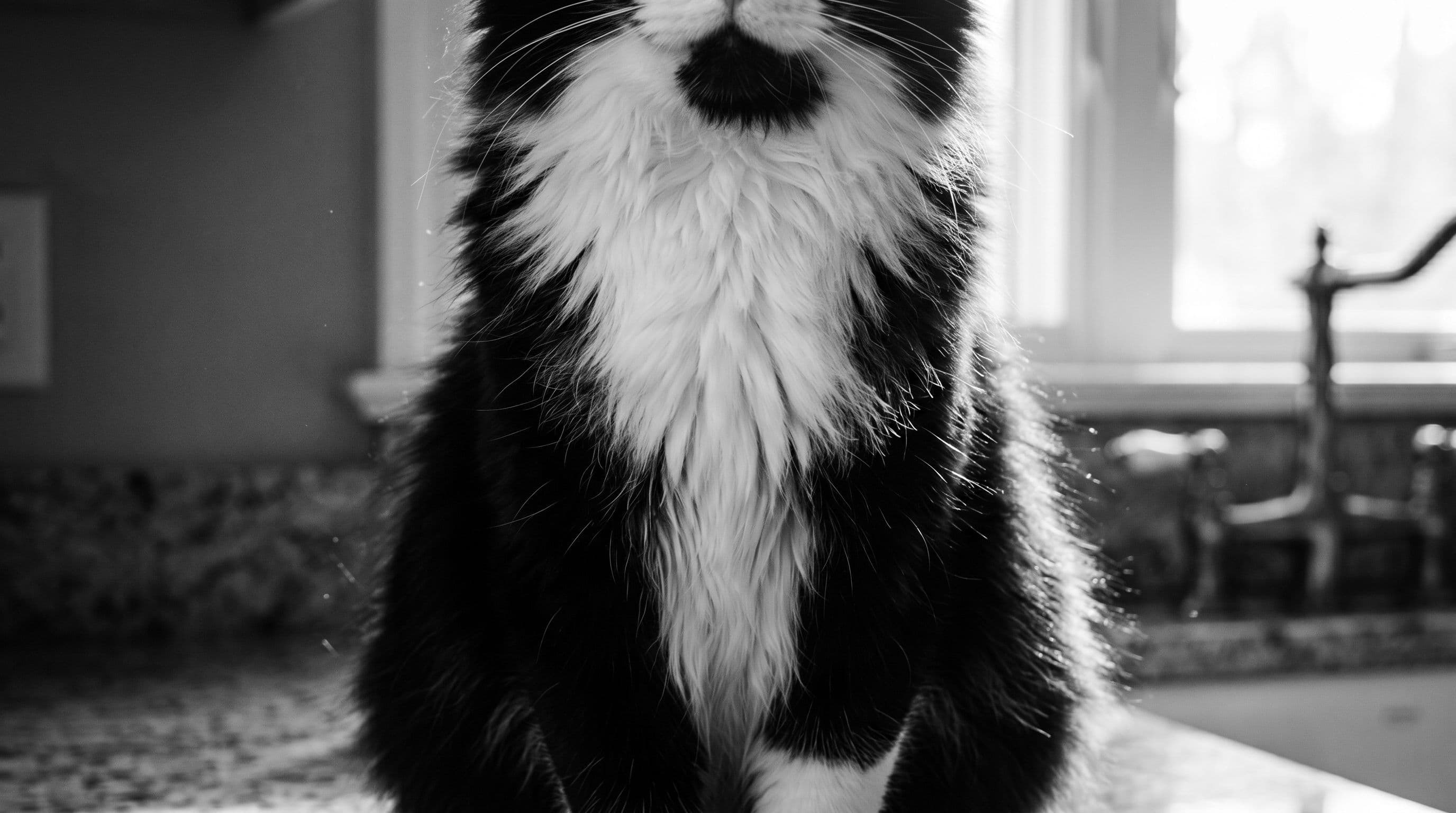
I haven't been able to sit on the brown leather couch for three consecutive minutes this week without Vino depositing a small grey cloud of loose fur onto my lap. He's been shedding with a commitment that borders on artistic expression: tufts along the hallway, wisps clinging to the kitchen windowsill where he sits sniffing the afternoon breeze, and one spectacular clump I found wedged between the couch cushions that could've been mistaken for a small animal in its own right. Finding the best brush for long-haired cats isn't a casual interest of mine; it's a household survival strategy, born from years of living with a medium-long-haired tuxedo cat who produces fur at an industrial rate and who, mercifully, happens to love being brushed.
That last part matters more than most grooming guides acknowledge. Vino isn't just tolerant of brushing. He actively leans into it, tilting his chin up so I can work through the white mane on his chest, purring at a volume that rivals his 5-second protest meows. Zola, by contrast, will permit exactly 90 seconds of brushing before delivering a look that suggests I've overstayed my welcome. Two cats, same household, completely different grooming relationships. The brush that works isn't only about bristle type or handle ergonomics; it's about the specific cat you're dragging it across.
Why Most "Best Brush" Lists Get It Wrong for Long-Haired Cats
Here's what frustrated me about the research I did before buying my first brush for Vino: almost every recommendation treated "long-haired" as a single category. A Persian's dense double coat and a Balinese's silky single layer couldn't be more different, yet they're lumped together as though one tool handles both. Vino's fur sits somewhere in between. He's a domestic tuxedo with medium-long hair, noticeably longer than a standard shorthair but nowhere near the volume of a Maine Coon or a Norwegian Forest Cat. His belly and back legs carry the most length, while his back stays relatively manageable. The chest and chin area, that gorgeous white bib that forms his natural bow tie marking against the black, mats faster than anywhere else.
Based on everything I've seen living with Vino, grooming sessions can go either way. Some days he's compliant, other days he clearly finds it stressful. Cats spend a remarkable share of their waking hours grooming themselves, and Vino is no exception. That's a telling detail, and it tells me that the brush itself is only half the equation. Any animal that dedicates that much of its conscious life to self-maintenance has opinions about how the job gets done. The other half is whether your cat will sit still long enough for the brush to do anything useful.
Vino will. So I had an unusually cooperative test subject when I worked through four different brush types over about 8 months.
The Four Brushes I Tried on Vino (and What Actually Happened)
1. A Standard Slicker Brush
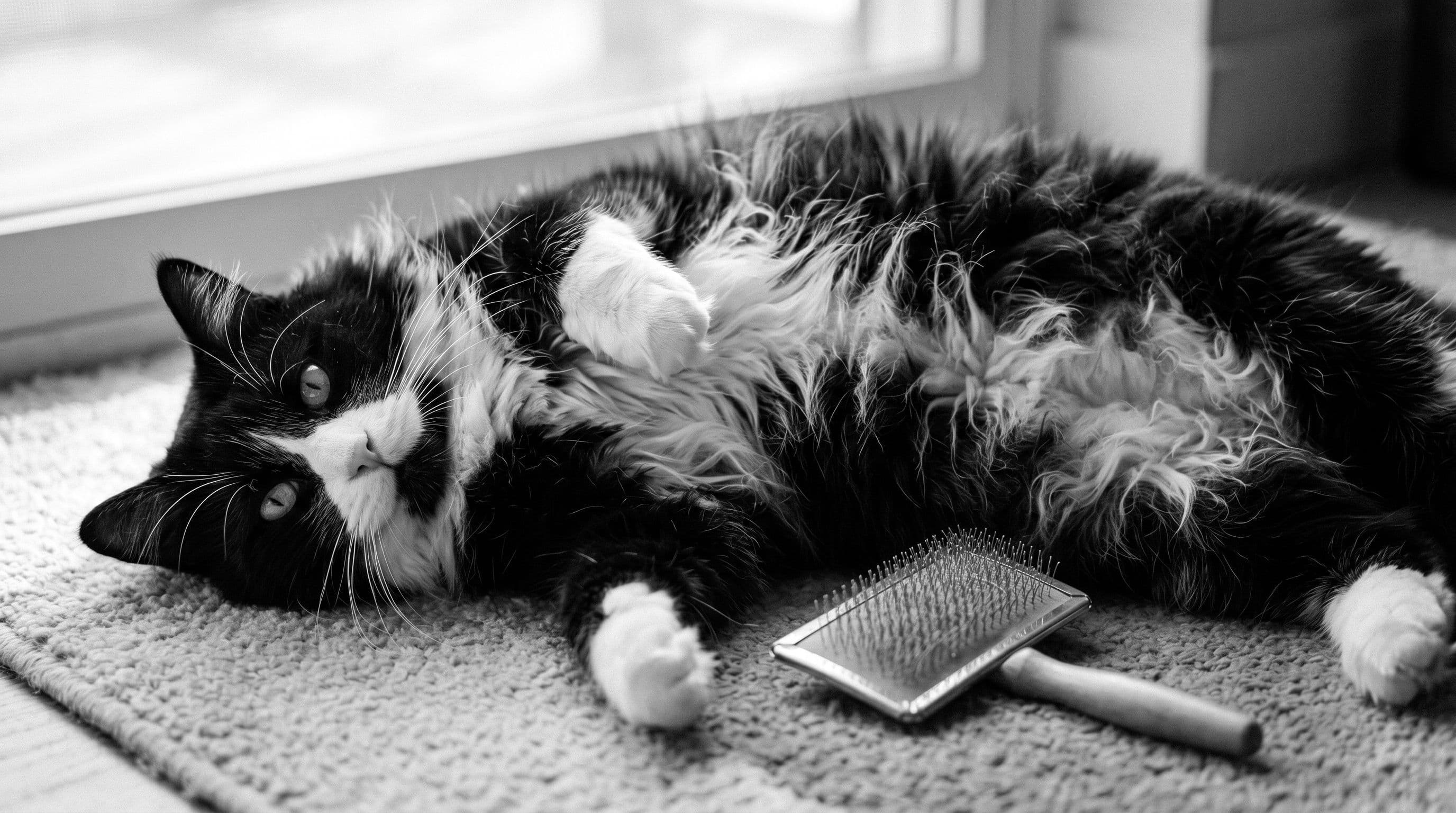
This was my starting point: a rectangular slicker brush with fine wire bristles, the sort you'll find in any pet aisle. I picked one up during a routine trip. For surface-level grooming, it did an adequate job. It caught loose topcoat fur and Vino didn't mind the sensation.
The problem emerged on his belly and the backs of his legs, where his fur is longest and most prone to tangles. The fine wires snagged on knots instead of working through them, and I could feel Vino tense up whenever I hit resistance. For a cat who genuinely enjoys grooming, that tension was a clear signal to stop. On Zola's short black coat, the slicker worked perfectly. On Vino's longer sections, it wasn't enough.
Verdict: Fine for shorthairs, inadequate for medium-long or long coats with any tendency toward matting.
2. A Stainless-Steel Deshedding Comb
This was the tool that changed everything for undercoat management. It's a simple design: a handle attached to a short stainless-steel edge that catches and removes loose undercoat without cutting the topcoat. I use it once a week, typically on Saturday mornings while Vino sits on my lap in what I've come to think of as his grooming throne (the couch, obviously; he claimed it years ago).
The volume of fur this thing removes is genuinely alarming. The first time I used it on Vino's back, I pulled out enough loose undercoat to build a second, smaller cat. Regular deshedding reduces hairball frequency, and I can confirm that firsthand. Vino's always been a prolific hairball producer; his grooming sessions generate so much loose material that it inevitably gets swallowed and reappears on the bedroom floor at 3 a.m. Since I started weekly deshedding, those incidents have dropped by roughly half.
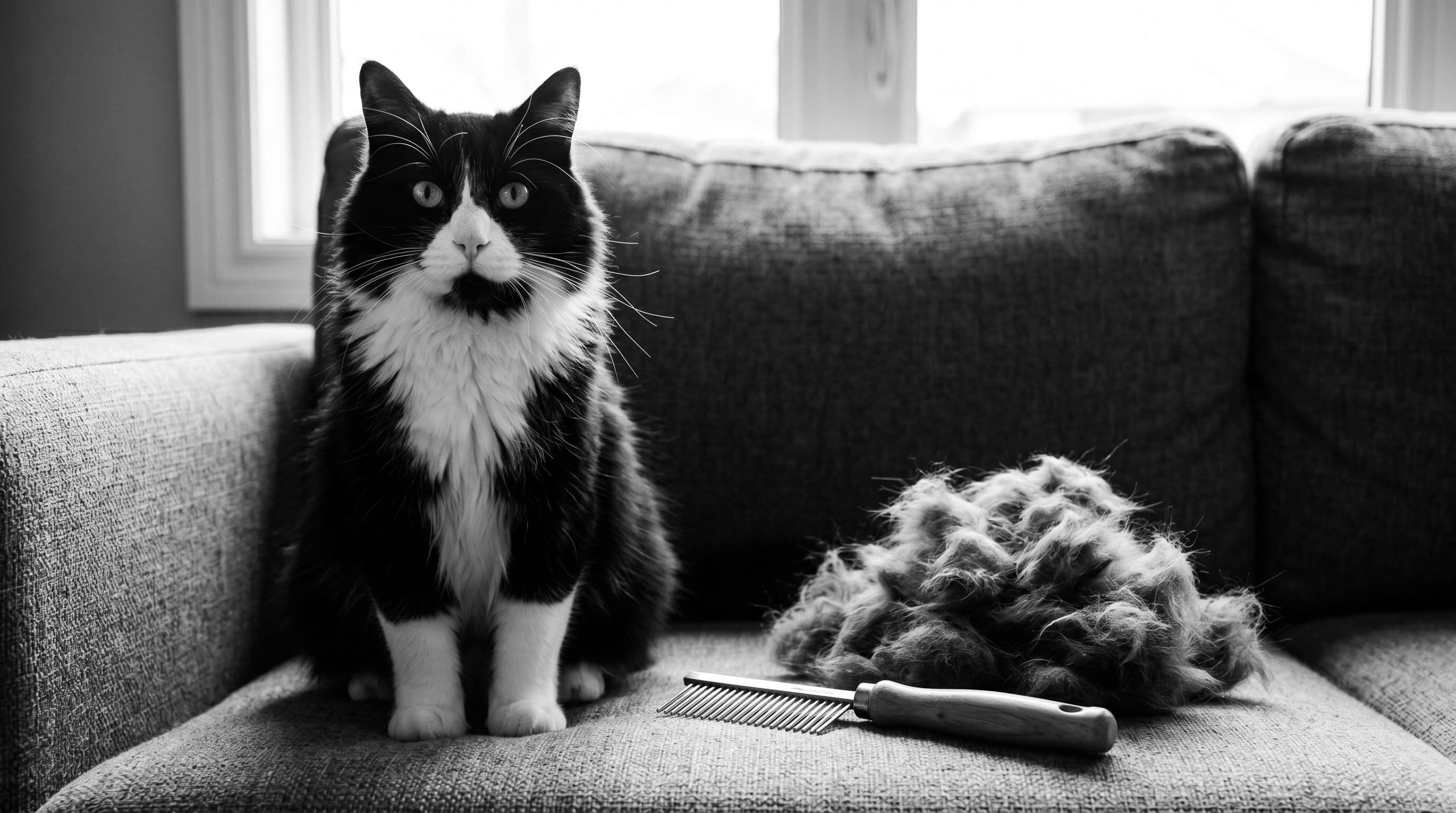
The one caveat: this comb doesn't detangle. It removes loose fur beautifully, but if Vino's chest mane has started clumping, I need a different tool first.
Verdict: Essential for undercoat removal, especially heading into the warmer months when shedding intensifies.
3. A Wide-Tooth Metal Comb
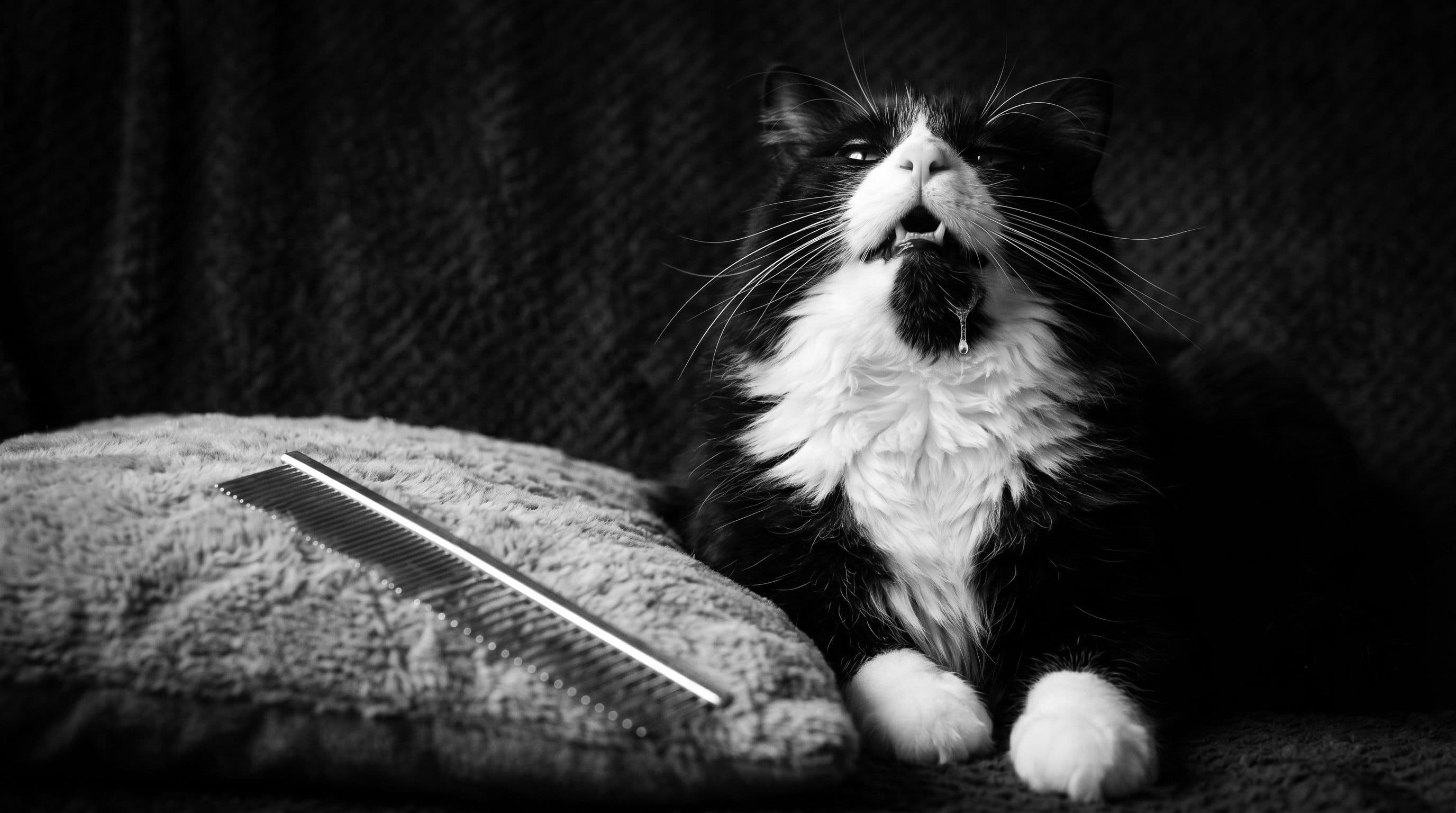
This is the unglamorous workhorse that I wish I'd bought first. A simple wide-tooth metal comb with rounded tips, the sort a professional groomer would have in their kit. I've learned through trial and error that slow, gentle, predictable strokes make all the difference with a cat like Vino, who'll tolerate grooming only if he feels in control of the situation. A wide-tooth comb lets me work through his chest and belly fur methodically, starting at the tips and working inward toward the skin. Considering how much of their waking hours cats spend grooming themselves, Vino's already doing a lot of the heavy lifting on his own. The comb just picks up where his tongue leaves off.
This is where Vino transforms into something almost meditative. When I comb through his white chest fur, he tilts his head back, closes his eyes to half-mast, and drools. Copiously. It pools on whatever surface he's lying on. The drooling is a well-documented Vino phenomenon during any form of affection, but brushing the chest area amplifies it to an almost hydraulic degree.
I've also used this comb as a pre-bath detangler during the regrettable half-bath incidents. For context: Vino's medium-long fur on his back legs has, on more than one occasion, caught something it shouldn't have. Warm water, patience, and a cat who has none of either. The wide-tooth comb at least lets me get the worst tangles out before the growling and escape attempts begin.
Verdict: The single most useful grooming tool I own. Non-negotiable for Vino, whose fur gets past two inches in places.
4. A Soft Rubber Grooming Mitt
I bought this mostly out of curiosity. It's a flexible rubber mitt covered in soft nubs that you wear on your hand, essentially turning petting into grooming. The theory is appealing: cats who resist brushes might accept something that feels like a normal stroke.
Vino doesn't need convincing to accept grooming, so the mitt's primary selling point was irrelevant. What I found instead was that it works beautifully as a finishing tool. After I've deshedded and combed, a few minutes with the rubber mitt picks up the last floating loose hairs and leaves his coat looking genuinely polished. His black fur, which covers roughly 70% of his body, develops a sheen that makes him look like he's just stepped out of a salon rather than off the back deck where he's been staring down the neighbour's Staffy for 20 minutes.
For Zola, who tolerates minimal grooming, the mitt is actually the only tool she'll accept without complaint. She seems to register it as petting rather than brushing, which keeps her cooperation window open longer than the usual 90 seconds.
Verdict: Not a primary grooming tool, but an excellent complement. Particularly useful for cats who resist traditional brushes.
The Best Brush for Long-Haired Cats Isn't One Brush
If you've read this far hoping I'd name a single winner, I'm sorry to disappoint. The honest answer is that Vino's coat requires a rotation: the wide-tooth comb for detangling, the deshedding comb for undercoat removal, and the rubber mitt for finishing. The slicker brush lives in the bottom of the grooming drawer now, pulled out occasionally for Zola and otherwise forgotten.
Coat types vary wildly across the dozens of breeds and mixes that carry long or medium-long fur. A Ragdoll's silky coat mats differently from a Siberian's dense triple layer. Vino's domestic tuxedo fur is its own thing entirely, and the system I've built works specifically for him. Your cat's needs will differ based on coat density, length, temperament, and how aggressively they drool on your furniture during the process.
What I'd recommend to anyone starting out: begin with a wide-tooth metal comb. It's the most versatile, the least likely to cause discomfort, and the tool that gives you the clearest feedback about what's happening in your cat's coat. From there, add tools as your cat's specific needs reveal themselves.
Building a Grooming Routine Your Cat Won't Fight
The brush matters less than most people assume once you've actually got the right one in hand. What determines whether grooming becomes a fight or a non-event is almost entirely about timing, positioning, and reading the signals before your cat starts giving you the bigger ones.
Timing first. Grooming a cat who's mid-zoom around the house, or one who's just been startled by the vacuum, is a losing proposition regardless of the tool. The best window is somewhere in the settled middle of the day, after a meal, when the cat is already inclined to sit still. For Vino, that's almost always after lunch, when he's parked in a sun patch and reluctant to move for any reason short of food. Trying to brush him first thing in the morning, when he's still doing his rounds of the house demanding breakfast, doesn't go nearly as well.
Positioning matters more than people expect, too. Brushing a cat who's braced, standing, or trying to walk away rarely lasts long. Getting them into a relaxed, horizontal position first, lap, cushion, favourite patch of carpet, changes the whole session. Vino goes from tolerant to genuinely enjoying it the moment he's lying down rather than standing, chin lifted, doing most of the work of presenting the areas that need it.
Then there's reading the signals before they escalate. A tail starting to flick, ears turning back, a shift from loose to tense under your hand: these show up before the growling or the swatting does, and stopping at that point rather than pushing through it is what keeps grooming from becoming something your cat starts actively avoiding. Zola gives almost no warning at all; she goes from tolerant to done in the space of a few seconds, which is exactly why her sessions stay under two minutes. Vino gives plenty of warning and almost never needs it, because he rarely reaches the point where a warning is necessary.
None of this requires a better brush than the ones already covered here. It requires paying attention to the fifteen minutes around the brushing, not just the fifteen minutes of the brushing itself.