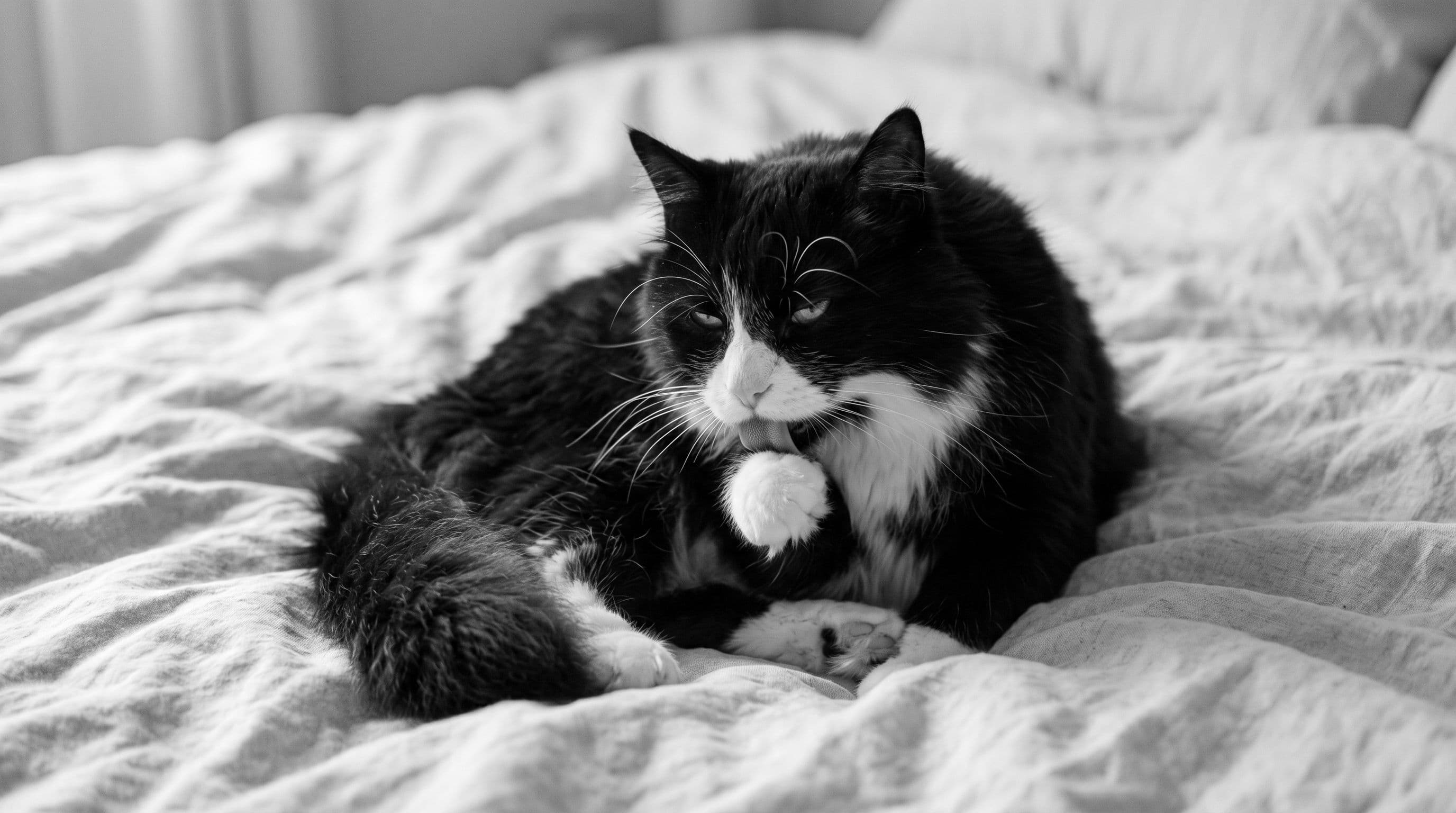
Most cat owners don't find out about preventing cat furballs until they're already scrubbing bile off a wool area rug at 6 a.m. on a Tuesday. That was me in early 2023, barefoot in the hallway, questioning every choice that had led to this moment. What surprised me wasn't the mess itself; it was how little useful guidance existed once I started looking. When I asked Vino's vet about recurring hairball episodes, she admitted that hairball prevention rarely comes up in routine wellness visits until an owner reports a problem, and from what I've gathered talking to other cat owners online, that experience is basically universal. The conventional wisdom online is a fog of pumpkin purée tips and malt-flavoured pastes, most of it reactive, almost none of it grounded in what actually happens inside a cat's digestive tract. I've spent years living with a medium-long-haired tuxedo cat whose grooming habits border on obsessive, and I've learned that nearly everything the internet tells you about preventing cat furballs is, at best, incomplete.
Vino: Viniferous "The Mischievous" Messiah, a bicolour tuxedo with green eyes and a medium-long coat that he maintains with the dedication of someone training for the Olympics. He grooms extensively, daily, sometimes for 20 or 30 minutes in a single session. He also lives with Zola, a sleek black cat whose short coat and minimal grooming schedule mean she produces almost zero hairballs. Same household, same diet, same environment. The difference between them taught me more about furball prevention than any listicle ever did.
The "Just Brush More" Myth and Why Preventing Cat Furballs Requires More
If you've searched for hairball prevention advice, you've encountered the same prescription repeated across dozens of websites: brush your cat daily, and the problem goes away. It sounds logical. Remove the loose fur before the cat swallows it. Simple.
Except it isn't. Brushing helps, genuinely, but positioning it as the primary solution misrepresents why furballs form in the first place. I've brushed Vino on a near-daily schedule for over a year, and he still hacks up hairballs with a regularity that'd make you question whether the brush does anything at all. It's a reduction, yes, but it's nowhere near elimination. From watching Vino and Zola side by side, I can tell you that brushing addresses fur ingestion volume but doesn't touch the three other factors that determine whether swallowed hair passes through the gut or accumulates into a trichobezoar: motility, hydration, and dietary fibre content.
The "just brush more" advice also ignores a basic feline reality: cats groom themselves regardless of what you do with a comb. Vino loves being brushed. He'll lean into a stainless-steel deshedding comb like it's the greatest invention since the treat bag. But he'll also spend half an hour licking his own chest and belly immediately afterward, because grooming isn't just about cleanliness for him. It's self-soothing, it's territorial scent distribution, and it's habit. I can brush out a small bird's worth of loose fur in a single session and still find him working his tongue through his mane 15 minutes later.
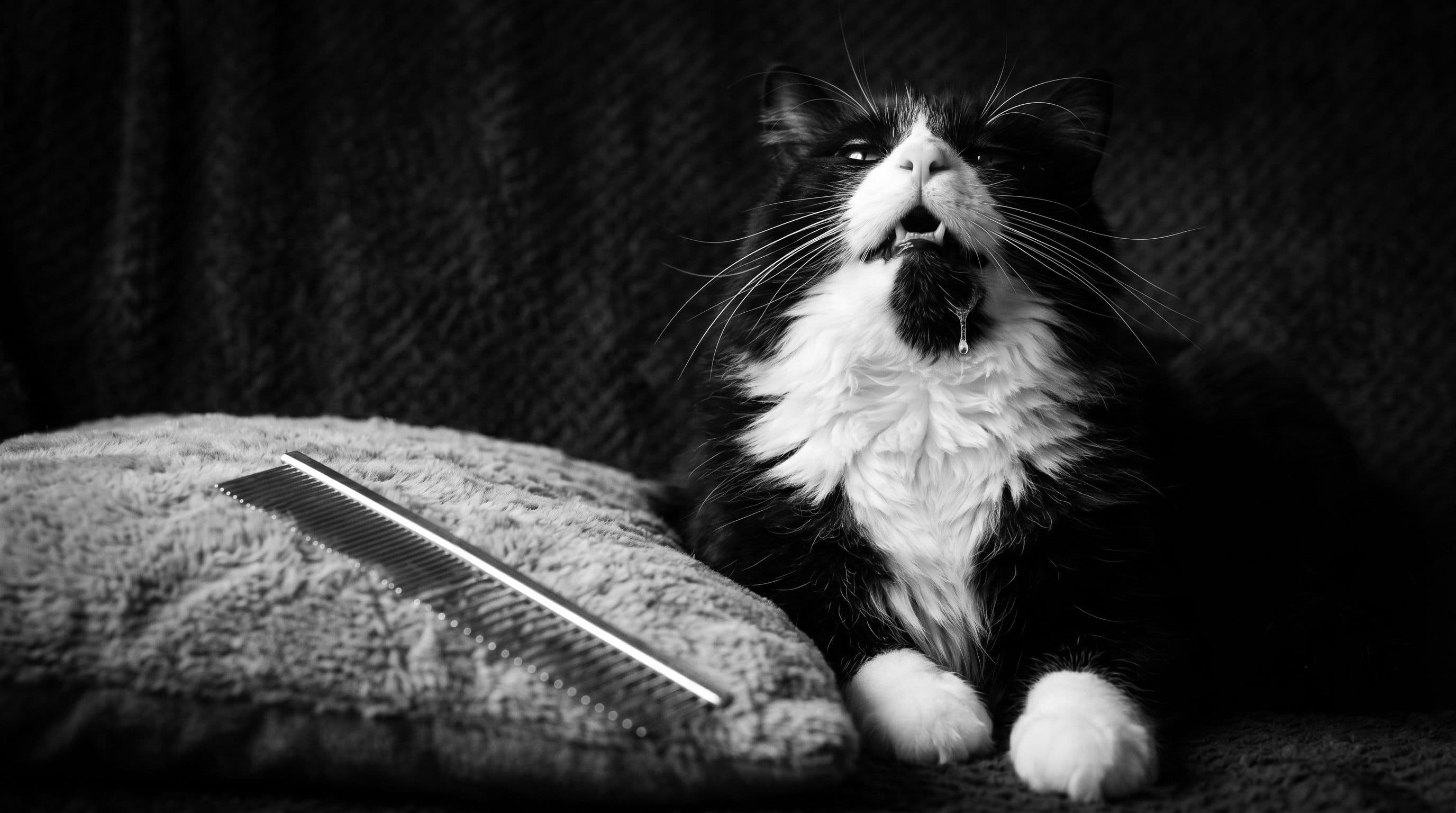
Brushing is a tool. It isn't a solution on its own. The distinction matters, especially for owners of breeds like Maine Coons, Norwegian Forest Cats, and Persians, whose undercoats are dense enough that no amount of combing removes every loose hair before the cat gets to it. Anyone serious about preventing cat furballs long-term needs to look deeper than the surface of the coat.
What Actually Causes Furballs to Form (and Stay)
Here's what I wish someone had told me on that Tuesday morning: the fur is only half the equation. The other half is what happens after ingestion.
Every cat swallows hair when grooming. In a healthy digestive system with adequate motility, that hair moves through the stomach, into the intestines, and out through the litter box without drama. You'd never know it was there. The problem starts when transit slows down. Hair that lingers in the stomach begins to clump. Gastric acids and mucus bind the strands together. The longer the clump sits, the larger and more compact it becomes, until the stomach can't push it forward and the only exit is back the way it came.
Three factors control whether swallowed hair keeps moving or starts accumulating.
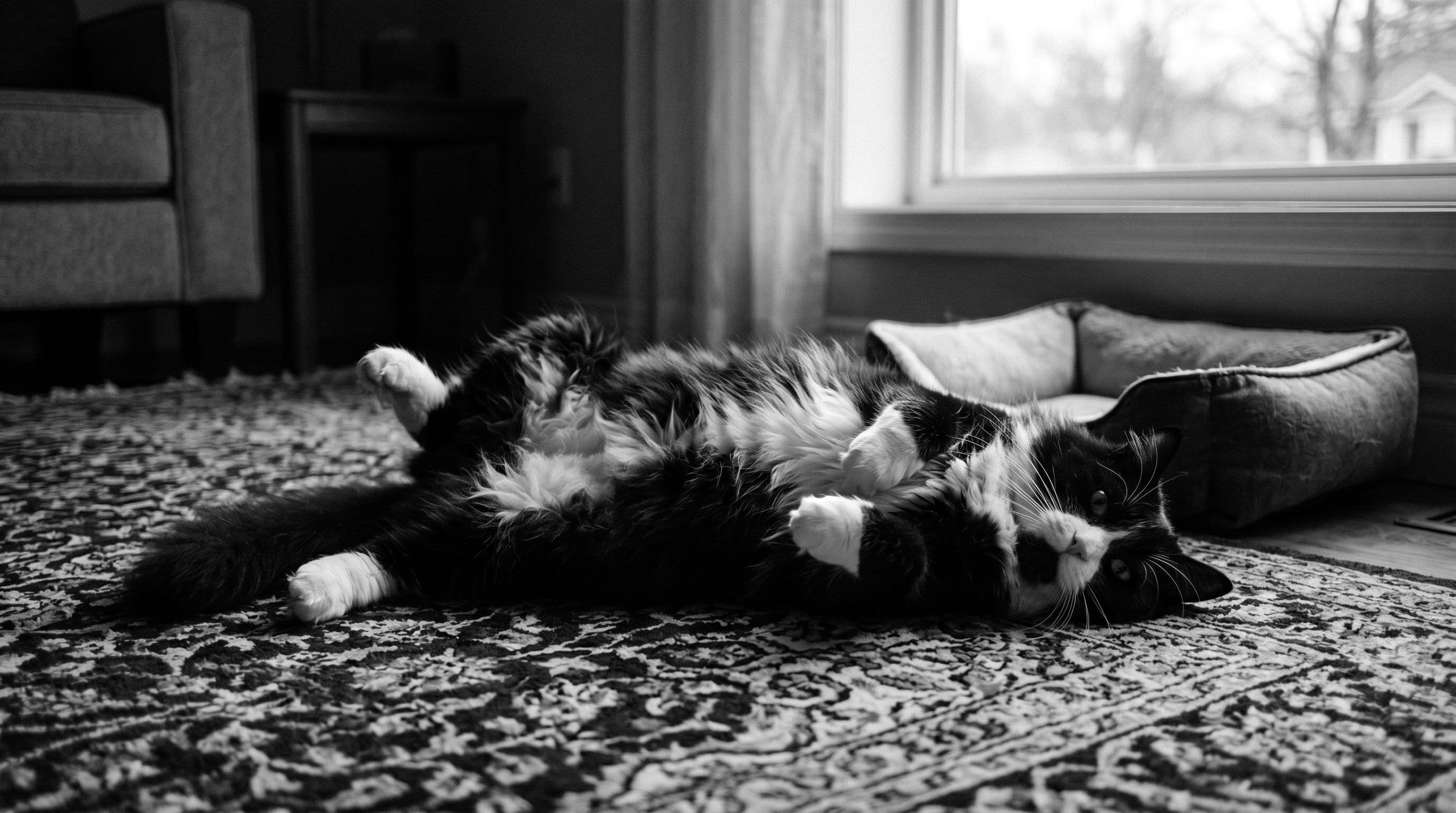
Gut motility. This is the big one. Cats that are sedentary, overweight, or chronically dehydrated tend to have slower gastrointestinal transit. I've noticed this firsthand with Vino during the winter months, when he's less active and spends more time lounging on the radiator shelf than chasing anything. With Vino it's not that he grooms more in those months, it's that he's moving less, and the hair seems to sit in his gut longer as a result.
Hydration. Cats evolved as desert animals. Their thirst drive is notoriously low. A cat eating exclusively dry kibble takes in far less water from its food than one eating wet food, which is mostly moisture. That difference in daily water intake has a direct impact on the consistency and movement of gut contents. Hair passes through a well-hydrated digestive tract far more easily than a dry one.
Dietary fibre. This is the piece most prevention guides either skip entirely or reduce to "add some pumpkin." Fibre does help, but the type matters. Insoluble fibre, the kind found in cellulose and psyllium husk, adds bulk to stool and helps sweep hair through the intestines mechanically. Soluble fibre, like the pectin in pumpkin, absorbs water and forms a gel. Both have roles, but dumping a tablespoon of canned pumpkin into a food bowl isn't a targeted fibre strategy. It's a guess.
When I started thinking about Vino's furballs through this lens of gut transit rather than just chasing loose fur with a comb, the frequency dropped dramatically. I didn't stop brushing. I changed everything else around the brushing. That shift in framework is, I think, the single most important step in genuinely preventing cat furballs rather than merely reacting to them.
Vino as the Case Study: What Actually Changed
I'll walk you through exactly what shifted in our household over the span of about 6 months, because the timeline matters. This wasn't an overnight fix.
When Vino first came home from that biodynamic vineyard in northern Tasmania in April 2022, his diet was mostly dry kibble supplemented with whatever scraps the winery family had given him. He was healthy, energetic, and already grooming with an intensity that suggested he took personal offence at any fur being out of place. Within the first few months, the furballs started showing up: once a week, sometimes twice, always in the worst possible location. The hallway rug. The couch cushion. Once, memorably, on my laptop keyboard.
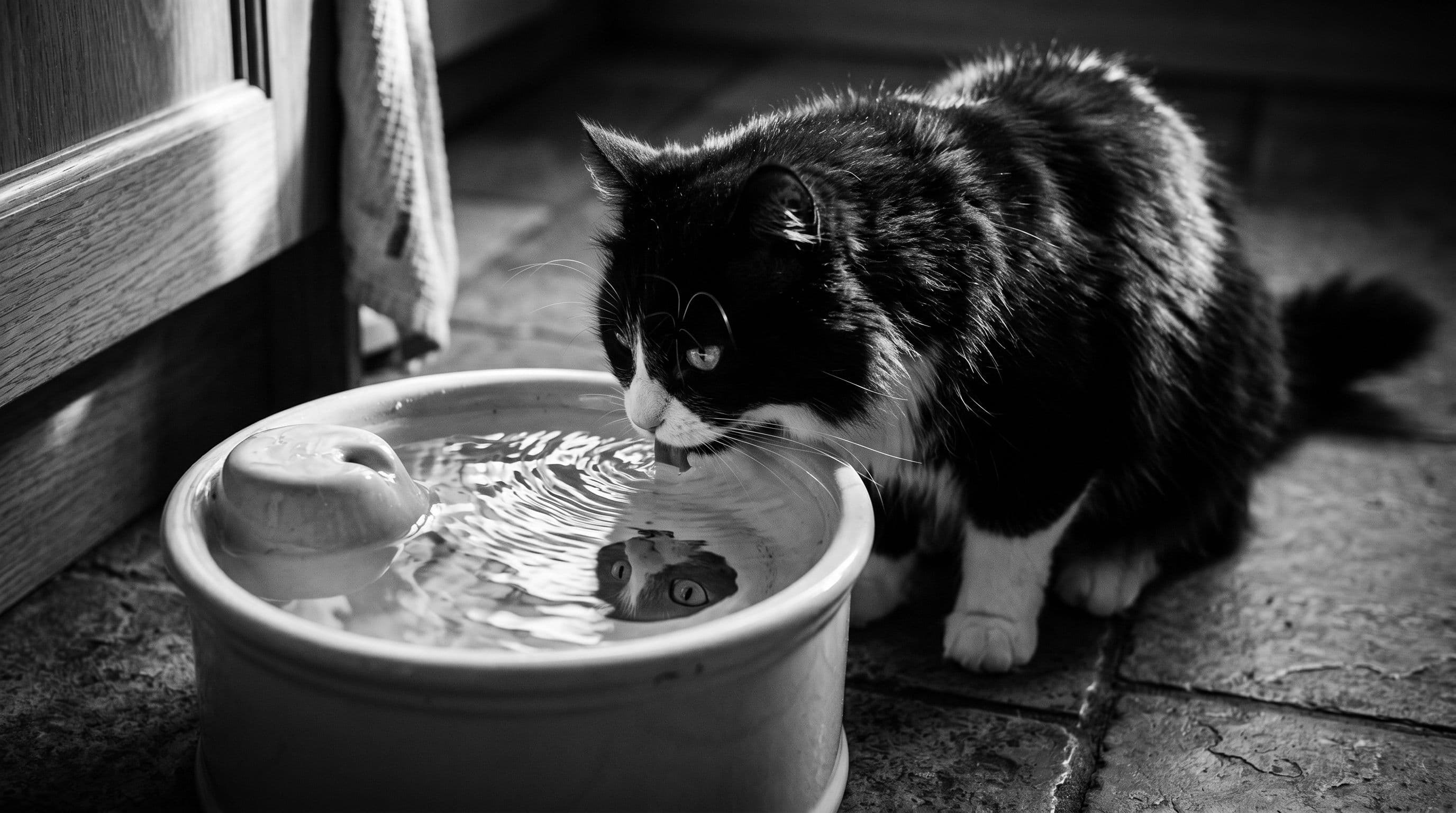
The first thing I changed was his water situation. I'd been using a standard ceramic bowl, filled once daily. Vino drinks a lot of water compared to most cats I've known, but "a lot" relative to baseline feline behaviour is still not much. I added a second water station in a different room and switched to a small ceramic fountain that keeps the water moving. His daily intake went up noticeably; I could tell by how often I was refilling the reservoir. I also started incorporating wet food into his diet, moving from fully dry to a roughly 50/50 split. This alone seemed to reduce episodes, though I wasn't tracking carefully enough in those early weeks to give you a hard number.
The second change was fibre. After doing a fair bit of reading on feline digestive health and talking it over with Vino's vet, I started adding a small amount of psyllium husk powder to Vino's wet food: about a quarter teaspoon per meal, mixed thoroughly. I'd read that some cats reject the texture, but Vino, who has never met a food he didn't immediately try to consume, didn't blink. (If your cat is pickier, starting with an eighth of a teaspoon and building up over two weeks tends to work.)
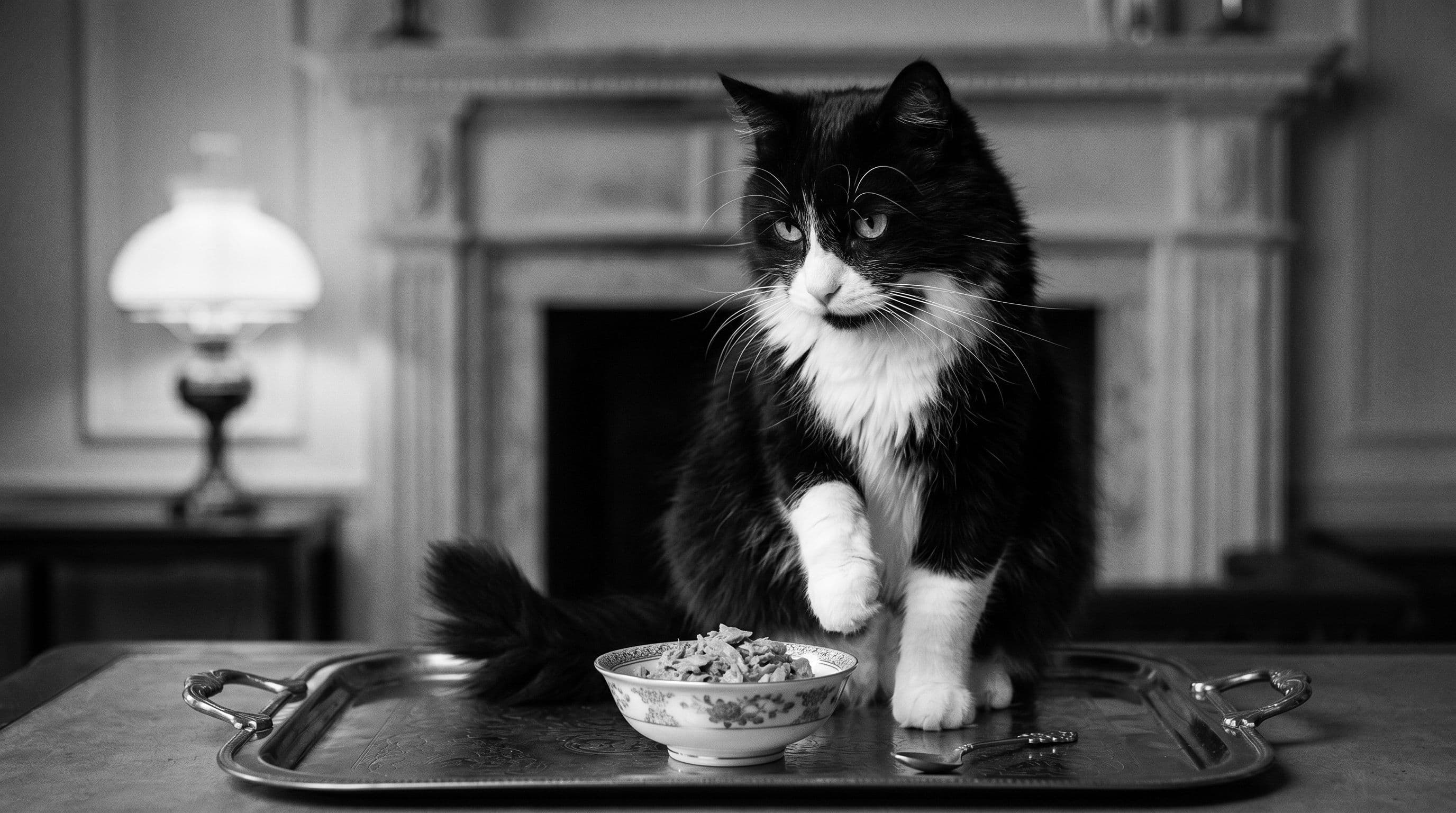
The third piece was activity. He and Zola go outside every afternoon for one to two hours. But I also started being more deliberate about indoor play sessions: 10 to 15 minutes of wand toy time before dinner, specifically targeting that post-grooming window when he's swallowed the most fur. I've seen it firsthand with Vino: physical activity stimulates peristalsis. With Vino, the running and pouncing he does right after a grooming session does seem to help move things along, though that's just what I've observed with him.
And yes, I still brush him. Three to four times a week, focusing on his chest, belly, and the medium-long fur on his back legs. That last area is particularly important for Vino, as I've detailed in the post about his infamous half-bath incidents. The fur there mats easily and traps loose hairs that he'll eventually pull out with his teeth.
The result: we went from roughly 6 to 8 furball episodes per month down to 1 or 2. Some months, zero. That's not a clinical trial. It's one cat in one household. But the change was stark enough that I'm confident in the approach, and the underlying science supports every piece of it.
One specific moment sticks with me. About three months into the new routine, I was at my desk and Vino jumped up to insert himself between me and the keyboard, as he does. He made the telltale pre-vomit heaving sound. I braced. Nothing came up. He swallowed, looked at me with mild irritation as if I'd somehow caused the interruption, and went back to kneading my mousepad. That was the moment I knew the transit-focused approach to preventing cat furballs was working: his system was handling the hair before it could accumulate into something worth ejecting.