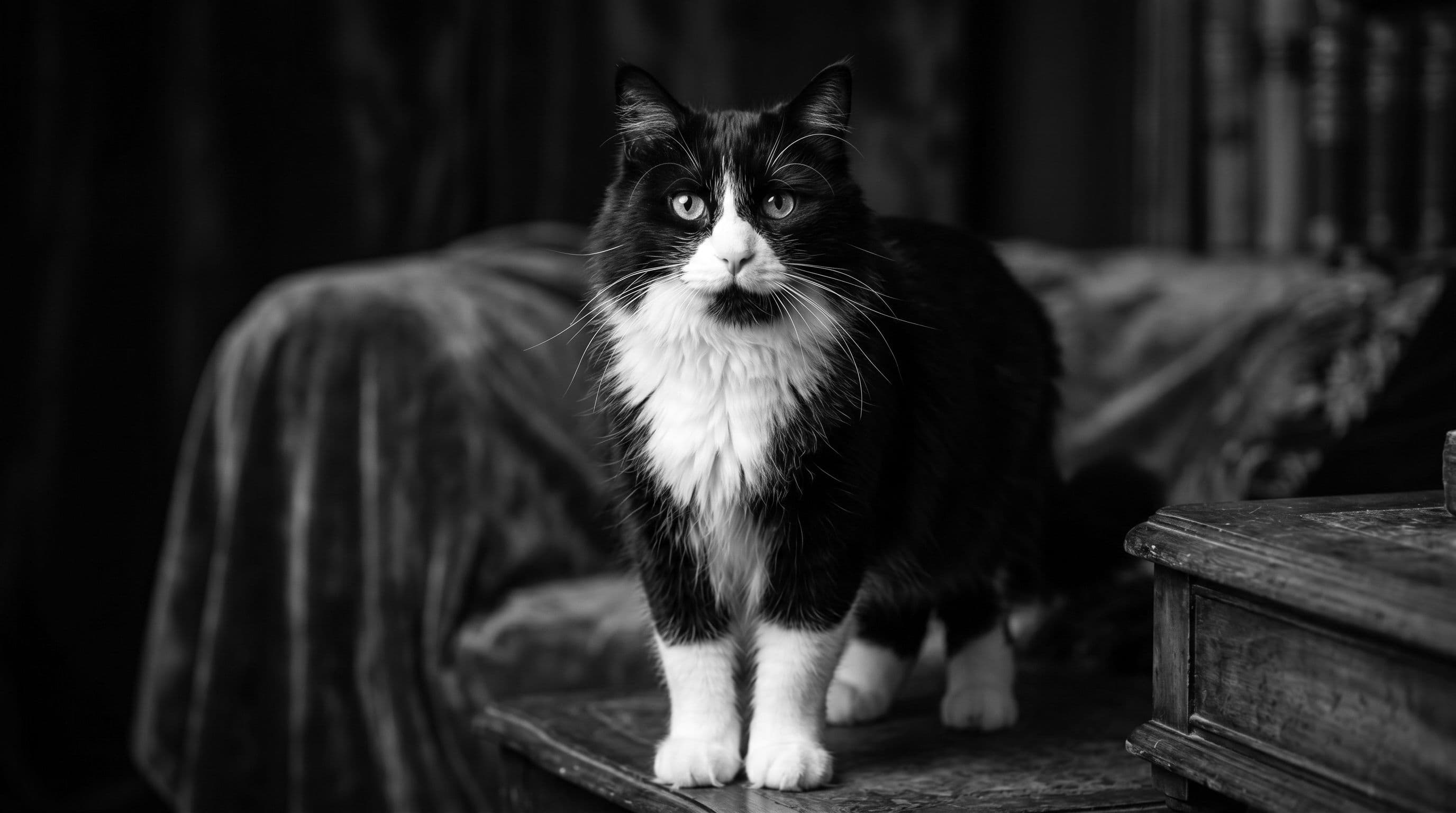
A lot of cat owners in the Vino's Tuxedo Tales community have told me they feed their cats the same kibble regardless of breed, coat length, or activity level. That statistic doesn't surprise me. What surprises me is how confidently the pet food industry encourages it. Finding the best food for tuxedo cats isn't about coat colour genetics; it's about matching nutrition to the specific metabolic and dermatological demands of the individual animal in front of you. Tuxedo isn't a breed. It's a coat pattern that appears across domestic shorthairs, Maine Coons, British Shorthairs, Turkish Angoras, and plenty of moggies with no pedigree papers to speak of. So the real question isn't "what should tuxedo cats eat?" but rather "what does this particular cat, with this particular fur, this particular energy output, and this particular history, actually need?
I landed on that distinction the hard way. Vino came to me in April 2022 from a small biodynamic winery in northern Tasmania, where he'd been catching mice in a barn and eating whatever was put in front of him. He arrived at 5.4 kilograms, lean and muscular from barn work. Then domestic life happened, and he crept up to about 5.8, because Vino has never met a bowl of bikkies he didn't finish in one sitting. We trimmed his portions a little, and the lesson stuck: the feeding chart on the back of the bag assumes a cat with some restraint. Mine has none.
Zola, our other cat, eats the same food. She stops when she's had enough and walks away. Same household, same bowl schedule, same brand. Two completely different appetites. That's what made me stop trusting the back of the bag: the chart assumes the cat handles some of the portion control, and Vino handles none of it.
The "One Size Fits All" Myth: Why Generic Tuxedo Cat Feeding Advice Fails
Most articles ranking for best food for tuxedo cats will tell you something like: "Tuxedo cats need a high-protein diet with quality ingredients." That's technically true in the way that saying "humans need oxygen" is technically true. It doesn't help you make a single practical decision at the pet store.
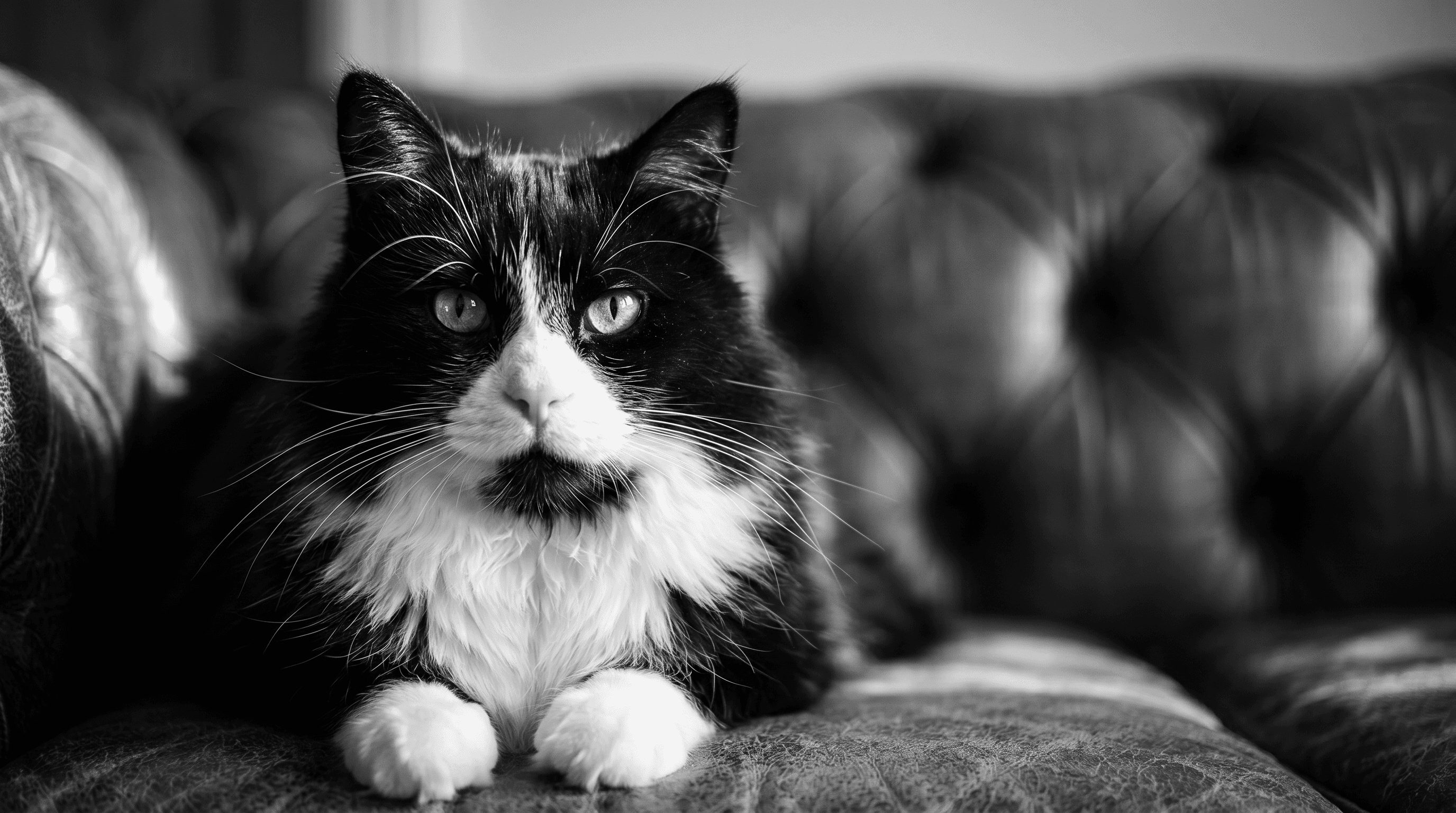
The conventional wisdom treats tuxedo cats as a monolithic group. They aren't. A tuxedo domestic shorthair with a sedentary indoor life has dramatically different caloric needs than a medium-long-haired tuxedo like Vino who spends 1 to 2 hours outside every afternoon chasing birds, antagonising the neighbour's Staffy, and sprinting after Zola through the yard. The Association of American Feed Control Officials (AAFCO) sets minimum nutritional standards, but minimums aren't optimums. They're floors, not ceilings.
Here's what the generic guides also skip: coat maintenance is metabolically expensive. Grooming a longer or denser coat is more physical work, plain and simple, and Vino's is on the denser end. Vino grooms himself extensively. Furballs and the occasional vomit are facts of life in our house. That grooming cycle requires nutritional support that a standard "complete and balanced" kibble doesn't always deliver in sufficient quantities.
The other gap in most advice is caloric density awareness. Premium high-calorie-density foods pack significantly more calories per gram than budget options. If you're free-feeding a calorie-dense food to a cat who'd eat until his stomach physically couldn't hold more, and that cat is Vino, you're going to end up at the vet discussing weight management.
The Mechanism: Protein Source, Fat Ratio, and the Coat-Gut Connection
So what actually drives the difference between a tuxedo cat whose coat gleams and one whose fur looks dull and produces excessive hairballs?
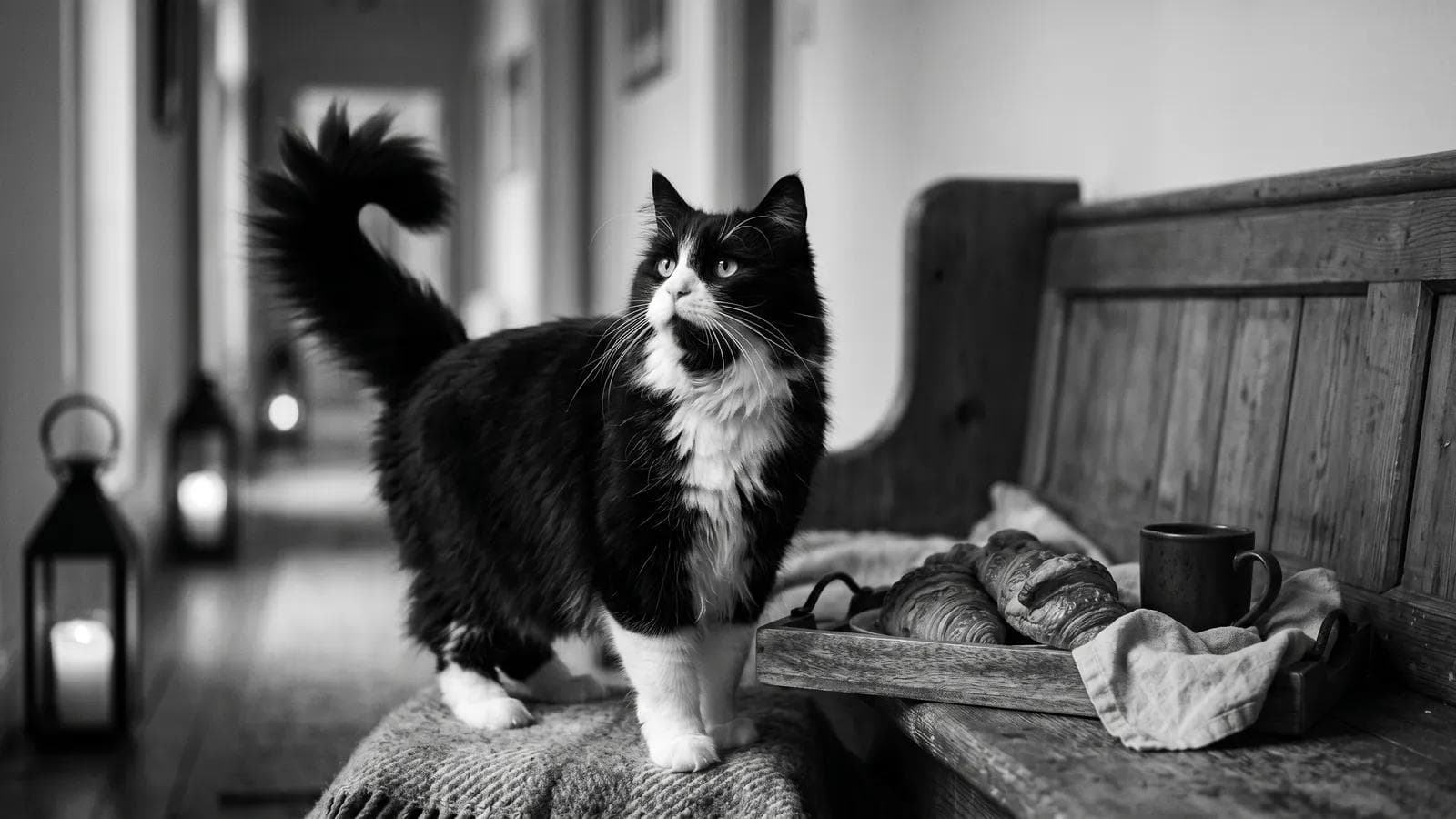
Three things, working in concert.
Protein source matters more than protein percentage. A bag claiming 38% protein from rendered meat meal isn't equivalent to 38% protein from named animal sources like chicken, turkey, or fish. Bioavailability determines how much of that protein your cat can actually absorb and use. I've seen the difference firsthand with Vino: plant-based protein fillers inflate label percentages without delivering the amino acid profile cats need. Taurine, an amino acid cats can't synthesise themselves, is critical for heart function, vision, and coat quality. It's abundant in animal tissue. It's absent in corn gluten meal.
The fat ratio affects the coat directly. Omega-3 and omega-6 fatty acids aren't just marketing buzzwords. Vino's coat is at its absurdly glossy best when his food covers the omega-3 base properly, and the veterinary consensus is consistent: fatty acid supplementation is one of the most reliable ways to improve skin and coat health in cats. For longer-furred cats, this translates to less matting, less excessive shedding, and fewer of those delightful hairball deposits on the bedroom carpet at 3 a.m.
The gut determines everything upstream. If your cat's digestive system can't efficiently process what you're feeding, it doesn't matter how premium the label looks. Cats with sensitive stomachs especially need a transition period of at least 7 to 10 days when switching foods. Abrupt changes cause diarrhoea, vomiting, and a deeply offended cat. I learned this the hard way when I switched Vino from his original kibble to a higher-quality option in a single day. The result involved warm water, patience, and his back legs. I'll spare you the full details, but anyone who's tried to wash something unpleasant out of medium-long cat fur while the cat growls and attempts to flee will understand.
Vino's Diet: The Case Study
Let me lay out exactly what Vino eats and why.
Morning: Wet food. Currently he gets a chicken and lamb recipe, roughly 85 grams per serving, from a brand that uses named meat sources with no grains, fillers, or artificial preservatives. The moisture content sits around 78%, which matters because Vino drinks a lot of water anyway, and cats evolved to get most of their hydration from prey, not from a water dish sitting next to their kibble. I rotate between two different recipes on a roughly monthly basis to prevent him developing a fixation on one flavour and rejecting everything else. He's done that before. It wasn't fun for anyone.
Evening: A smaller portion of wet food, same brand, paired with a measured amount of dry kibble. The kibble is Open Farm's RawMix, which combines kibble with freeze-dried raw pieces. I weigh it: 25 grams, not a gram more. Left to his own devices, Vino would eat until the heat death of the universe.
Treats: Sparingly. He gets freeze-dried chicken treats as rewards or distractions when I need him off my desk during work. Which is constantly. He doesn't wait for an invitation to insert himself between me and my keyboard; he simply arrives, meows, and begins lying across whatever I'm trying to read.

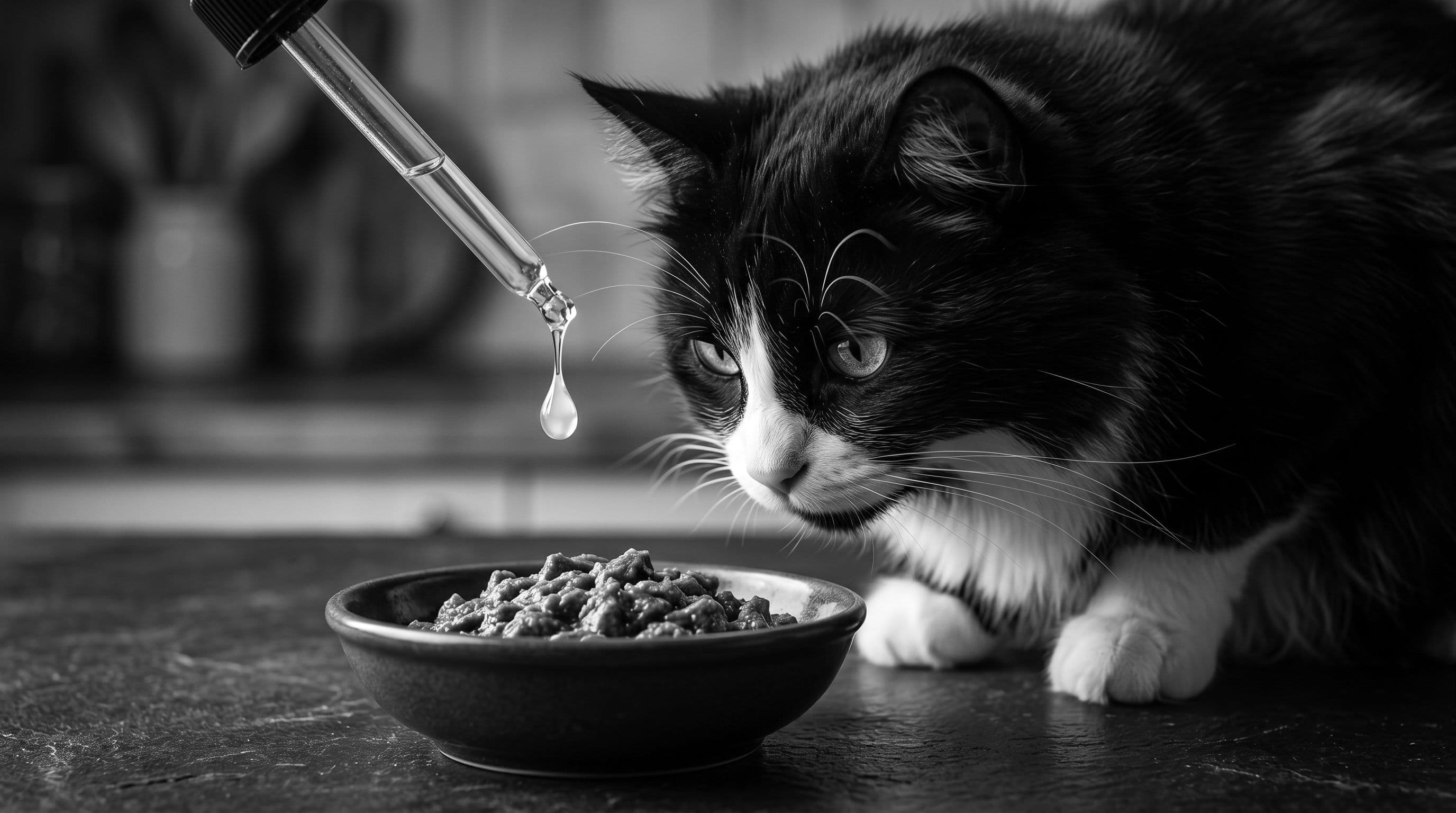
Supplements: I add a small amount of fish oil to his wet food three times a week. About half a millilitre per serving. His coat has noticeably improved since this became the routine. The black portions of his tuxedo pattern carry a deeper sheen, and the white chest fur, that theatrical bib that makes him look like he's permanently dressed for the opera, mats less frequently.
The results: Vino weighed 6 kg at his September 2026 check-up. His energy levels are high, possibly too high, given that his primary hobbies include chasing Zola until she hisses and, at the rural house, lying provocatively near the fence to torment the neighbour's Staffy, and producing a sustained five-second protest meow whenever I don't open the door fast enough.
Zola, for comparison, eats the same brands but in smaller portions, around 70 grams of wet food per serving. She's always been leaner and less food-obsessed. Their dietary overlap is about 80%; the difference is portion control and the fact that Zola has the self-regulation of a monk while Vino has the self-regulation of a Roman senator at a banquet.