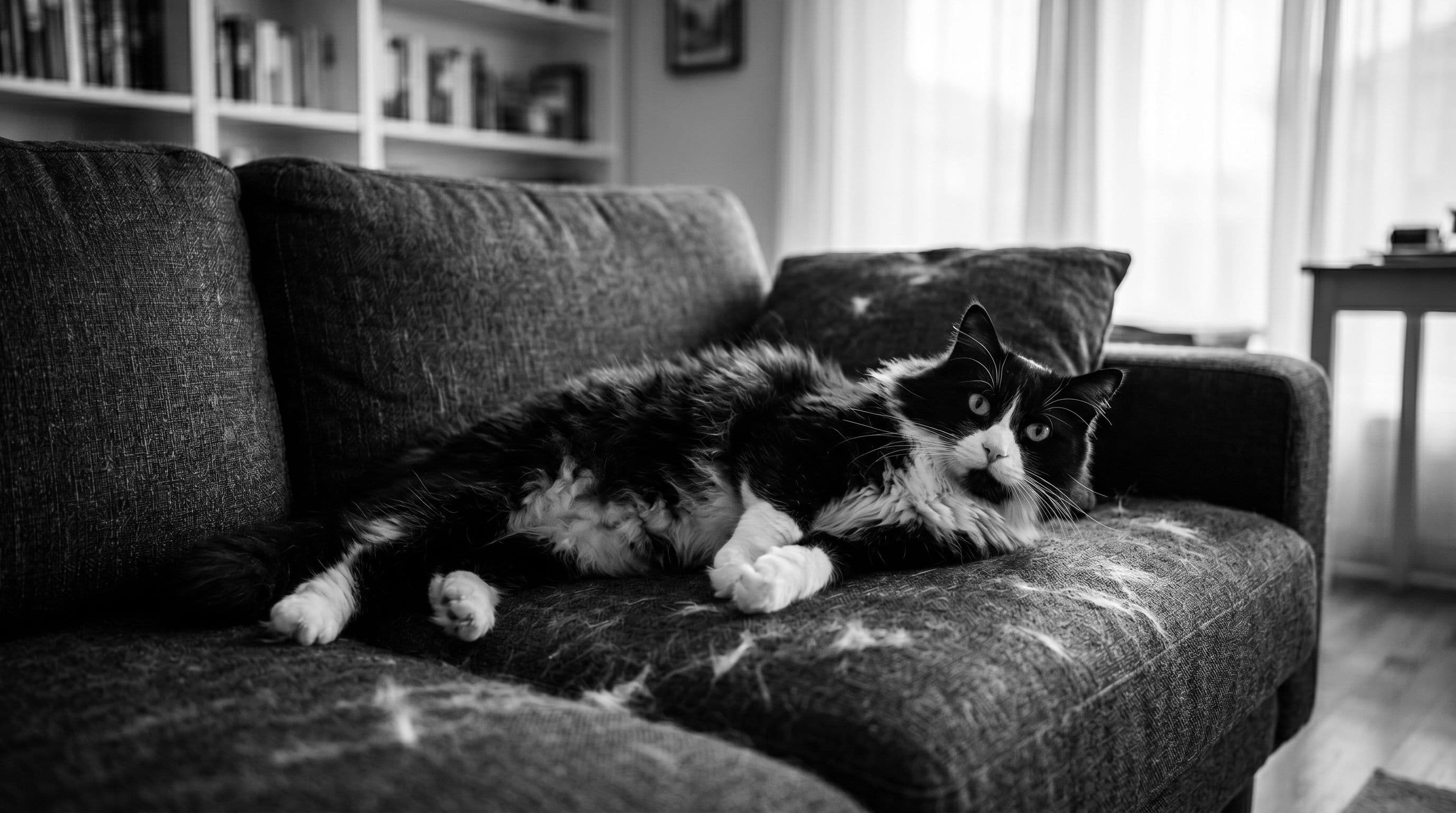
Yes. Tuxedo cats shed, and the pattern has nothing to do with how much.
That's the part most guides get wrong. "Tuxedo" describes a bicolour coat, not a breed, so there's no single shedding profile attached to it. The International Cat Association shows non-pedigree cats, including bicolour and tuxedo-patterned cats, in its Household Pet category, where they're judged on condition, health, and appearance instead of against a breed standard. There's no official shedding metric for a cat like Vino because there's no breed to measure him against. What determines the volume is coat length and undercoat density, and those vary enormously between two cats who both look like they're wearing formalwear.
I've lived with Vino for years. He's a medium-long-furred bicolour cat in northern Tasmania, noticeably longer in the coat than a shorthair without being extreme. Zola, the other cat here, is black, slender, and about 3.9 kg. Same house, same climate, same food. She sheds a fraction of what he does. That contrast is the whole answer in miniature.
Do Tuxedo Cats Shed a Lot?
It depends entirely on the coat underneath the pattern, and for a medium-long coat like Vino's, yes.
The ASPCA puts numbers to the maintenance side of this: long-haired cats living indoors need grooming sessions every few days to remove dead hair and prevent tangles, compared with just one or two brushings a week for short-haired cats. That's a three-to-four-fold difference in handling time, and it tracks exactly with what I do here. Vino gets brushed three times a week as a baseline. Zola gets brushed when she permits it, which is rarely, and nothing bad happens as a result.
So when someone asks whether tuxedo cats shed a lot, the honest answer is a question back: how long is the coat? A shorthaired tuxedo sheds like any other shorthair. Vino sheds like a medium-long-haired cat who happens to be wearing a tuxedo.
The Two-Fur Problem Nobody Warns You About
Here's the part specific to bicolour cats, and it makes a genuine practical difference.
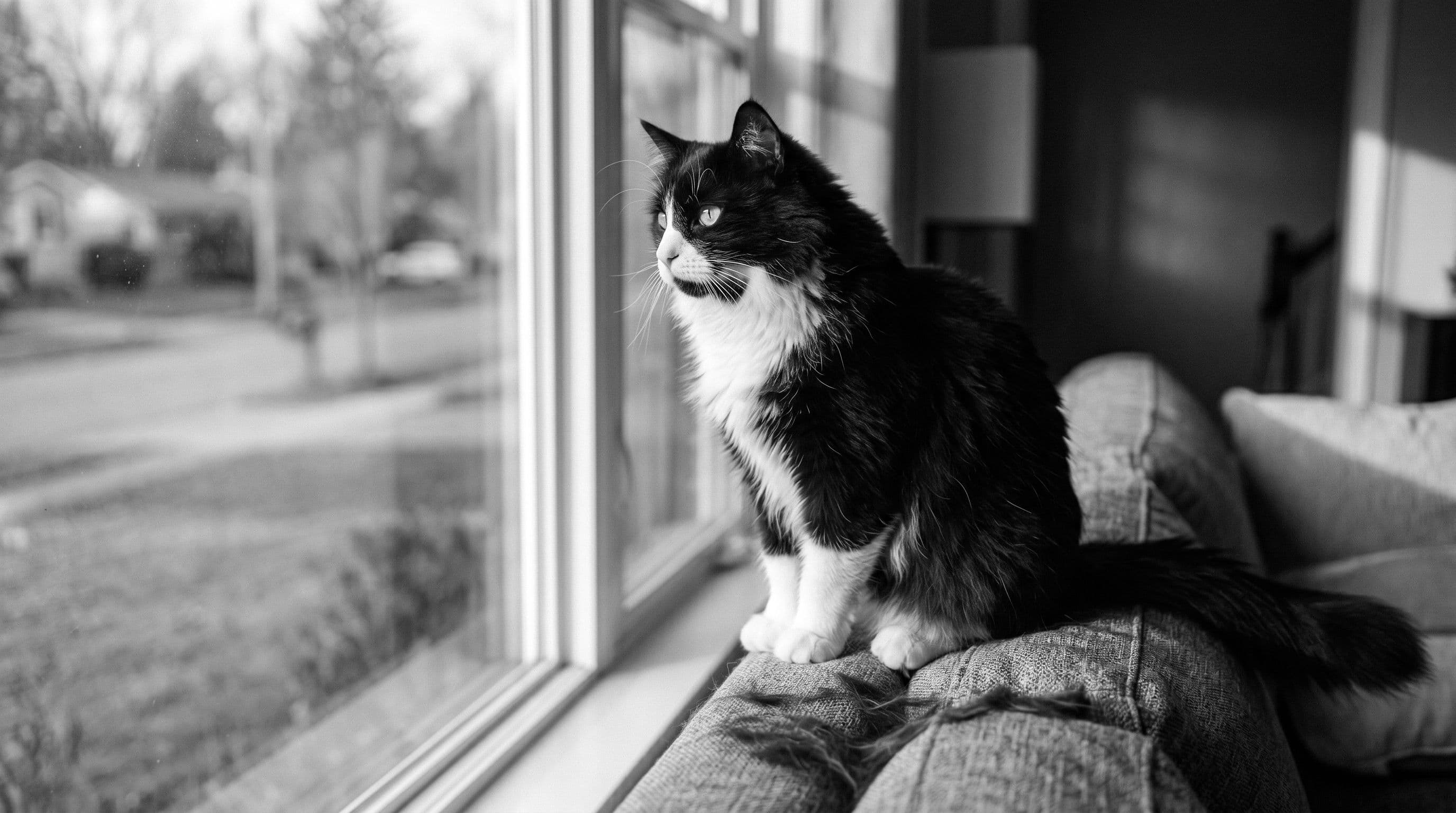
A single-colour cat sheds one type of fur. You adjust once. You pick furniture that hides it and move on. A tuxedo cat sheds two visually distinct fur types from two different body regions, and they behave differently on fabric.
Vino's white chest and belly fur is finer and softer, and it works its way into textiles and stays there. His black fur, which covers his back and sides, is slightly coarser, comes away in larger clumps, and tends to sit on top of a surface instead of embedding in it. One removal technique doesn't handle both well. A sticky roller lifts the black surface fur efficiently and barely touches the white fur woven into upholstery, which needs a fabric brush that generates friction.
The consequence is that no single colour of furniture is safe. Dark fabric shows the white chest fur, light fabric shows the black back fur, and mid-greys show both. There's no clever purchase that solves this. I've stopped trying.
There's an upside, though, which is that the fur is a movement log. I can tell where Vino has been by what colour he left behind and at what height. Zola leaves almost nothing. She could cross a white linen bedspread and leave no evidence at all. Vino can't sit anywhere for thirty seconds without filing a signed confession.
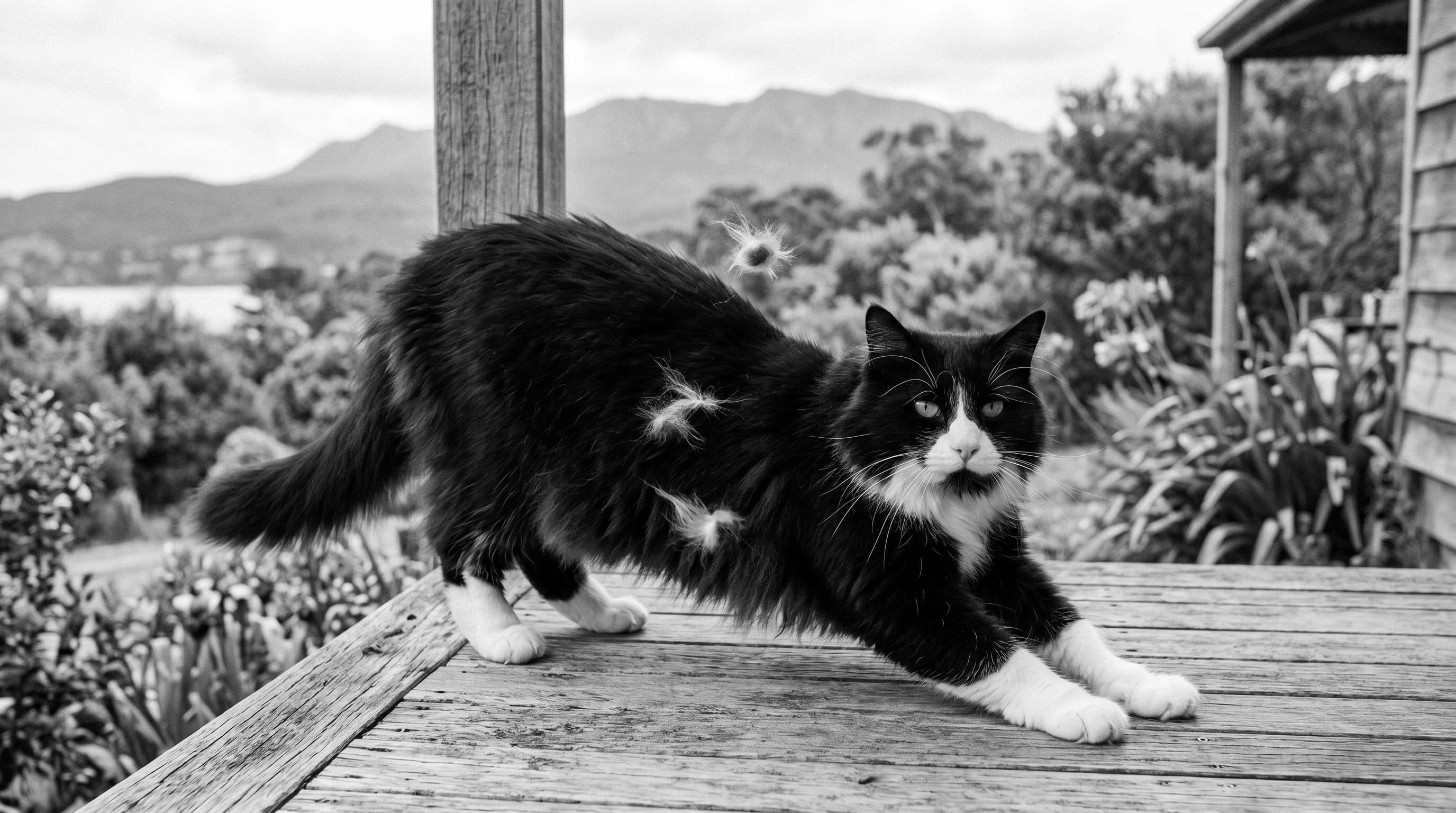
Why Does My Tuxedo Cat Shed So Much?
If the volume has genuinely increased rather than just feeling like a lot, there are a few explanations worth separating, and one of them is a reason to call a vet.
Coat length is doing more work than you think. Longer fur is more visible on surfaces and takes longer to work out of carpet, so a modest increase in coat length produces a much larger increase in perceived shedding. Some of "he sheds so much" is a visibility effect, not a volume one.
Seasonal transition. A concentrated spring shed is normal and self-limiting. It arrives, it peaks over a few weeks, it stops. If the timing lines up with a change of season, that's the likely answer.
Age. This is the one to take seriously. The Cornell Feline Health Center notes that an older cat's skin becomes thinner, less elastic, and has reduced circulation, that older cats groom themselves less effectively and can start to mat as a result, and that a marked increase in shedding is among the signs worth a veterinary visit. A sudden change in an older cat isn't a grooming problem to solve with a better brush. It's a symptom.
Grooming that's stopped working. A cat who was managing their own coat and no longer is has usually had something change, whether that's reach, joint comfort, or interest. Vino grooms his own coat obsessively and furballs are simply a fact of life here, with the occasional vomit that follows. The Cornell Feline Health Center also notes that vomiting is a common sign of inflammatory bowel disease in cats, and that dietary allergens can play a role, which is why vets sometimes recommend a food trial with a hypoallergenic diet. Occasional furballs in a long-coated cat are ordinary. A pattern of vomiting is a conversation with a vet, not a grooming adjustment.
One more thing worth flagging, because it catches people out with exactly this coat type. A 2010 study by Courcier and colleagues on feline obesity in a Glasgow veterinary practice found that owners were more likely to misjudge their cat's body condition when the cat was long-haired. A dense coat hides the body underneath it. If you're brushing a lot of fur off a cat you haven't put hands on properly in a while, it's worth checking what's under there at the same time.
The Spring Peak Is Not "Moderate"
Tasmania is in the Southern Hemisphere, so spring runs from September, and the temperature swings here are wide. It can be single digits at dawn when the rooster starts up and close to twenty by mid-afternoon when Vino and Zola go out for their hour or two in the yard.
Through the peak weeks, Vino's shed stops being a background condition and becomes a daily job. I go from three brushes a week to one every day. His undercoat loosens first, so soft pale tufts start turning up in places no fur should be, and then the outer coat follows and there's black fur on every light surface in the house.
The practical move is to increase brushing before you see the evidence rather than after. If I lift the frequency as the season turns, the loose undercoat is already thinned out by the time the peak arrives. It doesn't eliminate the peak. It flattens it.

Tools: What Actually Worked on a Medium-Long Coat
I've been through a rotation of grooming tools with Vino and most of them were disappointing.
A basic plastic slicker brush skimmed the surface and left the undercoat untouched, which on a medium-long coat means it did almost nothing. A rubber grooming glove was pleasant for him and removed a fraction of what a proper session should. A fine-toothed metal comb worked well on his belly and pulled at the denser fur across his back, and he told me about it with the protest meow: one sustained note, same tone, same volume, held for five seconds or more. Not a question. A statement of grievance.
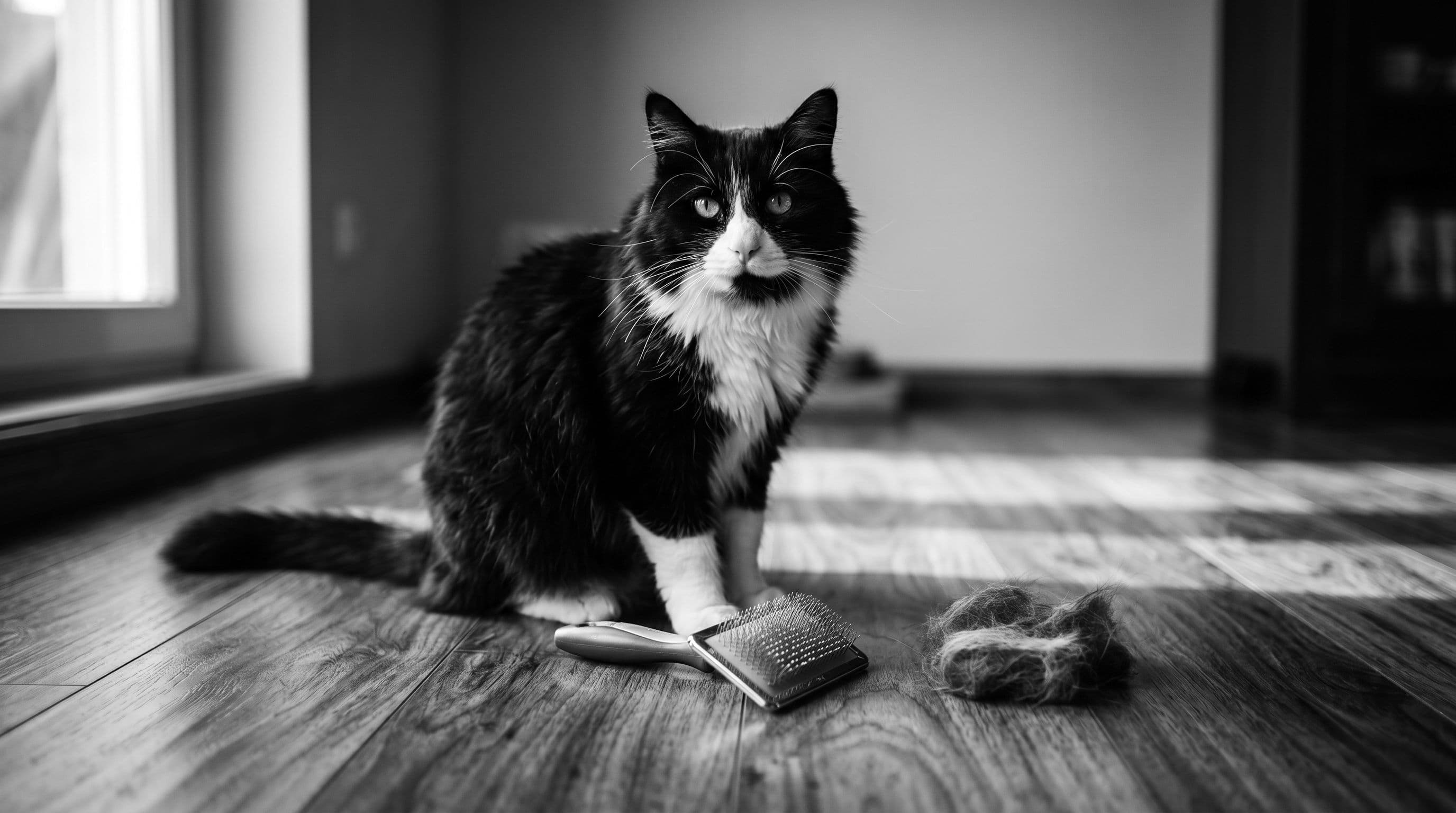
What finally worked was an undercoat deshedding tool sized for a medium cat with long hair. The technique mattered more than the purchase. Almost no pressure, a slow stroke, and no more than two passes over the same patch, because leaning on one of these shreds the topcoat instead of lifting the loose undercoat. On a black-and-white cat that damage shows up quickly as a dull brownish cast across the dark fur.
Vino is entirely sold on it. He starts drooling within a couple of minutes, which is his standard signal for contentment, and he leans into the strokes. He's most enthusiastic about his chin and the white chest that forms the natural bow tie against his black chin and shoulders. One ten-minute session with the right tool lifts more loose fur than three sessions with the slicker brush did.
Worth saying clearly: the ASPCA's position is that cats come well equipped with built-in grooming tools to handle their own hair care, and recommends bathing only if a cat gets very dirty or into something sticky or smelly. Brushing is the intervention. Bathing generally isn't, and in this house it's a last resort reserved for when Vino's back-leg fur has caught something it shouldn't have. He hates water, he growls and fights the entire time, and the gap between his usual dignity and a forced half-bath is total.
How Much Do Tuxedo Cats Shed Compared to Other Coat Patterns?
Coat colour and pattern don't determine shedding volume. Coat length and undercoat density do.
Vino sheds more than a shorthaired tuxedo would because his medium-long fur carries a denser undercoat. What the bicolour pattern changes is visibility, not volume: you'll find both black and white hairs on every surface regardless of what colour that surface is, so the same amount of fur reads as more.
This is why comparing yourself to another tuxedo owner online is close to useless. You're not comparing the same cat. You're comparing two coat lengths that happen to share a colour scheme.
Does Going Outside Change Tuxedo Cat Shedding?
Vino isn't an indoor-only cat. He and Zola go out every afternoon before dinner for an hour or two, sometimes in the morning as well, and he'll occasionally clear the fence and disappear into the bush for a while.
That outdoor access means his coat gets the full seasonal light cycle instead of a smoothed-out indoor version of it, and his shed is correspondingly sharper and more concentrated in spring rather than spread evenly across the year. A cat kept fully indoors under artificial light and climate control tends to shed lower-grade all year instead of in a hard seasonal burst. The annual total doesn't change much. The distribution does.
Indoors, he divides his time between sun patches by the windows, the cat tower, the desk while I'm trying to use it, and my lap. Every one of those is a fur deposit site, and the sunny ones are the worst, because warmth plus grooming is where loose fur actually comes free.
What's the Best Way to Manage Tuxedo Cat Shedding at Home?
Three things, in order of how much difference they make.
Brush on a schedule instead of in response to mess. For a medium-long coat that means every few days as a baseline and daily through the seasonal peak, which matches the ASPCA's guidance for long-haired indoor cats. Reacting to fur on the couch means you're always behind it.
Use the right tool with almost no pressure. An undercoat deshedding tool lifts what a slicker brush leaves behind, but only if you let it do the work. Pressure damages the topcoat, and on a bicolour cat that damage is visible.
Keep two removal methods for fabric, because the fine white belly fur and the coarser black back fur don't come off the same way.
And if the volume changes suddenly, particularly in an older cat, treat it as a health question before a grooming one. That's the one situation where a better brush is the wrong answer.
Frequently Asked
Related reading: Best Food for Tuxedo Cats: Diet Guide for Optimal Health.
Related reading: What Do Tuxedo Cats Eat? Here's What Works for Vino.
Do Tuxedo Cats Shed More in Spring?
Yes, and Vino's coat keeps its own calendar. Here in northern Tasmania, the moment the days stretch out, his undercoat lets go in clumps. I'll brush him on a Tuesday, fill half a shopping bag, and by Friday the hallway has tumbleweeds again. Zola, same house, same sunlight, barely drops a hair.
> Vino's official ruling: Tuxedo cats shed year-round, with a heavy coat blow in spring and a smaller one in autumn. The pattern is decoration. The coat length and undercoat underneath it decide how much fur ends up on your couch.
[PHOTO: Vino lying in a sun patch by the kitchen window mid-spring, loose tufts of black and white undercoat visible on the floorboards beside him]
Winter Vino is a different animal to summer Vino. The winter coat is dense enough that he looks a full kilo heavier than his actual 6 kg. Then spring arrives and he spends his afternoon yard sessions getting groomed by me instead of sitting majestically, which he tolerates because the chin and chest work is involved.
How I Keep Vino's Shedding Manageable
The routine here is simple and non-negotiable, because Vino's medium-long fur does not forgive neglect. Three brushing sessions a week as a baseline, daily during the spring blow. He leans into the brush the moment it hits his chin and mane, drooling the whole time, which is its own cleanup job. If you want the full breakdown of tools and technique, I've written up our complete grooming routine for a medium-long-haired tuxedo cat separately.
[PHOTO: Vino stretched on the couch being brushed under the chin, eyes half closed, a small bead of drool on his lower lip]
Two things I'd tell anyone bringing home a long-coated tuxedo. First, furballs are a fact of life with a cat who grooms this extensively; the occasional vomit on the rug is the tax you pay. Second, keep the coat brushed and you reduce the odds of the half-bath, which is what happens when the long fur on his back legs catches something it shouldn't have. Warm water, a growling cat, total loss of dignity on both sides. Prevention wins.
The rest is environment. Vino gets one to two hours outside every afternoon, and a cat who burns energy chasing Zola around the yard and working through the activities in our indoor cat enrichment setup seems to groom himself more calmly rather than obsessively. I have no lab data on that. I have years of watching him.
[PHOTO: Vino sitting on elevated ground near the chicken flock, coat gleaming, pretending to ignore the rooster]
Do Tuxedo Cats Shed More Than Other Cats?
No. Shedding volume comes from coat length and undercoat density, not the bicolour pattern. A shorthaired tuxedo sheds like any shorthair. Vino sheds heavily because he's medium-long with a dense undercoat; Zola, in the same house, sheds a fraction of it.
Are Tuxedo Cats Hypoallergenic?
No cat is truly hypoallergenic, and tuxedo cats carry no special exemption. The allergens live in saliva and skin, and a cat like Vino who grooms constantly spreads them through his coat regardless of colour. If allergies are a concern, spend time with the actual cat before committing.
How Often Should You Brush a Tuxedo Cat?
Match the coat, not the pattern. Shorthaired tuxedos manage on one or two sessions a week. A medium-long coat like Vino's needs three sessions a week at minimum, stepping up to daily when the spring coat lets go. Skip it and you'll meet the furballs, the tangles, and eventually the half-bath.
What Vino's Black-and-White Coat Actually Leaves Behind
The morning I found Vino's top left canine hanging loose, I wasn't looking at his teeth. I was brushing him through his usual window-patrol-to-breakfast transition, and the brush came away with enough black-and-white fur to knit a small villain. The tooth was a separate discovery, noted and scheduled for removal at a cost of AUD $3,200. Sixteen teeth remain. The shedding continues uninterrupted.
That brush is the same one I've used since he arrived from the winery: a simple slicker, nothing motorized or ergonomic. One brush, two cats, radically different results. The contrast is the entire answer to whether tuxedo cats shed.
Do Tuxedo Cats Shed a Lot?
It depends entirely on the coat underneath the pattern. A tuxedo is a colour distribution, not a breed, so the shedding profile is determined by fur length and undercoat density. Vino's medium-long coat, noticeably longer than a shorthair without being extreme, produces substantially more loose hair than Zola's sleek black coat at 3.9 kg. Same house, same climate, same diet. Different outcomes entirely.
For maintenance, long-haired cats need grooming every few days to remove dead hair and prevent tangles, while short-haired cats manage with one or two brushings weekly. That three-to-four-fold difference in time commitment tracks precisely with my household routine. Vino gets brushed three times weekly as baseline. Zola gets brushed when she permits it, which is rarely, with no consequence.
A shorthaired tuxedo sheds like any shorthair. Vino sheds like a medium-long-haired cat who happens to wear formal attire.
The Two-Fur Problem Nobody Warns You About
Here's the part specific to bicolour cats: the shed hair is visually louder. Black fur on white upholstery. White fur on black clothing. Vino's formalwear creates a two-tone debris field that a solid-coloured cat simply cannot match. I've found his white chest hairs on my navy blazer and his black back hairs on my fiancée's cream throw in the same afternoon. The volume is one matter; the visibility is another.
The knots form predictably: under the arms, under the chin, anywhere the longer fur rubs against itself during Vino's insistence on inserting himself into whatever I am doing. He does not wait to be invited. He walks between my legs, jumps onto whatever I am reaching for, and the friction creates tangles that a shorthair would never develop.
Vino's Verdict
| Factor | Vino's Official Ruling |
|--------|------------------------|
| Shedding volume | Medium-high; demands consistent brushing |
| Visual impact | High; two-tone fur announces itself everywhere |
| Grooming frequency | Three times weekly minimum |
| Zola comparison | She sheds a fraction; I shed a statement |
| Human preparation | Dark furniture helps; light furniture confesses |
His documented reaction to brushing: immediate purring, immediate drooling, immediate attempt to insert his head more firmly into the brush. He does not tolerate maintenance; he demands it as attention.
The Expensive Lesson
The AUD $3,200 dental work taught me nothing about shedding directly, but it taught me about scheduled maintenance versus crisis response. I now brush Vino's coat with the same regularity I should have applied to inspecting his teeth. The brush costs nothing; the lesson cost dearly. Neglecting either coat or teeth produces avoidable expense and discomfort.
Frequently Asked Questions
How often should I brush a tuxedo cat?
Match the schedule to the coat length, not the pattern. For a medium-long coat like Vino's, three times weekly removes dead hair before it mats. For a shorthaired tuxedo, once or twice weekly suffices. Watch the problem areas: under the arms, under the chin, anywhere friction concentrates.
Does tuxedo cat fur show more on furniture?
The bicolour pattern creates a two-tone shedding profile that solid colours cannot replicate. Black fur on light surfaces, white fur on dark surfaces: Vino's formalwear produces visible evidence regardless of your décor choices. My fiancée's cream throw and my navy blazer have both served as exhibition spaces.
Will shaving reduce shedding?
Shaving a cat to reduce shedding addresses the symptom while creating new problems. Vino's medium-long coat regulates his temperature and protects his skin. The proper intervention is consistent brushing with the right tool: one simple slicker brush, used regularly, removes loose undercoat before it disperses through the house.