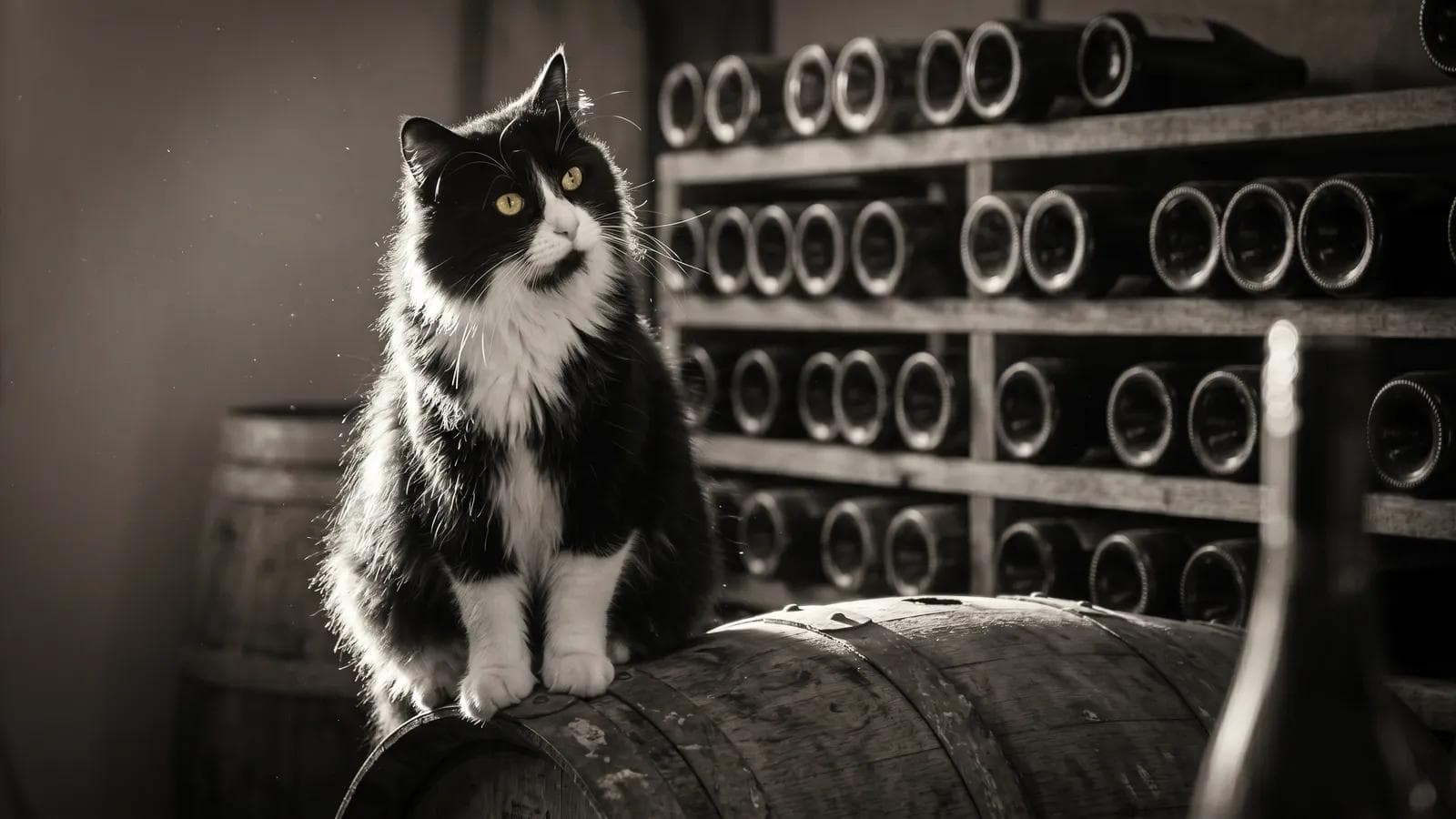
Vino's Complete Guide to the Morning Sunbeam
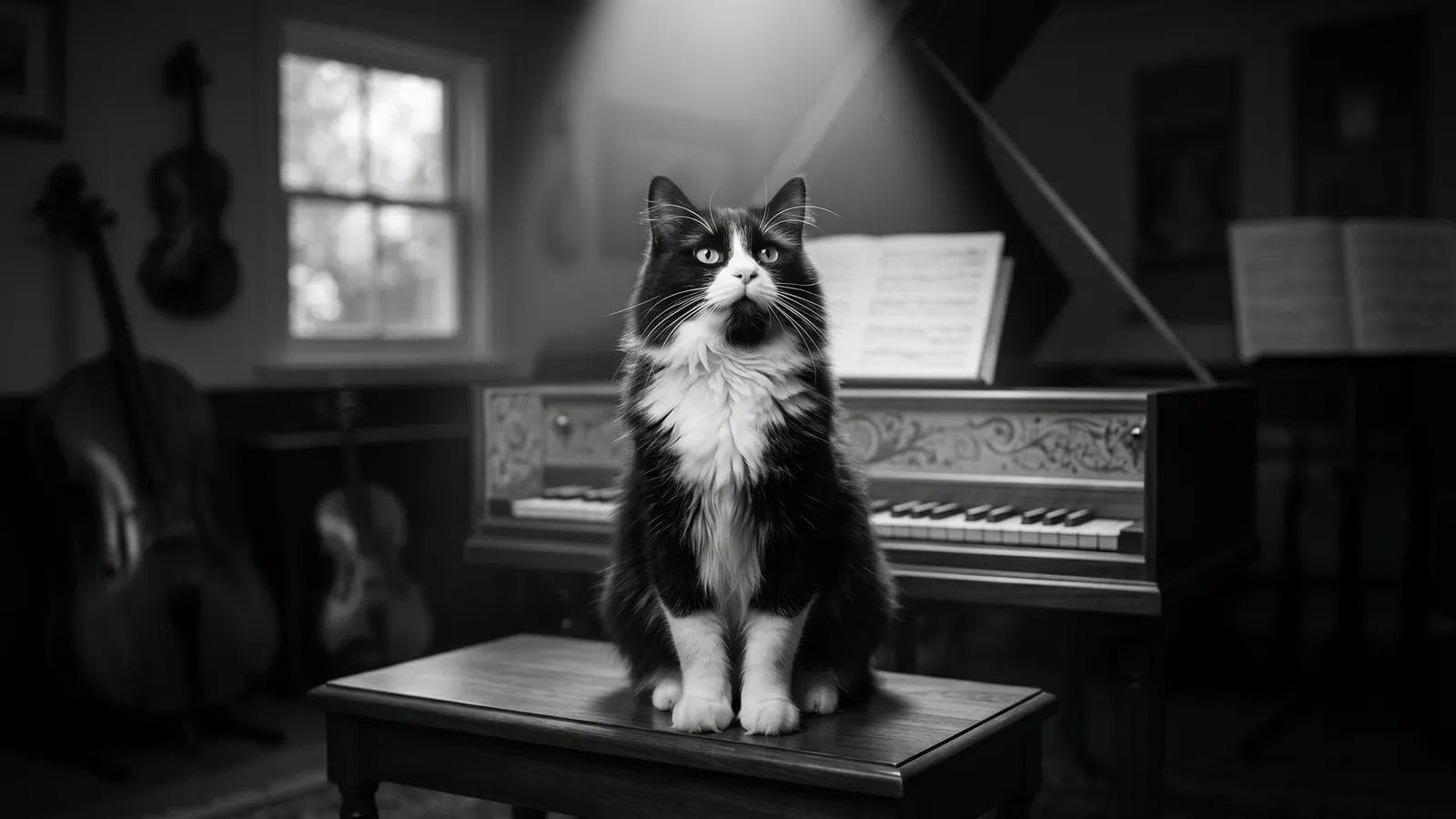
The rooster goes first. That part is non-negotiable. Then, in the precise interval between the last note of the crow and silence settling back over our home, Viniferous "The Mischievous" Messiah lands on the bedside table with the considered weight of someone who has places to be and a human who is sleeping through his obligations.
The meow that follows is not a request.
This is how mornings begin in our household, and it is how they have always begun. The rooster provides the signal. Vino provides the instruction. I provide breakfast. The system is elegant in its simplicity, even if I occasionally fail to appreciate this.
What unfolds after breakfast is a subject Vino has spent years refining into something approaching a discipline. The morning sunbeam is not, as some households apparently believe, merely a warm patch on the floor where a cat happens to sit. It is an environment to be evaluated, claimed, and inhabited with intention. There is a protocol. Vino is its foremost practitioner.
This is his guide.
The Morning Light Assessment: Why Position Is Everything
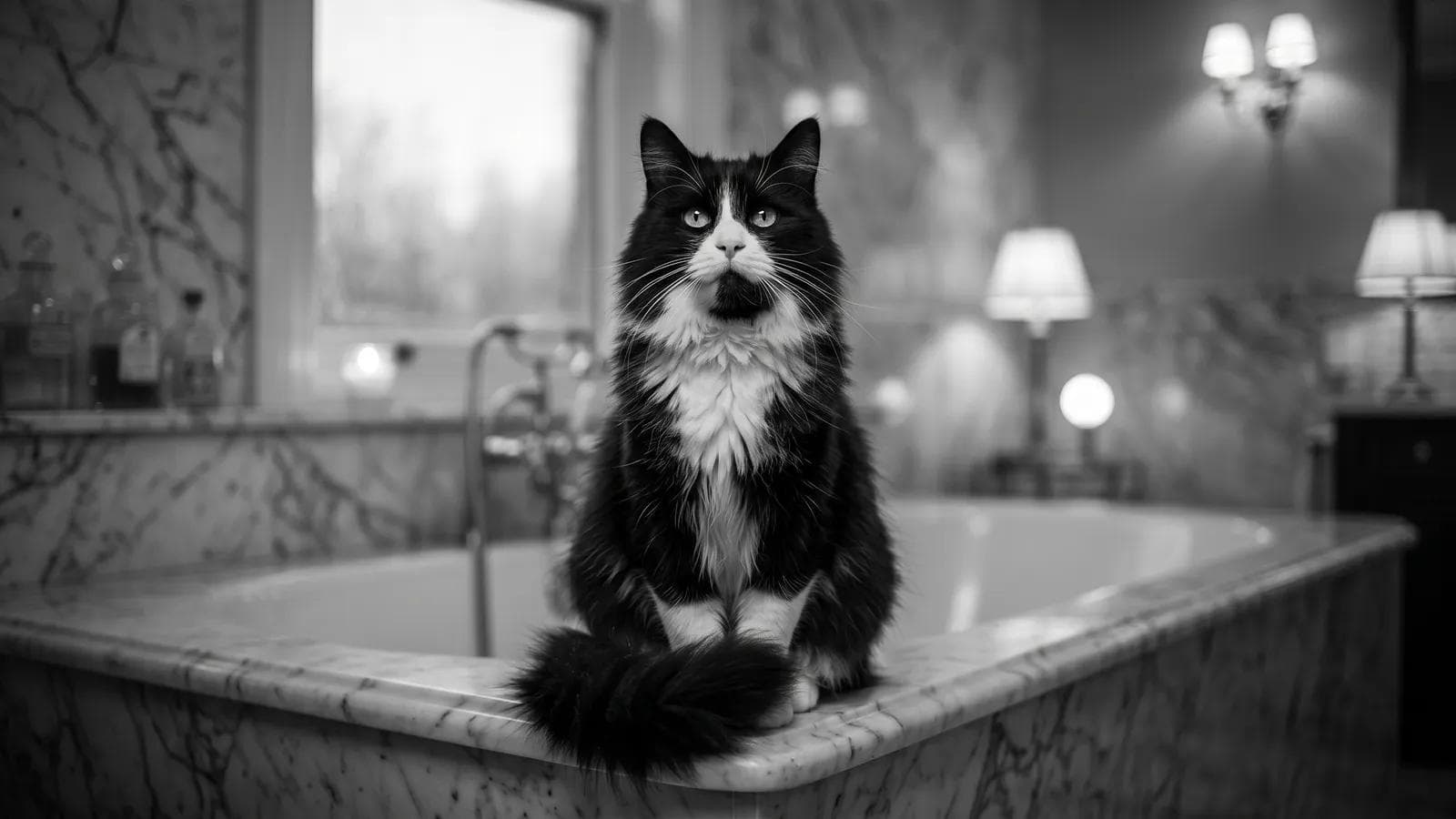
By the time breakfast is concluded and the first proper light is finding its way through the windows, Vino has already begun the evaluation. This is not something a casual observer would notice. It looks, from certain angles, like a cat sitting very still and staring at a wall. It is not.
The qualities under review are specific. The angle of incidence matters: a low winter sun cuts across the floor at a different trajectory than the higher summer light, and the warmth delivered is not equivalent. The duration matters too, because a patch that disappears behind a curtain in twenty minutes is not a patch worth committing to. The absence of foot traffic matters. The proximity to the food bowl matters rather less than the proximity to a comfortable exit.
Vino has mapped every sunbeam in our home across the seasons. This is known not because he has provided documentation, but because the evidence is behavioural: he moves before he needs to. A patch begins to fade and Vino is already elsewhere, rearranged in a new shaft of light with the quiet satisfaction of someone who has been three steps ahead the entire time.
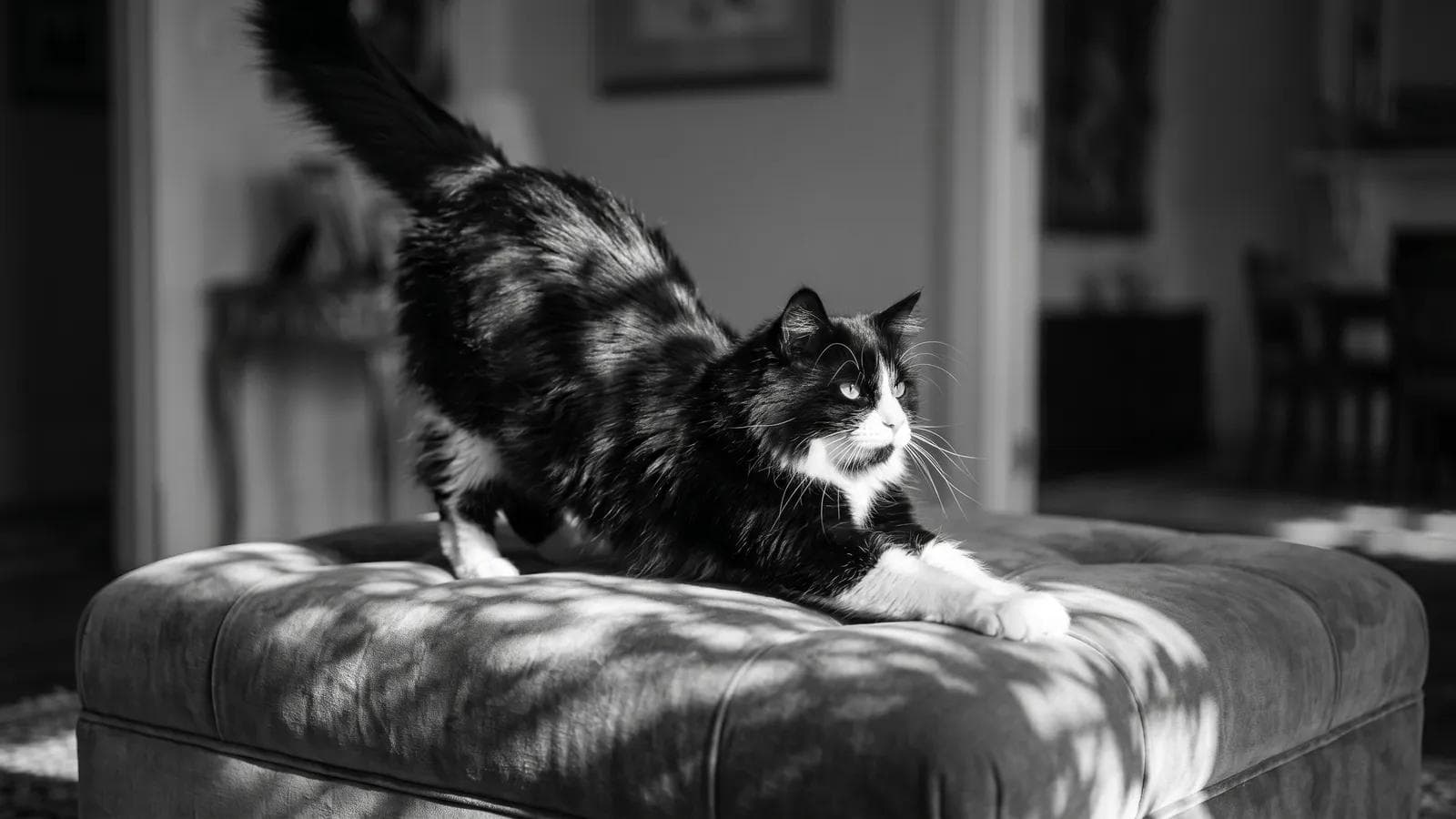
The preferred positions shift through the year. In summer, the kitchen floor catches the morning light through the east window, and Vino can frequently be found there in the first hour of the day, sprawled with the particular bonelessness of a cat who has absolutely nowhere to be and multiple hours in which to not be there. In cooler months the lounge becomes primary territory, the light lower and longer, the warmth more considered. There is a specific patch at the base of the armchair that receives approximately ninety minutes of good direct sun on clear winter mornings. Vino has not shared how he knows this. He simply knows.
The assessment, it should be noted, is conducted silently. The only meowing during this portion of the morning is the kind directed at me when I'm standing somewhere I'm not supposed to be, which is most places.
The Outdoor Thermal Appointment
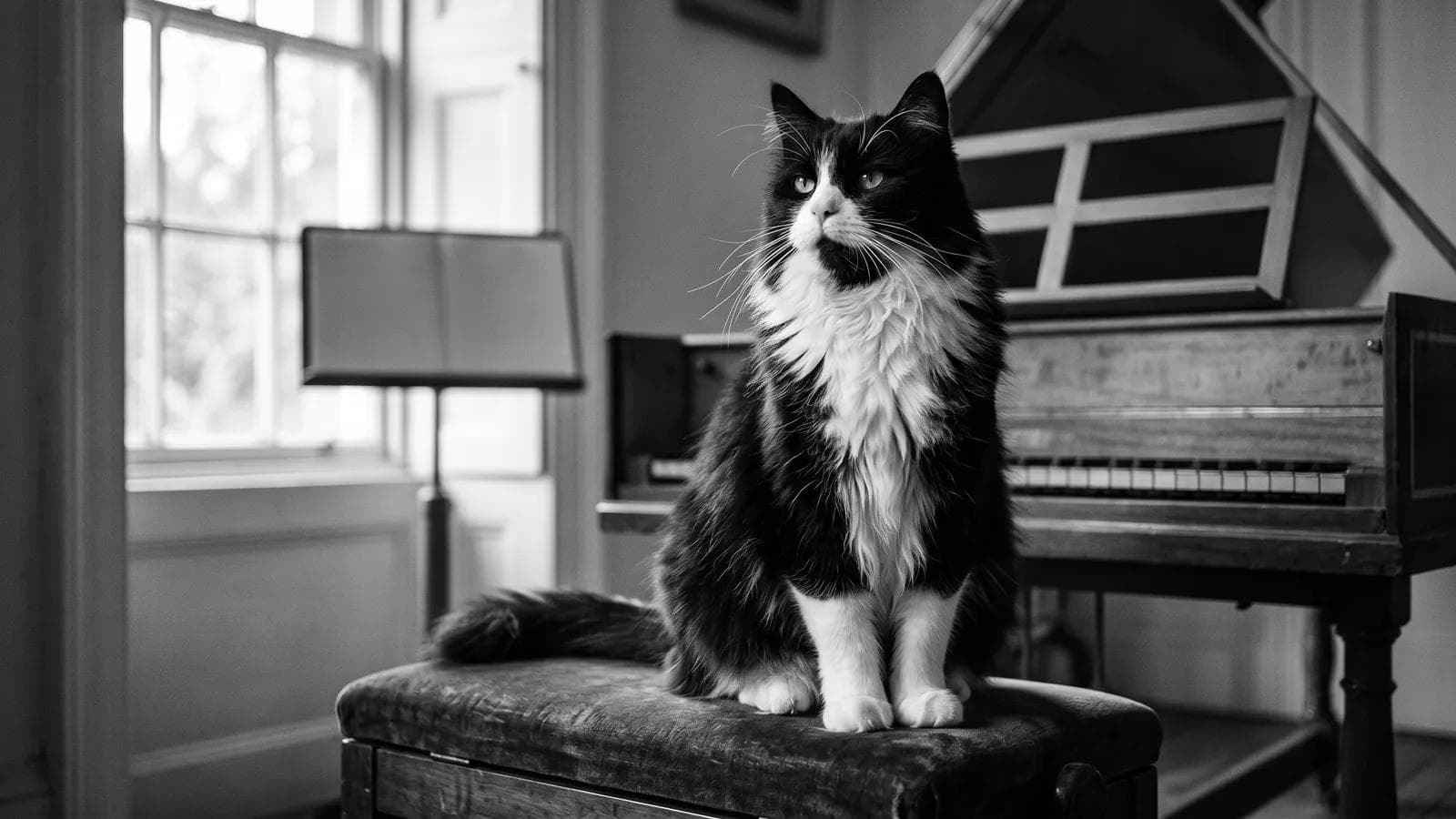
Every afternoon before dinner, Vino and Zola are permitted outside for one to two hours. This is the formal afternoon session, and it operates on a different logic from the indoor sunbeam work. Inside, the light comes to Vino. Outside, Vino goes to the light, and the distinction matters to him.
The outdoor thermal appointment is not exercise. Let that be clear. Exercise, in the sense of deliberate exertion toward a fitness goal, is a concept Vino regards with the polite incomprehension of a man invited to a sport he didn't know existed. What outdoor time offers is the full-spectrum warmth of unfiltered sun on medium-long fur, which conducts heat in a way that no indoor patch can quite replicate.
The site selection process happens again, conducted on a grander scale. The yard has specific positions: the flat stone near the garden bed that holds heat well into the afternoon, the strip of grass along the south fence that receives the last of the direct light before it drops, the elevated position near the chicken run where Vino can survey his territory from an angle that is flattering to him and slightly threatening to anyone approaching from below. He rotates through these. The rotation is not random.
A significant portion of outdoor time is simply sitting and looking majestic. This is not an editorial gloss. It is an accurate description of what is happening. Vino sits. He surveys. His expression suggests he has considered the available evidence and found the world acceptable, though only just. The fur, which catches the afternoon light and renders his white chest bib a kind of warm cream against the black, does most of the work for him. He contributes posture.
Zola, for her part, handles the outdoor session differently. She moves more. She investigates things. She occasionally produces a single hiss at Vino when he tries to chase her, which he takes with the equanimity of a man who has been told no before and has no intention of updating his behaviour accordingly. They maintain a proximity that is close enough to suggest companionship and far enough to avoid the accusation of needing it.
We hover nearby, doing whatever humans do in gardens. Vino follows us occasionally, meowing with great urgency about matters he does not specify. When we stop moving, he sits on whatever we were about to use. The consistency of this approach, across every setting and every year, suggests it is not incidental. It is simply the cost of having Vino on your property.
The Bird Situation: An Ongoing Study
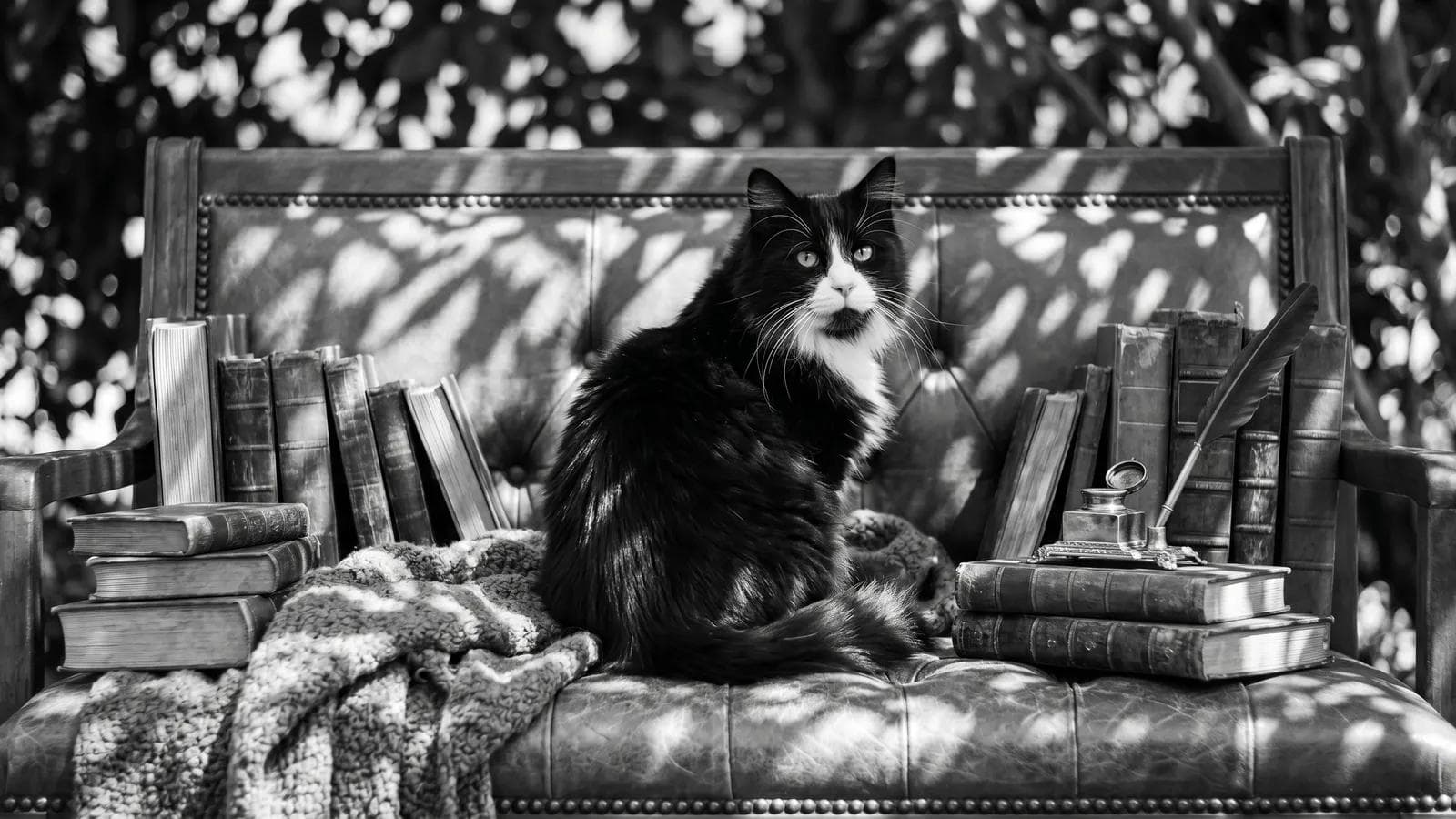
No account of Vino's relationship with sunlight is complete without addressing the birds.
The wild birds arrive most mornings. They have no arrangement with us. They come for reasons of their own, perch in the trees beyond the fence, and proceed to go about their business with a breathtaking lack of awareness that they are being watched by one of the most focused observers in the district.
Vino chirps at them.
The chirp is a specific sound: rapid, staccato, produced from the back of the throat, somewhere between excitement and frustration and something that might generously be described as a hunting call. Whether it functions as a hunting call is a matter that the birds have tested extensively by not responding to it in any meaningful way. They continue to arrive. They continue to ignore the performance. Vino continues to produce it.
This has been happening for years.
The position from which he conducts this observation varies by season and by where the best light falls, but the combination of a good sunbeam and a visible bird is essentially the peak of Vino's intellectual engagement with the natural world. He will sit for extended periods in this configuration: head tilted slightly, eyes tracking with absolute precision, that quiet rapid sound going continuously while the bird eats something or rearranges its wings or does bird things that are entirely indifferent to the surveillance being conducted below.
If the light shifts during the observation, Vino adjusts. He does not leave. The birds are more interesting than the inconvenience of moving to maintain the warmth. This is one of the few activities that competes with a premium sunbeam for his full attention, and it is notable that both can frequently be satisfied simultaneously. Vino has not failed to notice this.
The rooster was a separate matter entirely and falls outside the scope of this guide.
The Biscuit-Making Addendum: A Note on Post-Thermal States
There is a condition that follows sustained sunbeam exposure which Vino enters reliably and which I have spent years observing without ever quite getting ahead of. It might be called the post-thermal contentment state, if one were inclined toward clinical language. What it looks like in practice is: Vino on the bed, kneading.
The biscuit-making, as I refer to it, is not exclusive to mornings. But it tends to coincide with warm surfaces and the particular satisfaction that follows a breakfast eaten, a light patch occupied at length, and a session of bird-watching conducted with full commitment. It arrives, in other words, when conditions have been adequate. Which, by Vino's standards, is not as often as one might hope.
The technique is precise. The front paws work in a slow alternating rhythm against whatever surface has been chosen: the duvet, a pillow, occasionally a sleeping person who made the error of remaining stationary at the wrong moment. The eyes narrow. The drool begins. This last detail is not something Vino would include in his own account of the activity, which is presumably why he has one.
The state of the bedding upon completion is not something Vino considers his department. He has made his peace with the surface. The surface can make its peace with the arrangements.
What this state represents, in the broader context of his sunbeam practice, is completion. The morning has been assessed, claimed, and inhabited properly. The thermal requirements have been met. The birds have been informed of his presence. The biscuit-making is the sign-off: a creature who has managed his day according to his standards and is prepared to move on to the next requirement, which is probably the protest meow at the back door and then a second round of outside time.
The system, in Vino's view, works. I am somewhat slower to agree, but I have not been consulted.
Frequently Asked Questions
Why do cats sit in sunbeams?
Cats sit in sunbeams because sunlight is a direct source of warmth, and cats regulate body temperature in part through external heat sources. The fur traps warmth efficiently once a patch of direct light heats it, which means sunbeam time is thermally productive in a way that simply sitting in a warm room is not. In Vino's case, there is also the matter of light quality and duration, which he appears to evaluate before committing. Not all sunbeams are equal. He knows which ones are worth his time.
Do cats have preferences for specific sunbeam positions?
Yes, consistently. Individual cats learn which areas of their home receive light at which times of day, and they adjust their positioning accordingly. This isn't guesswork: it's learned behaviour built from months or years of occupying the same spaces. Vino moves between known positions across the year as the sun's angle shifts, and he moves proactively, not reactively. He's not sitting somewhere and noticing the light has gone. He leaves before it goes.
Is sitting in the sun good for cats?
Sunlight is beneficial in several ways. It delivers warmth, which supports muscle relaxation and overall comfort. It can contribute to vitamin D synthesis through the skin, though cats absorb this differently from humans and groom much of it in. Perhaps more practically, sustained sunbeam time in a safe, quiet position appears to function as genuine rest for cats. Vino is not resting casually when he occupies a good patch. He is using it.
Why do cats chirp at birds?
The chirping and chattering sound cats produce when watching birds has been linked in research to positive, hunting-related arousal rather than distress. Nobody's entirely sure why cats do it, but the two popular explanations are that it's an involuntary physical response to the excitement of spotting prey, or that it's some kind of mimicry attempt meant to lure birds closer, though I've never seen a single bird fall for it. In Vino's case, the chirping has been conducted with great consistency for years, observed by multiple birds on multiple occasions, and has produced no recorded results. He hasn't adjusted the strategy. He finds the birds every morning. The birds continue to not care. The chirping continues regardless.
Can you train a cat to use a specific sunbeam spot?
No. What you can do is place a comfortable surface in a location that receives good direct light, and then accept that the cat will determine whether this location meets its standards. If it does, the cat will use it. If it doesn't, the cat will use whatever location it has already identified as superior, and the bed or blanket you placed there for it will be occupied by a cat exactly once, briefly, out of what feels less like appreciation and more like a site inspection it didn't particularly enjoy.
The rooster, for what it's worth, has no idea he's part of a protocol. He crows because he crows. The precision of what happens immediately afterward is Vino's contribution, not his.
The morning proceeds as it must: light assessed, warmth claimed, birds informed, biscuits made, household staff kept honest. Somewhere in this sequence, my fiancée and I manage to drink our coffee. Vino has noted this and chosen not to interfere, which is, by his standards, generosity.