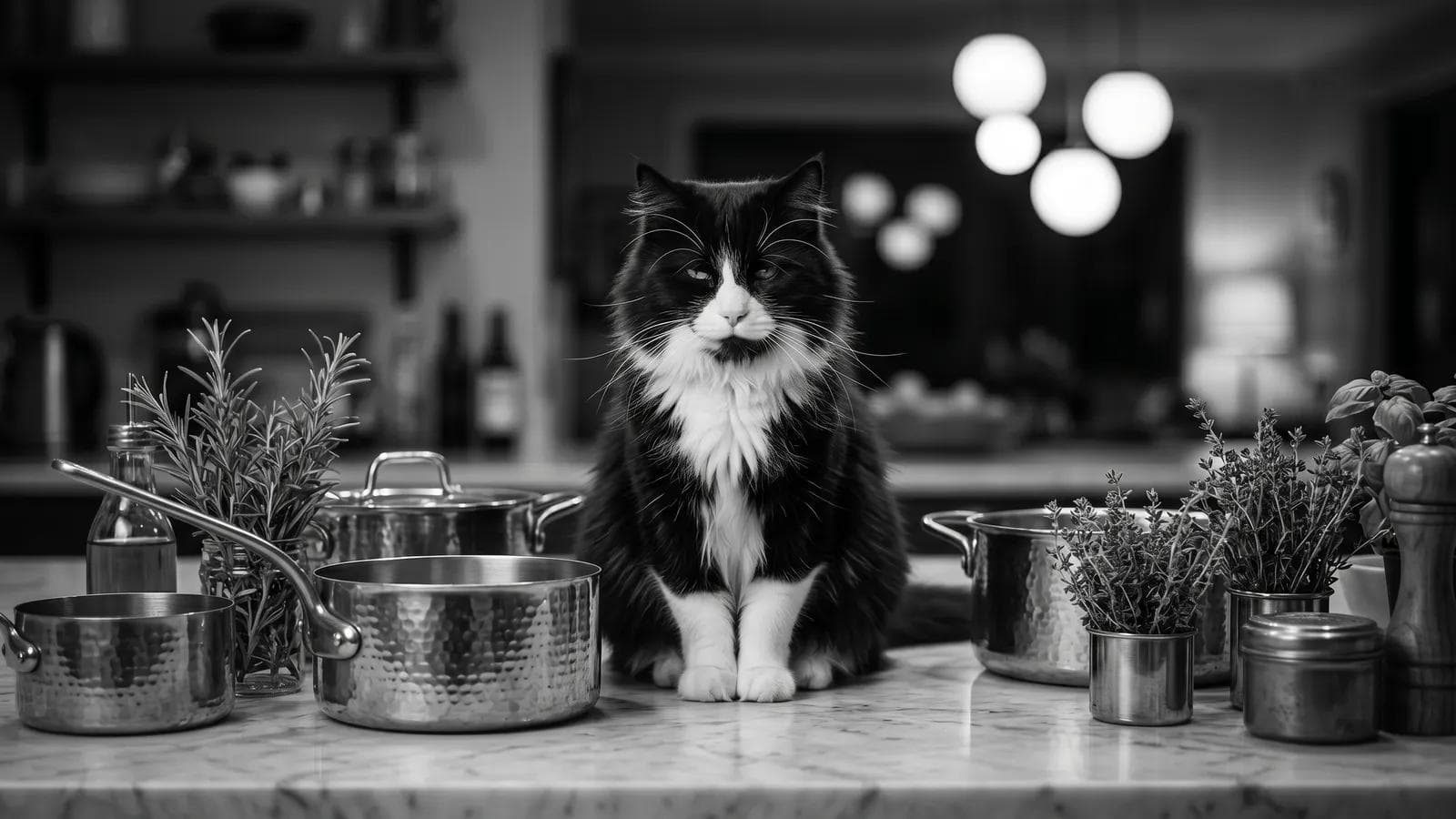
Vino came home with me having spent two and a half years at a winery barn where the feeding arrangements were, by every available account, loosely supervised. He had been supplementing his diet with whatever he could catch. He had strong opinions about food availability. The transition to measured meals was not smooth.
The complaints started in the first week. Not aggressive; specific. He would sit next to his bowl with the expression of a cat who is choosing to interpret an empty bowl as a deliberate personal slight, and he would produce his sustained protest meow until something happened. One note, one volume, capable of lasting five seconds or longer without modification. It is not a question. It is a statement of position. I held the line. A system was established. Years later, he is healthy, well-maintained, and still of the opinion that meals could be provided slightly faster than they are.
What follows is what actually goes into that bowl, and why.
Calories and the Outdoor Cat Variable
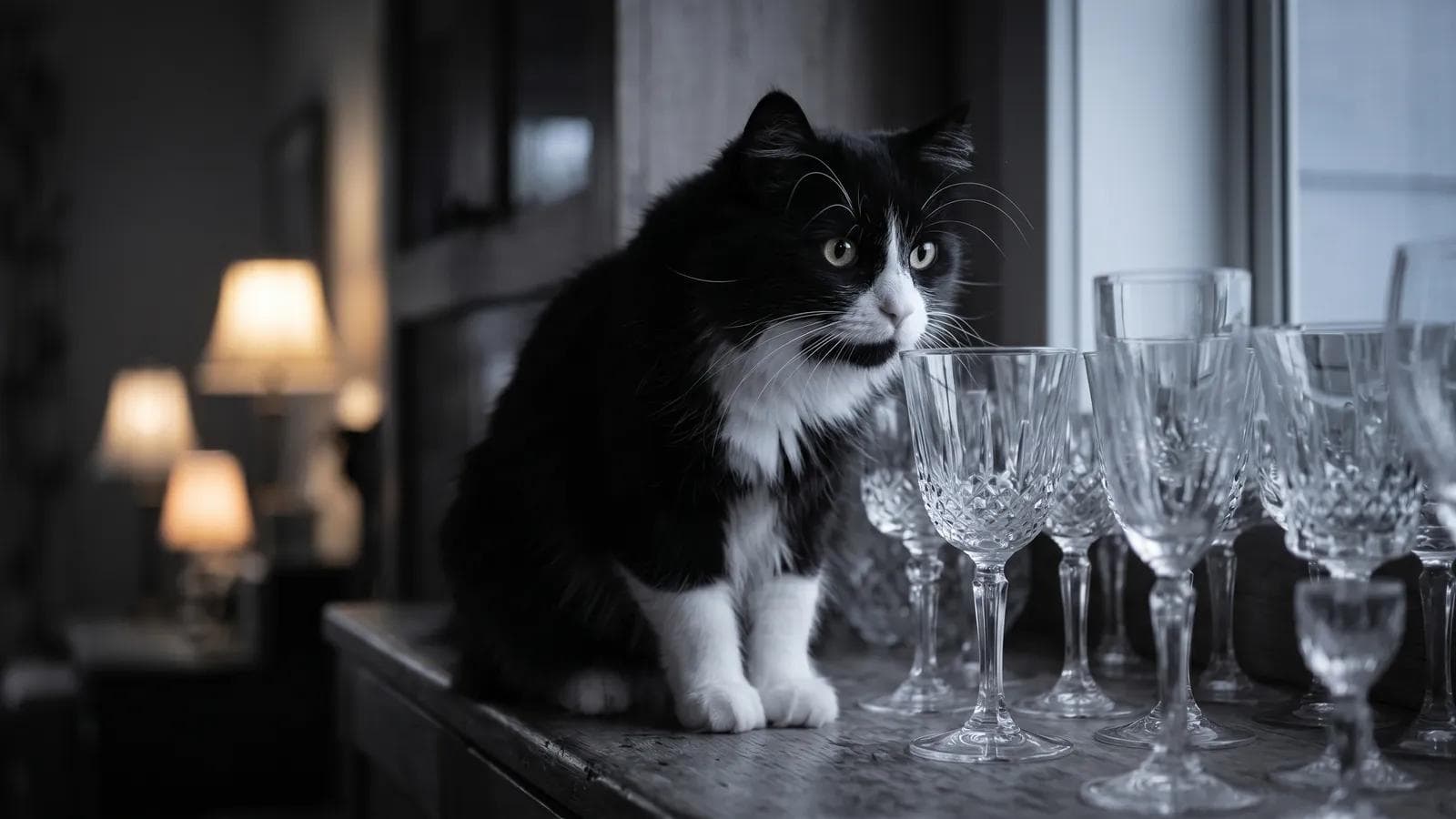
Vino eats approximately 200 to 250 calories per day. That's the range the WSAVA calorie chart supports for a cat of his size and activity level, and "activity level" is doing significant work in that sentence.
He is not a sedentary cat. He goes outside daily, one to two hours before dinner and sometimes more in the mornings, and he uses that time. He covers real ground. He climbs. He runs when the mood takes him, which it does with reasonable frequency. He conducts his patrol of the property with genuine thoroughness, and when his investigation takes him to the fence line and the question of the Staffy next door, that particular operation requires sustained concentration that appears to burn calories through the mechanism of intense, motionless deliberateness.
A purely indoor cat at his size and age might run closer to 180-200 calories. Vino's outdoor life pushes his requirements toward the higher end of his range. His coat, medium-long and well-maintained, is the clearest external indicator that the nutrition is working. Consistent shed pattern, no excessive loss, adequate condition throughout. By every measure I can track at home, he's in good shape. He has never publicly agreed with this assessment, but he has not contradicted it either.
What's in the Bowl
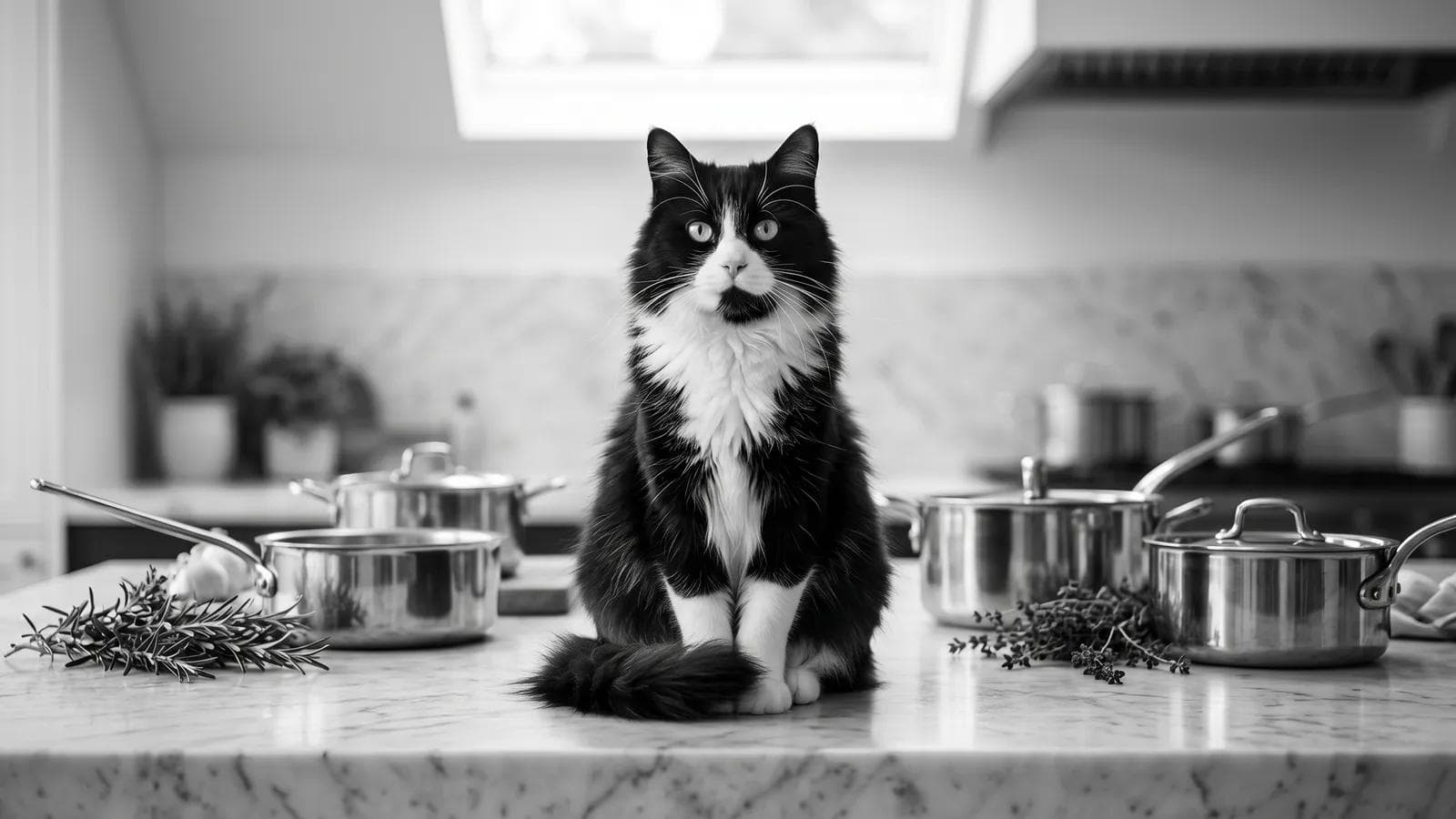
The main meals are high-protein dry kibble, AAFCO-approved, with animal protein as the first listed ingredient. He doesn't greet it with the enthusiasm he reserves for other categories of food; his response to the kibble bowl is what might be described as considered acceptance. The coat and the weight are the proof of whether the food is working, not the facial expression.
Wet food appears on a rotating basis, primarily as variety and to contribute to his fluid intake. Whether he prefers it depends on the specific product and on factors I have not been able to isolate. He has views. The views are inconsistent. This is consistent.
The fish treats are a separate matter entirely.
The moment the treats packet makes a sound (any sound, from anywhere in the house), Vino's calm assessment phase disappears. He knows what they are before the packet is open. He has opinions about the interval between one treat and the next. He arrives at the treat source with a focus that is entirely at odds with the composed bearing he otherwise projects, and he communicates his position on treat timing with a directness that does not leave room for interpretation.
Fish treats account for approximately ten percent of his daily caloric intake, roughly twenty calories. They are kept at this level because the alternative is a cat who has successfully trained me to produce fish treats on demand, which would represent a shift in the balance of operational control that I have not officially endorsed.
The Water Problem, Solved
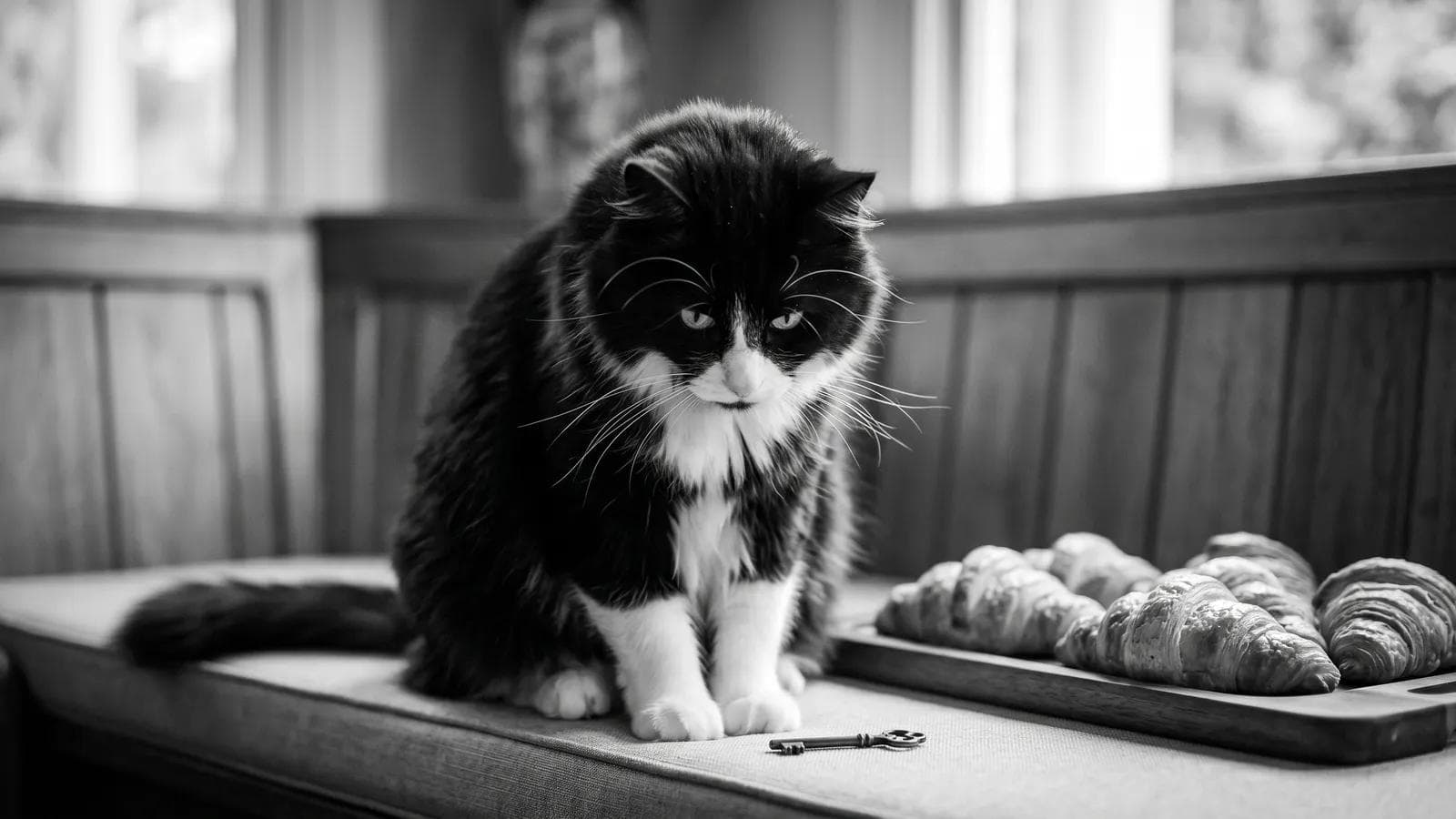
Vino barely used a water bowl. This was observed early, tracked with mild concern, and resolved when I installed a circulating fountain: filtered, moving water, running continuously.
He uses it constantly. Whether it's the movement, the freshness, the sound, or some aspect of feline preference that doesn't map onto any human framework, the difference in his water intake between a static bowl and the fountain was immediately noticeable.
This matters more than most food discussions acknowledge. Kidney disease is one of the most prevalent diseases in older cats: the Cornell Feline Health Center puts it at up to 40% of cats over age 10 and 80% of cats over age 15. Adequate hydration is the most accessible form of kidney protection available. A cat who won't drink from a static bowl will drink from a fountain. The fountain is worth the cost of the fountain.
Zola also uses it. She adopted it without ceremony, which is consistent with her approach to everything: no drama, no resistance, just a quiet assessment followed by incorporation into the routine.
The Mealtime Arrangement
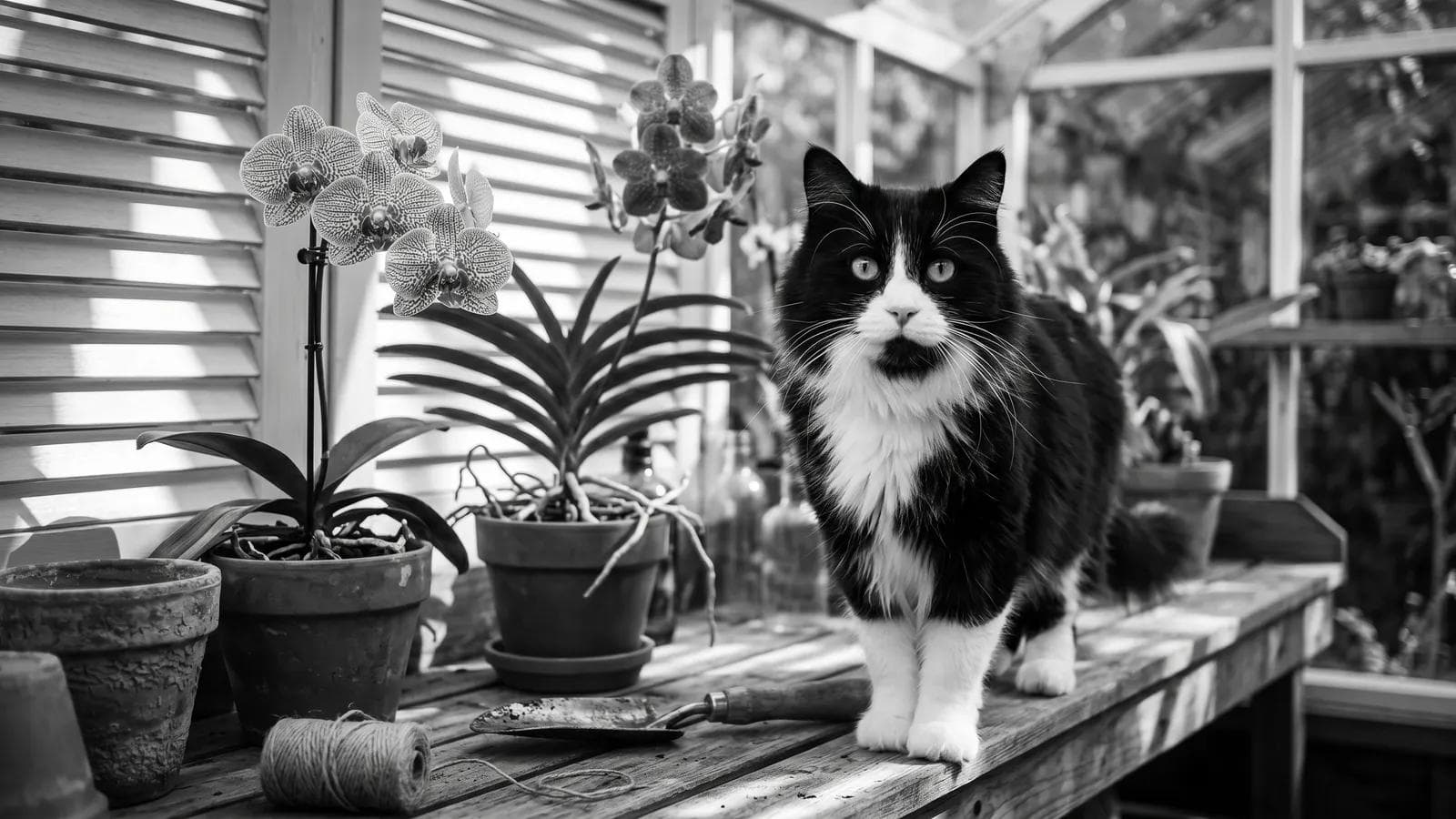
Both cats eat in the same room. This requires a specific configuration.
Vino deliberates. He approaches his bowl, considers the options, and eats at a pace that suggests he's reviewing each piece individually. Zola eats faster, considerably faster, and is usually done and elsewhere before Vino has reached the halfway point. I have stopped trying to understand what this says about either of them.
The diplomatic arrangement that governs mealtimes: both cats are at their respective bowls simultaneously, neither acknowledging the other, for the duration of Zola's meal. Once she's gone, Vino finishes alone. This neutral-zone agreement has emerged organically over the years and has not broken down. It is, by the standards of our home, an unusually stable arrangement.
What this says about their actual relationship is a separate question, and a longer one.
What "What Do Tuxedo Cats Eat" Actually Means
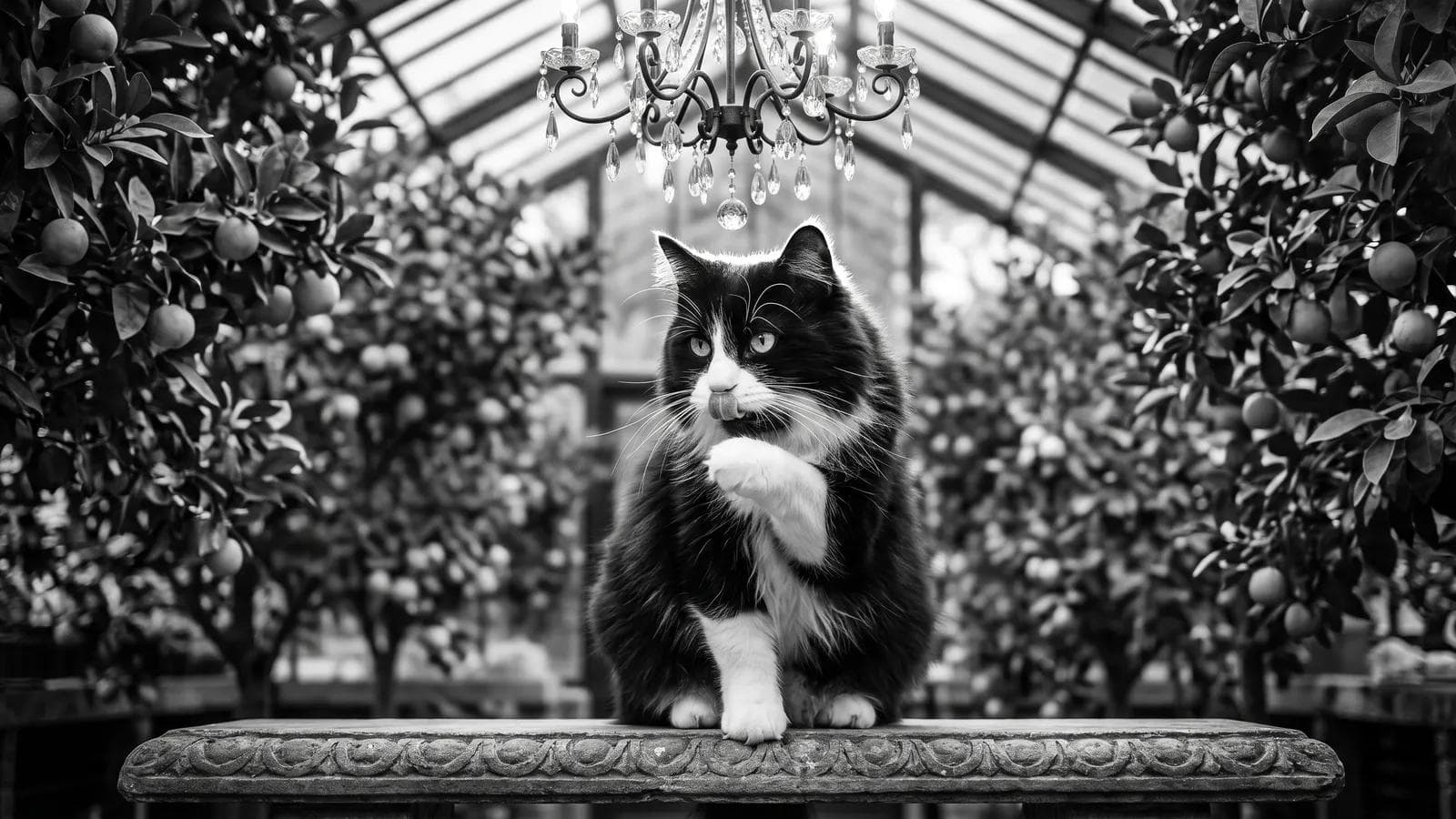
Tuxedo cats aren't a breed. They're a coat pattern. There's no breed-specific dietary requirement to account for, no particular metabolic quirk that distinguishes a tuxedo from any other domestic cat. They eat what healthy domestic cats eat: quality protein, appropriate calories for their size and activity level, reliable access to fresh water.
The individual variables are what matter. A tuxedo cat who spends eight hours a day napping on a sofa has different calorie needs than one who covers real ground on daily outdoor sessions. A cat who won't drink from a bowl needs a fountain, not a different type of water. A cat transitioning from barn-cat feeding habits to measured domestic meals needs someone willing to hold a line against sustained protest meowing for approximately the first month.
Vino arrived with strong opinions about food availability and has maintained them throughout. I have adapted. Everything I can see and measure says the system is working.
He is in good shape. He would prefer to also be eating fish treats right now. These two things are not in conflict.
Frequently Asked Questions
What do tuxedo cats eat?
Tuxedo cats eat the same diet as any healthy domestic cat: high-protein food with animal protein as the primary ingredient, appropriate calories for their size and activity level, and reliable fresh water. Tuxedo is a coat pattern, not a breed, so there are no breed-specific dietary requirements.
How many calories does a tuxedo cat need per day?
The WSAVA's calorie chart for healthy adult cats in ideal body condition puts a 3 to 4 kilogram cat at roughly 200 to 250 calories a day, with the number rising as body weight increases. Active cats with daily outdoor time trend toward the higher end; sedentary indoor cats can run lower. Vino, who covers real ground on daily outdoor sessions, runs at the upper end of his range. Body weight and coat condition are the most reliable indicators that the calorie amount is right.
Should tuxedo cats drink from a fountain?
Any cat who shows low water intake from a static bowl is worth trying a fountain with. Many cats prefer moving water; it may be fresher, it may trigger drinking instincts, or it may simply be more interesting. Hydration matters significantly for kidney health as cats age. If a cat won't drink adequately from a bowl, a fountain is a low-effort, high-impact change.
Can tuxedo cats eat wet food?
Yes, and many benefit from it; wet food contributes to fluid intake and is often more palatable. Whether to use dry, wet, or a combination depends on the individual cat's preferences, weight, and any health considerations. Both Vino and Zola receive wet food on rotation alongside their regular kibble.
What treats can tuxedo cats have?
Standard cat treats. Fish-based treats are popular with Vino, who responds to them with a speed and focus entirely inconsistent with his usual bearing. Treats should account for no more than ten percent of daily caloric intake to avoid displacing the nutrition from main meals. The ten percent ceiling is non-negotiable. I have attempted to explain this to Vino. He disagrees.
The barn-to-measured-meals transition was a month of sustained protest meowing and unyielding bowls. The outcome was a cat in good health with a functioning routine and a non-negotiable position on fish treat frequency.
Years in, the position remains non-negotiable. The health remains good. On balance, we have decided this is acceptable.