
Four receipts, one spreadsheet I probably should've started sooner, and a vet bill that made my left eye twitch: these are the exhibits I'm presenting today as evidence that the cost of owning a tuxedo cat in the first year is both higher and stranger than any generic pet-ownership calculator will tell you. I brought Vino home from a small biodynamic winery in northern Tasmania in April 2022, and I've since reconstructed that inaugural twelve months of spending with enough detail to be useful and enough honesty to be slightly embarrassing. Vino was sitting on my chest when I compiled the numbers, drooling onto my collarbone, which felt appropriate.
Exhibit One: The Vet Bills That Set the Tone for the Cost of Owning a Tuxedo Cat
Within the first 30 days, Vino had his initial health check, vaccinations, and desexing. The vet charged $387 for the first consultation and round of vaccinations alone. Desexing added another $290. Between the initial consult, vaccinations, and desexing, we landed at $1,040 in vet costs by year's end, before anything unplanned came up.
But here's what the generic guides don't mention. Vino's medium-long fur on his back legs has a habit of catching things it shouldn't. I won't dwell on the specifics; I'll simply say that the first time it happened, I panicked, called the vet, and was advised I could handle it at home with warm water and patience. Vino, who hates water with a conviction bordering on philosophical, growled and fought through the entire half-bath ordeal. The second time it happened, I bought a stainless-steel deshedding comb and a set of blunt-tipped grooming scissors. That was $47 I hadn't budgeted for, but it saved me from a third after-hours vet call that would've cost $185 just for the consult fee.
The lesson: the cost of owning a tuxedo cat isn't just the line items you can predict. It's the 11 p.m. Google search for "cat poop stuck in fur emergency" that leads to an unplanned purchase and a cat who won't look at you for 48 hours.
If you're curious about Vino's grooming personality beyond the bath incidents, I've written about his obsession with being brushed and why medium-long fur changes the maintenance equation.
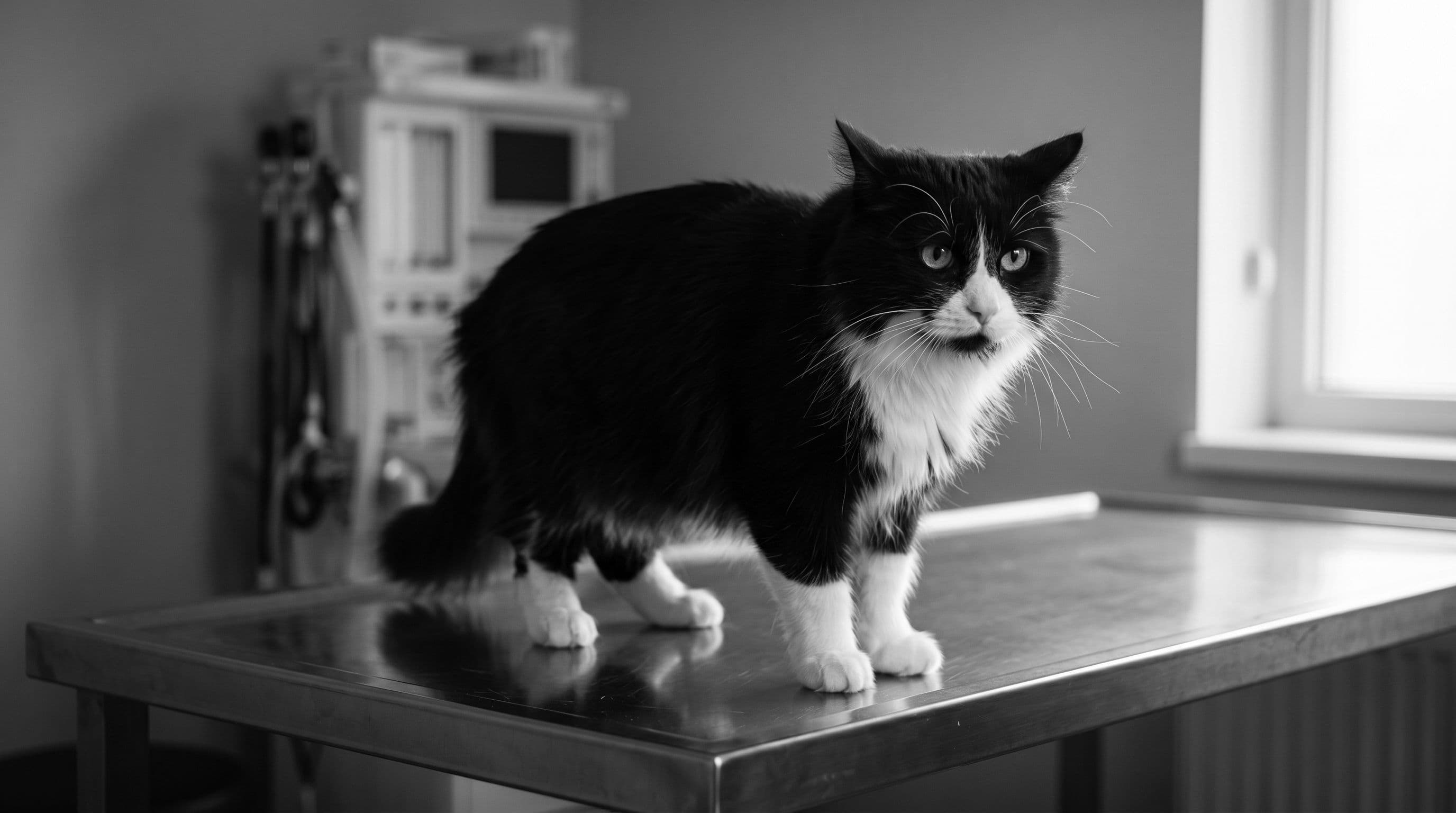
Exhibit Two: Food, and the Appetite That Defied the Feeding Guide
I'd read the feeding guidelines on the back of the kibble bag. I'd spent hours researching caloric needs for indoor cats around Vino's size, cross-referencing veterinary resources and nutrition guides until my browser tabs looked like a conspiracy wall. The Association for Pet Obesity Prevention's 2022 survey found that 61% of cats in the United States were classified as overweight or obese by veterinary professionals, which meant I wasn't about to wing it with portion sizes. Vino, 6 kg at his September 2026 check-up, should've been eating about 280 calories a day, going by the feeding chart on the back of his food bag and the WSAVA calorie guidance for a cat his size.
He disagreed.
Vino is, and has always been, either eating or requesting food. This is the cat who, at the winery barn, would jump onto whatever I was trying to reach just to establish that his needs came first. That attitude transferred seamlessly to meal times at home. He doesn't beg in the traditional sense; he simply stands near his bowl and produces a single sustained meow, same tone, same volume, for five seconds or more. It's not a question. It's a statement of grievance. Then he does it again. And again.
Monthly food costs settled at around $65 for a combination of wet and dry food, which put the annual total at $780. That figure includes treats, because pretending I wasn't going to buy treats would be dishonest. I also spent $38 on a slow-feed ceramic bowl after Vino demonstrated that he could inhale an entire portion of wet food in under 90 seconds and then look at me as though I'd starved him.
For context, Zola eats like a normal cat. She takes her time. She walks away mid-meal and comes back. I've tracked our monthly food spending for both cats, and Vino consistently accounts for the lion's share of it, despite being one of two cats in the household. This ratio hasn't improved with time.
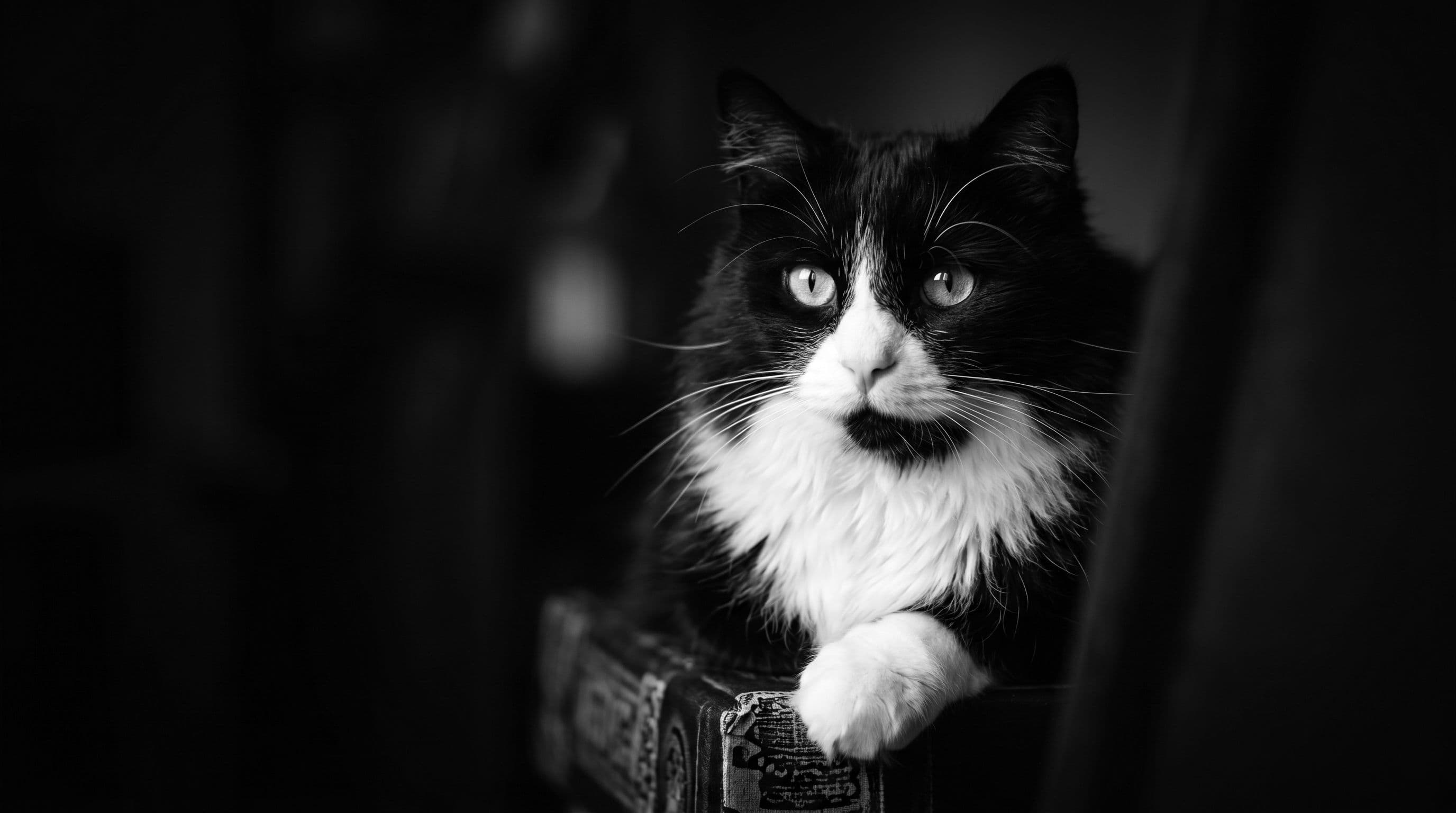
Exhibit Three: The Accessories, the Furniture, and the Thing He Broke
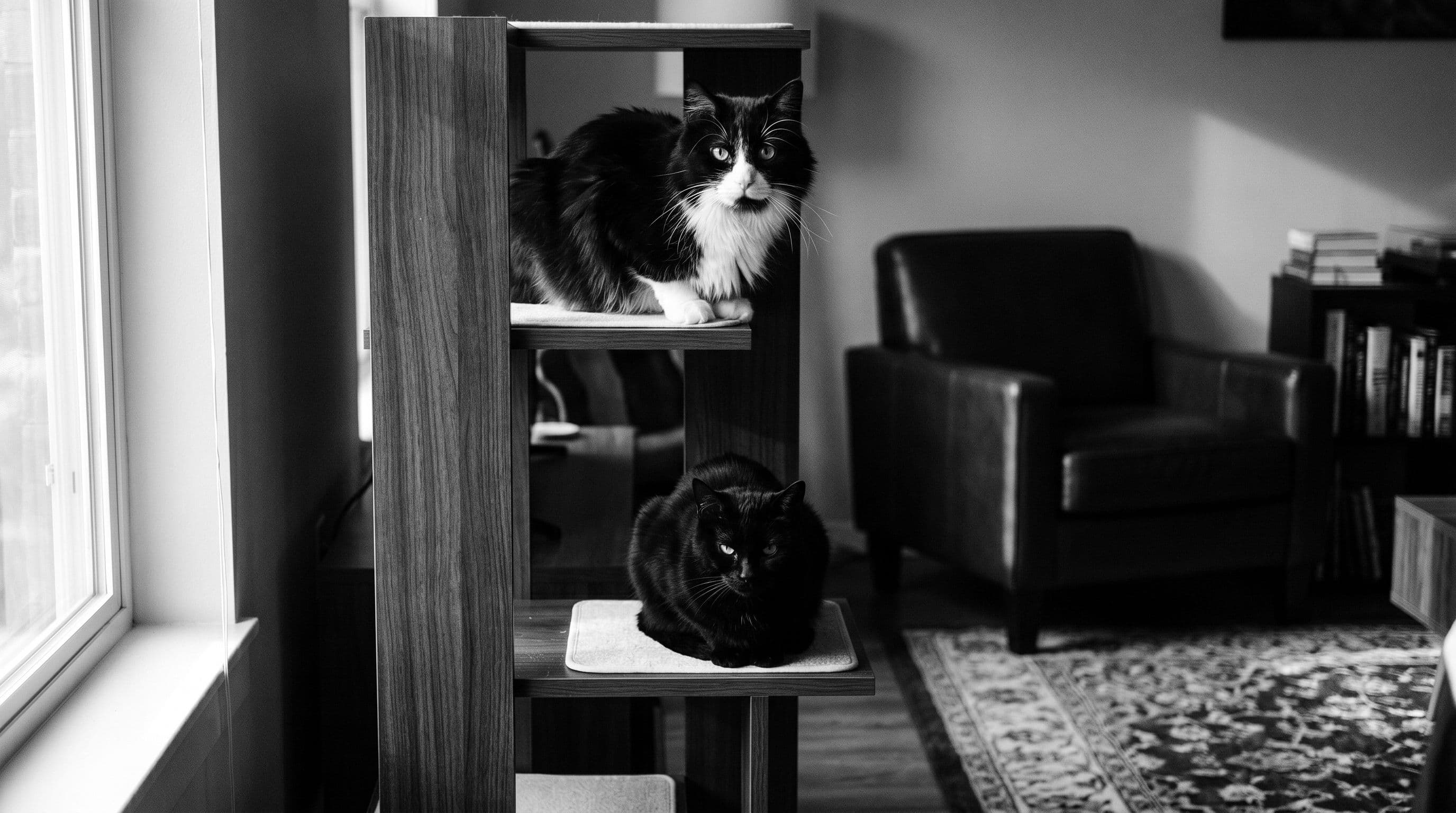
Here's where my spreadsheet gets creative with its categories. The essentials were predictable enough: a self-cleaning litter box (I went with a Litter-Robot, which was $899 and the single largest non-veterinary expense of the year), two cat carriers at $55 each, a wool area rug he immediately claimed as personal territory, and a tall cat tower from Tuft + Paw that cost $320.
The cat tower deserves its own paragraph, because it became the site of what my fiancée and I called "the standoff." Vino and Zola would both sit in it, on separate levels, and stubbornly wait for the other to leave first. Neither would. This could last an hour. We haven't observed the standoff recently, but during the first year it was a near-daily event, and it confirmed that the $320 was well spent even if the tower's primary function had become a stage for competitive stubbornness.
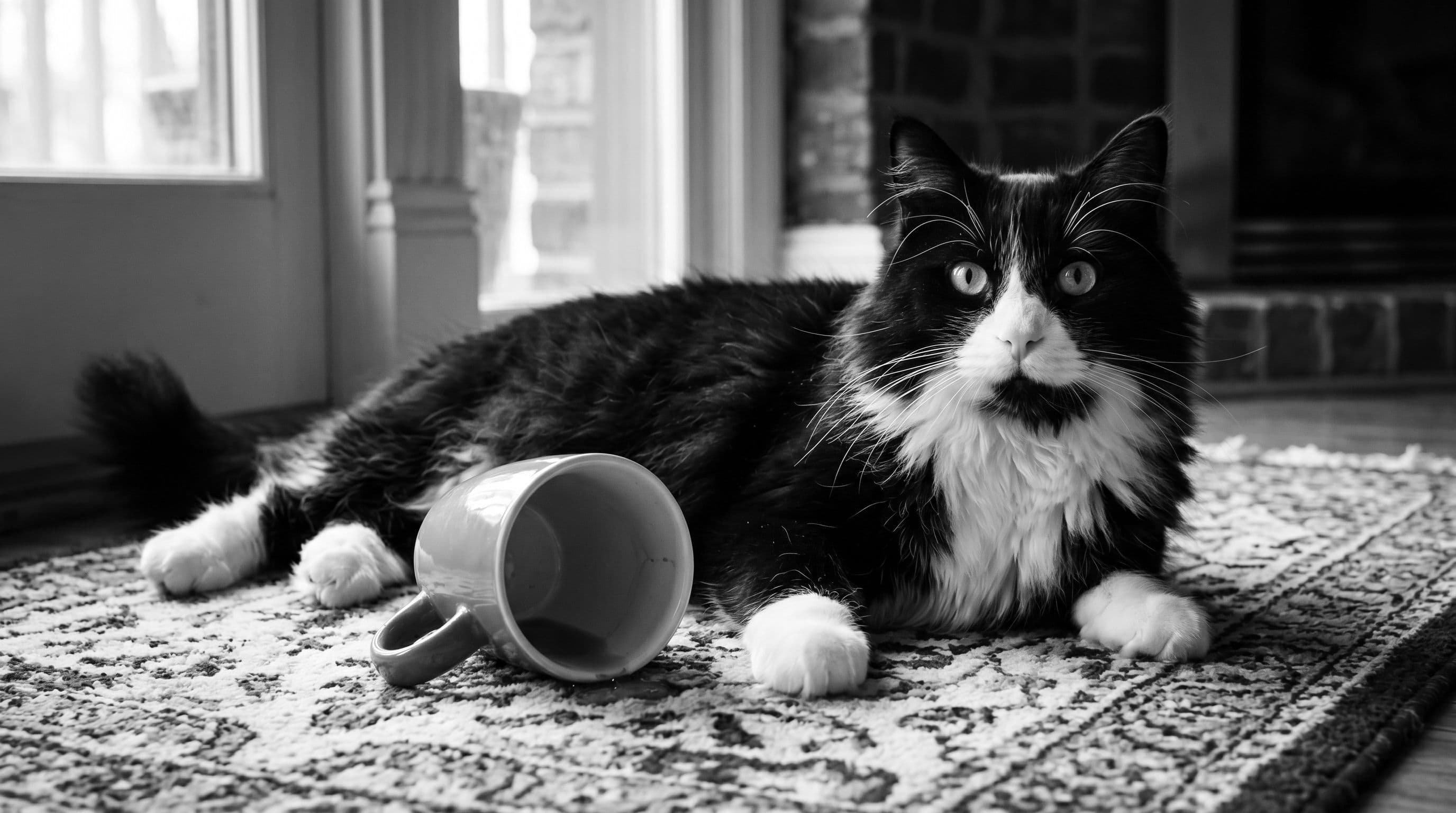
Then there were the unplanned costs. Vino knocked a mug off my desk during one of his regular interventions into my work. That was a $12 replacement. He also scratched a section of the couch within the first month, prompting a $45 purchase of adhesive furniture protectors. A second set of adhesive protectors followed three weeks later when Vino found a section I'd missed.
The total accessories and household damage tally for year one: $1,487. That number includes the Litter-Robot, without which it drops to $588. Still more than I'd planned.
You can read more about how Vino and Zola's dynamic plays out around shared spaces like the cat tower in my post about their relationship and the performative hissing.
What This Adds Up To
Here's the full first-year breakdown:
- Veterinary care: $1,040
- Food and treats: $780
- Accessories, furniture, and replacements: $1,487
- Miscellaneous (grooming tools, cleaning supplies, an extra water bowl after Vino kept drinking from Zola's): $126
Total: $3,433
That figure won't match what you'll find on PetSmart's cost estimator or the general ownership guides, which tend to quote first-year figures between $1,000 and $2,000 for a cat. The gap comes from two places. First, I made a premium purchase with the Litter-Robot that most guides don't assume. Second, and this is the angle I haven't seen any other cost breakdown address: personality-driven expenses.
Vino is not a low-maintenance cat. He isn't destructive in a malicious way; he's simply present, constantly, in every room, on every surface, requiring engagement, food, grooming, and the occasional emergency half-bath. A more reserved cat, a Zola-type, would've cost less. I've watched enough cats in friends' homes to know that personality profiles vary wildly from one animal to the next, and living with both Vino and Zola has confirmed it firsthand. Vino's the sociable one who follows me into the bathroom and bats the shower curtain while I'm in there; Zola's the one who picks a single sunlit rectangle of carpet and doesn't move for six hours. Where your cat falls on that spectrum directly affects your wallet in ways that breed-specific guides don't capture.
Tuxedo cats aren't a breed; they're a coat pattern found across domestic shorthairs, Maine Coons, British Shorthairs, and plenty of others. So the cost of owning a tuxedo cat is really the cost of owning whatever cat is underneath the tuxedo. In Vino's case, that's a medium-long-haired, 6 kg, aggressively social, endlessly hungry, water-hating former barn cat who has never once in his life waited to be invited into a situation.